Sitting Alternate Side Leg Lift On A Chair
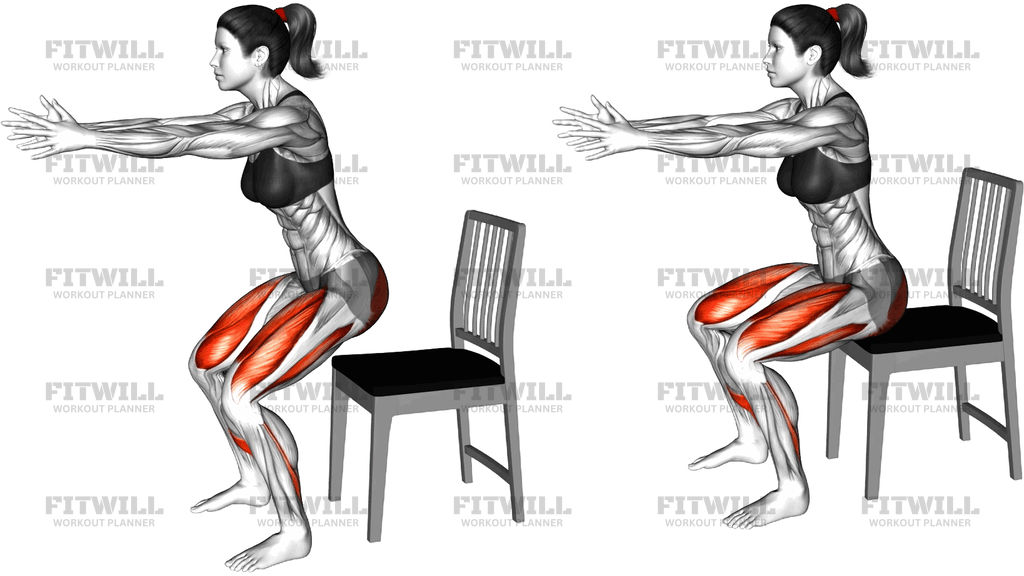
The Sitting Alternate Side Leg Lift On A Chair is a seated hip abduction exercise performed sideways on a sturdy chair. You sit on the chair facing forward, then rotate your hips so one buttock stays planted on the seat while the other side opens toward the room. From there you lift the top leg straight out to the side, lower it under control, and repeat before switching legs. Because you are seated rather than standing, the chair removes balance demands and lets you focus entirely on the hip doing the work.
The main target is the gluteus medius and the other small muscles on the outer hip that lift the leg away from the body. The gluteus maximus assists as the leg travels higher, and the obliques plus deep core work hard to keep your torso from collapsing as the leg rises. That torso-stabilizing demand is what separates this from a lying side leg raise: your trunk has to resist side-bending while you are perched on a narrow seat, which quietly trains the waist along with the hips.
This is a good fit for people who want to strengthen the outer hips without getting on the floor, including older adults, office workers fitting in movement breaks, or anyone rehabbing back into lower-body training after a layoff. Strong glute medius muscles support the pelvis during walking, stair climbing, and single-leg balance, so a seated version like this carries over to everyday movement. It is also a useful warm-up drill before squats or lunges, waking up the side glutes that often sit dormant after long periods of sitting.
Setup matters more than it looks. Sit toward the front edge of the chair with your torso tall and both feet flat on the floor to start. Sit bones firmly planted, ribs stacked over pelvis, one hand resting lightly on the seat beside your hip for support. If you slump or grip the chair with white knuckles, the working leg loses range and the trunk does the moving instead.
To execute well, extend the working knee so the leg is long, then sweep that leg up and out to the side, leading with the outer thigh and keeping the toes pulled gently back. Pause briefly at the top, then lower with control until the foot hovers just above or lightly touches the floor. Alternate legs within the set or complete all reps on one side before switching, depending on your preference.
Keep the movement small and honest. A modest, clean lift with a tall spine beats a huge swing that tips your whole torso sideways. If you feel it pinching at the front of the hip, reduce the height of the lift and think about lifting from the side of the seat bone rather than from the thigh front. Stop if you feel sharp pain in the hip joint or lower back.
[ Workout Log & Planner ]
Put your next workout in Fitwill
Keep your plan and training log ready when you are.


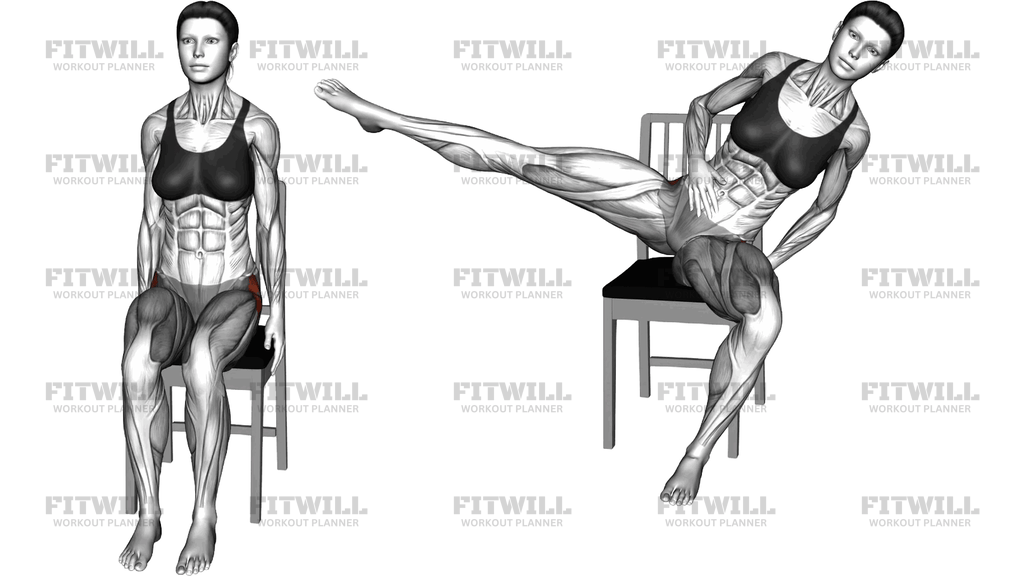
Instructions
- Sit on a sturdy chair with both feet flat on the floor and your spine tall, then shift your weight so you are angled sideways on the seat with one sit bone firmly planted on the front edge.
- Rest one hand lightly on the seat beside your hip for balance and place the other hand on your waist or thigh; this is your support side for the set.
- Brace your abs gently and lengthen through the crown of your head so your ribs stay stacked over your pelvis before the leg moves.
- Straighten your top leg so the knee is extended and the foot is relaxed, with the toes pulled slightly back toward your shin.
- Lift the straight leg up and out to the side, leading with the outer thigh, until the leg is roughly level with your hip or as high as you can go without tipping your torso.
- Pause for one breath at the top, feeling the contraction along the side of your hip and seat.
- Lower the leg slowly and under control until the foot is just above or lightly touching the floor, keeping the knee straight throughout.
- Complete your reps on one side, breathing out as you lift and in as you lower, then reposition yourself and repeat the same number of reps with the other leg.
- Between sides, reset your posture: feet flat, torso tall, hand placement swapped so the supporting hand is always beside the working hip.
Tips & Tricks
- The most common mistake is swinging the leg with momentum. If your foot whips up and drops fast, the glute medius never gets loaded, so count two seconds up and two seconds down on every rep.
- Watch for trunk lean: as the leg rises, your upper body wants to tip away from it. Imagine a string pulling the crown of your head to the ceiling and stop the lift at the height where your torso starts to move.
- Keep the working knee pointing forward or slightly up, not rotating toward the ceiling, so the outer hip does the lifting instead of the hip flexors taking over.
- Grip the seat lightly. If you are squeezing the chair edge hard enough to whiten your knuckles, the load is too high or the range is too big for your current control.
- If the front of your hip pinches at the top, shorten the range and focus on height from the seat bone side rather than lifting the toes higher.
- Sitting too far back on the chair makes the lift awkward and limits range; scoot to the front edge so the working leg has clear space to travel past the seat.
- For more challenge, add a light ankle weight or a small resistance band looped just above the knees, but only once you can keep your torso still for a full set.
- Alternating legs rep by rep is fine, but finishing all reps on one side first often gives a stronger glute contraction because you stay set up in the sideways position.
- Use this as a pre-workout wake-up for the side glutes with 10 to 12 easy reps per leg, or as a standalone set of 2 to 3 rounds for hip strength.
Frequently Asked Questions
Which muscles does the Sitting Alternate Side Leg Lift On A Chair work?
The primary muscles are the gluteus medius and other outer hip abductors that raise the leg sideways, with the gluteus maximus assisting at the top. Your obliques and deep core also work to keep your torso upright while you sit sideways on the seat.
Is this exercise good for beginners?
Yes, it is one of the most beginner-friendly hip abduction drills because the chair supports your weight and eliminates balance demands. Start with a small lift and 8 to 10 reps per side, prioritizing a still torso over height.
Why do I sit sideways on the chair instead of facing forward?
Sitting sideways frees the top leg to travel out to the side past the edge of the seat, which lets the hip abduct through a full, unobstructed range. Facing forward would force the leg to swing around the chair legs or cross over the seat.
How is this different from a lying side leg raise?
Both target the same outer hip muscles, but the seated version adds an anti-side-bending challenge for the trunk because you are balancing upright on a narrow seat. The lying version usually allows a larger, more isolated leg range.
My torso keeps tipping as I lift my leg. How do I fix that?
Reduce the lift height until you can raise the leg without any trunk lean, and press lightly through the supporting hand on the seat for feedback. Also check that you are sitting tall on the front edge of the chair, since slumping makes the collapse worse.
Can I do the Sitting Alternate Side Leg Lift On A Chair every day?
It is a low-load body weight movement, so daily practice is generally reasonable, especially as a desk break or warm-up. If your outer hips feel sore the next day, drop to every other day or cut the sets in half.
What can I use if I do not have a suitable chair?
Any stable, armless seat such as a bench, sturdy stool, or the edge of a bed works, as long as it will not tip when you press a hand beside your hip. Avoid chairs with wheels or soft cushioning that shifts under you.
Should I add weight or a resistance band to this movement?
A small ankle weight or a mini band above the knees adds challenge, but only add it once you can keep your torso completely still for a full set of controlled reps. Loading too early usually just turns the exercise into a trunk swing.
Is this exercise safe for people with hip pain?
Many people with stiff or cranky hips tolerate the seated version well because the chair supports the pelvis, but sharp or pinching pain is a signal to stop. Reduce the range, slow the tempo, and check with a qualified professional if discomfort persists.