Chair Squat To Toe Stand
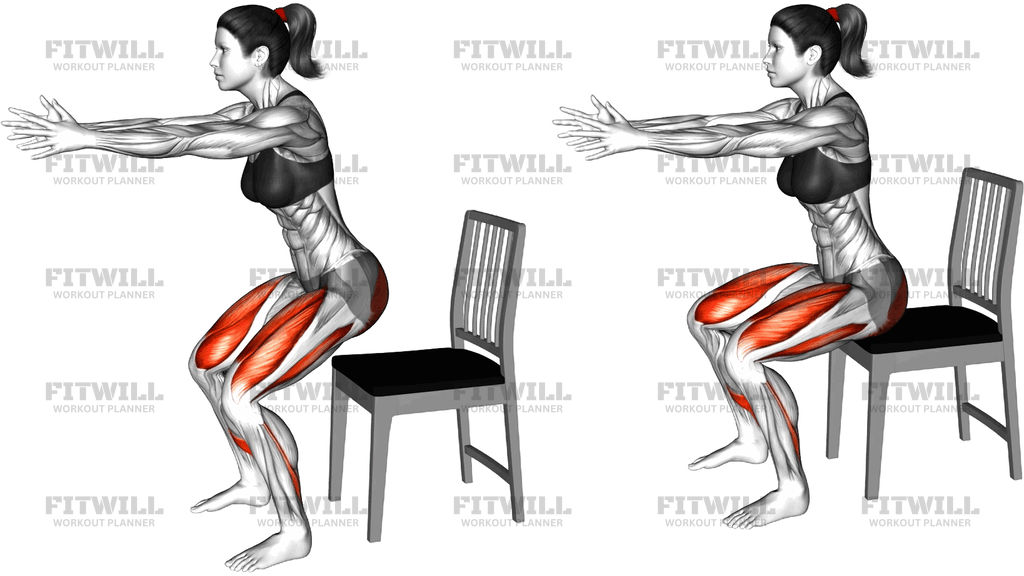
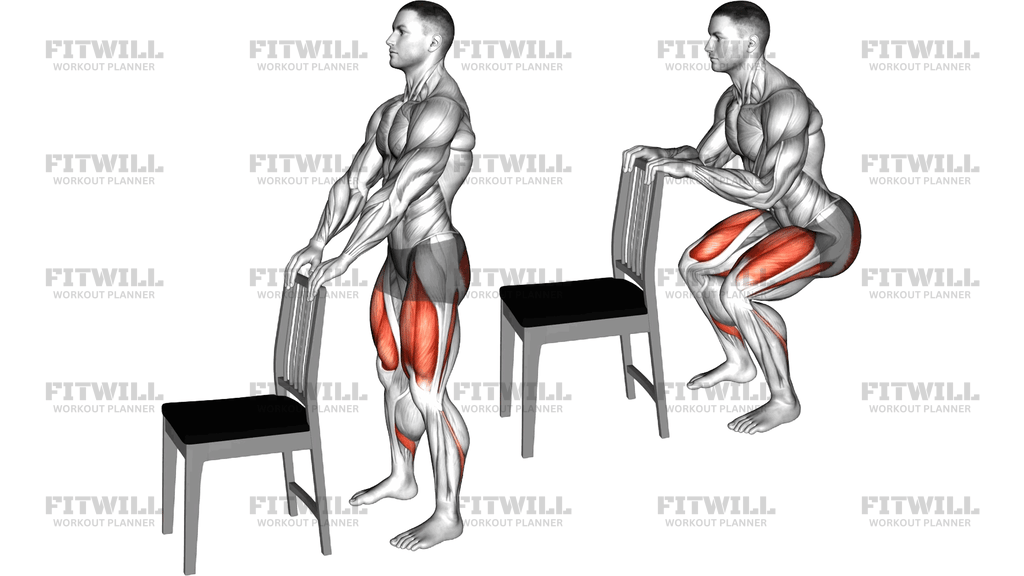
The Chair Squat To Toe Stand combines two fundamental lower-body patterns into one flowing rep: a squat down to a chair or bench, followed by a tall stand that finishes up on the balls of your feet. Instead of stopping at standing height, you push through the floor and lift your heels into a calf raise at the top, then lower back down with control before sitting lightly onto the seat again. This turns a basic sit-to-stand into a full-leg exercise that trains the thighs through the squat and the calves through the toe stand.
This movement is especially useful for people building everyday leg strength. The chair provides a clear, safe depth target and a built-in safety net, which makes it a smart choice for beginners, older adults, or anyone returning from a layoff who is not ready for full free squats. Because the calves get their own dedicated work at the top of every rep, it also covers an area that plain chair squats miss entirely.
The main work comes from the quadriceps during the squat and the stand, with the glutes and hamstrings driving hip extension as you rise. The calf raise at the top loads the gastrocnemius and soleus, while the ankles and smaller stabilizing muscles around the feet and hips work to keep you balanced on the balls of your feet. Holding your hands clasped in front of your chest, as shown, shifts your weight slightly forward and makes it easier to sit back with an upright torso.
Setup matters more than it looks. Choose a stable chair or bench that lets your thighs reach roughly parallel when you sit, and position it behind you so you can reach it by hinging at the hips, not by shuffling your feet. Place your feet about hip-width apart with your weight spread across the whole foot. A chair that is too low forces the knees far forward; one that is too high shortens the squat and reduces the training effect.
To execute well, sit back and down until your glutes lightly touch the seat, keeping your chest tall and knees tracking over your toes. Drive through the floor to stand fully, then immediately press onto the balls of your feet into a firm toe stand, squeezing the calves at the top. Lower your heels with control, take a breath, and begin the next squat without bouncing off the seat.
A few practical points: keep the contact with the chair light so your legs keep working, avoid dropping onto the seat, and stay balanced during the toe stand before lowering. If balance is shaky at first, stand near a wall or counter and keep one hand lightly available for support until your ankles feel steady.
[ Workout Log & Planner ]
Put your next workout in Fitwill
Keep your plan and training log ready when you are.


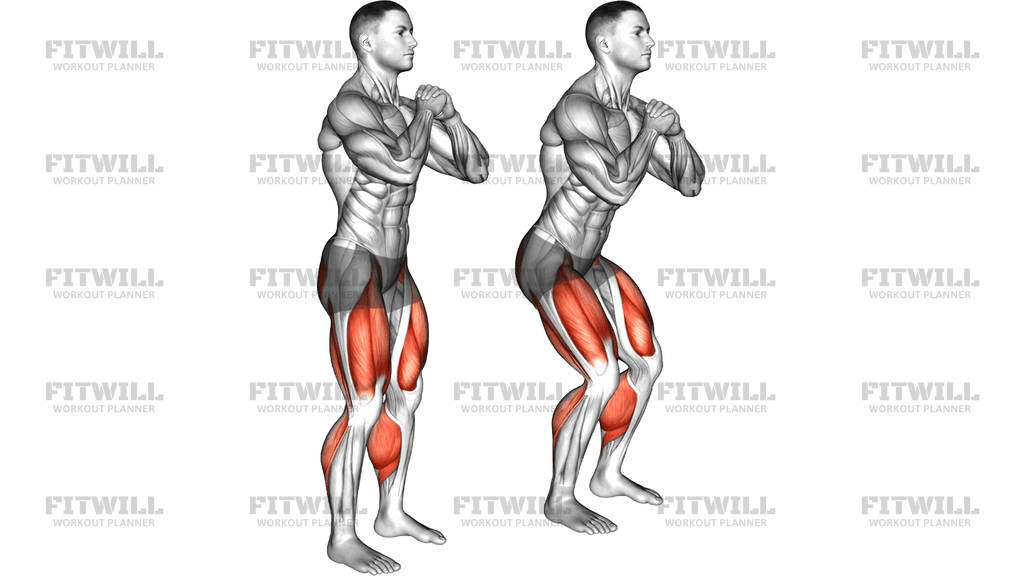
Instructions
- Place a stable chair or bench behind you and stand facing away from it with your feet hip-width apart, toes pointing slightly out.
- Clasp your hands together in front of your chest with elbows bent, which helps counterbalance your torso and keeps you upright.
- Brace your core lightly and shift your weight so your whole foot is in contact with the floor.
- Push your hips back and bend your knees to lower yourself toward the chair, keeping your chest tall and your knees tracking in line with your toes.
- Let your glutes touch the seat lightly without unloading your weight onto it, then pause for a moment.
- Drive through your heels and mid-foot to stand up tall, extending your hips and knees fully.
- At the top of the stand, press through the balls of your feet and lift your heels as high as possible into a toe stand, squeezing your calves.
- Lower your heels back to the floor under control, then immediately begin your next squat.
- Exhale as you stand and rise onto your toes; inhale as you lower your heels and sit back toward the chair.
- Complete your set, then step away from the chair and reset your stance before the next set.
Tips & Tricks
- If your heels lift early during the squat, widen your stance slightly and focus on sitting back into your hips rather than bending straight down at the knees.
- Tapping the seat with weight still in your legs is the goal; if you plop down onto the chair, slow the descent or raise the seat height until you can control the last few inches.
- During the toe stand, keep your ankles stacked over your big and second toes. Letting the ankles roll outward shifts the work away from the calves and strains the ankles.
- Keep the torso angle on the squat consistent with the torso angle on the toe stand. Many people lean far back when rising onto their toes, which throws off balance.
- Do not rush the transition from standing to the toe raise. A short pause at full standing height lets you find balance before the heels leave the floor.
- If the calves cramp at the top, lower them into a slightly shorter range for the first week or two and build up to a full heel lift.
- Point your knees in the same direction as your toes throughout, both on the way down and while pressing up onto the balls of the feet.
- Keep your hands clasped at the chest instead of letting them drift. Reaching the arms forward during the toe stand is a common cause of losing balance backward.
- If your chair slides on the floor, place it against a wall or use a mat underneath so it cannot shift when you touch down.
Frequently Asked Questions
What muscles does the Chair Squat To Toe Stand work?
The quadriceps do most of the work during the squat and stand, supported by the glutes and hamstrings. The heel lift at the top targets the calves, mainly the gastrocnemius and soleus.
Is the Chair Squat To Toe Stand good for beginners?
Yes, it is one of the most beginner-friendly leg exercises because the chair sets the depth and acts as a safety target. Beginners can shorten the toe stand range until their ankle strength and balance improve.
How high should the chair be for this exercise?
Pick a seat height where your thighs are roughly parallel to the floor when seated, typically around knee height. If the chair is too low and your form breaks down, start with something slightly higher and progress down over time.
Should I sit fully onto the chair between reps?
No, the aim is to tap the seat lightly and keep tension in your legs. Fully unloading onto the chair each rep turns it into a rest and reduces the training effect on the thighs and glutes.
Why do my calves shake when I rise onto my toes?
Shaking usually means the calves and ankle stabilizers are working near their current limit, which is common early on. Reduce the height of the heel lift or do fewer reps per set, and the steadiness will come quickly.
Can I do the Chair Squat To Toe Stand without holding onto anything for balance?
Most people can, especially with hands clasped at the chest as a counterbalance. If the toe stand feels unsteady, stand near a wall and keep one hand hovering nearby for occasional support until your balance improves.
How is this different from a regular chair squat?
A regular chair squat ends when you reach standing, while this version adds a calf raise at the top of every rep. That extra phase trains the calves and ankles, which the standard sit-to-stand does not load directly.
How many reps and sets should I do?
Start with 2 to 3 sets of 8 to 12 reps, moving slowly enough to control both the seat tap and the heel lower. Once that feels easy, add reps before adding load such as holding a dumbbell at your chest.
Is it safe for my knees to rise onto my toes at the top?
For most people yes, as long as the heel lift is controlled and the ankles do not roll outward. If you have a history of ankle or Achilles issues, keep the heel lift modest and progress gradually.