Criss Cross Arms Prayer Push
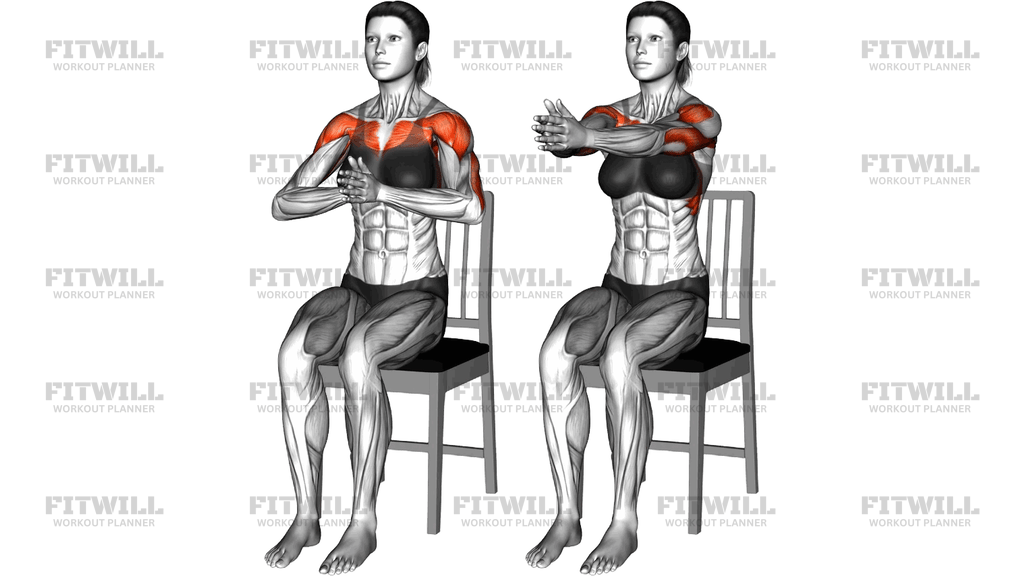
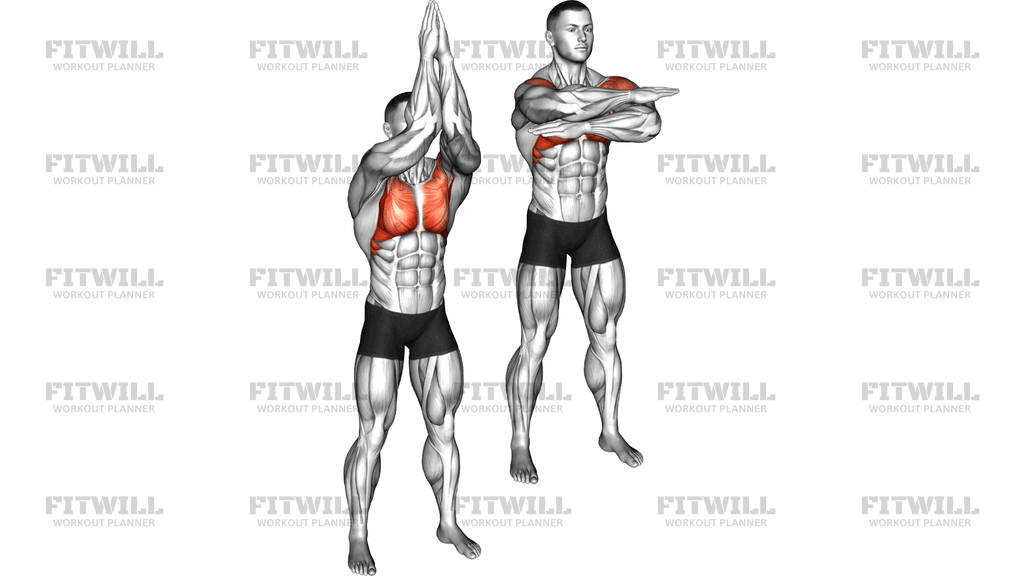
The Criss Cross Arms Prayer Push is a standing, equipment-free chest exercise built entirely on self-generated resistance. You press your palms together and use that pressure as the load, sweeping your arms from a crossed position in front of your chest up into a prayer position overhead. Because you control the force with your own hands, the tension on the pectoral muscles stays constant from start to finish, which is something very few bodyweight chest movements can offer without weights, bands, or a floor setup.
This movement works well for people who train at home, travel often, or want a way to fire up the chest before pressing exercises without touching any equipment. It is also a useful option on rest days or during hotel-gym sessions where benches and dumbbells are not available. The main effort comes from the pectorals squeezing inward, while the front shoulders, triceps, and forearm muscles hold the press together and keep the hands glued to each other throughout the arc.
Setup matters more than it looks. Stand tall with feet about hip-width apart, ribs stacked over the pelvis, and shoulders pulled gently down away from the ears. If you let the lower back arch or the shoulders creep upward, the chest loses tension and the joints take over the work. The whole exercise lives or dies on how firmly you press the palms together, so think of the press as the weight and the arm movement as the rep.
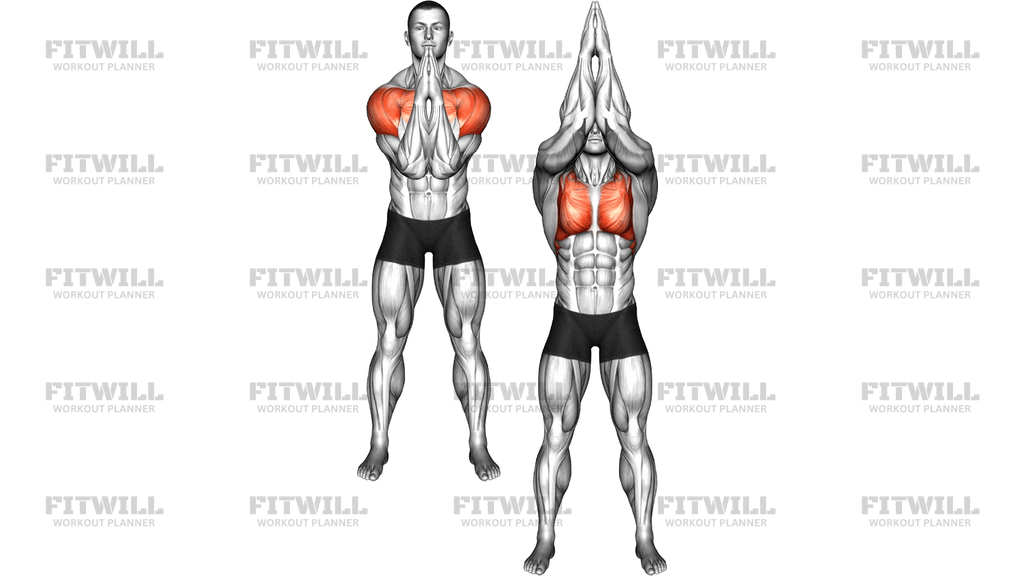
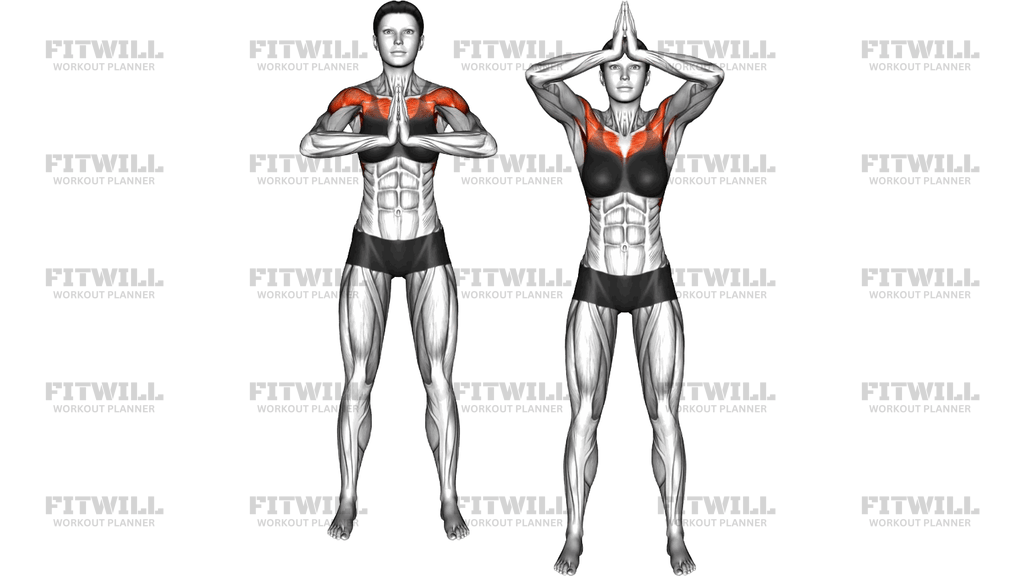
To execute it, bring your forearms across each other in front of your chest so the arms form a criss cross, with palms touching or nearly touching. From there, press the hands hard into each other and, keeping that pressure locked in, sweep the arms upward and slightly forward until they extend overhead in a prayer position. Pause for a beat at the top, then reverse the path with the same amount of force until the arms are crossed again in front of the chest. Every inch of the circle should feel active, not relaxed.
Common use cases include warm-up circuits, high-rep finishers after a pressing day, and low-impact chest work for anyone managing cranky shoulders who does not tolerate heavy loading well. Because the resistance is self-regulated, you can make it as easy or as hard as you want simply by changing how hard you squeeze.
A few practical points keep this safe and effective. Move slowly enough that you could stop the arms at any point in the arc, keep the elbows from flaring wildly behind you, and stop if you feel any pinching at the front of the shoulder. If your wrists complain during the press, soften the angle slightly rather than forcing the hands flat together.
[ Workout Log & Planner ]
Put your next workout in Fitwill
Keep your plan and training log ready when you are.


Instructions
- Stand upright with feet hip-width apart, knees soft but not bent deeply, and weight spread evenly across both feet.
- Bring both arms up in front of your chest and cross your forearms over each other so the arms form an X, with palms facing each other and ready to meet.
- Press your palms firmly together and squeeze the chest as if trying to crush something between your hands.
- Draw the shoulders down and back, brace the abdominals lightly, and keep the ribs from flaring upward.
- Keeping constant palm pressure, sweep the arms upward and slightly forward in an arc until they extend straight overhead in a prayer position, palms still pressed together.
- Hold the overhead prayer position for one to two seconds while continuing to squeeze the chest and keep the elbows long.
- Reverse the arc slowly, lowering the arms back down in front of the chest until the forearms cross again in the criss cross position.
- Exhale as the arms travel upward, inhale as they come back down, and never let the breath hold stiffen your neck.
- Reset your posture between reps: check that the shoulders are down, the spine is tall, and the palm pressure is still firm before starting the next rep.
Tips & Tricks
- The most common mistake is letting palm pressure fade as the arms travel overhead, which turns the exercise into a plain shoulder raise. Squeeze the hands together harder at the top, not less.
- If you feel the front of the shoulder pinching near the top of the arc, angle the arms a few degrees forward instead of pushing them straight back behind the head.
- Keep the elbows long but not locked hard at the top; jamming them into full lockout shifts tension away from the chest and into the joint.
- Do not let the head jut forward as the arms rise. Keep the neck long and eyes forward so the upper traps do not take over.
- Slow the lowering half down deliberately. Most people rush the return from the prayer position, and that is exactly where the chest can keep working hardest.
- If your wrists ache with the palms fully flat together, touch at the base of the palms and fingers instead; the chest squeeze matters more than a perfect palm-to-palm match.
- A slow tempo of about two seconds up, a pause, and two seconds down turns this from a casual arm movement into a genuinely demanding chest contraction.
- Avoid arching the lower back as the arms reach overhead. Squeeze the glutes lightly and keep the ribs stacked over the hips to protect the spine.
- Use this as a warm-up before bench pressing or push-ups; two or three sets of slow reps will pre-activate the chest without fatiguing it.
Frequently Asked Questions
What muscles does the Criss Cross Arms Prayer Push work?
The pectorals are the primary movers, since they generate the inward squeezing force. The front shoulders, triceps, and forearms work isometrically to hold the press and keep the arms stable through the arc.
Is the Criss Cross Arms Prayer Push suitable for beginners?
Yes, it is very beginner-friendly because the resistance comes from your own palm pressure, so you can start with a light squeeze and progress gradually. Beginners should focus on a slow tempo and constant hand contact rather than forcing maximum force.
Why do the arms cross in front of the chest during this exercise?
The criss cross position lengthens the chest slightly and gives the arms a full arc to travel through, so the pectorals stay loaded at both ends of the range. It also forces you to maintain the palm press continuously rather than resting between positions.
How hard should I press my palms together?
Press firmly enough that the squeeze is the hardest part of the exercise, but not so hard that your wrists, elbows, or shoulders hurt. A strong, sustainable effort of maybe seventy to ninety percent of your max squeeze works for most people.
Can I build chest muscle with the Criss Cross Arms Prayer Push alone?
It provides a meaningful contraction and can maintain or modestly develop the chest, especially for beginners, but it is limited as a sole builder because the resistance is self-generated. It works best alongside push-ups, presses, or other loaded chest exercises.
How many reps and sets should I do?
Slow, controlled reps in the range of ten to fifteen per set for two to three sets work well, whether as a warm-up or a finisher. If the squeeze is genuinely hard, fewer reps with a pause at the top will feel plenty.
My shoulders click or pinch when my arms go overhead. What should I do?
Sweep the arms slightly forward rather than pushing them straight up behind the head, and reduce the height of the arc until it feels comfortable. If pinching continues, stop the overhead portion and work only the crossed position squeeze in front of the chest.
What can I use instead if this movement does not suit me?
A standard prayer squeeze with the arms at chest height, palms pressed together in front of the sternum, trains the same squeezing action with less shoulder range required. Resistance band chest flies or push-ups are good alternatives if you want external load.
Should I hold my breath during the squeeze?
No. Breathe steadily throughout, exhaling as the arms rise into the prayer position and inhaling as they return. Holding your breath adds unnecessary tension in the neck and jaw.