Arms Forward And Behind The Neck
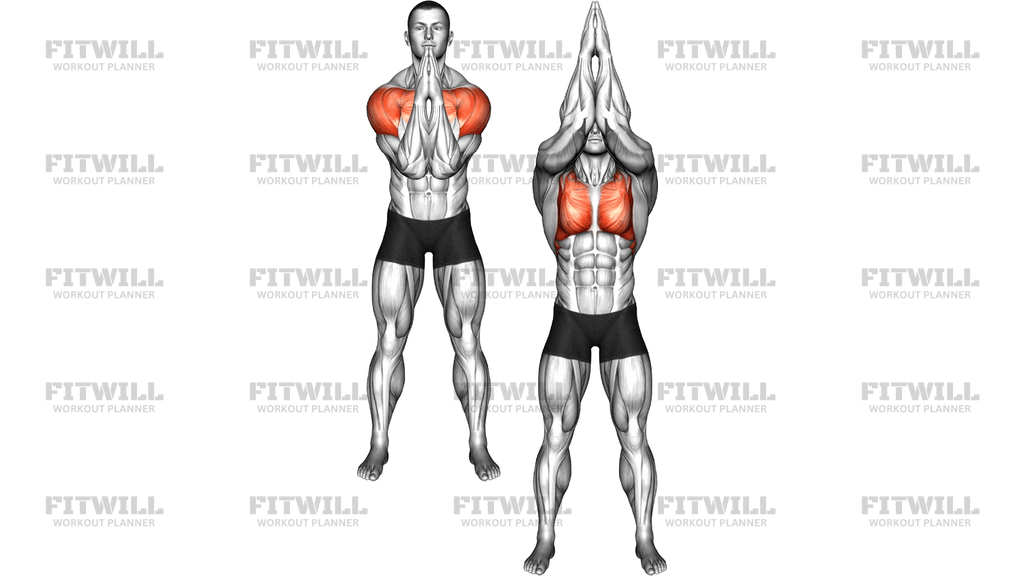
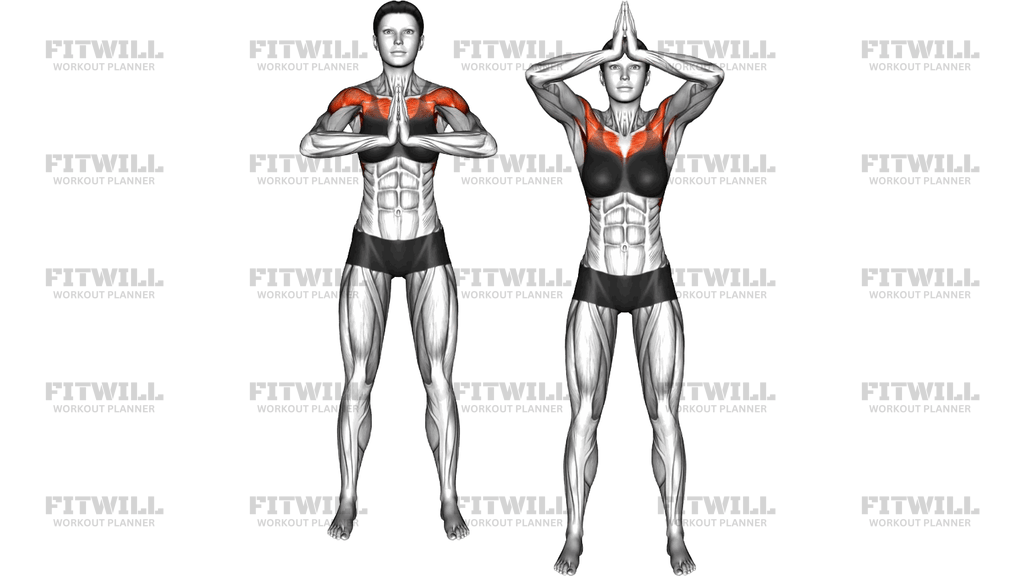
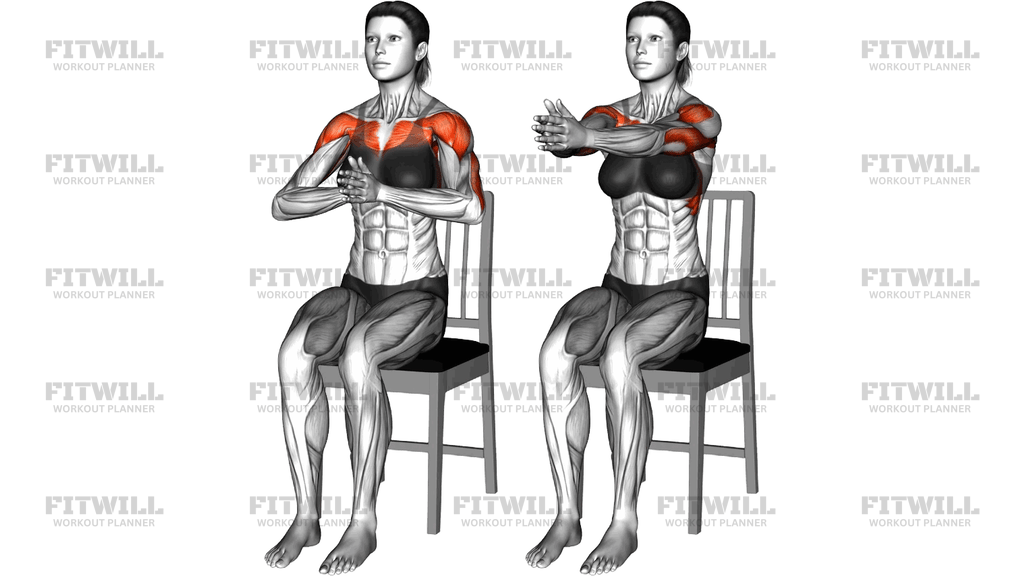
Arms Forward And Behind The Neck is a bodyweight mobility drill that moves the arms from a straight-forward position at chest height into a deep behind-the-head position with the elbows opened wide. The two positions are usually shown side by side because the exercise is a flow between them: you start with the arms extended in front of the body, then sweep them up and back so the hands settle behind the neck while the chest lifts and opens. It requires no equipment and very little space, which makes it easy to slot into a warm-up, a desk break, or the cooldown after an upper-body session.
The main targets are the pectorals and the front of the shoulders. When the elbows travel back behind the neck, the pec major is taken into a lengthened position across both the shoulder joint and the sternum, and the anterior deltoids get a similar stretch. The upper back muscles that retract the shoulder blades work to pull the elbows into position, so you also get a gentle activation of the mid-back and traps as you open up. Because the movement is unloaded, the demand is on range of motion and control rather than strength.
This drill is especially useful for anyone who spends long hours sitting at a desk, driving, or training pressing movements like bench presses and push-ups. Those habits leave the shoulders rounded forward and the chest tissue adaptively short. Moving the arms forward and then behind the neck repeatedly encourages the shoulder blades to retract and depress, counteracting that rounded posture. Swimmers, overhead athletes, and lifters also use it as a pre-training opener before benching, overhead pressing, or pulldowns.
Setup matters more than it looks. Stand tall with the feet about hip-width apart, the ribs stacked over the pelvis, and the abdominal muscles lightly braced so the lower back does not arch to fake extra range. Keep the neck neutral as the hands approach the back of the head; pushing the chin forward or craning the neck is one of the most common faults. The stretch should be felt across the chest and the front of the shoulders, never as a pinch deep in the shoulder joint or at the back of the neck.
To execute it well, move the arms in a smooth arc rather than jerking them back. Reach forward first, let the hands pass beside the head, and only then draw the elbows wide and slightly back. Pause for a breath or two at the deepest comfortable position, then return the arms forward under control. Two to three sets of eight to ten slow repetitions, or three to five held stretches of fifteen to twenty seconds, work well depending on whether you are warming up or cooling down.
The main safety point is to respect shoulder history. Anyone with a previous shoulder dislocation, impingement, or rotator cuff irritation should keep the range shallow and the elbows higher rather than forcing them back. The stretch should feel like a broad opening across the chest; if it turns into sharp pain, back off immediately. Done with that kind of restraint, the drill is a low-risk, high-value way to keep the chest and front shoulders supple.
[ Workout Log & Planner ]
Put your next workout in Fitwill
Keep your plan and training log ready when you are.


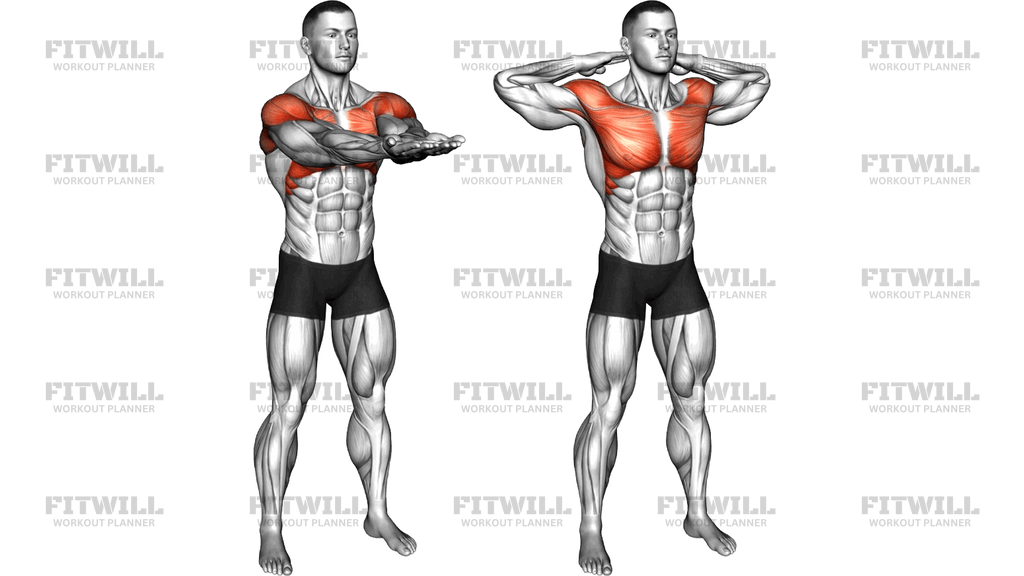
Instructions
- Stand upright with your feet about hip-width apart, weight spread evenly across both feet, and your arms relaxed at your sides.
- Extend both arms straight forward at chest height and interlace your fingers, turning the palms so they face away from you.
- Lightly brace your abdominal muscles and keep your ribs stacked over your pelvis so your lower back stays neutral.
- Sweep the interlaced hands up in an arc toward your head, letting the elbows bend and travel outward as the hands pass ear height.
- Settle the hands behind the back of your neck and open the elbows as wide as comfortable, pointing them out to the sides.
- Draw the elbows slightly back until you feel a broad stretch across your chest and the front of your shoulders, and hold for one or two slow breaths.
- Reverse the arc in a controlled manner, bringing the hands forward past the ears and returning the arms to the straight-ahead starting position.
- Exhale as you sweep the arms back behind the neck, and inhale as you return them forward.
- Repeat for eight to ten smooth repetitions, or hold the back position for fifteen to twenty seconds per repetition if you are stretching rather than warming up.
- Finish the set by lowering the arms to your sides, shaking out the shoulders, and checking that your posture has not drifted before the next rep.
Tips & Tricks
- If your elbows will not open wide, the issue is usually tight chest tissue, not a lack of effort; work at the height where you feel a stretch and widen gradually over weeks.
- Avoid jutting the chin forward to make room for the hands; tuck the chin slightly and keep the back of the neck long instead.
- Do not let the lower back arch and the ribs flare as the elbows go back; that cheats the chest out of the stretch and loads the lumbar spine.
- Keep the shoulders pulled down away from the ears; shrugging as the arms sweep back shifts tension into the upper traps and away from the pecs.
- Think of opening the elbows out to the sides rather than shoving the hands down into the neck; pushing down can compress the cervical spine.
- If you feel a pinching sensation at the front of the shoulder, raise the elbow height slightly or reduce how far back you draw the elbows.
- Warm shoulders stretch better than cold ones; do a few arm circles or a minute of light cardio before using this drill as a deep stretch.
- Move slower than feels necessary; this exercise rewards a smooth arc, and rushing the sweep usually means the range was borrowed from the lower back or neck.
- Pair it with a rowing or face-pull style movement in the same warm-up so the newly opened chest position is reinforced by mid-back strength.
Frequently Asked Questions
What muscles does Arms Forward And Behind The Neck stretch?
It primarily stretches the pectorals across the chest and the anterior deltoids at the front of the shoulders. The mid-back and traps work on the other side of the movement as they pull the shoulder blades back to open the elbows.
Is Arms Forward And Behind The Neck a strength exercise or a stretch?
It is best treated as a stretching and mobility drill. The muscles do contract to control the arm path, but the value comes from the chest and front shoulder range of motion rather than from any loading.
Can beginners do Arms Forward And Behind The Neck?
Yes, and it is a good early drill because the intensity is completely self-regulated. Beginners should simply keep the elbows a little higher and not force them back until the chest gradually loosens.
Should my fingers be interlaced behind the neck?
Interlacing the fingers makes it easier to rest the hands behind the head and keeps the arms tracking together. If interlacing bothers your wrists or finger joints, rest the hands loosely on the back of the head instead.
Why do I feel Arms Forward And Behind The Neck in my neck instead of my chest?
That usually means the shoulders are shrugging or the chin is jutting forward as the hands pass the ears. Drop the shoulder blades down, keep a slightly tucked chin, and open the elbows out to the sides rather than pressing the hands into the neck.
How many reps and how long should I hold the back position?
For a warm-up, use eight to ten flowing repetitions with a one-breath pause at the back. For a flexibility focus, hold the open position for fifteen to twenty seconds and complete three to five repetitions.
When is the best time to use this drill?
It fits well before pressing workouts such as bench press or overhead press, after long periods of sitting, and during a cooldown. Avoid aggressive holds on it immediately before heavy overhead lifting if the stretch temporarily leaves your shoulders feeling loose and less stable.
What can I use if Arms Forward And Behind The Neck hurts my shoulder?
Try a doorway chest stretch with the arm lower than shoulder height, or a lying chest opener on a foam roller, both of which load the shoulder less. If pain persists rather than a simple stretch sensation, get it assessed before continuing.
Do I need to push my elbows as far back as possible?
No, the goal is a broad stretch across the chest, not maximum elbow depth. Chasing depth usually comes from arching the lower back or craning the neck, and it can irritate the front of the shoulder.
Can this exercise help with rounded shoulders from desk work?
It can be a useful part of that process because it repeatedly takes the chest into a lengthened position and encourages the shoulder blades to retract. For lasting change, pair it with mid-back strengthening such as rows rather than relying on stretching alone.