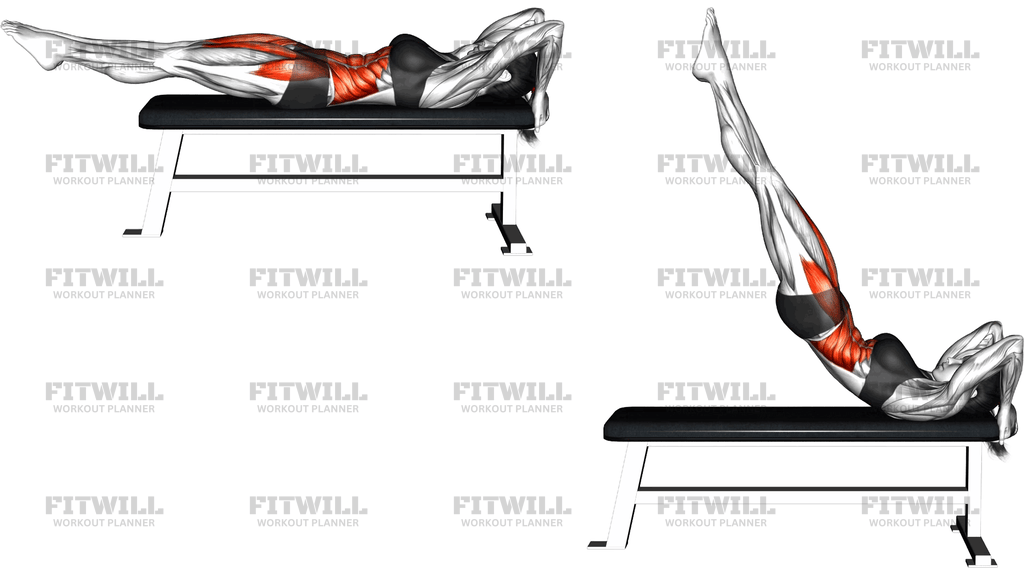
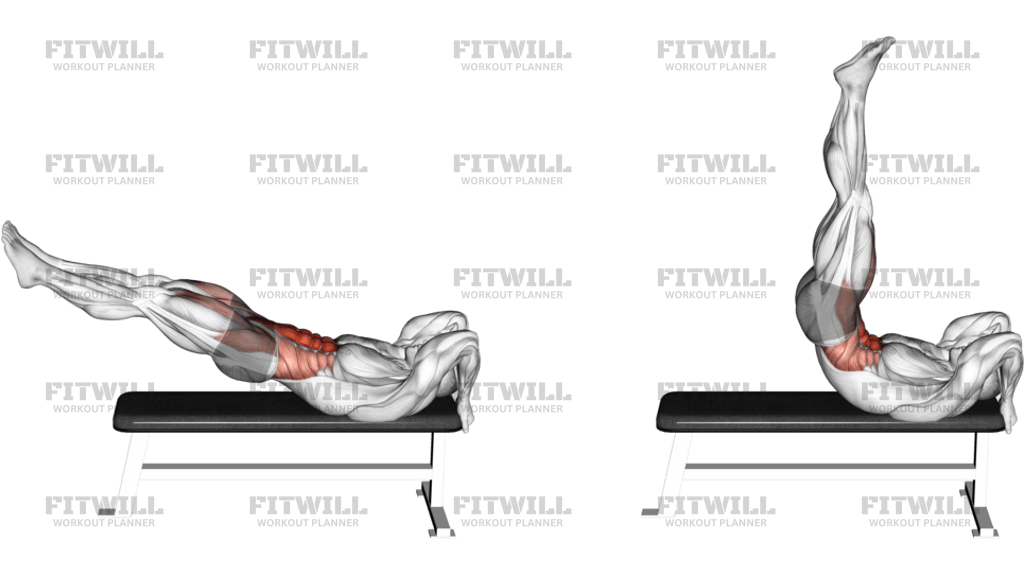
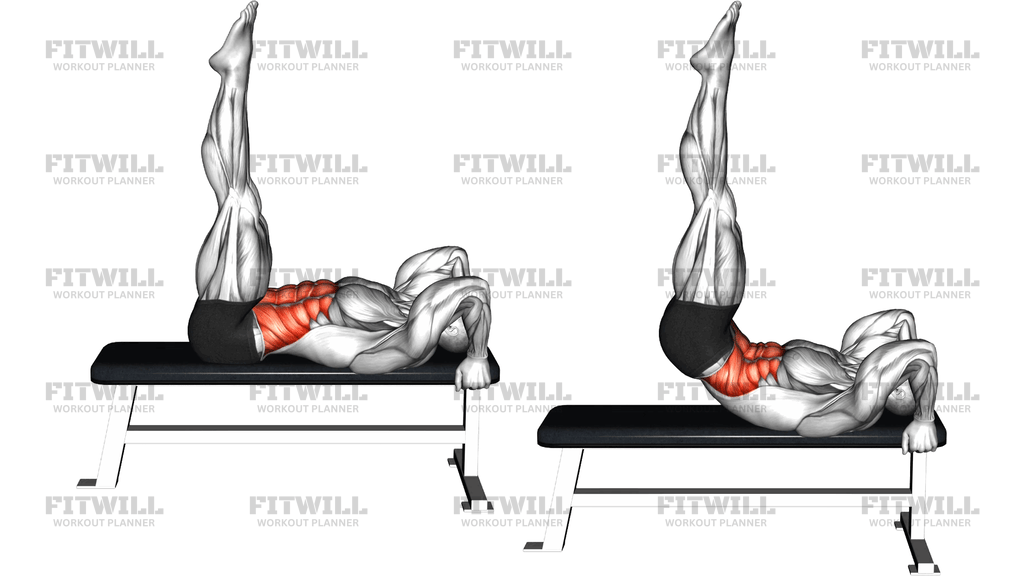
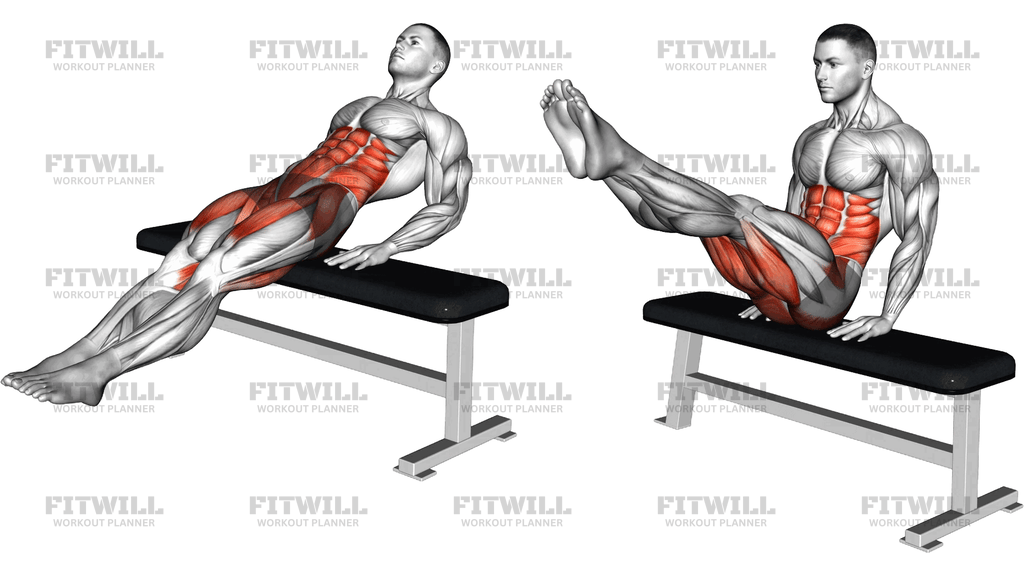
Incline Elbow Plank
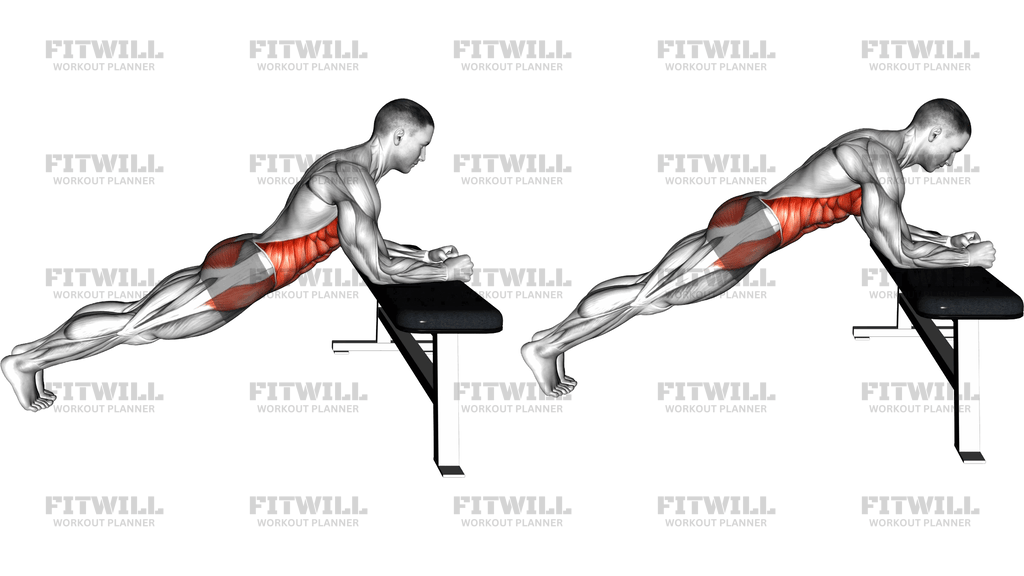
The Incline Elbow Plank is a front plank variation performed with your forearms resting on a flat bench instead of the floor. Because your forearms are elevated, your body sits at an angle with your head higher than your feet, which shifts a portion of your body weight away from your midsection. The result is a core brace that feels noticeably easier than a floor plank while still demanding a rigid, straight line from heels to head.
This position makes it an excellent entry point for people building isometric core strength, anyone coming back from a layoff, or lifters who fatigue quickly on floor planks because of shoulder or lower back limitations. It also works as a teaching tool: the angle lets you hold a clean position long enough to actually feel your abdominals, glutes, and legs working together, which carries over directly to stricter floor planks later.
The main work comes from the abs and deep core holding your ribcage and pelvis in place against gravity. Your glutes and thighs stay active to keep the hips extended and the legs in line, while your shoulders, triceps, and the muscles around the shoulder blades support you on the bench. Because your forearms are planted on a padded surface rather than the floor, the wrists stay completely neutral, which is a relief for anyone with wrist discomfort in straight-arm positions.
Setup details matter more than they might seem. Elbow placement on the bench, bench height, and foot position all change the angle and the load. A taller bench or a wider foot stance makes the hold easier; stepping your feet back and closer together increases the demand. Aim for elbows roughly under your shoulders and a body line that would look the same whether you were standing or lying down.
To execute it well, squeeze your glutes, brace your abdominals as if bracing for a light push to the stomach, and hold that position without letting your hips sag toward the floor or ride up toward the ceiling. Breathe steadily through the hold rather than holding your breath. When the position starts to break — hips dropping, lower back arching, shoulders shrugging — the set is over, even if the clock says you could keep going.
Use the Incline Elbow Plank in warm-ups, as part of a core circuit, or as a regression in a progression that leads toward floor and long-lever planks. Because it is low-skill and easy to adjust, it fits into almost any training level without special equipment beyond a sturdy bench.
[ Workout Log & Planner ]
Put your next workout in Fitwill
Keep your plan and training log ready when you are.


Instructions
- Place a flat bench on a stable, non-slip surface and kneel in front of it so the padded edge is within easy reach.
- Set both forearms on the bench with your elbows roughly shoulder-width apart and stacked under your shoulders; you can clasp your hands loosely or keep them flat on the pad.
- Step one foot back, then the other, until your legs are extended behind you and only the balls of your feet touch the floor.
- Squeeze your glutes and brace your abdominals so your body forms one straight line from your heels through your hips, shoulders, and ears.
- Press your forearms gently into the bench to keep your upper back from rounding and your shoulders from shrugging up toward your ears.
- Look at the floor a short distance ahead of the bench so your neck stays neutral and in line with your spine.
- Hold this position while breathing slowly and steadily through your nose and mouth — do not hold your breath.
- Keep checking that your hips stay level: neither sagging toward the floor nor pushed up into a pike.
- When your form starts to slip, lower your knees to the floor one at a time and rest before the next set.
- Adjust your foot position between sets — stepping farther back makes the hold harder, stepping in makes it easier.
Tips & Tricks
- The most common fault on a bench plank is letting the hips sag as you tire, which arches the lower back. If you feel your stomach dropping toward the floor, end the set rather than pushing through it.
- Do not park your elbows too far down the bench. If they drift toward the far edge, your shoulders end up ahead of your elbows and the hold becomes much harder on the shoulder joints — re-center them under your shoulders.
- If your feet slide on a smooth floor, place them against a wall or use shoes with grip; slipping feet quietly turn a plank into a stretching contest.
- Squeeze your glutes deliberately for the first few seconds of each hold. This locks the pelvis in a neutral position and makes sagging much less likely.
- A taller bench or box reduces the load, and a lower bench increases it. If a 30-second hold feels easy, switch to a lower surface before adding time.
- Avoid pushing your chest up and letting your ribs flare. Think about pulling your lower ribs toward your front pockets to keep the brace honest.
- If your shoulders shrug and creep toward your ears, actively press your forearms down and broaden your upper back.
- Quality beats duration here: three sets of 20 seconds with a rigid line beat one set of 90 seconds with sagging hips.
- Keep your hands unclenched or loosely clasped. White-knuckling your hands tenses your neck and shoulders without helping the core brace.
Frequently Asked Questions
What muscles does the Incline Elbow Plank work?
The primary work comes from the abs and deep core stabilizing your trunk. Your glutes and thighs hold the hip and leg position, while your shoulders, triceps, and upper back support you on the bench.
How is the Incline Elbow Plank different from a regular floor plank?
With your forearms on a bench, your body is angled with the head higher than the feet, so less of your body weight loads the midsection. It is easier than a floor plank and easier to hold with clean form.
Is the Incline Elbow Plank good for beginners?
Yes, it is one of the best starting points for isometric core training. The bench angle lets beginners build brace strength and learn proper hip position before progressing to floor planks.
How high should the bench be for the Incline Elbow Plank?
A standard flat bench works well for most people. A taller surface makes the hold easier and a lower one makes it harder, so you can scale the difficulty by choosing the height that lets you hold a straight line with good form.
How long should I hold the Incline Elbow Plank?
Start with sets of 15 to 30 seconds and stop as soon as your hips sag or your lower back arches. Add time or lower the bench only when you can finish each set without form breakdown.
Why do my lower back and hips ache during the Incline Elbow Plank?
That usually means your hips are sagging and your lower back is arching into the support role instead of your abs. Squeeze your glutes harder, tuck your pelvis slightly, and shorten your holds until the discomfort goes away.
Should my feet be close together or apart on the Incline Elbow Plank?
A slightly wider foot stance gives you more stability and makes the hold easier, while bringing the feet together increases the demand on your core. Start wider and narrow your stance as you get stronger.
What can I use instead of a bench for the Incline Elbow Plank?
Any stable elevated surface around the same height works, such as a sturdy box, a low table, or a Smith machine bar set at the right height. Avoid soft or wheeled surfaces that can shift under your forearms.
How do I progress from the Incline Elbow Plank to a floor plank?
Lower the surface height over time as your holds get stronger, then move to a forearm plank on the floor. Keep the same standards — straight line, glutes engaged, no sagging — at every step of the progression.