Lying Flat Hip Raise
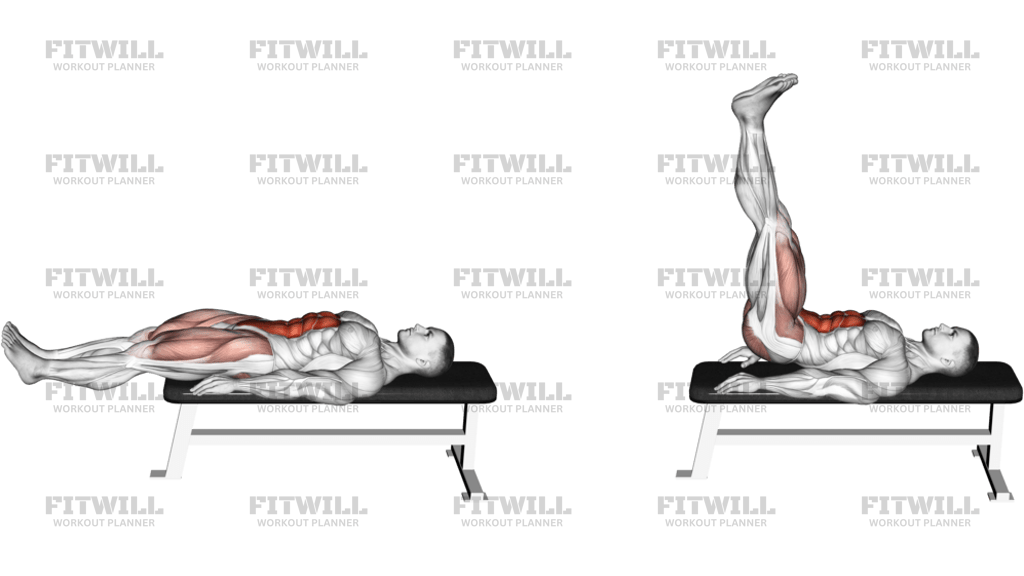
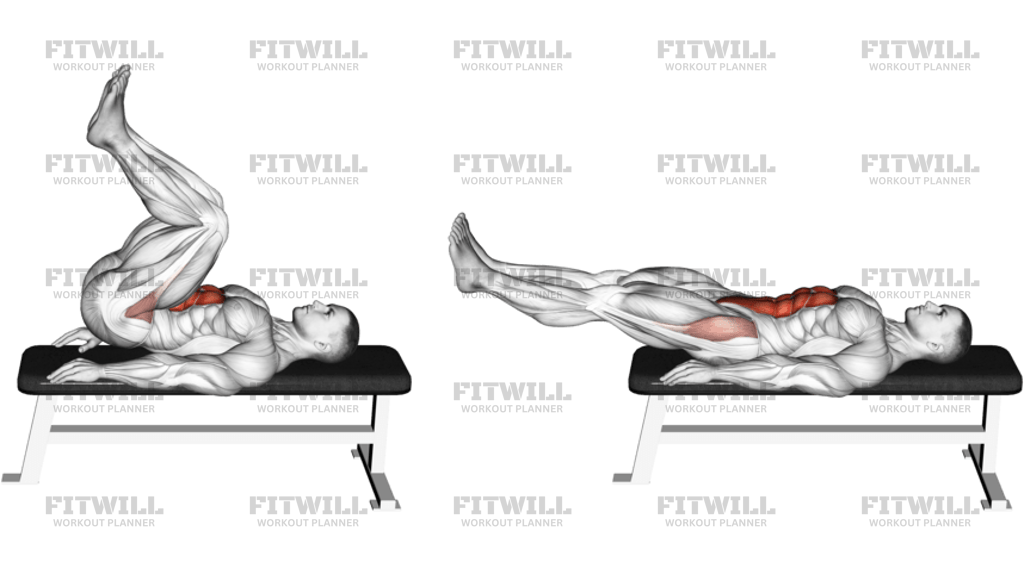
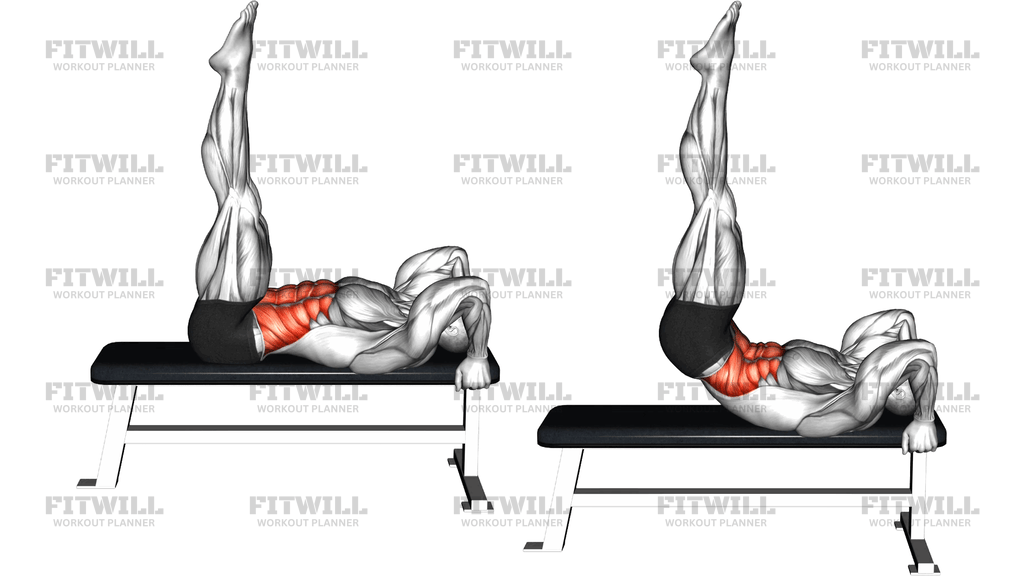
The Lying Flat Hip Raise is a bodyweight core exercise performed on a flat bench. You lie on your back with your head and shoulders supported, grip the edge of the bench behind or beside your head for stability, and point your legs straight up toward the ceiling. From there, you lift your hips and lower back off the bench by curling the pelvis upward, then lower back down with control. The highlighted work happens in the abdominal wall, particularly the lower portion of the rectus abdominis, which is responsible for pulling the pelvis toward the ribcage.
This movement is a step up from lying leg raises on the floor. Because your legs start in a vertical position, you begin with the lower abs already under tension, and lifting the hips adds the pelvic curl that floor versions often miss. That makes it a good choice for anyone who has mastered basic leg raises and wants to challenge the abs through a fuller range without adding external load. It is commonly used in abdominal finishers, calisthenics routines, and programs aimed at building control through the trunk.
Setup matters more than most people expect. Your grip on the bench is what keeps your torso anchored while the pelvis moves, so a loose grip usually leads to sliding or jerking. Keeping the legs stacked and vertical is equally important. If the legs drift toward your head or swing for momentum, the abs stop doing the work and the hip flexors take over, which changes the entire feel of the exercise.
Execution should feel like a curl, not a heave. Think about rolling the tailbone up toward the ceiling, lifting the hips only as high as your spine can flex, then reversing the motion slowly so the lower back touches down one segment at a time. The legs stay perpendicular to the floor throughout; they are the lever, not the mover.
Because the hip raise is unloaded, it is generally joint-friendly, but the lumbar spine does flex under tension. Move smoothly, avoid bouncing out of the bottom, and keep the range honest. If your lower back arches off the bench or your hips drop sharply on the way down, reduce the range or bend the knees slightly until your control improves.
[ Workout Log & Planner ]
Put your next workout in Fitwill
Keep your plan and training log ready when you are.


Instructions
- Lie flat on your back on a horizontal bench with your head and upper back fully supported and your body centered on the pad.
- Reach back and grip the edge of the bench firmly behind or beside your head so your torso stays anchored throughout the set.
- Extend both legs straight up so they are perpendicular to the floor, knees together or nearly so, and point your feet toward the ceiling.
- Brace your abdominal wall and press your lower back lightly into the bench before starting the rep.
- Exhale and curl your pelvis upward, lifting your hips and tailbone off the bench while your legs continue to point straight up.
- Pause briefly at the top with your hips fully elevated and your lower spine flexed, feeling the abs shorten.
- Inhale as you lower your hips in a slow, controlled arc so the lower back and then the hips return to the bench one section at a time.
- Stop when your hips are resting back on the bench but your legs remain vertical, keeping tension in the abs rather than letting the legs drift or swing.
- Reset your grip and brace, then begin the next repetition from the vertical-leg position.
Tips & Tricks
- The most common mistake is swinging the legs toward the face to throw the hips up. If momentum is doing the lifting, slow the leg position down and think of the pelvis as the only thing that moves.
- Do not let the legs tilt past vertical during the raise. The moment your feet drift toward your head, the hip flexors dominate and the abdominal curl gets shortened.
- Chin tucked toward the chest and a firm two-handed grip on the bench edge keep you from sliding. If the bench is slippery or your hands sweat, reposition your grip every few reps rather than letting the torso creep.
- Keep the range equal on both sides. If one hip lifts higher than the other, you are rotating through the trunk; square the pelvis before each rep.
- Bending the knees slightly is a legitimate regression. It shortens the lever without changing the pelvic curl, so use it if the straight-leg version pulls your lower back off the pad too aggressively.
- Breathe out on the way up, not before. Holding your breath through the curl is common, but exhaling as the hips rise actually helps the abs shorten.
- Control the descent for at least two to three seconds. Most of the muscle-building value in this movement comes from the lowering phase, and dropping fast turns it into a bounce.
- If you feel the work in your hip crease instead of your abs, reduce the range and focus purely on tilting the tailbone up a few inches with intent.
- Keep your head from pressing hard into the bench. Pushing with the neck or shrugging into the grip shifts tension away from the midsection.
Frequently Asked Questions
What muscles does the Lying Flat Hip Raise work?
The primary muscle is the rectus abdominis, with the greatest demand on its lower portion because the pelvis curls toward the ribcage. The hip flexors assist by holding the legs vertical, and the obliques work to keep the pelvis level.
How is the Lying Flat Hip Raise different from a lying leg raise on the floor?
On a bench, your legs start fully vertical and you lift the hips off the surface, adding a pelvic curl that a floor leg raise usually lacks. This extends the range of the abdominal muscles and removes floor contact as a stopping point.
Why do I grip the bench during the Lying Flat Hip Raise?
The grip anchors your head, shoulders, and torso while the pelvis moves underneath you. Without it, your body tends to slide toward the head of the bench or jerk upward as the hips lift.
Should my legs stay straight the whole time?
Straight legs make the exercise harder because they lengthen the lever, but a slight knee bend is fine if your lower back strains or your hips cannot lift cleanly. Keep the bend consistent through every rep so the difficulty stays even.
Can beginners do the Lying Flat Hip Raise?
Beginners can, but many get more out of bent-knee floor reverse crunches first. Once you can lift the hips off the floor with control and no lower-back arching, move to the bench version with a partial range and build up.
Why do I feel this in my hip flexors instead of my abs?
The hip flexors hold the legs upright, so some involvement is normal. If they dominate completely, your legs are probably swinging past vertical or you are lifting with the thighs instead of curling the pelvis; shorten the range and focus on the tailbone lifting.
Is it safe for the lower back?
For most people with healthy spines, yes, as long as the movement is slow and the range matches your control. The lumbar spine flexes under load during the raise, so avoid bouncing out of the bottom and stop short of the range where your back arches or strains.
How many reps should I do?
Because the exercise is bodyweight, aim for controlled sets of roughly 8 to 15 reps. Once you can complete 15 smooth reps with a full pause at the top, you can slow the lowering phase further or add difficulty rather than chasing high rep counts.
What can I use instead of a flat bench?
A sturdy exercise mat on the floor works for a reduced version where you lift the hips off the ground, or you can lie on a bench and hold a stable object behind your head. Decline benches set flat also work, though anything with a wide edge and a non-slip surface is what you need for the grip.
How high should my hips go at the top?
Lift until your tailbone and lower back are off the bench and your spine is curled, not until your feet move toward your head. If your feet start drifting backward over your face, you have gone into momentum rather than abdominal flexion.