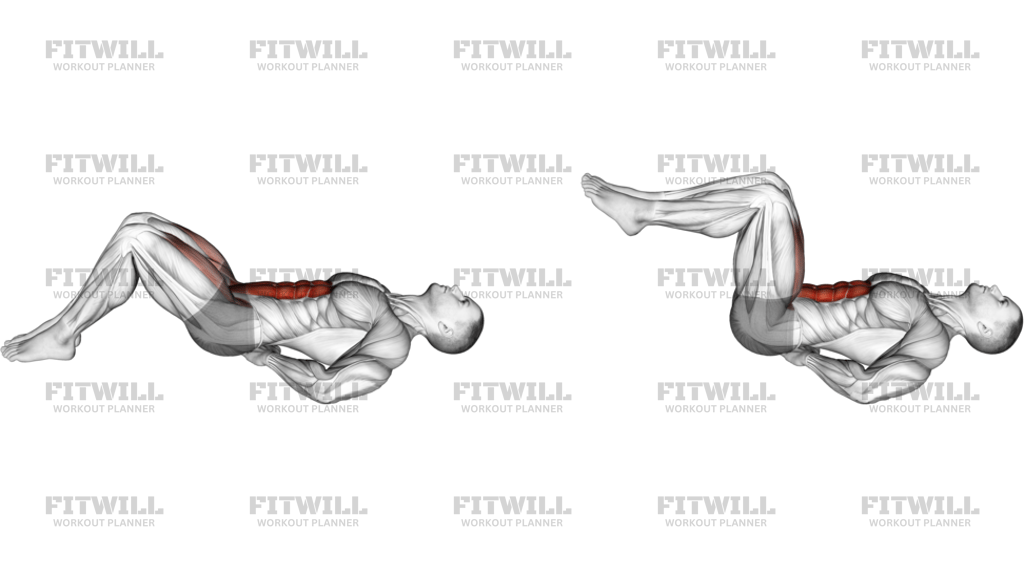
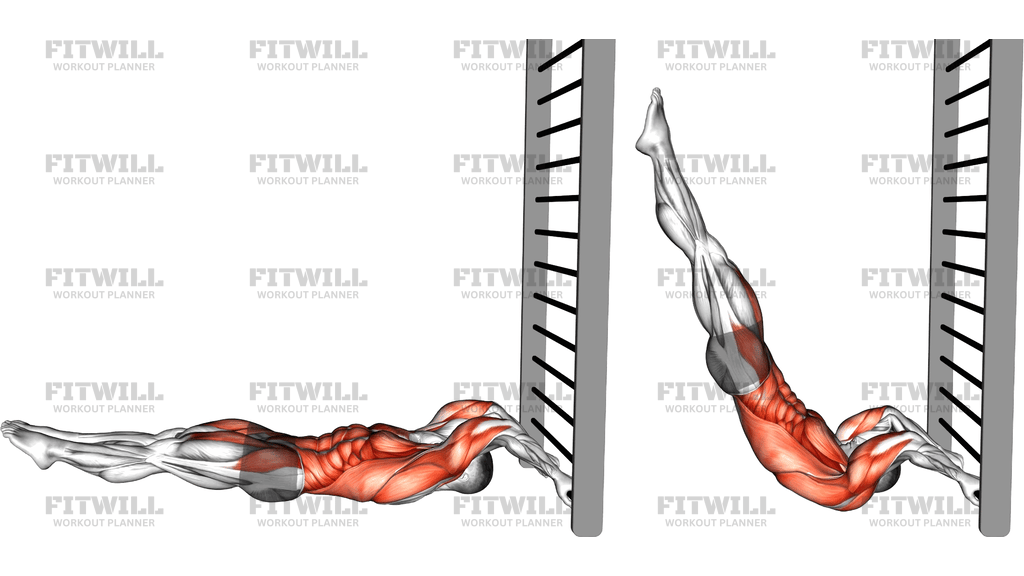
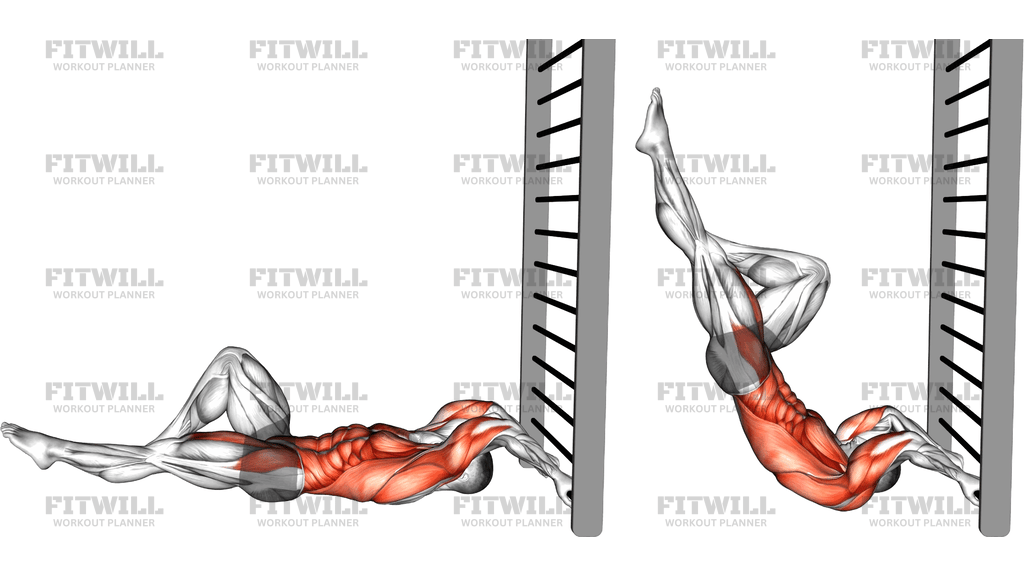
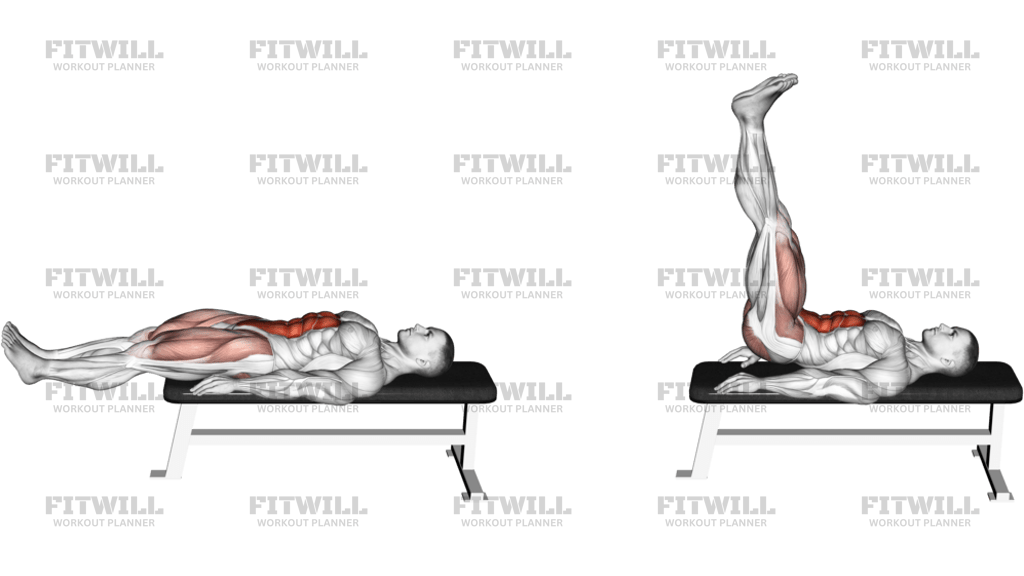
Leg Raise Dragon Flag
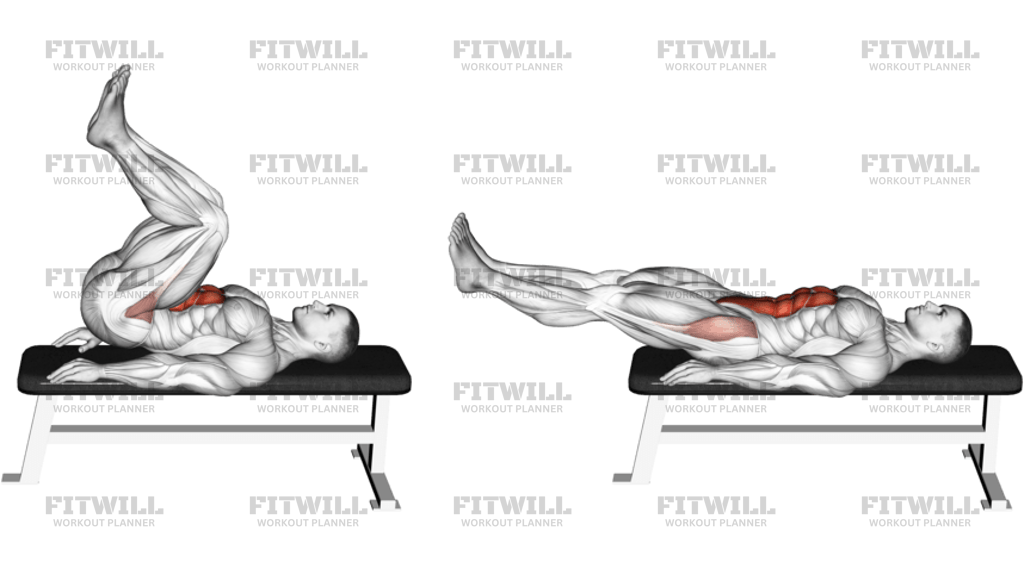
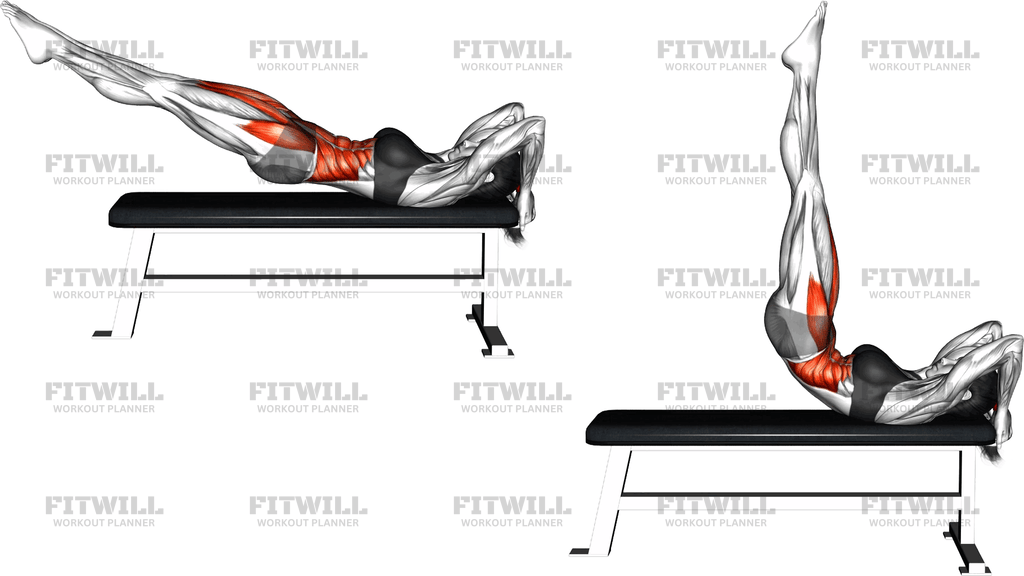
The Leg Raise Dragon Flag is an advanced core movement performed on a flat bench. You lie on your back along the bench, grip the edge of the bench behind your head, and raise your straight legs and hips up until your body is folded at roughly ninety degrees, with your feet pointing straight at the ceiling. The final position resembles the top of a dragon flag, which is where the exercise gets its name, but the torso stays supported on the bench throughout, making it more accessible than the full gymnastic version.
This exercise is built for the lower abdominals. Because your legs stay extended the entire time, the lever arm is long, and the lower portion of the rectus abdominis has to work hard both to lift the pelvis and to control the descent. The hip flexors assist strongly, the deep core stabilizes the spine against the bench, and the lats and arms work isometrically as you pull the bench toward you with your grip.
Setup matters more here than in most ab drills. Your head and shoulders should rest on the bench with your hands clamped on the edge directly beside your ears, because that grip is your only anchor once your hips leave the pad. Your upper back should stay planted and your neck relaxed; if your shoulders slide or your grip slips, the whole movement falls apart and your lower back takes stress it does not need.
Execution comes down to curling rather than swinging. Drive your knees and feet up and back toward your head, letting your pelvis roll up so your hips and lower back peel off the bench in sequence. At the top, your legs should be vertical and your weight should sit on your shoulders and upper back. Then reverse the path slowly, lowering one vertebra at a time until your legs hang just above or slightly past level with the bench before starting the next rep.
This movement suits intermediate and advanced trainees who already own strict lying leg raises and controlled reverse crunches. Calisthenics practitioners use it as a stepping stone toward the full dragon flag, while lifters use it to build the kind of lower-ab and pelvic-control strength that carries over to hanging leg raises, levers, and heavy compound work. It also demands solid shoulder and lat engagement, which is why grip and upper-body endurance often give out before the abs do.
Two practical safety points. First, never kick or use momentum to reach the top; the long lever only rewards controlled tempo. Second, keep the range honest at first — lowering to just above bench level with a smooth return builds more usable strength than crashing the legs down and jerking them back up.
[ Workout Log & Planner ]
Put your next workout in Fitwill
Keep your plan and training log ready when you are.


Instructions
- Lie face-up on a flat bench with your head near one end, knees bent slightly at first if needed, and your entire torso supported by the pad.
- Reach overhead and grip the edges of the bench firmly on both sides of your head, elbows pointing up, and press your upper back and shoulders into the bench.
- Extend your legs straight and lift them to slightly above bench level so your body forms a long, rigid line from shoulders to feet.
- Brace your core as if preparing for a light punch, exhale, and keep that tension before any movement begins.
- Pull with your arms while curling your pelvis up toward your ribs, letting your hips and lower back roll off the bench as your feet travel up and back in an arc.
- Continue until your legs are vertical and stacked directly over your shoulders, with your weight resting on your upper back and shoulders.
- Pause briefly at the top, then reverse the path under control, unrolling your spine one section at a time until your legs hover just above bench level.
- Inhale on the way down and exhale as you curl up, keeping your breathing steady rather than holding your breath through the rep.
- Reset your brace and grip tension at the bottom of each rep before starting the next one.
- Stop the set when your lower back starts to arch off the pad or your legs drop with speed rather than control.
Tips & Tricks
- The most common failure point is momentum: kicking the legs up turns a lower-ab exercise into a hip-flexor swing. Slow the ascent down until every inch of the curl comes from your pelvis rolling back.
- If your shoulders creep down the bench during the set, you are losing your anchor. Re-grip and pull the bench toward you slightly — that lat tension keeps your torso pinned.
- Shorten the lever to progress properly. Tuck your knees toward your chest and perform the same pelvic curl before attempting the fully extended version.
- Do not let your lower back slap down onto the bench at the bottom. The descent should be at least two to three seconds; if it is faster, the set is over.
- Point your toes or keep feet neutral, but keep the knees locked. Any knee bend at full extension shortens the lever and hides weak points in your control.
- Keep your neck neutral and eyes toward the ceiling. Craning your chin toward your chest shifts tension away from the abs and strains the neck, especially as fatigue sets in.
- Place a mat under the bench or work near a rack if your grip is the weak link. Losing the bench mid-rep with straight legs overhead is the one position you want to avoid entirely.
- Film yourself from the side. The top position should show legs vertical over the shoulders — most people stop short and never actually reach the dragon flag position.
- Program this early in a session while fresh. As a high-skill core movement, it loses quality fast under fatigue and rewards full recovery between sets.
Frequently Asked Questions
Which muscles does the Leg Raise Dragon Flag work hardest?
The lower abs take the primary load, since they must curl the pelvis against a long leg lever. The hip flexors assist the leg lift, the deep core stabilizes the spine, and the lats and forearms work statically through your grip on the bench.
How is the Leg Raise Dragon Flag different from a regular lying leg raise on a bench?
A standard lying leg raise stops when the legs reach vertical with the hips still on the bench. The Leg Raise Dragon Flag continues past that point, curling the hips and lower back off the pad until your weight rests on your shoulders and upper back.
Is the Leg Raise Dragon Flag suitable for beginners?
Not as a first core exercise. Build a base with lying leg raises and reverse crunches first, then start with bent knees to shorten the lever. Once you can control ten strict reps that way, progress to the extended version.
Why do I need to grip the bench behind my head?
Your hands are the only anchor once your hips leave the pad. Grip the edges beside your head and pull the bench toward you slightly so your shoulders stay planted and the curl comes from your trunk, not from sliding down the bench.
My lower back hurts when my legs drop below the bench — should I push through it?
No. That usually means your abs have stopped controlling the pelvis and the spine is taking the load. Shorten the range so your legs stop just above bench level, and only progress the depth when the descent stays smooth and controlled.
How does the Leg Raise Dragon Flag help me get a full dragon flag?
It trains the same overhead anchor, straight-leg lever, and lower-ab control, but with your torso supported on the bench instead of balanced on your shoulders. Once the bench version is solid, the main new demand of the full dragon flag is core tension, not unfamiliar mechanics.
Should my legs stay completely straight throughout the movement?
In the full version, yes — locked knees keep the lever consistent and the tension on the abs. If your knees bend, the exercise becomes easier in the wrong places, so use a bent-knee variation deliberately rather than letting the legs drift.
What can I use if I do not have a bench with a solid edge to grip?
A decline bench works well because the angled pad and foot pegs give you purchase, or you can lie on the floor and hold a heavy dumbbell or rack upright behind your head. The key is a fixed anchor you can grip beside your ears.
How many reps and sets should I do?
Treat it like a strength skill: three to five sets of five to eight slow, strict reps with full rest. Quality matters far more than volume here, and one clean set is worth more than three sloppy ones.
How long should each rep take?
Aim for roughly one second to curl up, a short pause at vertical, and two to three seconds on the way down. If the descent speeds up, end the set — fast lowering is where form and safety break down.