Adductors Stretch Coronal Plane
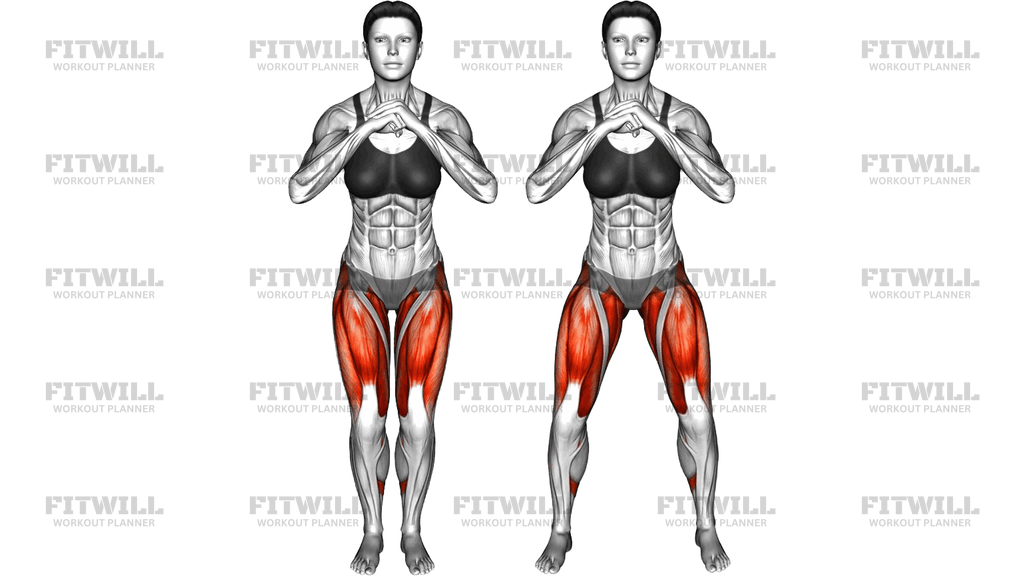
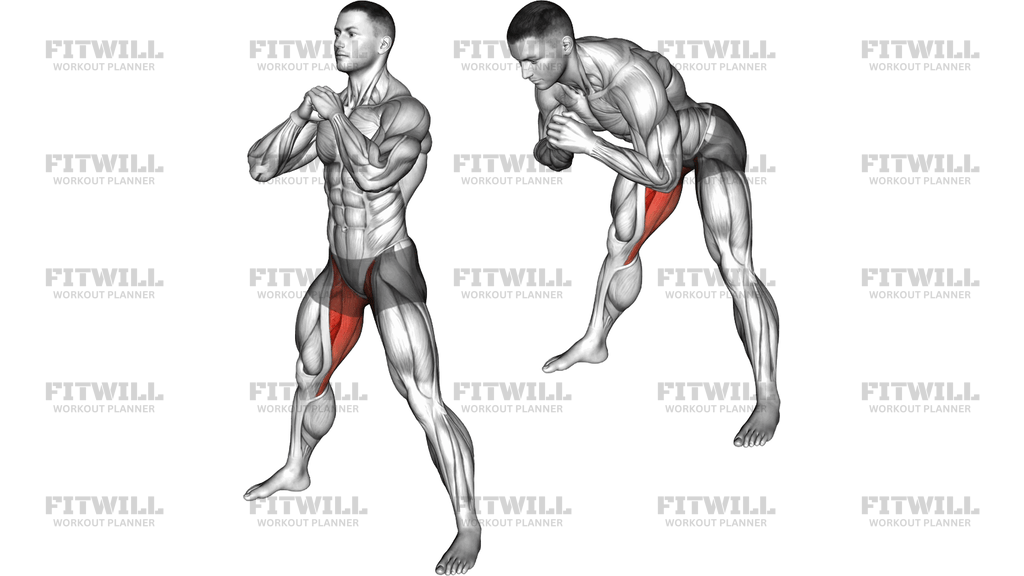
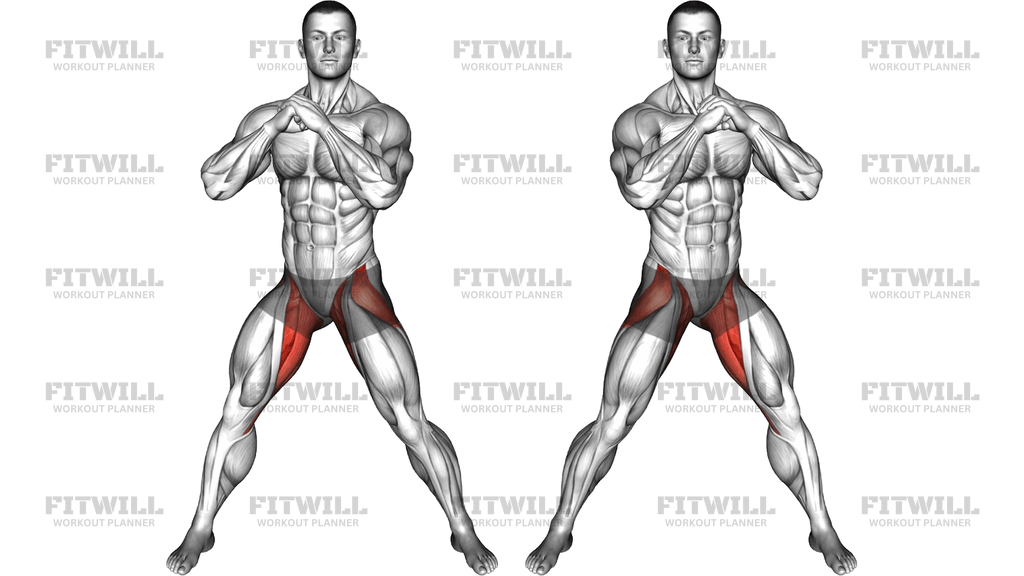
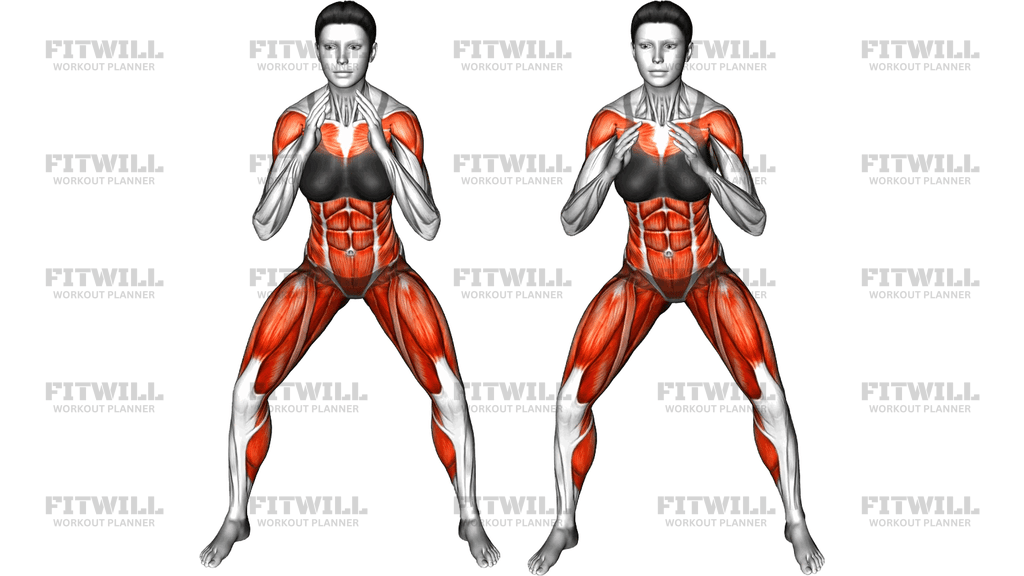
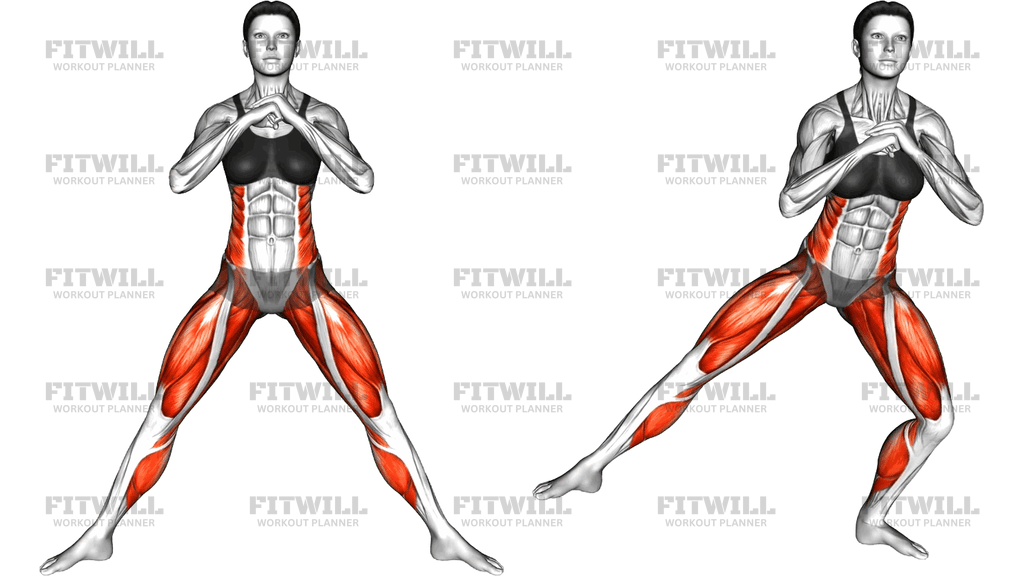
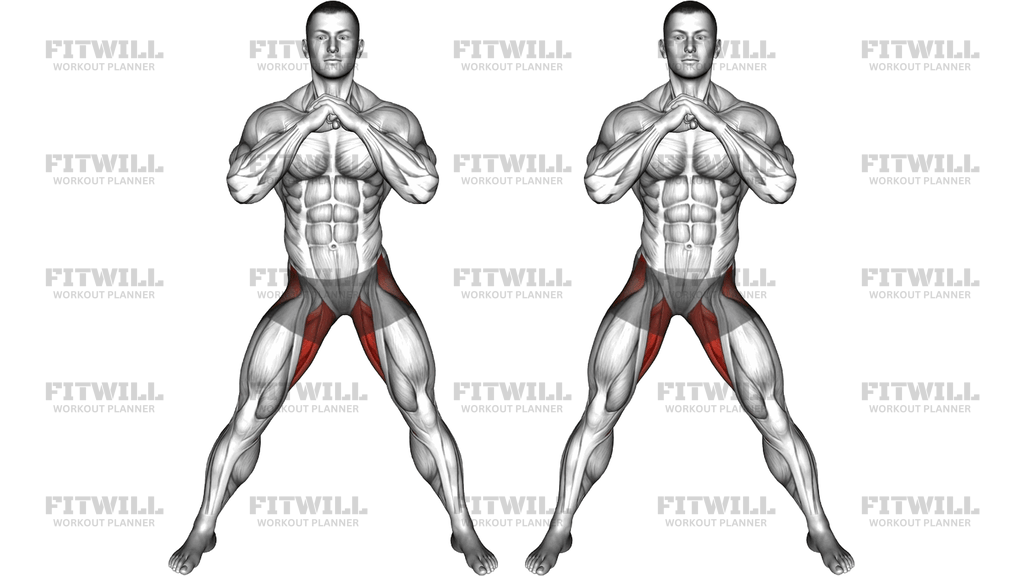
The Adductors Stretch Coronal Plane is a standing flexibility drill that targets the inner thigh muscles by moving your hips side to side through the frontal plane of the body. You set up with a stance much wider than shoulder width, clasp your hands together in front of your chest for balance, and then shift your pelvis laterally from one leg to the other. As your weight travels over one foot, the adductor group on the opposite, straightening leg is lengthened and placed under a steady stretch.
This movement is useful for almost anyone who spends long hours sitting, since shortened adductors are one of the most common restrictions in the hip area. It is also a practical warm-up or cool-down choice for lifters who squat deep, athletes who change direction quickly, and practitioners of martial arts or sports that demand a wide range of hip abduction. Because you stay on your feet, it is easy to slot into a dynamic warm-up before lower body training.
The primary muscles worked are the adductors on the inner thigh, including the adductor longus and adductor magnus. The hip stabilizers, glutes, and quadriceps of the bent support leg work isometrically to control the side-to-side transfer of weight. Unlike a static floor straddle, this version keeps you active and lets you modulate the stretch intensity simply by how far you shift.
Setup matters more than most people expect. The width of your stance determines how much length the adductors have available, and your foot angle decides whether the stretch hits the inner thigh cleanly or spills into the knee. Toes should point forward or only slightly outward, knees track over the toes, and the torso stays tall and upright rather than folding forward.
To perform the stretch well, shift your hips horizontally to one side until you feel a firm but comfortable pull along the inner thigh of the straight leg. Pause briefly at the end range, then transfer smoothly to the other side. The motion should feel like a pendulum traveling in a straight line across your body, which is exactly the coronal, or side-to-side, plane the name refers to.
In practice, this stretch works well as a pre-squat mobility primer, a recovery tool after heavy leg days, and a gentle daily reset for stiff hips. Keep the load on your muscles rather than your knee joints, breathe steadily throughout, and never force the range. A moderate, repeatable stretch performed consistently will do far more for your hip mobility than an aggressive pull done occasionally.
[ Workout Log & Planner ]
Put your next workout in Fitwill
Keep your plan and training log ready when you are.


Instructions
- Stand with your feet roughly two to three shoulder widths apart, toes pointing forward or turned out only slightly, and keep both legs straight to start.
- Clasp your hands together in front of your chest with your elbows pointing out to the sides; this gives you a counterbalance for the lateral weight shifts.
- Brace your core lightly and keep your chest lifted and torso upright, avoiding any forward lean as you begin.
- Shift your hips directly out to the right side in the frontal plane, letting the right knee bend slightly while the left leg stays straight.
- Continue shifting until you feel a firm, comfortable pull along the inner thigh of the straight left leg, and hold that end position for one to two seconds.
- Transfer your weight smoothly across the middle to the left side, bending the left knee and stretching the straight right leg's adductors.
- Alternate sides in a slow, pendulum-like rhythm, keeping the movement in a straight side-to-side line rather than a circular one.
- Breathe normally, exhaling as you shift into each stretch and inhaling as you change direction.
- Complete 8 to 12 controlled shifts per side, then step your feet back together and shake out the legs before your next set or exercise.
Tips & Tricks
- If you feel the stretch in the knee instead of the inner thigh, reduce your stance width slightly and make sure the stretching foot stays flat on the floor.
- A common mistake is leaning the torso toward the bent leg; this turns the drill into a side bend and robs the adductors of stretch, so imagine your head travels in a straight horizontal line.
- Keep the heel of the straight leg planted; lifting it shortens the adductors you are trying to lengthen.
- Do not let the stretching knee or foot rotate inward as you shift; toes forward keeps the pull on the inner thigh and protects the knee joint.
- If your balance wobbles, hold the clasp slightly higher or place one hand on a wall or rack until the lateral shift feels stable.
- Start with a narrower stance and widen it over several sessions; forcing a maximal split stance on day one usually causes the hips to tilt instead of shift.
- Keep the stretch intensity around a 5 or 6 out of 10; a sharp or pinching sensation means you should shorten the range immediately.
- Pause for a beat at each end range rather than bouncing, especially if you are doing this before heavy squatting or deadlifting.
- If one side feels tighter, spend a few extra repetitions on that side, but keep the movement quality identical rather than just shifting farther.
Frequently Asked Questions
Which muscles does the Adductors Stretch Coronal Plane target?
It primarily lengthens the adductor group on the inner thigh, including the adductor longus and adductor magnus. The glutes and quadriceps of the bent support leg work to stabilize you as the weight shifts.
What does 'coronal plane' mean in the name of this stretch?
The coronal, or frontal, plane divides the body into front and back halves, and movement in this plane travels side to side. This stretch shifts your hips laterally, which is what separates it from forward-fold adductor stretches.
Is the Adductors Stretch Coronal Plane suitable for beginners?
Yes, as long as you start with a moderate stance width and a modest range. The stretch intensity is self-regulated by how far you shift, so beginners can ease in safely and progress gradually.
Should my legs stay straight during this stretch?
The stretching leg stays essentially straight so the adductors are lengthened, while the leg receiving your weight bends slightly to allow the lateral shift. If both knees bend deeply, you drift into a side lunge and reduce the inner thigh stretch.
Why do I feel this stretch in my knee instead of my groin?
This usually means your stance is too wide, the stretching foot has rolled inward, or the heel has lifted. Narrow the stance, keep the whole foot flat, and point the toes forward to move the pull back to the inner thigh.
Should I do this stretch before or after training?
It works well before lower body training as an active mobility drill with short pauses, and equally well after training with longer holds. Before lifting, keep the shifts dynamic and brief; after lifting, pause two to three seconds in each end range.
Can I substitute the Adductors Stretch Coronal Plane with a seated straddle stretch?
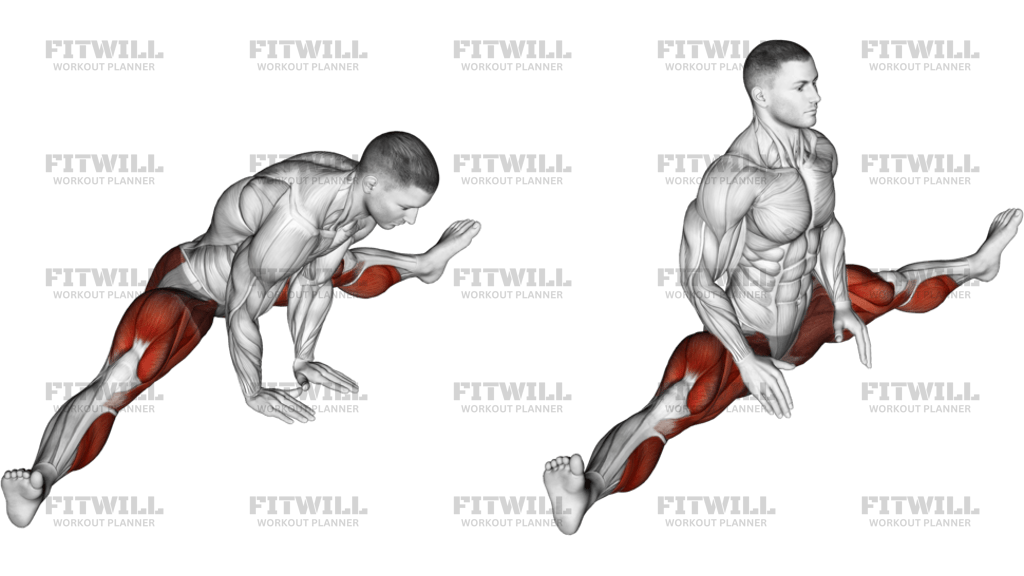
A seated straddle reaches similar tissue, but it is a static, floor-based option and loads the hips differently. The standing version is easier to regulate and better suited to warm-ups, so use the seated version when you want a longer passive hold.
How wide should my stance be?
Start around two shoulder widths and only go wider once the stretch feels comfortable at that width. The correct width is the one where you feel a clear inner thigh pull with your heels flat and your torso upright.
Is it safe if I have a groin strain or hip injury?
If you have a recent groin strain or ongoing hip pain, get clearance from a qualified professional before adding this stretch. When cleared, use a narrow stance, short holds, and stop well before any sharp sensation.
How many repetitions should I perform per session?
Eight to twelve controlled shifts per side is a solid dose for most people. You can repeat for two to three rounds in a dedicated mobility session, keeping each end-range pause brief before training or longer afterward.