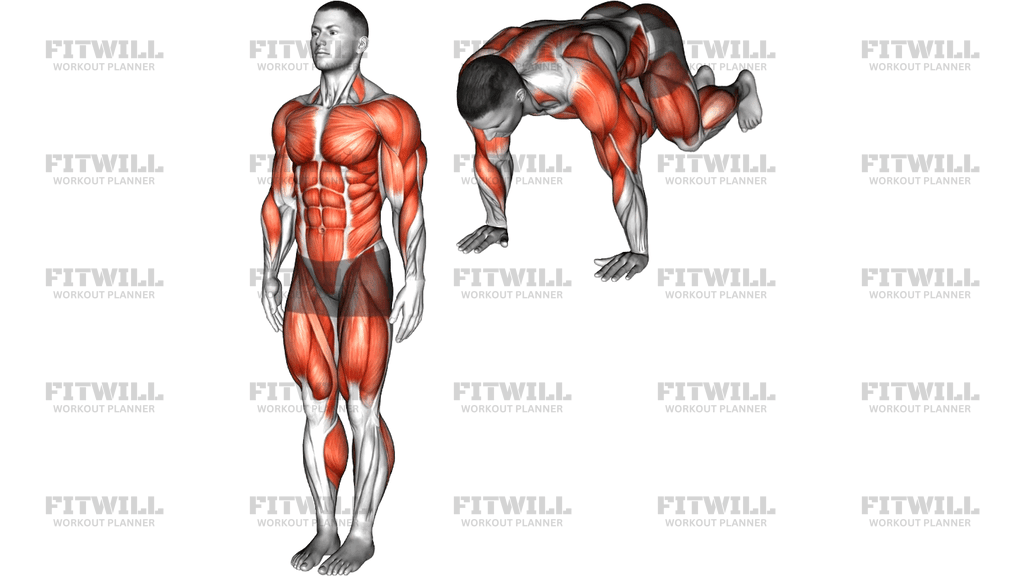
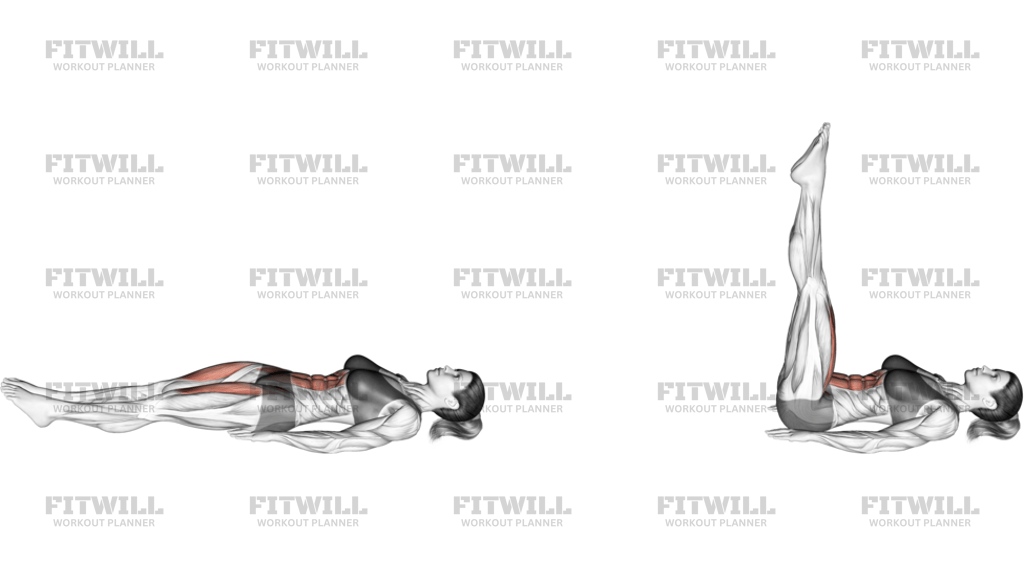
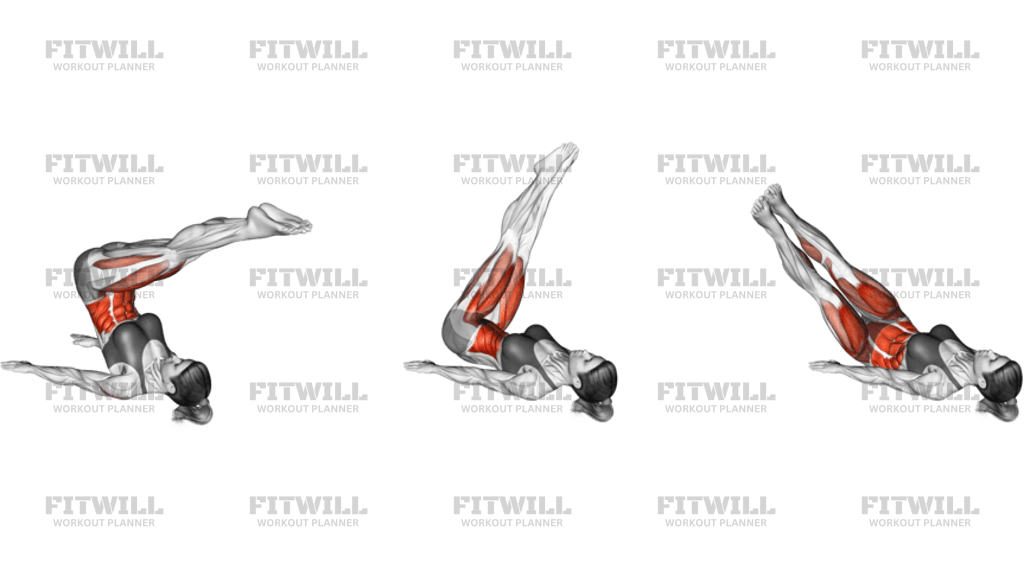
Lying Alternate Toe Tap
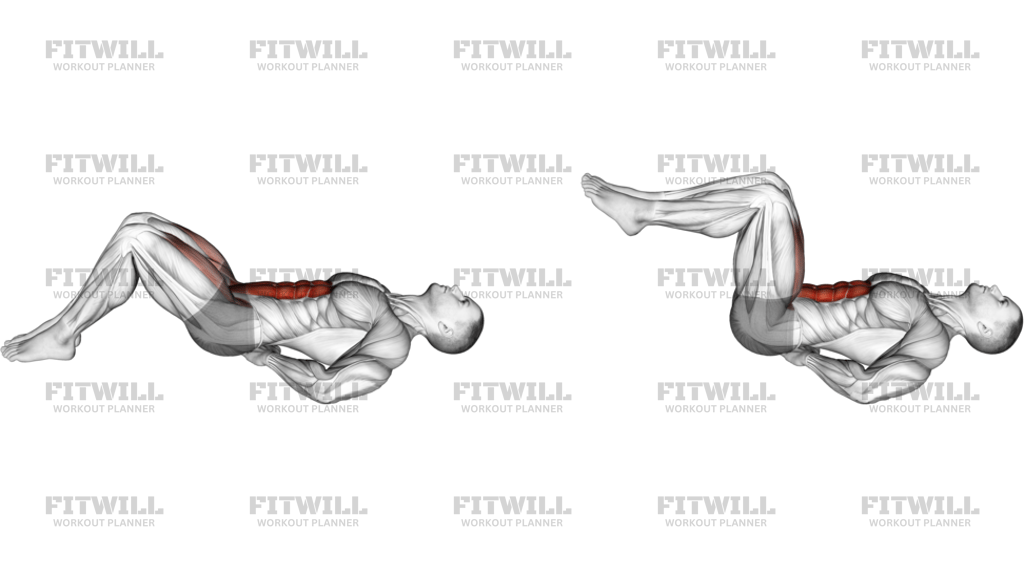
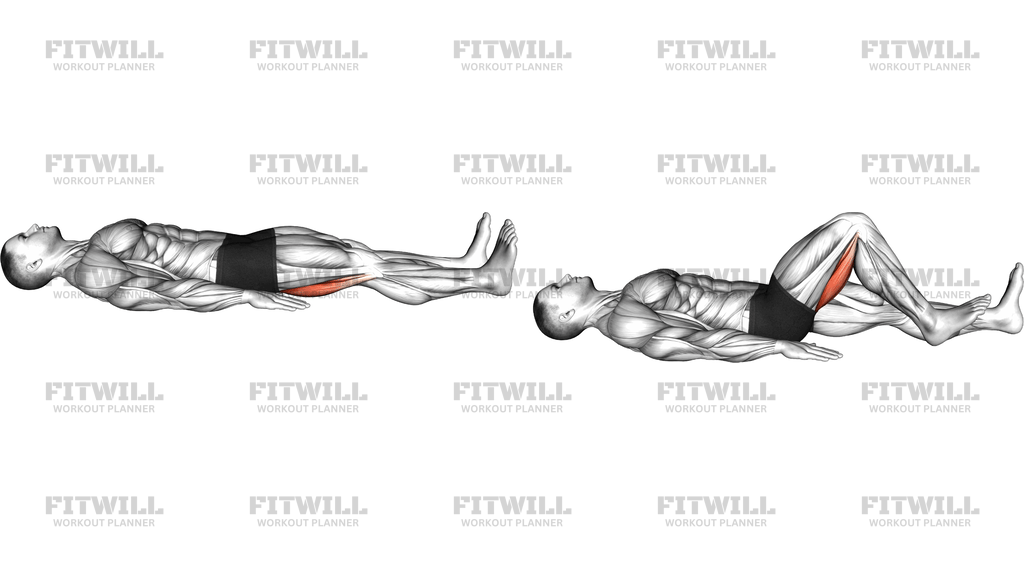
The Lying Alternate Toe Tap is a supine core exercise performed from a tabletop position, where you lie on your back with your knees bent over your hips and slowly lower one foot at a time to tap the floor before returning it to the start. It looks simple, but the slow, alternating leg lowering creates a serious challenge for the deep abdominal muscles, which have to hold your pelvis and low back still while one leg moves away from your center of mass. The highlighted working area sits at the front of the hip, where the hip flexors lift the leg back up against gravity.
This movement is especially useful for people who find classic leg raises too demanding or who feel them in their lower back. Because each leg only extends partway and the opposite knee stays bent, the lever length and load stay moderate, making the toe tap a common bridge exercise toward more advanced lying leg work. It is a staple in Pilates-style training and rehabilitation-adjacent core programs, and it works well as a warm-up activation drill before squats, deadlifts, or heavier ab training.
Setup matters more than speed here. Lie flat on your back with your arms relaxed at your sides, press your low back gently toward the floor, and bring both knees directly over your hips with shins parallel to the ground. That tabletop position fixes your pelvis in a neutral alignment; if you start with your knees drifted toward your chest or your back already arched, the lowering phase will pull your pelvis into tilt and the work shifts away from your abs.
To execute well, brace your midsection as if bracing for a light punch, then hinge at the hip and lower one leg slowly until your toes lightly touch the floor beneath you. Keep the knee at roughly ninety degrees throughout, so the shin stays relaxed and the movement comes from the hip. Exhale as you return the leg to tabletop, then repeat on the other side. The tap itself should be feather-light, a touch rather than a landing, and your torso, arms, and head should stay completely quiet.
The main form cue is control of the pelvis. If your lower back arches off the floor or your ribs flare up as the leg descends, you are either lowering too far or losing the brace. Shorten the range until you can keep the back flat, and prioritize a slow tempo, about two to three seconds down, over adding repetitions. You should feel this in the front of the hips and deep in the abdomen, not in your neck, shoulders, or lumbar spine.
Fitwill
Log Workouts, Track Progress & Build Strength.
Achieve more with Fitwill: explore over 9600 exercises with images and videos, access built-in and custom workouts, perfect for both gym and home sessions, and see real results.
Start your journey. Download today!




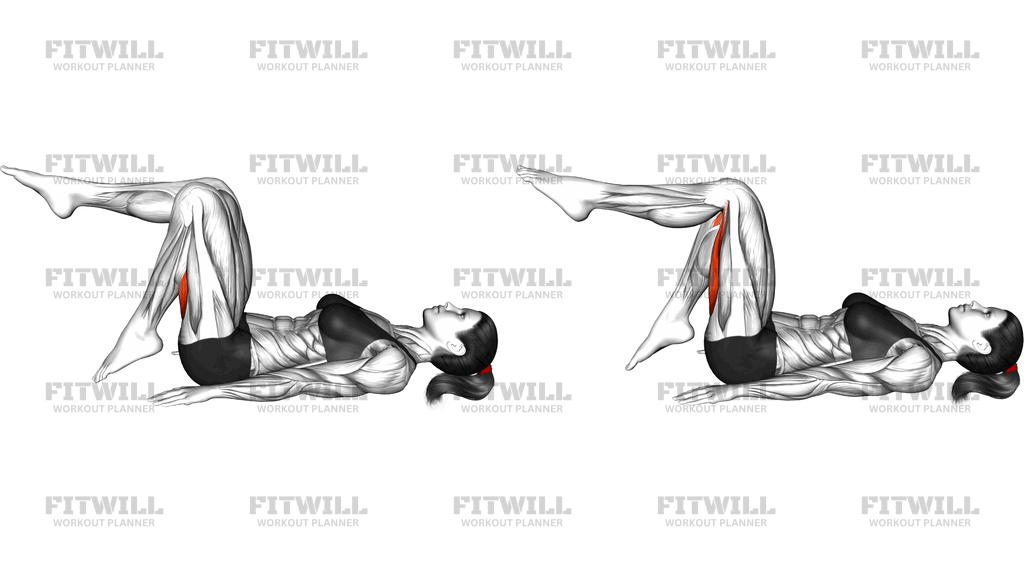
Instructions
- Lie on your back on an exercise mat with your arms relaxed at your sides and your palms facing down.
- Bend both knees and lift your feet off the floor until your knees are stacked directly over your hips and your shins are parallel to the ground, in a tabletop position.
- Gently press your lower back toward the mat to set a neutral pelvis, then brace your abdominal muscles and keep the brace active for the whole set.
- Keeping one knee bent at about ninety degrees, slowly hinge at the hip and lower that leg until your toes lightly touch the floor below you.
- Pause for a brief moment at the tap without letting your foot rest or your back arch.
- Exhale and drive the leg back up from the hip until the knee returns over your hips in tabletop.
- Repeat the same lowering and returning action with the opposite leg, then continue alternating sides for the desired number of repetitions.
- Breathe steadily throughout, inhaling as the leg lowers and exhaling as it returns, and avoid holding your breath.
- Keep your head, shoulders, and arms flat and still; if the pelvis starts to tilt or the low back arches, reduce your range and slow the tempo.
- When finished, lower both feet carefully to the floor one at a time and rest before your next set.
Tips & Tricks
- The most common mistake is letting the lower back peel off the mat as the leg descends. If this happens, stop the descent higher up, where you can still keep the back flat, and rebuild the range gradually.
- A light toe tap is the goal; if you hear or feel a solid foot slap, the leg is dropping under gravity instead of being lowered under muscular control. Slow down to a two- or three-second descent.
- Keep the knee angle fixed near ninety degrees. Straightening the leg mid-rep lengthens the lever and can tip the pelvis forward, turning the tap into a strain on the hip flexors and low back.
- Do not push into the floor with your hands. Pressing down with the palms is a quiet cheat that stabilizes the torso; let the abs do that job with only a light hand contact for feedback.
- If you feel the work mainly as a burning sensation at the front of the hip rather than in the abdomen, your hip flexors are dominating. Refocus on the brace and try slightly smaller, slower taps.
- Avoid letting the knee of the working leg drift toward or away from your midline; the thigh should track straight up from the hip so the lowering path stays vertical.
- Neck tension often creeps in when people lift the head or jut the chin. Keep the back of the head heavy on the mat and look straight up.
- An ankle weight on the working leg can add difficulty once your pelvis stays completely quiet for full sets, but earn it with clean form first.
Frequently Asked Questions
What muscles does the Lying Alternate Toe Tap work?
The primary work comes from the lower abdominals and deep core, which hold the pelvis stable while the leg moves. The hip flexors, mainly the iliopsoas, lift the leg back to tabletop, with the quadriceps assisting at the front of the thigh.
Is the Lying Alternate Toe Tap good for beginners?
Yes, it is one of the more approachable lying core exercises because the bent knee keeps the lever short. Beginners should limit the range so their lower back stays flat and focus on slow, quiet taps rather than speed.
Why should my knees stay bent at ninety degrees during the toe tap?
A bent knee shortens the leg lever, which reduces the pull on the pelvis and keeps the load on the abs instead of the lower back. Straightening the leg makes the exercise significantly harder and usually causes the back to arch prematurely.
How far down should I lower my foot?
Lower only until the toes lightly graze the floor, and no further. If your lower back arches or your pelvis tilts before your toes reach the floor, stop at whatever depth you can still keep the back flat.
Can I do the Lying Alternate Toe Tap without a mat?
You can perform it on carpet or a firm, padded surface, but a mat is recommended because your spine and pelvis rest directly on the floor for the entire set. Very soft surfaces like a thick bed make it hard to feel whether your back is flat.
What is the most common mistake with this exercise?
Dropping the leg too quickly so the foot slaps the floor, which lets gravity do the work and lets the pelvis rotate. The fix is a controlled two- to three-second descent with a light, silent tap.
What can I use instead of the Lying Alternate Toe Tap?
Dead bugs, heel slides, and single-leg tabletop holds train the same anti-rotation and pelvic stability demand. If the floor position bothers your back, a standing marching drill with a wall for support is a reasonable substitute.
Why do I feel this more in my hip flexors than my abs?
The hip flexors are heavily involved in returning the leg to tabletop, so some hip sensation is normal. If they dominate completely, slow the descent, re-brace your abdomen before each rep, and slightly reduce the range so the core, not momentum, controls the leg.
Is the Lying Alternate Toe Tap safe for people with lower back issues?
It is often tolerated well because the spine stays supported on the floor, but comfort varies from person to person. Keep the range small, maintain a flat lower back, and stop if the movement produces discomfort rather than muscular effort.
How many repetitions should I do?
Start with six to ten controlled taps per side, counting each touch of one foot as one rep. Once you can keep your pelvis completely still at that volume, progress by adding reps or slowing the tempo before adding load.