Burpee Side Tap Step Jack
The Burpee Side Tap Step Jack is a low-impact conditioning drill that strings three moving pieces together into one continuous sequence: a burpee, alternating side foot taps in a high plank, and a step-out jack as you stand back up. Because every transition is stepped rather than jumped, it keeps the heart rate climbing while sparing your knees, ankles, and lower back from repeated landing forces. That makes it a smart choice for home workouts, garage gyms with noise concerns, or anyone who loves the burn of burpees but not the pounding.
The sequence trains the whole body in one flow. The squat and stand drive the quads and glutes, the plank hold and side taps light up the shoulders, chest, and deep core, and the step jack adds hip abduction work through the outer hips and glutes while the calves keep you springing lightly from foot to foot. Because you are constantly shifting between a standing position and a plank, your trunk has to brace and re-brace on every transition, which is where much of the midsection work comes from.
Setup matters more than speed here. Place your hands flat on the floor about shoulder-width apart before you step back, and keep them stacked under your shoulders for the entire plank phase. If your hands drift forward or your hips sag, the side taps turn into a strain on your lower back instead of a core exercise. A mat helps with wrist comfort on hard floors, but no other equipment is needed.
Execution is about rhythm, not rushing. Drop into the plank with control, tap one foot out to the side, bring it back, then tap the other foot out, keeping your hips as quiet as you can while your legs do the moving. Step both feet back in, rise to standing, and finish each rep with a wide step out on each foot and arms sweeping overhead, just like a slowed-down jumping jack. Then flow straight into the next burpee.
Use this movement as a conditioner in circuit training, as a finisher after strength work, or as the main engine of a low-impact home session. Start with 20 to 30 seconds of continuous reps or sets of 6 to 10, and add time or rounds as your plank stability improves. If your form breaks down, slow the taps down rather than cutting the range short.
[ Workout Log & Planner ]
Put your next workout in Fitwill
Keep your plan and training log ready when you are.


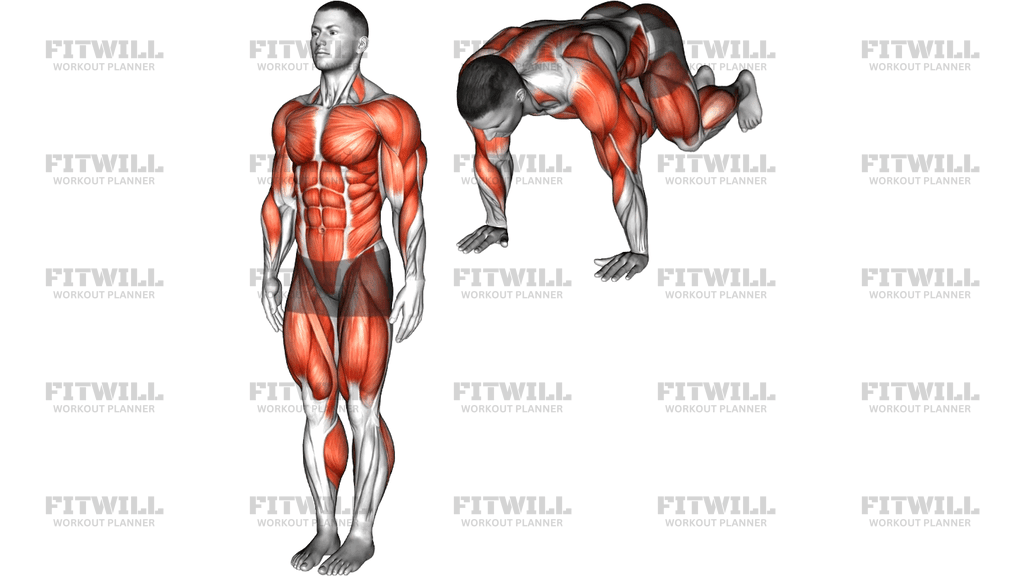
Instructions
- Stand tall with your feet hip-width apart and your arms relaxed at your sides, on a mat or non-slip floor.
- Hinge at the hips and bend your knees to place both palms flat on the floor directly under your shoulders, fingers spread.
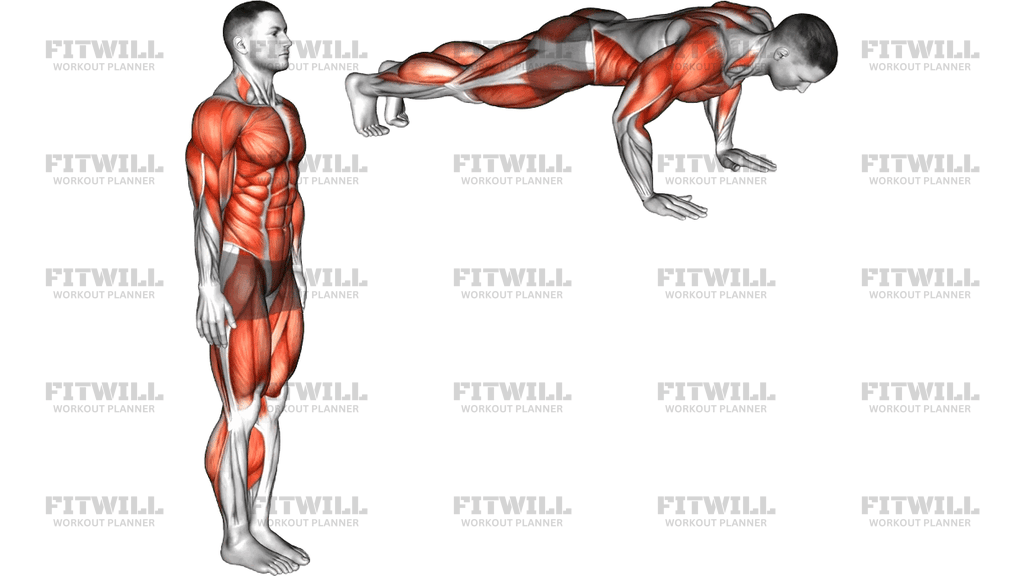
- Step one foot back at a time until you are in a high plank with a straight line from head to heels.
- Brace your abs and squeeze your glutes so your hips stay level before you start the taps.
- Tap one foot out wide to the side, return it to center, then tap the other foot out and back, keeping your hands planted and shoulders stacked over wrists.
- Step both feet back in toward your hands, landing them flat on the floor just outside your feet-width.
- Stand up tall through the squat, driving through your heels.
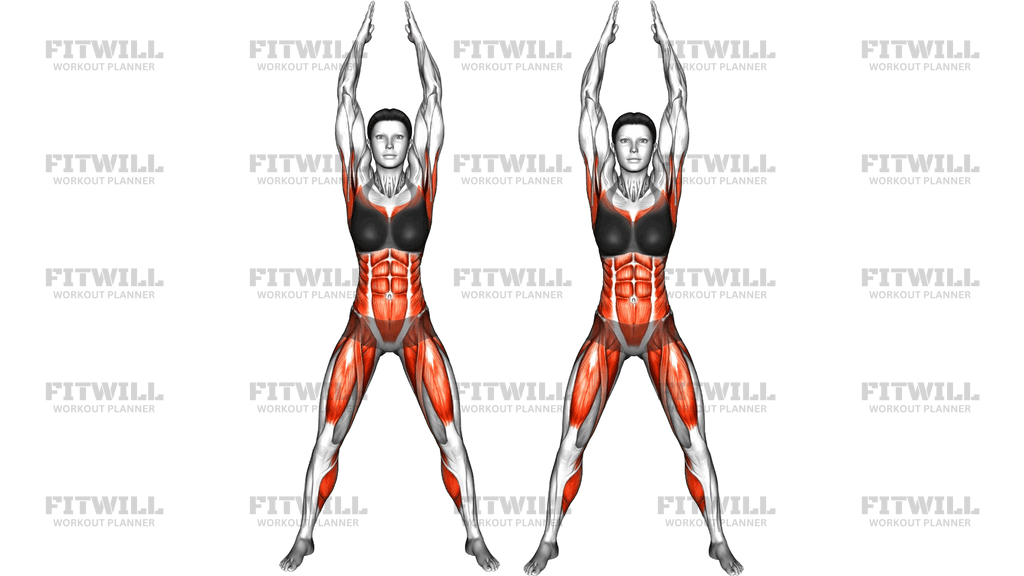
- Finish the rep with a step jack: step your right foot out wide as your arms sweep overhead, step it back in, then repeat with the left foot.
- Exhale as you step back to the plank and during the stand-up; inhale through the step jack.
- Reset your plank position each rep if your hips have drifted, then flow straight into the next burpee.
Tips & Tricks
- The most common breakdown is sagging hips during the side taps. Before each tap, squeeze your glutes and pull your ribs down so your plank stays a straight line.
- If your wrists ache in the plank, spread your fingers wide and press the floor away through your fingertips instead of sinking into the heel of the palm.
- Keep the side taps small and quick rather than stepping the foot far out wide; a controlled 12 to 18 inches is enough to work the outer hips without wobbling.
- Do not rush the transitions. Most sloppy reps happen when stepping back into and out of the plank, so treat those two steps as the core of the rep.
- If your heels lift when you stand up, your feet are too close to your hands. Step them slightly wider or walk them in closer so you can plant them flat.
- Land softly on the balls of your feet during the step jack to keep the rhythm light and protect your knees.
- Scale down by doing the taps on an elevated surface, such as a bench, or by pausing one breath in the plank if your core shakes before the taps are done.
- Breathe in a steady cycle instead of holding your breath through the plank phase, which is a common mistake once fatigue sets in.
- Count the step jack arms as part of the rep. Skipping the overhead sweep turns the movement into a plain burpee and shortchanges the shoulders and calves.
Frequently Asked Questions
What muscles does the Burpee Side Tap Step Jack work?
It hits the whole body: the quads and glutes drive the squat and stand, the shoulders and chest hold the plank, the abs and deep core stabilize through the side taps, and the calves and outer hips work during the step jack. No single muscle dominates; the value is in the constant transitions.
Is the Burpee Side Tap Step Jack suitable for beginners?
Yes, because every part is stepped instead of jumped. Beginners can slow the side taps to one count out and one count back, or drop the step jack overhead arm sweep until the plank feels stable.
Why do side taps in the plank instead of plank jumps?
The side taps keep one foot loaded at a time, which reduces the hip drop and lower back strain you often see when both feet jump out in a plank jack. It is the same conditioning idea with much more control.
How do I stop my hips from swaying during the side taps?
Widen your feet slightly in the plank, brace your abs before the first tap, and think about pressing the floor away with your hands. Slowing the tap tempo also helps the hips stay quiet.
Can I replace the step jack with a regular jumping jack?
You can if your joints tolerate jumping, but the step version keeps the whole exercise low-impact, which is the point of this variation. Stepping out one foot at a time with the arms overhead gives a nearly identical training effect.
How many reps or how long should I do the Burpee Side Tap Step Jack?
Start with 20 to 30 seconds of continuous reps or sets of 6 to 8, resting as needed between rounds. As your plank endurance improves, build toward 45 to 60 second intervals.
Do I need any equipment for this exercise?
No, it is entirely body weight. An exercise mat is optional and helps with wrist and foot comfort on hard floors.
My wrists hurt when I set up for the plank. What should I change?
Place your hands directly under your shoulders with fingers spread, and distribute pressure across the whole palm and fingertips rather than rocking back onto the heel of the hand. A folded mat or a slight forward lean on your fingers can also reduce wrist extension discomfort.
What is the most common mistake in this movement?
Rushing the step back into the plank so the hands end up too far forward and the hips sag. Recheck your hand position under your shoulders each rep, especially when tired.
Is the Burpee Side Tap Step Jack safe for people with knee problems?
It is generally friendlier to the knees than jumping burpees because there are no landing impacts, but you should still control the squat down and stand up and stop if you feel joint pain. Anyone managing an injury should clear new exercises with a qualified professional first.