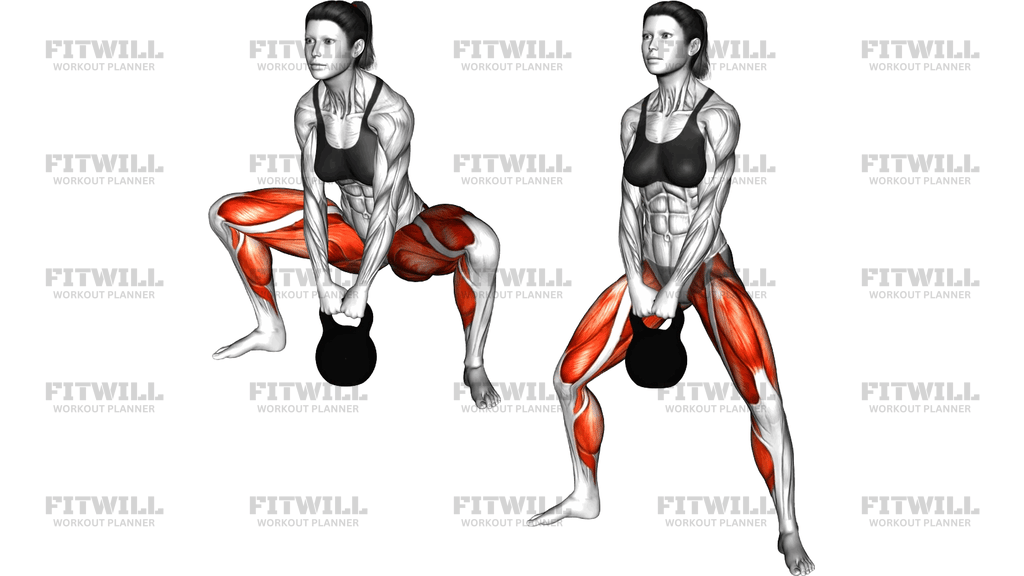
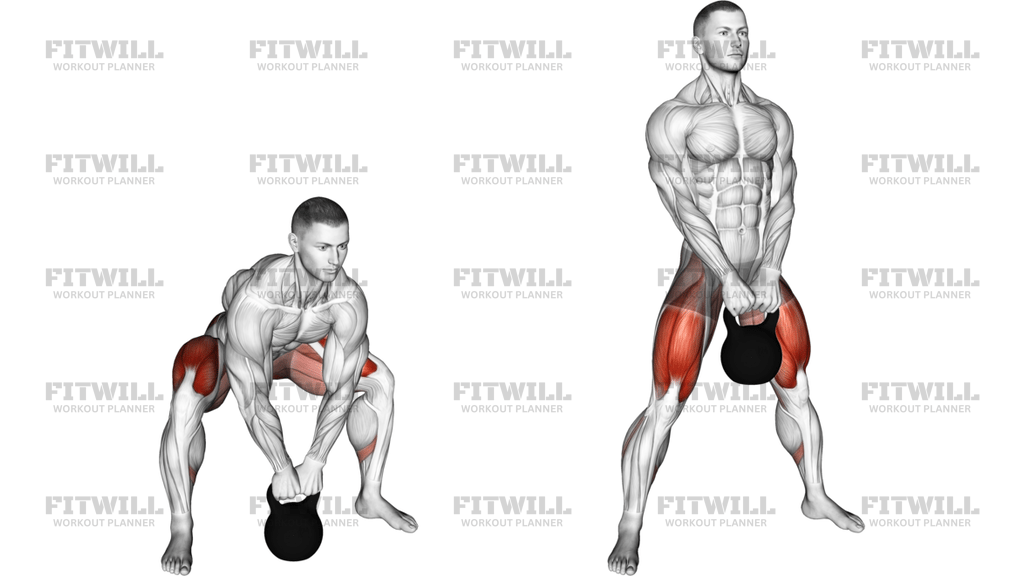
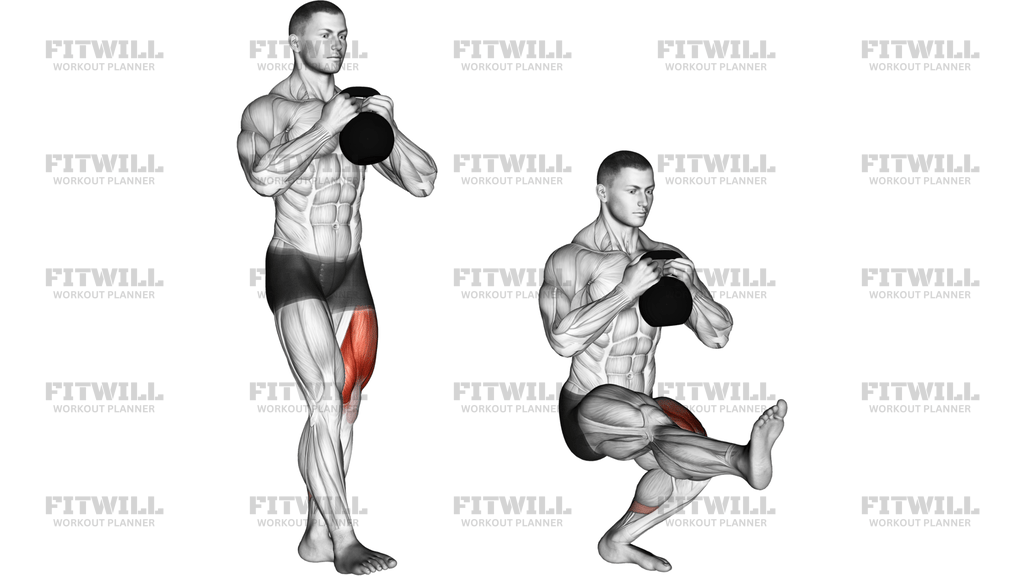
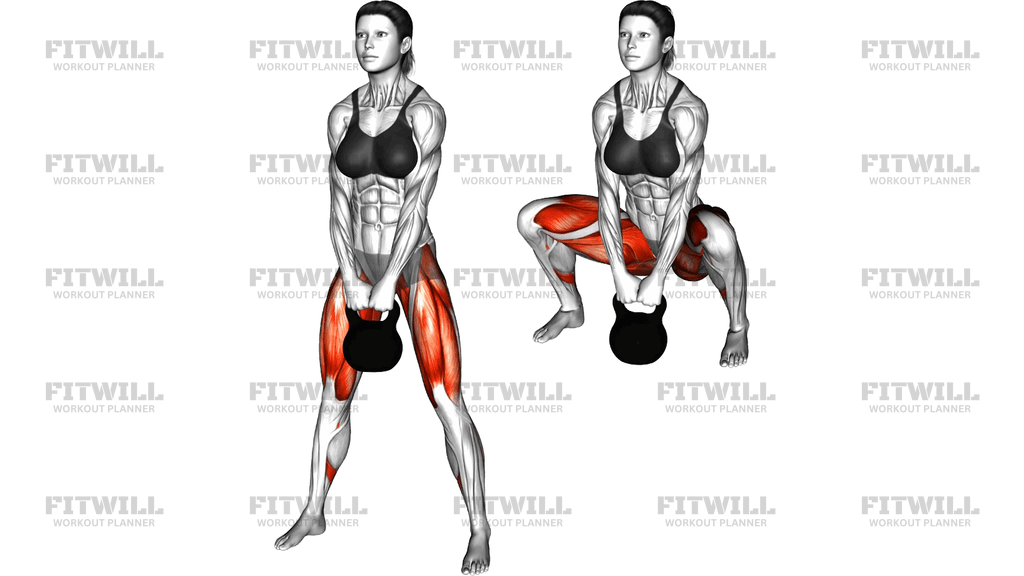
Kettlebell Swing Clean Grip Front Squat
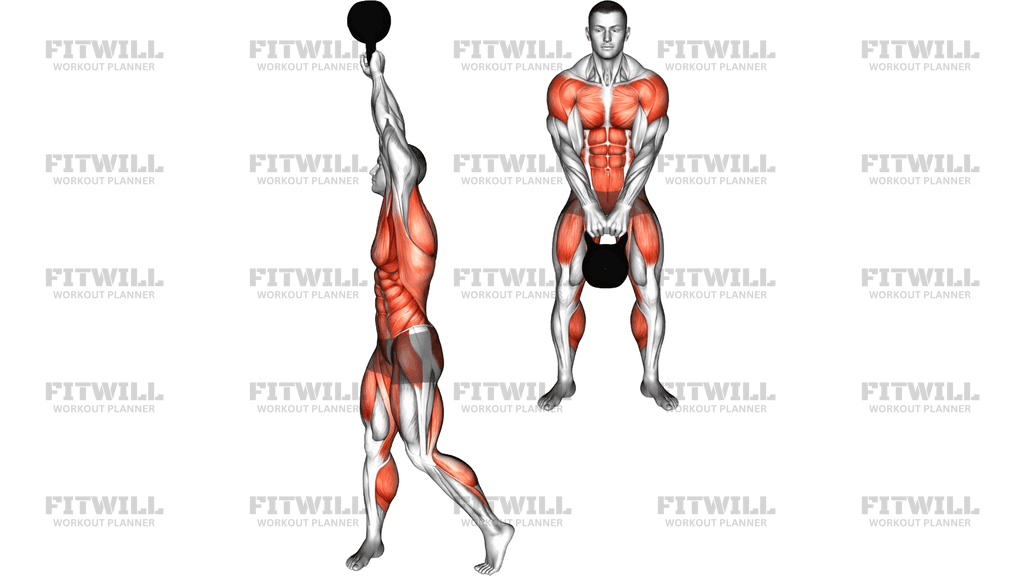
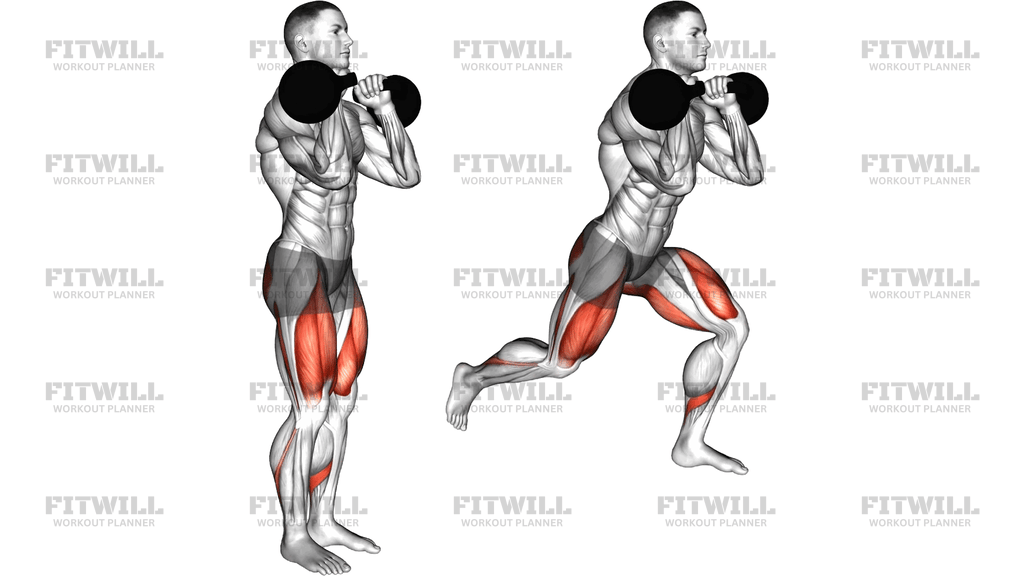
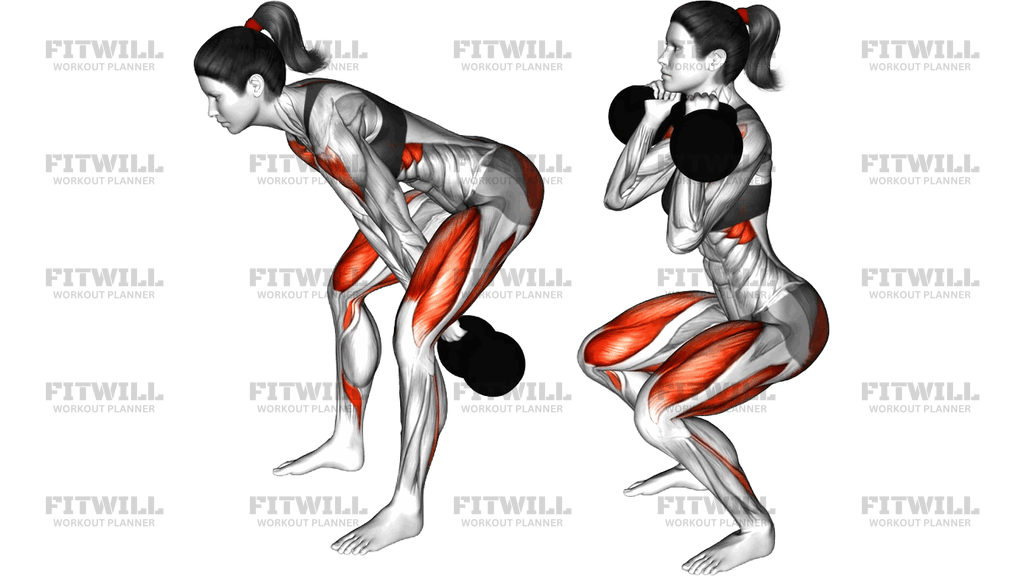
The Kettlebell Swing Clean Grip Front Squat combines two skills into one continuous lift: you clean the kettlebell from a swing or hinge position into the front rack at your shoulder, then lower into a front squat and drive back up while keeping the bell racked. Because the clean and the squat are linked, every rep trains hip power, a stable torso, and leg strength in one sequence rather than as separate drills.
This movement suits lifters who already have a comfortable kettlebell deadlift or hinge and want to build toward heavier front squat work without a barbell. The kettlebell sits in front of the body and slightly off-center, which challenges the core to keep the ribs stacked over the pelvis in a way a back squat never does. That makes it a practical choice for home training, small gyms, or anyone whose shoulders do not tolerate a barbell front rack well.
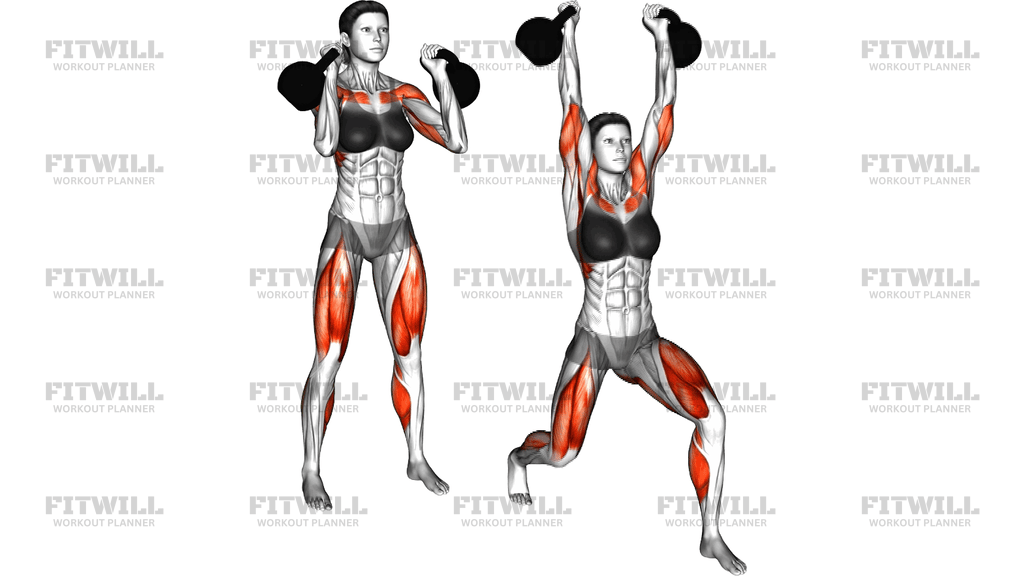
The primary work comes from the quadriceps and glutes during the squat, with the hamstrings and glutes powering the clean from the hinge. Your core, upper back, and shoulders hold the bell in place, and the grip works constantly to keep the handle seated. Because the clean uses hip drive rather than arm curling, most of the load stays on the big lower-body muscles.
Setup matters more here than in a standard goblet squat. If the bell lands loosely on the shoulder or the elbow drifts out to the side, the squat becomes a fight against the weight instead of a clean squat pattern. Aim for a tight rack: handle angled across the hand, elbow tucked close to the ribs, wrist neutral, and the bell resting partly on the forearm and shoulder rather than hanging from the hand.
Execute each rep by hinging back, swinging or drifting the bell back between the legs, then driving the hips forward so the bell floats up and rotates around the wrist into the rack. Pause briefly to settle, brace, and squat to a depth you can control with a neutral spine, then stand tall and either repeat the squat from the rack or lower the bell with another hinge. Common use cases include strength circuits, hypertrophy work for the legs, and conditioning intervals where the clean-plus-squat combo keeps the heart rate high.
The main safety points are keeping the lower back from rounding in the bottom of the squat, avoiding the bell crashing down on the forearm, and setting the bell down with a hinge instead of dropping it from the rack. Start with a moderate weight you can clean quietly, because a loud catch usually means the arc was too long or the wrist did not rotate through in time.
[ Workout Log & Planner ]
Put your next workout in Fitwill
Keep your plan and training log ready when you are.


Instructions
- Stand with your feet about hip-width to shoulder-width apart, toes turned out slightly, with one kettlebell on the floor a short step in front of you.
- Hinge at the hips and take hold of the handle with one hand (or both hands to start, if you plan to switch to a single-hand rack), keeping your back flat, shoulders pulled down, and the weight loaded in your midfoot and heels.
- Hike the kettlebell back between your legs like a football snap so it sits behind your hips, not swinging out in front of your knees.
- Drive your hips forward sharply and let the bell travel up the front of your body; as it rises, pull your elbow down and rotate your hand around the handle so the bell rolls onto the back of your forearm.
- Catch the bell in the front rack: handle resting across the palm and toward the base of the thumb, elbow tucked close to the ribs, wrist straight, and the bell resting on your forearm and shoulder, with your chest tall and eyes forward.
- Take a breath into your belly, brace your core, and screw your feet into the floor before descending.
- Squat down by pushing your hips back and bending your knees together over your toes, keeping the elbow pinned down and the torso as upright as the rack allows, until your thighs reach at least parallel or your deepest controlled depth.
- Press the floor away and drive back up to a full stand, exhaling as you rise through the sticking point, keeping the bell settled on the shoulder the whole time.
- For repeat reps, re-brace at the top and squat again from the rack, or lower the bell by hinging and letting it swing back between your legs before parking it on the floor.
- Reset your stance and grip between sets, and switch arms evenly if you are training one side at a time.
Tips & Tricks
- A loud, slapping catch on the forearm means the bell traveled a long arc and flopped over at the top. Shorten the swing path, think of the bell moving up close to your chest, and rotate your hand around the handle earlier so the bell rolls instead of flips.
- If your elbow splays out to the side in the rack, the squat will tilt your torso and strain the shoulder. Fix it by actively pulling the elbow down toward the ribs and thinking of pinning the upper arm against your lats.
- Lifting the heels or shifting to the toes at the bottom usually means the ankles or hips are running out of room. Try a slightly wider stance with toes turned out more, and only squat as deep as you can keep your whole foot planted.
- Do not let the clean become an arm curl. The bell should float up from hip drive; your arm only guides it. If your biceps are sore after training, your hips are not finishing the drive.
- Keep the wrist neutral in the rack rather than letting it bend backward under the bell. A bent wrist fatigues quickly and makes the bottom of the squat uncomfortable.
- Rack the bell slightly across your body toward the center line rather than straight out to the side. This keeps the combined center of mass over your midfoot and makes the squat noticeably more stable.
- Exhale at the top of each squat, not during the descent. Holding your breath through the descent and first half of the ascent keeps the torso rigid, then reset your brace before the next rep.
- When you lower the bell, do not drop it from the rack. Re-hinge and guide it back between your legs for one swing, then set it down quietly to protect your forearms and the floor.
- Start with a weight you could comfortably swing for ten reps. A bell that is too heavy turns the clean into a grind and pushes your torso forward in the squat.
Frequently Asked Questions
Which muscles does the Kettlebell Swing Clean Grip Front Squat work the most?
The quadriceps and glutes do the bulk of the squatting work, while the hamstrings and glutes power the clean from the hinge. Your core, upper back, and front shoulders work isometrically to hold the bell in the rack.
Can beginners do the Kettlebell Swing Clean Grip Front Squat?
Beginners can, but it is best learned in stages. Master the kettlebell deadlift and goblet squat first, then practice the clean alone before linking the two together.
Why does the kettlebell keep crashing onto my forearm during the clean portion?
The bell is usually traveling too far from the body or flipping over at the top instead of rolling around your wrist. Drive the hips harder, keep the bell close to your chest, and punch your hand through the handle earlier so it rotates onto your forearm smoothly.
How deep should I squat with the kettlebell in the front rack grip?
Squat as deep as you can while keeping a neutral spine, your heels down, and your elbow tucked. For most people that means at least thighs parallel, but a controlled partial squat is better than a rounded-back deep one.
Can I do the Kettlebell Swing Clean Grip Front Squat with two kettlebells?
Yes, a double-bell version is a common progression once the single-bell rack feels solid. The double rack demands more upper back and core stability, so reduce the weight and squat depth at first.
What can I use instead if I do not have a kettlebell?
A single dumbbell can substitute if you hold it vertically at your chest in a goblet-style position, though the clean-to-rack element is hard to replicate. A barbell front squat or a landmine squat are reasonable gym alternatives for the squatting pattern.
Should I clean the kettlebell before every squat or stay in the rack for multiple reps?
Both work, depending on your goal. Cleaning every rep adds hip hinge volume and conditioning, while staying in the rack for multiple squats puts more focus on leg strength.
Is it normal for my wrist to ache when holding the front rack grip?
Mild forearm fatigue is normal, but aching usually means the bell is hanging from your hand instead of resting on your forearm and shoulder. Reset the handle toward the base of your thumb and keep the wrist straight, letting the bell sit rather than gripping hard.
How do I set the kettlebell down safely at the end of a set?
From the rack, hinge back and let the bell swing down between your legs for one controlled rep before placing it quietly on the floor. Never drop it from shoulder height, and keep your back flat as you finish the hinge.