Kneeling Stay Forward Wheel Rollout
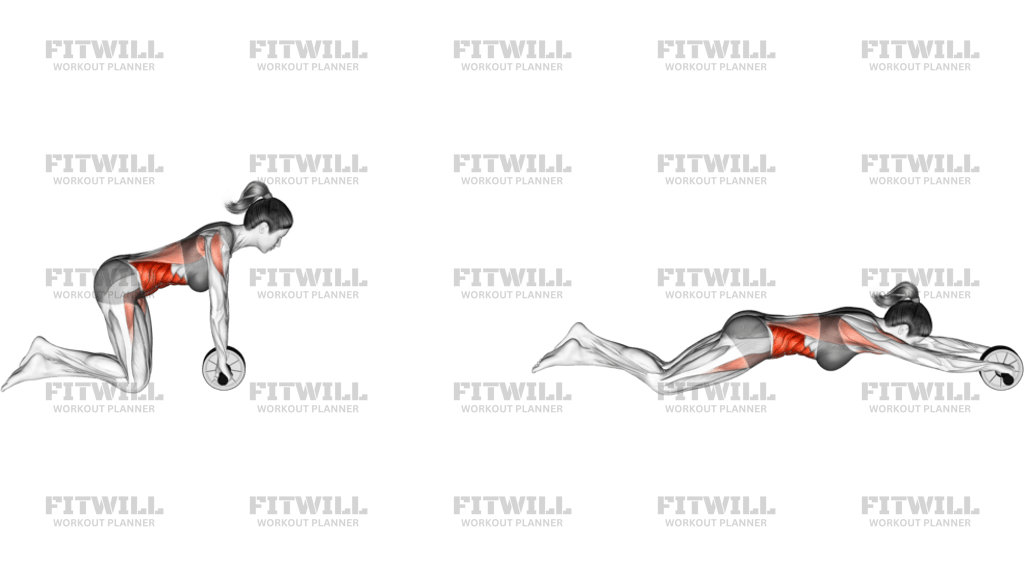
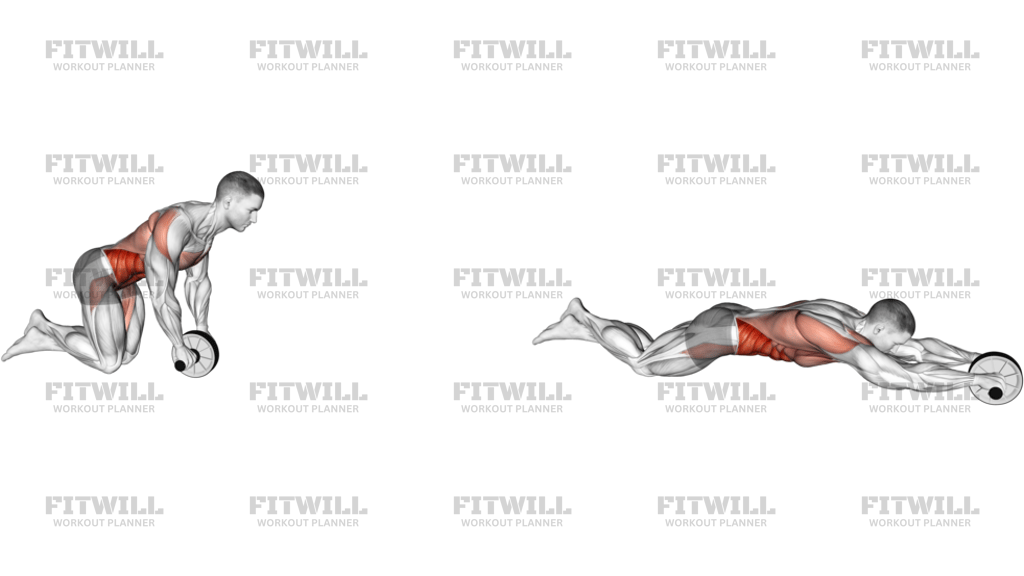
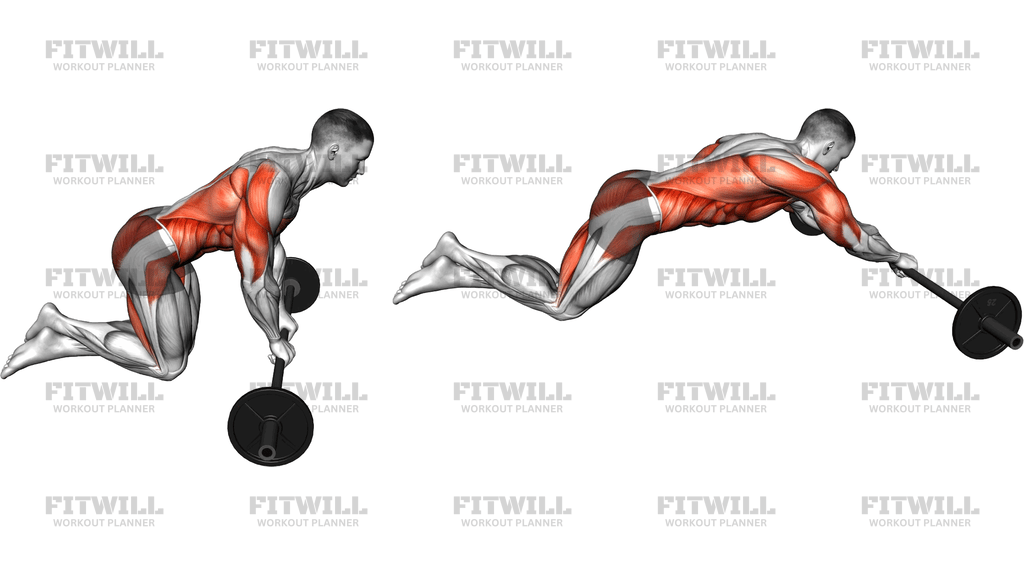
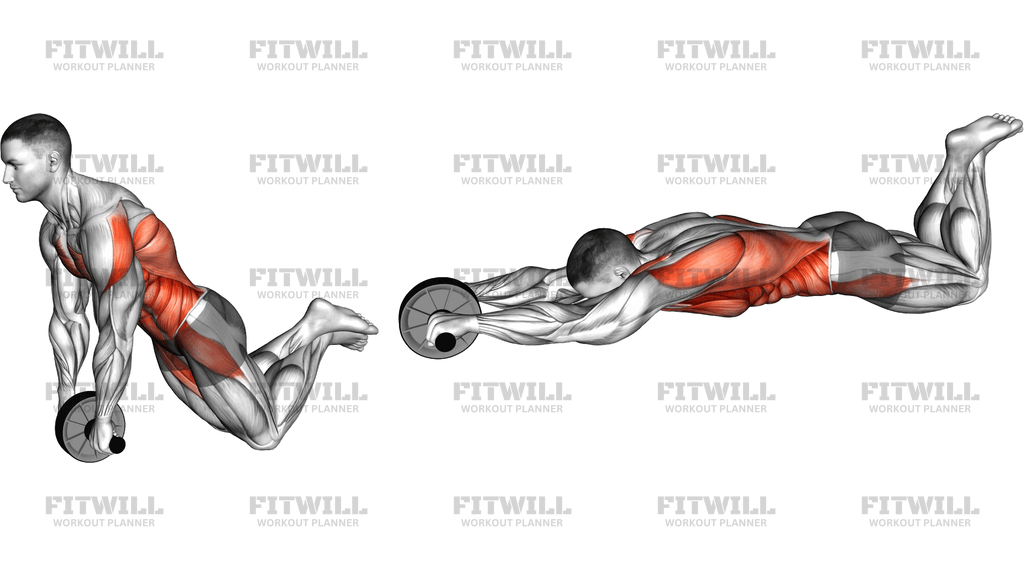
The Kneeling Stay Forward Wheel Rollout is the classic ab wheel rollout performed from a kneeling position: you grip a wheel roller on the floor under your shoulders, brace hard, and roll the wheel forward until your body stretches out low to the ground, then pull it back to the knees. The 'stay forward' portion of the name refers to that extended position, where you hold your body in a long, near-parallel line above the floor before returning. It is one of the most demanding anti-extension core exercises available with a single piece of portable equipment.
This movement suits intermediate to advanced trainees who already own a solid plank. If you can hold a rigid plank for 60 seconds without your hips sagging, you are ready to start with short rollouts. Beginners can still work with it by limiting the range, rolling out only a quarter or half of the way and rolling back before form breaks. Because the knees stay anchored, the lower body contributes very little, which places the burden squarely on the trunk and shoulders.
The main target is the rectus abdominis along with the deep transverse abdominis, both working overtime to stop your spine from arching as the wheel travels away from you. The obliques resist unwanted rotation, the lats and front delts drive the pull back, and the glutes and quads hold the pelvic position. The ending stretch also loads the lats and hip flexors under length, which is why many lifters feel it in areas beyond the abs.
Setup matters more than most people realize. Kneel on a mat with your knees roughly hip-width apart and your feet lifted off the floor behind you, ankles crossed or hovering. Place the wheel directly under your shoulders with arms straight, not out in front, so the first push loads your core instead of dumping stress onto your lower back before the rep even starts.
Execution comes down to one idea: move the wheel, not your spine. Tuck the pelvis slightly, squeeze the glutes, and roll forward in a slow line, letting the arms travel overhead while the torso follows as one rigid piece. At full extension your body hovers just above the floor, ribs down, head neutral. Pause there briefly, then pull the wheel back with the lats and abs rather than letting the hips shoot up first.
Use the Kneeling Stay Forward Wheel Rollout early in a core session when you are fresh, for 3 sets of 5 to 10 controlled reps. Progress by extending range and adding a 2 to 3 second hold at the far position before you ever think about standing versions. Stop the set the moment your hips sag or your lower back starts to arch, since that is the point where the anti-extension work turns into a lower-back stressor.
[ Workout Log & Planner ]
Put your next workout in Fitwill
Keep your plan and training log ready when you are.


Instructions
- Kneel on an exercise mat with your knees about hip-width apart, toes lifted off the floor and ankles crossed behind you so only your knees contact the ground.
- Place the wheel roller on the floor directly beneath your shoulders and grip the handles firmly with straight arms, hands stacked under shoulders.
- Tuck your pelvis under slightly, squeeze your glutes, and brace your abs as if preparing for a light punch to the stomach.
- Breathe in and hold the brace, then slowly roll the wheel forward along the floor, letting your arms travel up and ahead while your torso follows as one piece.
- Keep your lower back flat and ribs down the entire way; do not let the hips drop or the belly hang toward the floor.
- Continue until your body is extended in a long, low line just above the floor with arms overhead, and hold that forward position for a controlled one to two seconds.
- Exhale as you pull the wheel back toward your knees using your abs and lats, keeping the arms straight and the movement path straight ahead of you.
- Return until the wheel sits back under your shoulders and your hips return over the knees without collapsing upright.
- Reset your brace and glute squeeze, then begin the next rep; keep sets to 5-10 clean repetitions before form degrades.
Tips & Tricks
- The most common failure point is the hips sagging near full extension, which turns the exercise into a lower-back arch; fix it by rolling out 10-15 centimeters less and holding the brace harder.
- Do not push the wheel out at an angle, since a wandering path forces the obliques to chase rotation and usually ends with a twisted lower back; pick a floor seam or mat edge to follow in a straight line.
- If your knees hurt, the mat is too thin or you are resting on the kneecap; position the contact point on the softer tissue just above the kneecap and use a thicker mat.
- Keep the head neutral by looking at a spot on the floor slightly ahead of the wheel; craning the neck up at the far position breaks the rib-to-pelvis connection you are training.
- Start each rep with the wheel directly under the shoulders; starting with it parked out in front means your first few inches happen with a relaxed core and an arched spine.
- Control the return just as much as the rollout; if the wheel snaps back because your arms are yanking it, the abs are getting a free ride on the hardest half of the rep.
- Breathe in and brace before rolling out, exhale through the return; holding your breath through multiple reps is a sign the set is too long or the brace is too rigid.
- Lifted, crossed feet keep the quads and kneecaps out of the movement; if you let the toes touch down for balance, you will start pushing off the ground instead of pulling with the trunk.
- Film yourself from the side once in a while; from above or in front, a sagging pelvis is almost impossible to spot, but from the side it is obvious.
Frequently Asked Questions
What muscles does the Kneeling Stay Forward Wheel Rollout work?
The primary targets are the rectus abdominis and deep transverse abdominis, which fight spinal extension as the wheel moves away. The obliques resist rotation, while the lats, front delts, and hip flexors assist and stabilize throughout the roll.
Is the Kneeling Stay Forward Wheel Rollout suitable for beginners?
It can be, but only with a shortened range. Beginners should roll out just a quarter to half of the way and build up gradually, and should first be able to hold a solid plank for about a minute without the hips sagging.
Why should my feet stay lifted during this exercise?
With knees down and feet off the floor, the legs cannot push or assist, so the trunk and shoulders do all the work. It also keeps pressure off the tops of the feet and prevents cheating by driving off the ground.
How far should I roll the wheel forward?
Roll only as far as you can keep a flat lower back and ribs pulled down. For most people that is well short of full extension at first, and the range should grow over weeks as the core gets stronger.
My lower back aches after rollouts. What am I doing wrong?
Almost certainly your pelvis is tipping forward and your spine is arching as you reach full extension. Reduce the range, tuck the pelvis, squeeze the glutes harder before rolling, and end the set the moment form slips.
What can I use instead of a wheel roller?
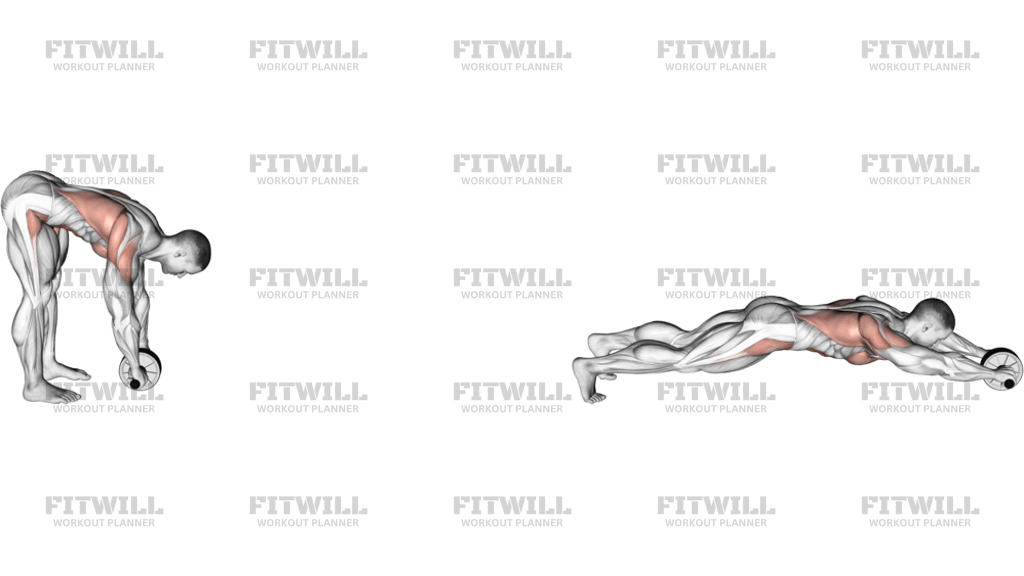
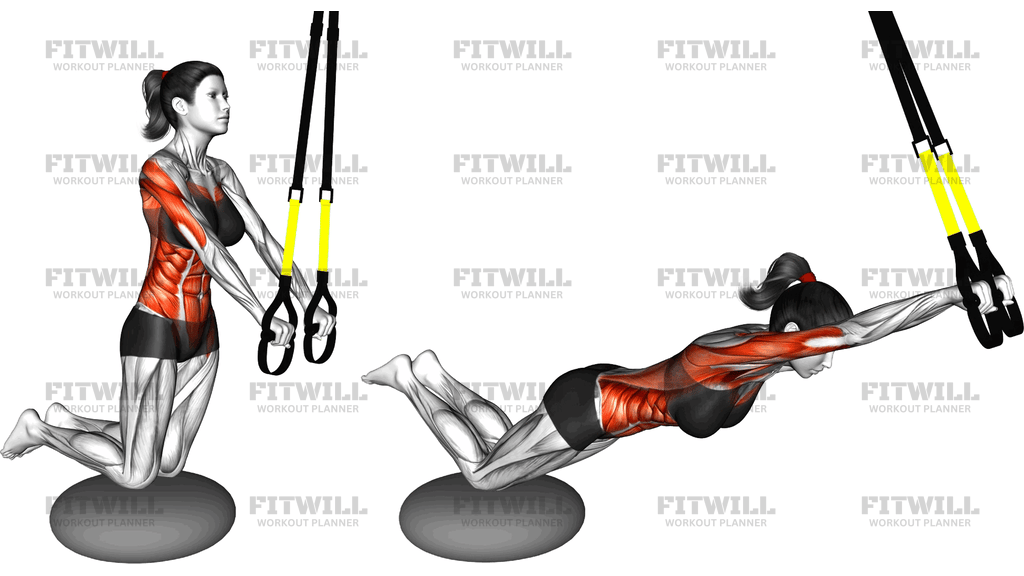
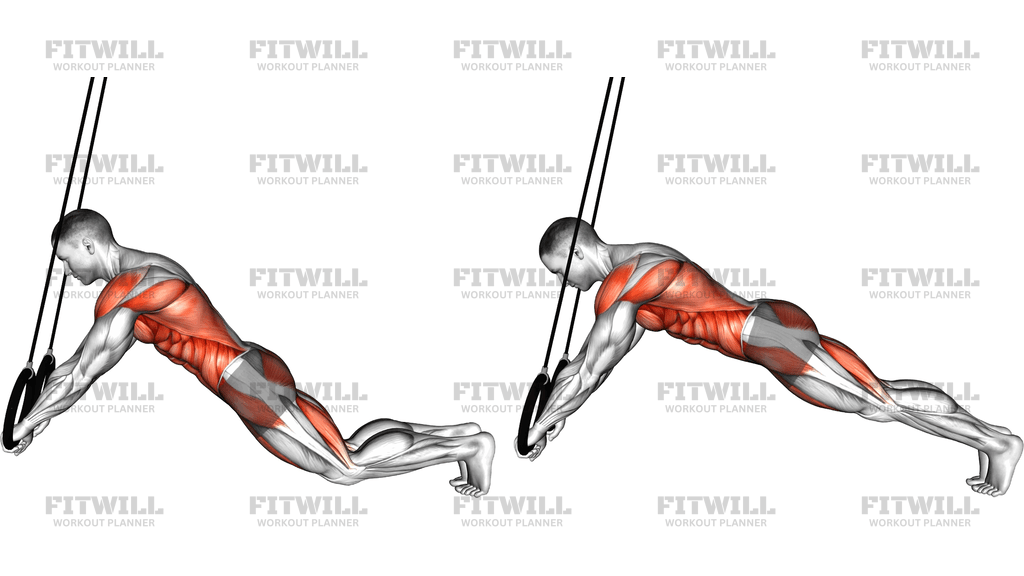
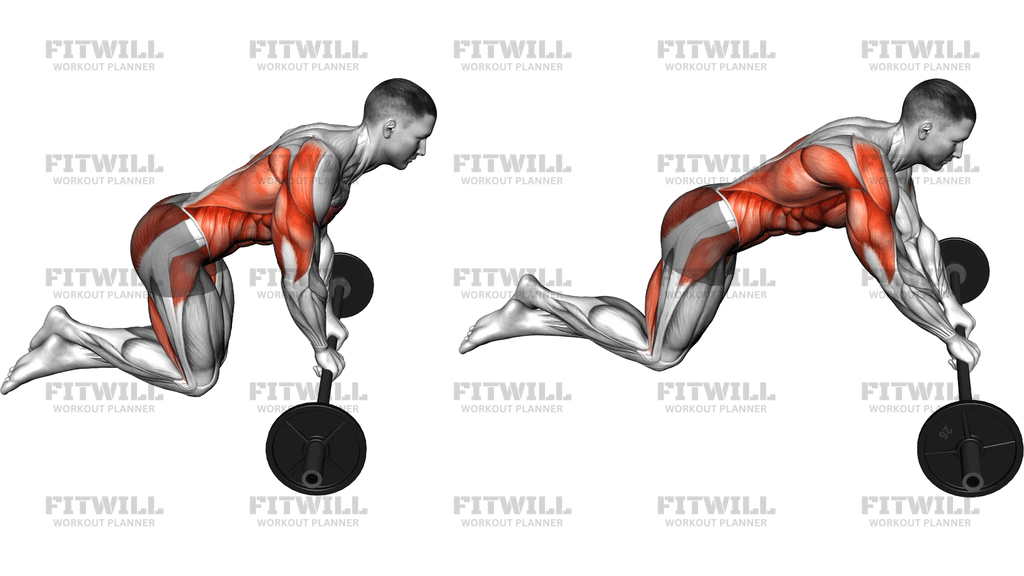
A barbell with round plates, a stability ball, or suspension straps can replicate the rollout pattern. Suspension straps and the stability ball are actually easier to control, making them good stepping stones to the wheel.
How does the Kneeling Stay Forward Wheel Rollout differ from a plank?
Both train anti-extension, but the rollout adds a moving lever and a loaded stretch, which makes the demand far greater. The plank is a static hold at one position; the rollout challenges the core through a long range of motion.
Should my arms stay straight during the rollout?
Yes, keep the elbows locked out softly throughout. Bending the arms turns it into a partial pulling exercise, shortens the lever on the abs, and usually signals that the load is too hard at that range.
How many sets and reps should I do?
Three sets of 5 to 10 slow, clean reps works well, placed early in a core session while you are fresh. Quality beats volume here; five strict reps are worth more than fifteen with a sagging lower back.