Suspender Abdominal Rollout With Pillow
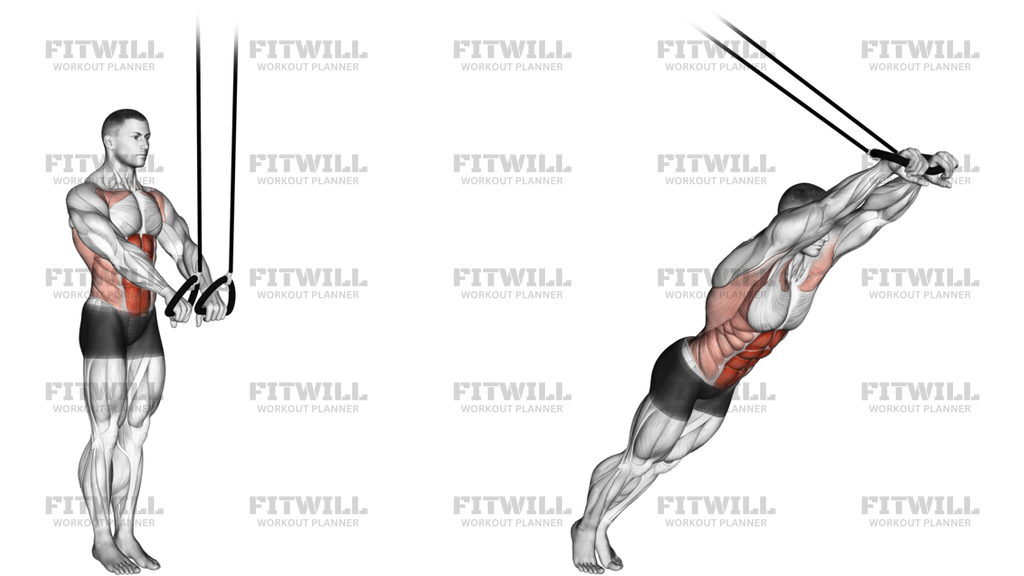
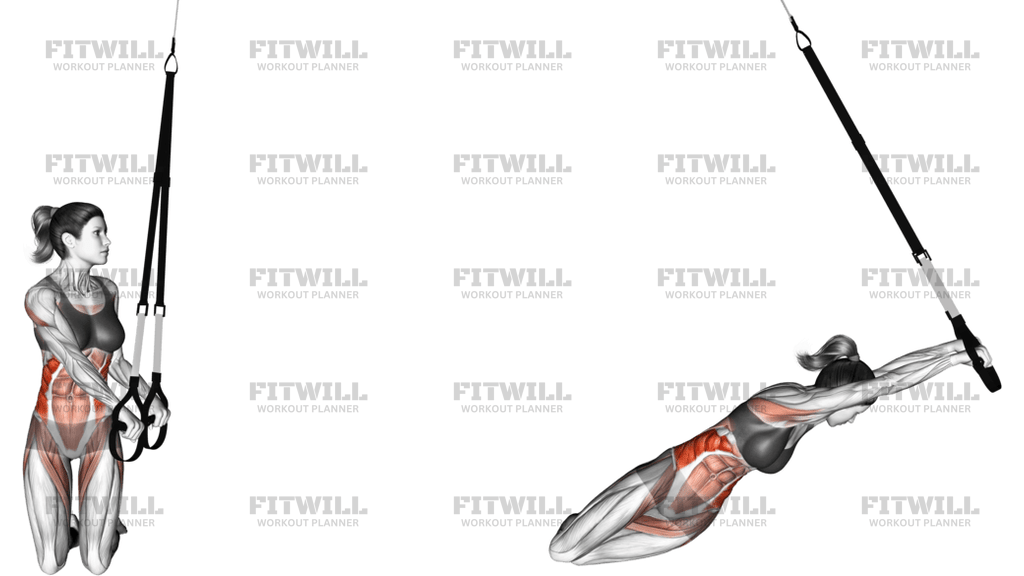
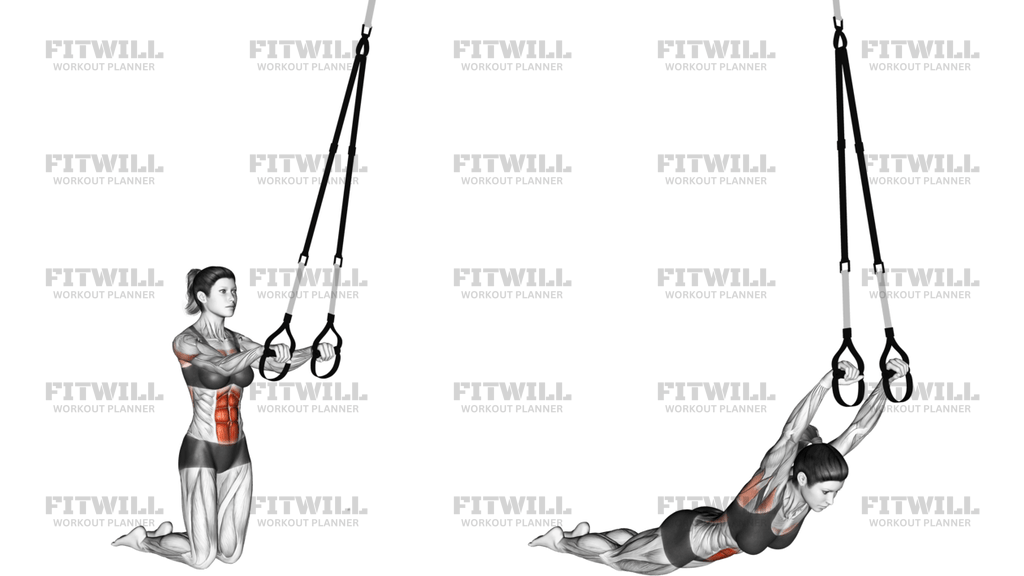
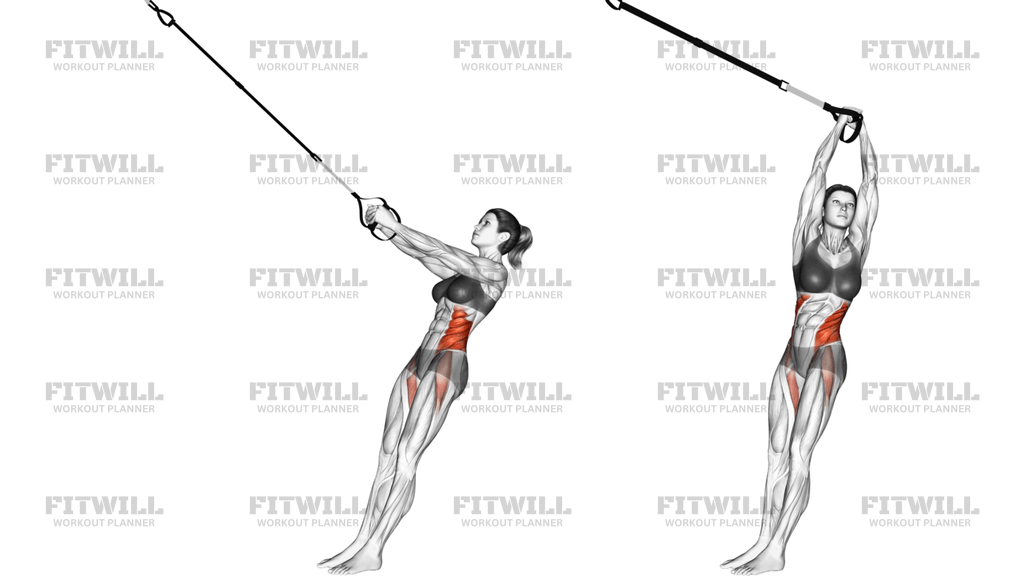
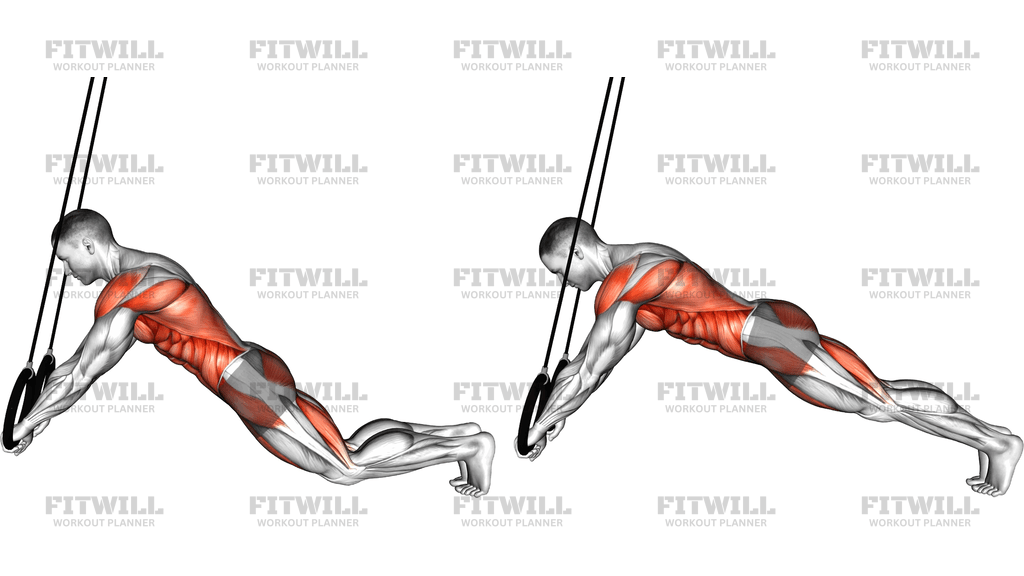
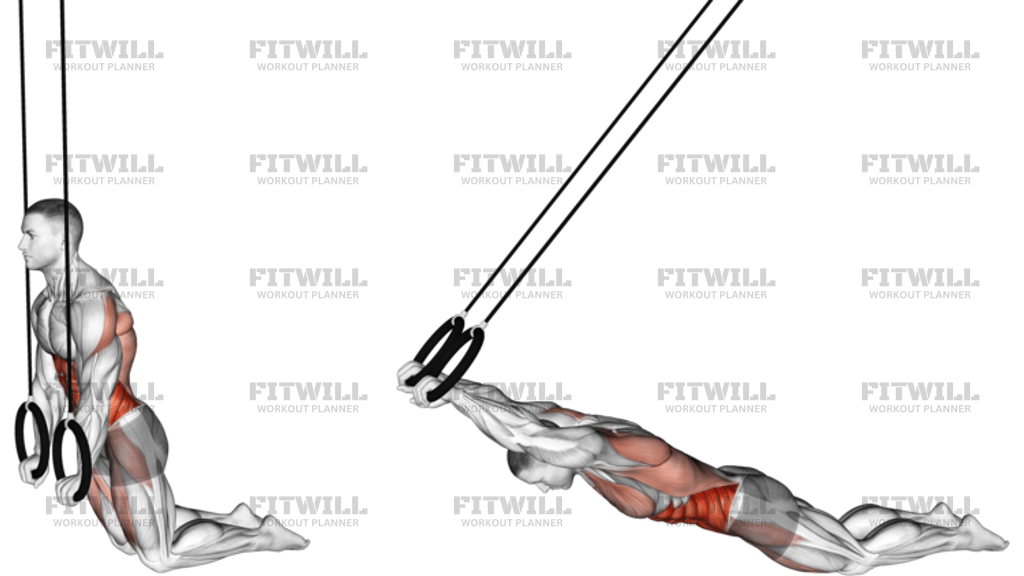
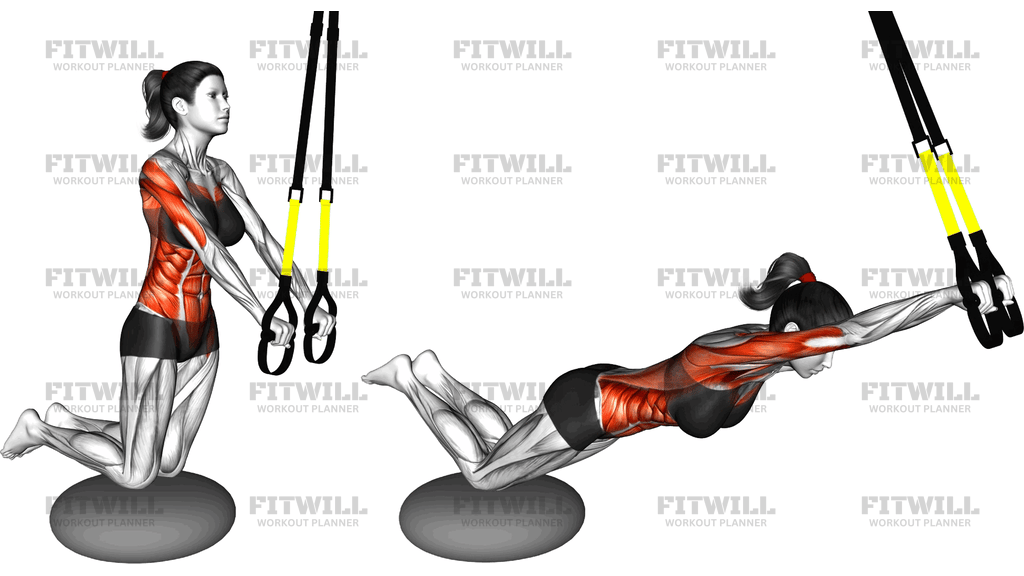
The Suspender Abdominal Rollout With Pillow is a kneeling rollout performed with suspension straps instead of an ab wheel. You kneel on a soft pillow, hold the suspension handles with both hands, and extend your body forward and down until your arms reach overhead and your torso hovers just above the floor, then pull yourself back to the start. Because the straps are unstable and can drift apart or collapse inward, your core has to work far harder to keep your body tracking straight than it would on a fixed roller.
This movement suits intermediate to advanced trainees who already own a solid plank and want to progress their anti-extension core work. It trains the abs and deep core primarily as bracing muscles: their job is to stop your lower back from sagging into an arch as your body lengthens away from your knees. Your shoulders, lats, and upper back handle the pulling and guiding work on the way back in, which is why the movement also feels demanding through the arms and shoulder stabilizers.
The setup details matter more here than in most core exercises. The pillow under your knees serves two purposes: it cushions your kneecaps from hard flooring and it lets you tilt your pelvis into a posterior tuck, which is the single most important protective position for your lower back during any rollout. The anchor point should be directly above and slightly in front of where you kneel, with the straps set at roughly hanging height so your arms can extend fully at the bottom without your hands dragging the floor.
To execute it well, start tall on your knees, squeeze your glutes, and tuck your tailbone under before you lean forward. Let your body fall forward in one slow line, arms straight, reaching overhead until you are nearly parallel to the floor. The return is where most of the work happens: pull the handles down and back toward your hips while exhaling hard, as if doing a straight-arm pulldown combined with a crunch. If your hips drop and your lower back arches at any point, you have gone too far out; shorten the range instead of pushing through it.
Common use cases include home training with a suspension trainer, accessory core work after compound lifts, and progressions for people who find kneeling ab wheel rollouts too easy or too hard to control depending on strap length. Because strap length is adjustable, this exercise scales cleanly: shorter straps and a steeper body angle make it easier, while longer straps and a more horizontal start make it significantly harder. Treat it like a strength skill rather than a burnout move, keeping reps low and quality high.
[ Workout Log & Planner ]
Put your next workout in Fitwill
Keep your plan and training log ready when you are.


Instructions
- Anchor the suspension trainer overhead and set the handles to around hip-to-waist height, long enough that your arms can extend fully when you roll out.
- Place a pillow on the floor beneath the anchor point and kneel on it with both knees, shins resting back so your kneecaps are off the hard ground.
- Grip the handles with a neutral grip, hands roughly shoulder-width apart, and walk your knees back until your body forms a straight line from knees to head with arms extended down in front.
- Before moving, squeeze your glutes, tuck your pelvis under, and brace your abs as if bracing for a light punch to the stomach.
- Keeping your arms straight, slowly let your body fall forward and down, allowing your arms to travel overhead until your torso is a few inches from the floor and nearly parallel to it.
- Pause briefly at the end position, checking that your hips have not dropped and your lower back has not arched.
- Exhale and pull the handles down and back toward your thighs, rounding your upper back slightly and drawing your ribs down as you return to the tall kneeling start.
- Breathe in at the top, re-brace, and repeat for the target number of reps.
- Between sets, release one handle at a time while staying in control of the straps so they do not snap back toward your face.
Tips & Tricks
- The most common mistake is letting the pelvis tilt forward as you extend, which turns the rollout into a lower back stretch. Re-tuck your hips at the top of every rep and hold that tuck throughout.
- If your knees slide backward on the pillow mid-set, you will lose your starting angle and drift too far out. Reposition your knees before each rep rather than adjusting mid-movement.
- Keep the straps from swaying: if your hands drift wider or narrower than shoulder-width, the straps will pull you off line and your obliques will fatigue early. Move slowly enough that the straps stay quiet.
- Your arms should stay straight the whole time. Bent elbows turn this into a triceps and chest exercise and take tension off the abs.
- Shorten the straps to make the movement easier and lengthen them to make it harder. Adjust length before you kneel down, not while holding the handles.
- The eccentric (rolling out) should take two to three seconds. Most people drop too fast, lose tension, and then grind a sloppy pull-back from a broken position.
- If you feel your lower back working instead of your abs, you are extending past your current brace strength. Cut the range in half and rebuild from there.
- Do this exercise early in your session while your core is fresh. Fatigue braces fail quickly, and the last few sloppy reps are where form breaks down.
- Stop the set when your hips start to sag or your pull-back becomes jerky. Two clean sets beat four compromised ones with this movement.
Frequently Asked Questions
Which muscles does the Suspender Abdominal Rollout With Pillow work?
The abs and deep core are the primary movers, working to prevent your lower back from arching as your body extends. Your lats, front shoulders, and upper back assist strongly on the pull back to kneeling.
Why is there a pillow under my knees?
The pillow cushions your kneecaps on hard floors and raises you slightly so your body can pivot cleanly at the knee. It also makes it easier to tuck your pelvis and keep your lower back protected.
Is the Suspender Abdominal Rollout With Pillow suitable for beginners?
It is best treated as an intermediate progression. Beginners should first build a solid plank and a shorter-range rollout, then use shorter straps and a more upright starting angle before extending fully.
How is this different from a kneeling ab wheel rollout?
The suspension straps are unstable, so your arms and core must also control side-to-side drift, making the demand on your trunk higher at any given range. The strap length also lets you scale difficulty more precisely than wheel distance.
How far out should I extend at the bottom?
Extend only as far as you can keep a tucked pelvis and a flat lower back. For most people that means stopping short of full parallel at first; going all the way down with an arching spine removes the benefit and adds risk.
What is the most common mistake with this exercise?
Letting the hips drop and the lower back arch during the extension, usually combined with dropping too fast. Slow the descent, re-tuck the hips at the top of each rep, and shorten the range until the brace holds.
Can I do the Suspender Abdominal Rollout With Pillow without a suspension trainer?
A kneeling ab wheel rollout is the closest substitute, though it removes the stability challenge of the straps. A barbell loaded with round plates can also roll, but the suspension version is easier on the shoulders for most people.
How many reps should I do?
Keep it in the strength range: 3 to 5 sets of 5 to 8 controlled reps with full bracing on each one. If you can cruise past 12 clean reps, lengthen the straps or slow the lowering phase instead of adding volume.
Is this exercise safe for my lower back?
When done with a tucked pelvis and a range you can brace through, it trains your trunk to resist extension, which supports a resilient back. If you feel sharp or localized back discomfort during the movement, reduce the range or stop and reassess your setup.
How high should the suspension handles be anchored?
Anchor them overhead with the handles at roughly hip-to-waist height while you kneel, so your arms extend fully at the bottom without your hands hitting the floor. Longer straps make the movement harder; shorter straps make it more manageable.