Ring Extended Plank
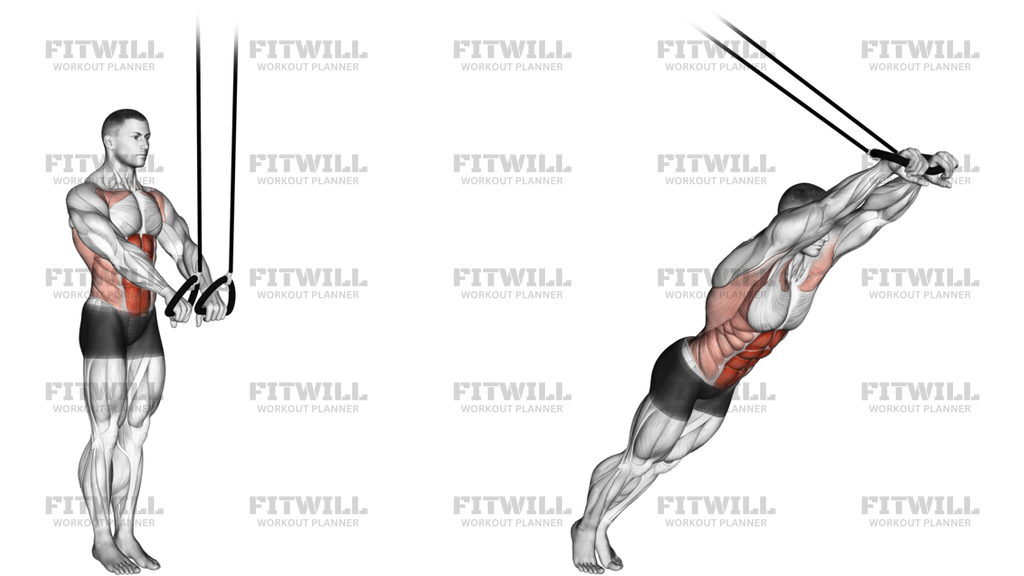
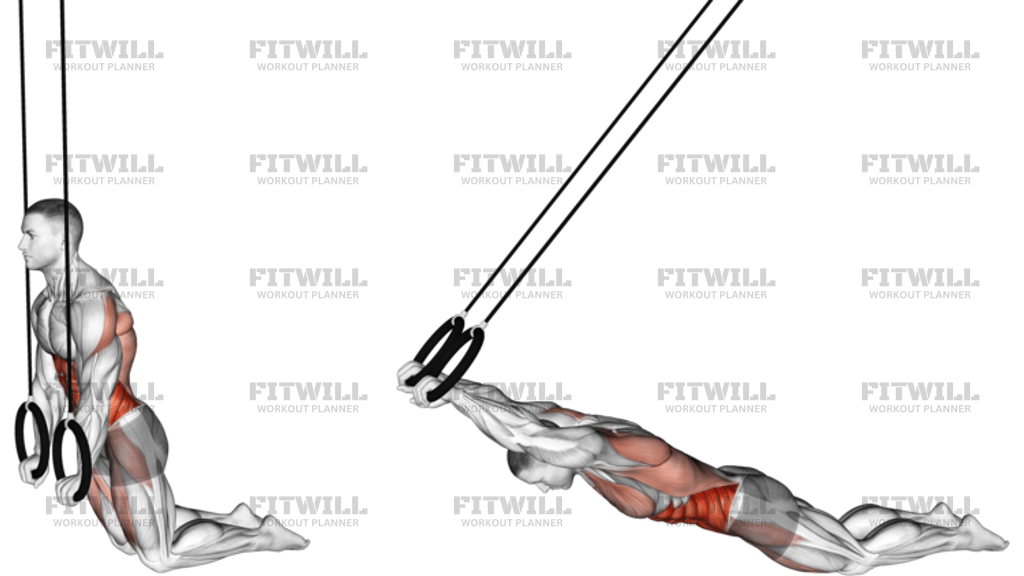
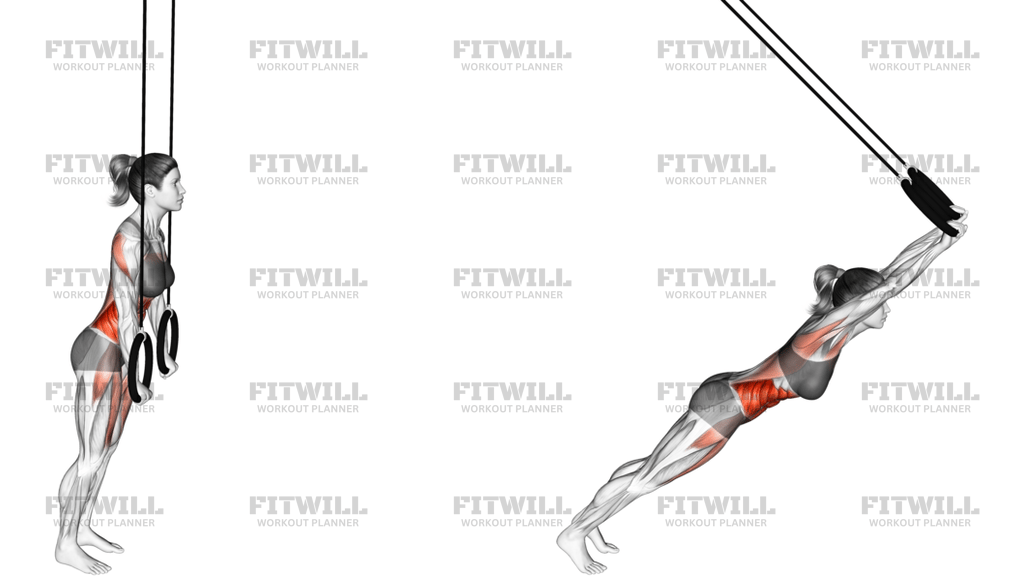
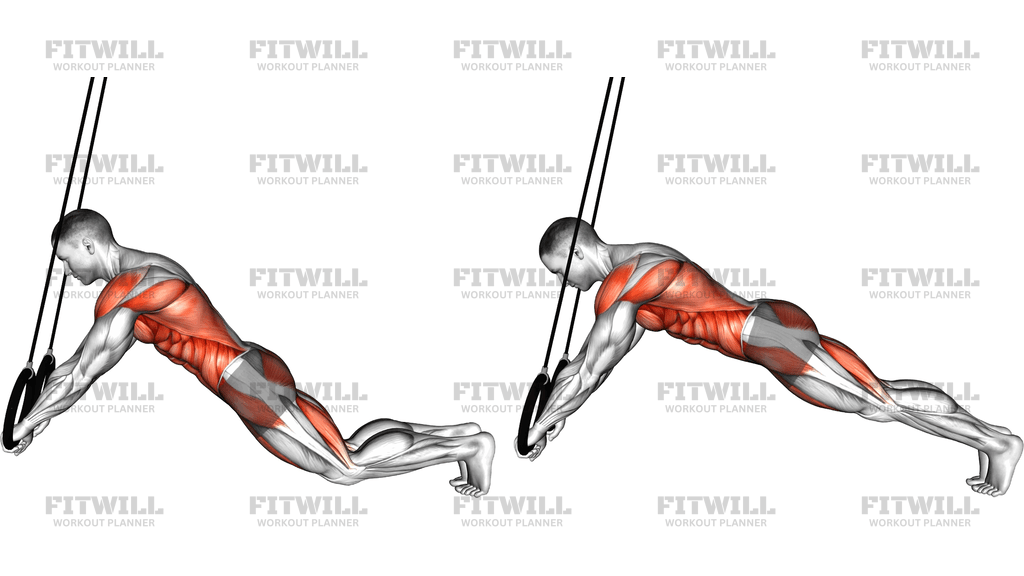
The Ring Extended Plank is an isometric core hold performed on gymnastic rings or a similar suspension trainer, where you support yourself in a plank with your hands pressed into the rings and your arms extended well in front of your shoulders. Instead of stacking your wrists directly under your shoulders like a standard plank, you push the rings forward so your body stretches into a long, angled line. That extended arm position dramatically lengthens the lever your core has to control, which is what makes this hold so demanding despite involving no movement at all.
Because the rings hang from a single anchor point, they shift and sway under you, so your abs, deep core, shoulders, and lats all have to work continuously just to keep your body from sagging or twisting. The front of your shoulders and the serratus muscles around your shoulder blades also work hard to keep you propped up, and your glutes and legs stay tight to hold the line from head to heels. Many people find the extended plank on rings feels harder than a set of standard planks several times longer.
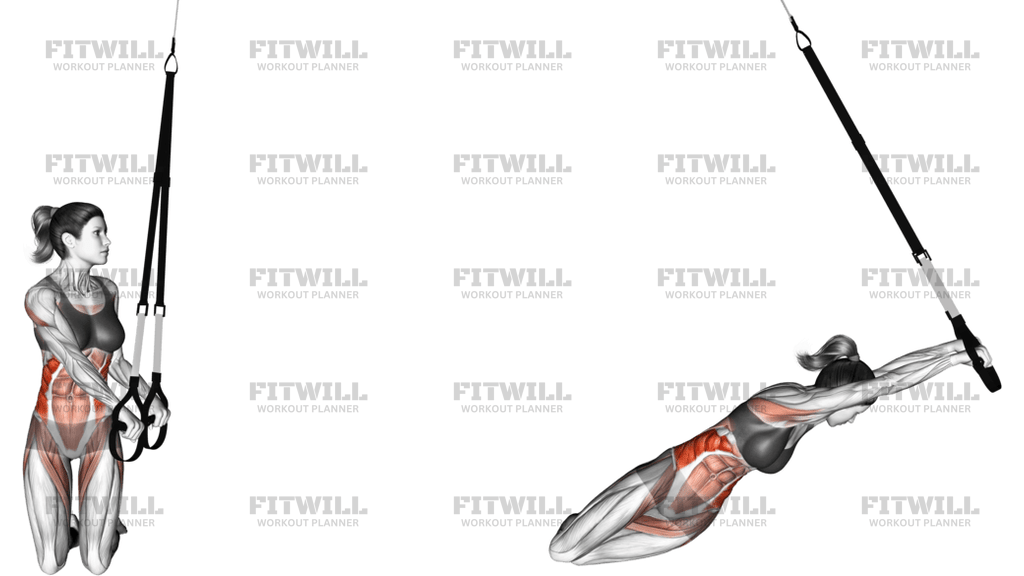
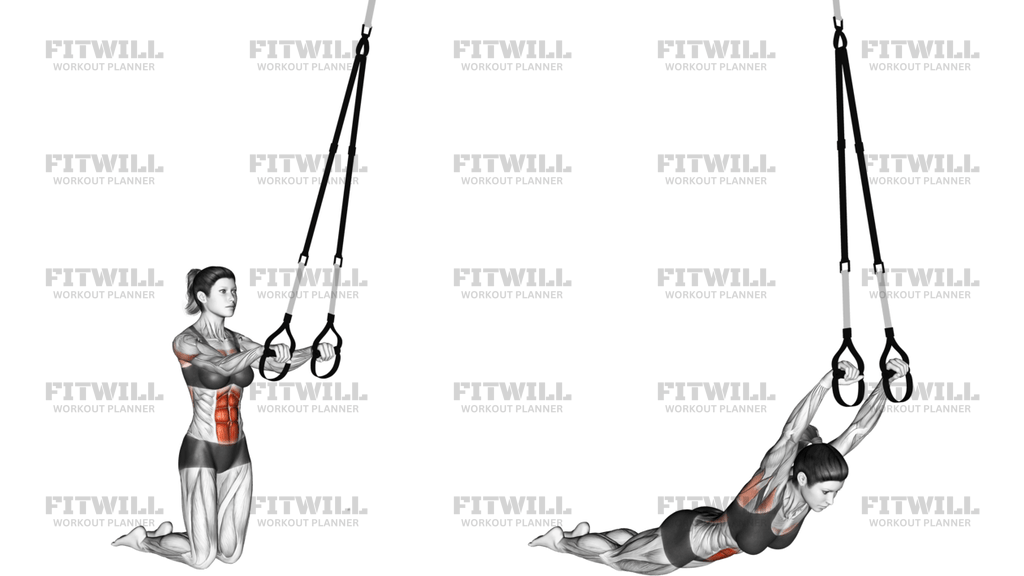
Setup matters a lot here. The lower the rings hang and the further you walk your feet back, the longer your body and the harder the hold; beginners can shorten the difficulty by keeping the rings higher and their body more upright. You can also start from the knees, as many people do when first learning this hold, before progressing to the full version on the toes. Your feet should be about hip-width apart so you can brace through the legs and stay balanced on the swaying straps.
To execute the hold well, press the rings out in front of you until your arms are almost straight, then actively pull your shoulder blades down and away from your ears rather than sinking between them. Tuck your ribs, squeeze your glutes, and hold a straight line from head through hips to heels. The most common error is letting the hips drop or the lower back arch as the arms extend, which shifts load away from the abs and onto the spine.
This hold is a staple in calisthenics and gymnastic strength training, and it pairs naturally with ring rollouts, ring push-ups, and body saws. It is a smart choice for anyone who has plateaued on floor planks, for athletes building the core stiffness needed for ring work, or as a finisher at the end of a pressing or core session. Hold for time rather than repetitions, aim for quality tension over a long clock, and step forward to rest as soon as your hips start to sag.
[ Workout Log & Planner ]
Put your next workout in Fitwill
Keep your plan and training log ready when you are.


Instructions
- Set the rings so they hang roughly knee height or lower for the full version, or around waist height if you plan to start from your knees.
- Grip the rings firmly and walk your feet back until your body forms a straight line and your arms are extended forward of your shoulders, hands directly below the anchor point.
- Set your feet about hip-width apart with toes tucked under (or knees down for the easier variation) so you can brace both legs evenly.
- Take a breath, then brace your abs as if bracing for a light punch, and squeeze your glutes to lock your pelvis in a neutral position.
- Press the rings forward and down into the floor so your arms extend until they are nearly straight, stopping at a distance where you can keep your hips level.
- Pull your shoulder blades gently down your back and keep your elbows soft but extended, avoiding any sagging between the shoulders.
- Hold this extended plank position with a straight line from head to heels, breathing in slow, controlled breaths through your nose for the duration of the hold.
- To finish, walk your feet forward toward the anchor to shorten the lever, then release your grip on the rings carefully.
- Reset your brace before each hold and stop the set the moment your hips drop or your lower back starts to arch.
Tips & Tricks
- Start with a hold distance you can control for 15-20 seconds with clean form; extending the arms further out is your progression tool, not extra time under poor tension.
- If your lower back arches as you press out, you have gone too far too soon — shorten the extension or drop back to the knee-supported version until your abs can hold the ribcage down.
- Do not let the rings drift out to the sides; keep both straps under even tension so your obliques work symmetrically instead of one side compensating.
- Squeeze the rings hard with your hands. A loose grip lets your wrists and forearms fatigue early and makes the sway much harder to manage.
- Keep a slight pull-in feeling with your lats as if dragging the rings back toward your feet — this protects the shoulders and keeps the plank from collapsing forward.
- Film yourself from the side for a set; most people are surprised how much their hips drop once the arms extend past the shoulders.
- If your wrists ache, rotate your grip slightly so the rings sit across the heel of the hand rather than pressing directly into the wrist crease.
- Place this hold before heavy pressing or pulling when your shoulders are fresh, or use short holds as a core finisher — avoid doing it right before grip-heavy work.
- Rest fully between holds; this is a high-tension isometric, and grinding through fatigued reps trains a sagging position instead of a braced one.
Frequently Asked Questions
What muscles does the Ring Extended Plank work?
The primary work comes from the abs and deep core, which fight the long lever created by the extended arms. Your lats, front shoulders, and the muscles around the shoulder blades support the hold, while the glutes and legs keep the body line locked.
Why is the Ring Extended Plank harder than a regular plank?
Extending your arms in front of your shoulders lengthens the distance between your hands and your hips, which multiplies the torque your core must resist. On top of that, the hanging rings shift and sway, forcing continuous stabilizing effort.
Can beginners do the Ring Extended Plank?
Yes, by starting from the knees or by setting the rings higher and keeping the body more upright. Master a solid 20-30 second hold in the easier position before extending the arms further or moving to the full plank.
How far forward should I extend my arms during the Ring Extended Plank?
Extend only as far as you can keep your hips level and your lower back from arching. For most people that means arms nearly straight with the rings out ahead of the shoulders, but the correct distance depends on your current core strength.
How long should I hold the Ring Extended Plank?
Aim for multiple sets of 10-30 seconds with full tension rather than one long, sagging hold. When you can hold 30 seconds with a perfectly straight line, progress by extending the arms further or elevating the difficulty.
The rings sway side to side when I hold the Ring Extended Plank — how do I fix that?
Keep your feet hip-width apart, squeeze the rings with an even grip, and match the tension in both arms. Swaying usually means one arm is pressing harder than the other or your hips are drifting off the midline.
What can I use instead of rings for the Ring Extended Plank?
A suspension trainer with handles works with the same technique, and a stability ball or wheel roller can approximate the extended position. A towel sliding on a smooth floor is a reasonable low-cost substitute, though it lacks the sway the rings add.
Is the Ring Extended Plank bad for the lower back?
Not when performed with a braced core and a neutral pelvis, but holding with sagging hips and an arched lower back loads the spine instead of the abs. Stop the set as soon as your form breaks rather than pushing through fatigue.
Should my elbows be locked during the Ring Extended Plank?
Your arms should be extended but not rigidly slammed straight. Keep a soft, active elbow with the rings pressed down and slightly pulled back so the tension sits in your lats and core instead of stressing the elbow joints.