Sitting Knee Raise Hold On A Chair
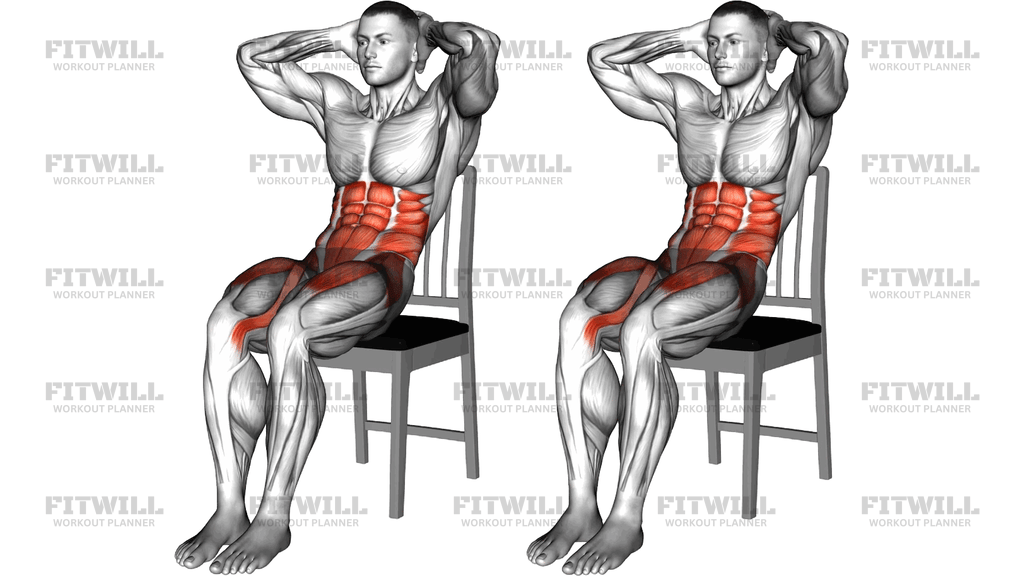
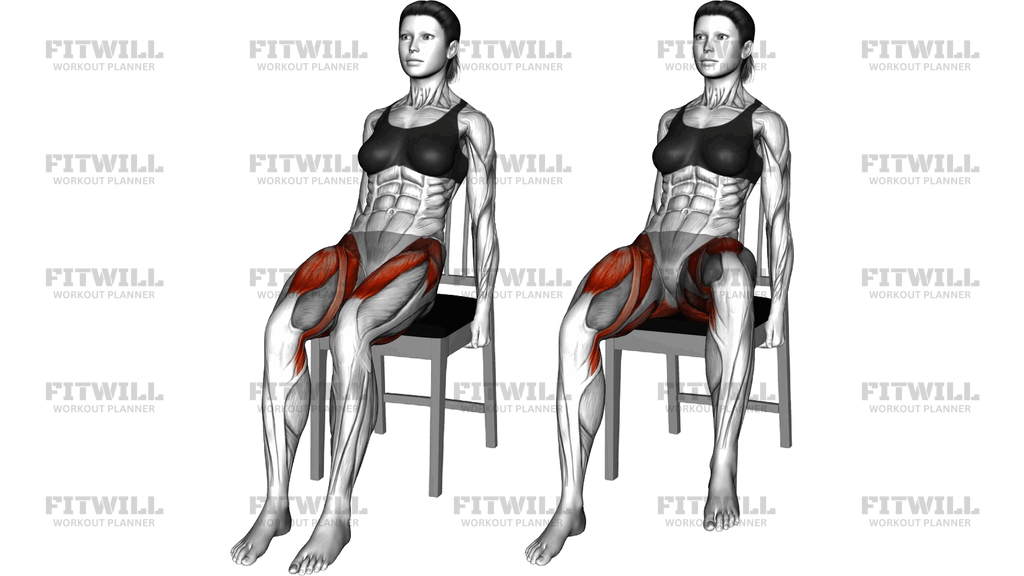
The Sitting Knee Raise Hold On A Chair is a simple isometric core and hip exercise: you sit upright on a sturdy chair, lift one knee so your foot clears the floor, and hold that raised position for time. Because nothing moves during the hold, the challenge comes from keeping your trunk steady while your hip flexors work continuously to hold the thigh up against gravity.
This movement is especially useful for people who find hanging knee raises or lying leg raises too demanding. Beginners, older adults, office workers who sit for long stretches, and anyone rebuilding strength after a layoff can use it to wake up the hip flexors and the deep abdominal muscles without straining the lower back. It requires only a stable, armless chair, so it works as a home workout, a warm-up drill, or a discreet desk-break exercise.
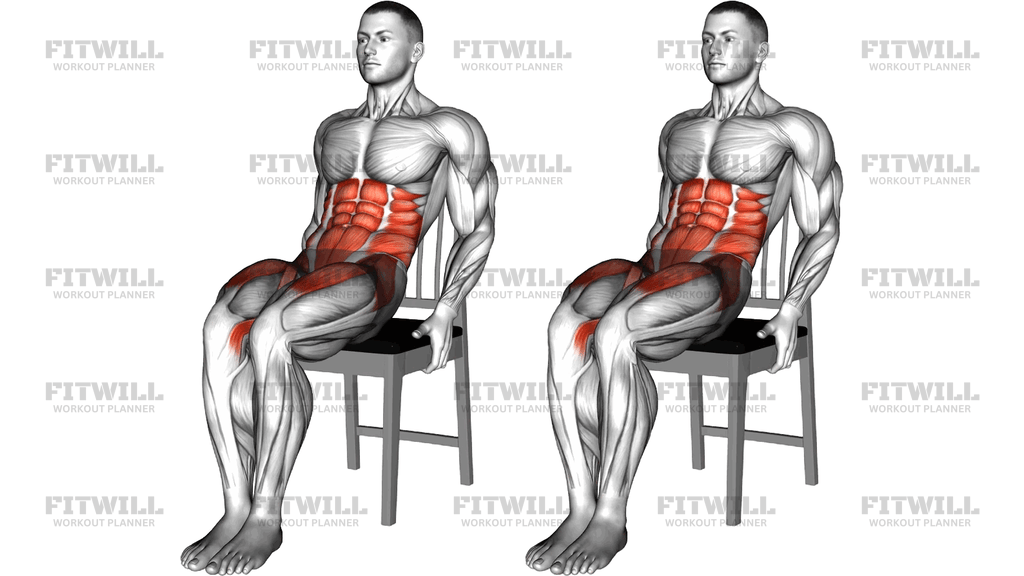
The main work comes from the hip flexors, particularly the iliopsoas and rectus femoris, which lift and hold the thigh. Your lower abdominals work isometrically to keep the ribs and pelvis from drifting as the leg rises, and the quadriceps help keep the knee bent and controlled. Because only one leg lifts at a time, you also train the trunk to resist the slight twist that each side's pull creates.
Setup makes or breaks this exercise. Slide to the front half of the seat, plant both feet flat, and sit tall with your shoulders stacked over your hips. Lightly rest your fingertips on the seat beside your hips for balance only. If you slouch or round your lower back before lifting, the abs stop doing their job and the lumbar spine takes the stress instead.
To perform it well, brace your midsection as if bracing for a light nudge, then lift one knee upward until the foot hangs clear of the floor. Keep your torso tall and still, breathe steadily through the hold, and aim for 10 to 30 seconds before lowering the foot slowly back down. Switch sides and match the hold time on both legs.
Common use cases include pre-workout activation for leg days, retraining hip flexor strength after long periods of sitting, and building toward harder variations like seated knee tucks or hanging knee raises. Move within a comfortable range, keep the effort at a level you can breathe through, and stop if you feel any pinching at the front of the hip.
[ Workout Log & Planner ]
Put your next workout in Fitwill
Keep your plan and training log ready when you are.


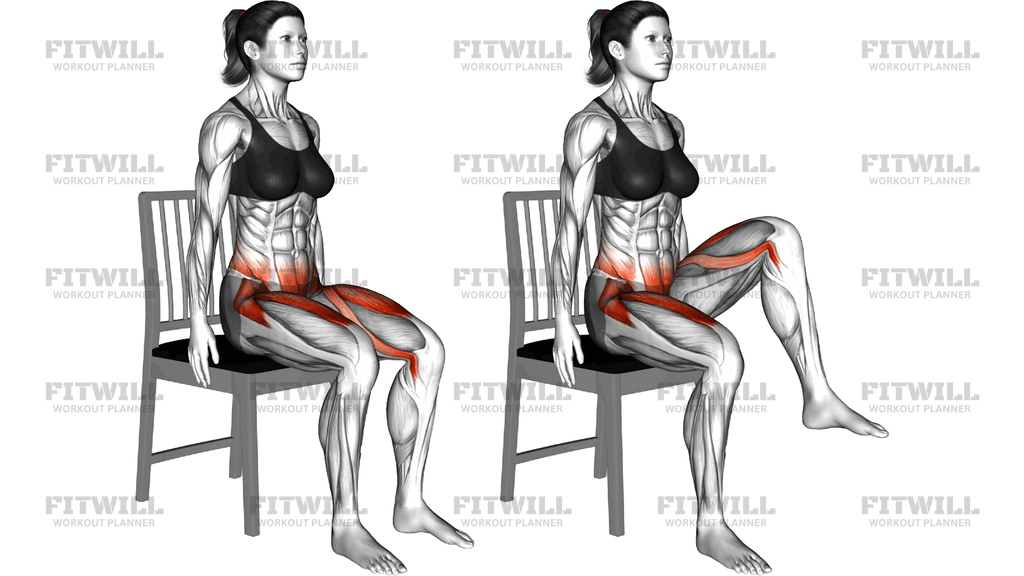
Instructions
- Choose a sturdy, armless chair and sit on the front half of the seat with your back upright and unsupported by the backrest.
- Place both feet flat on the floor about hip-width apart and rest your fingertips lightly on the seat edges beside your hips for balance only.
- Sit tall, lengthen the back of your neck, and brace your abdominal muscles as if preparing for a gentle push to the belly.
- Exhale and lift one knee upward, bending the hip until your foot hangs clear of the floor and your thigh rises a few inches off the seat.
- Hold the top position with your torso still: do not lean back, round your lower back, or tip sideways as the knee stays raised.
- Keep breathing slowly and evenly through the hold for 10 to 30 seconds, depending on your level.
- Lower the foot back to the floor under control, taking 2 to 3 seconds rather than dropping it.
- Reset your posture and brace again, then repeat the hold on the opposite leg.
- Complete 2 to 4 holds per side, resting about 30 to 60 seconds between efforts.
Tips & Tricks
- The most common mistake is leaning the torso backward as the knee rises, which turns the hold into a lower-back exercise; think of growing taller through the crown of your head as the leg lifts.
- Keep your hands as light as possible on the seat. If you are pressing down hard with your arms, the hold is too long or the knee is too high, so shorten the duration instead of muscling through with your arms.
- A slouched start position shuts off the lower abs before you even lift. Sit up, take a breath, and set your brace before the foot ever leaves the floor.
- If the front of your hip pinches at the top, lower the knee slightly until the foot is just off the floor and hold there; height is not the goal, sustained tension is.
- Match hold times exactly between sides. Most people have one hip flexor that fatigues faster, and evening them out matters more than adding seconds.
- Progress by adding 5 seconds per week before adding extra sets, since this is an endurance hold, not a strength grind.
- Breathe through the hold rather than holding your breath; if your face tenses or your breath stops, the effort is too intense.
- If balance feels shaky, widen your feet slightly at the start or place the chair against a wall so it cannot slide.
Frequently Asked Questions
What muscles does the Sitting Knee Raise Hold On A Chair work?
The hip flexors, especially the iliopsoas, do the main work of holding the knee up. The lower abdominals work isometrically to keep your torso upright, and the quadriceps help control the bent knee.
Is the Sitting Knee Raise Hold On A Chair good for beginners?
Yes, it is one of the most accessible ways to train the hip flexors and core because the chair supports your weight and there is no impact. Start with 10-second holds and build up gradually.
How high should I raise my knee during the hold?
Lift only until your foot clearly clears the floor and you can keep your torso tall. Raising the knee higher increases hip flexor demand, but only go higher if you can hold it without leaning back.
Why do I keep leaning back when I lift my knee?
Leaning back shifts the load away from tired hip flexors and lets the lower back arch take over. Cue yourself to stay tall through the crown of your head and shorten the hold until you can stay upright.
Can I use the Sitting Knee Raise Hold On A Chair as a warm-up?
Yes, one or two short holds per side before lower-body training nicely activates the hip flexors and bracing pattern. Keep the effort light so you do not fatigue the muscles before your main workout.
How long should I hold each knee raise?
Aim for 10 to 30 seconds per side, stopping when your posture starts to slip rather than when the leg drops. Two to four holds per side is a solid dose.
What kind of chair should I use?
Use a stable, armless chair that will not tip or slide, placed on a non-slip floor or against a wall. Avoid chairs with wheels or soft cushioning that lets you sink and slouch.
What can I do if this hold is too easy?
Progress to holding a knee lift with both feet off the floor, or move to seated knee tucks with repeated reps. From there, hanging knee raises from a bar are the natural next step.
Is it safe to do the Sitting Knee Raise Hold On A Chair every day?
For most people, yes, since it is a low-load isometric hold and the muscles recover quickly. Just keep the daily volume modest and skip the exercise if the front of your hip feels irritated.