Seated Alternate Hip Swirl On A Chair
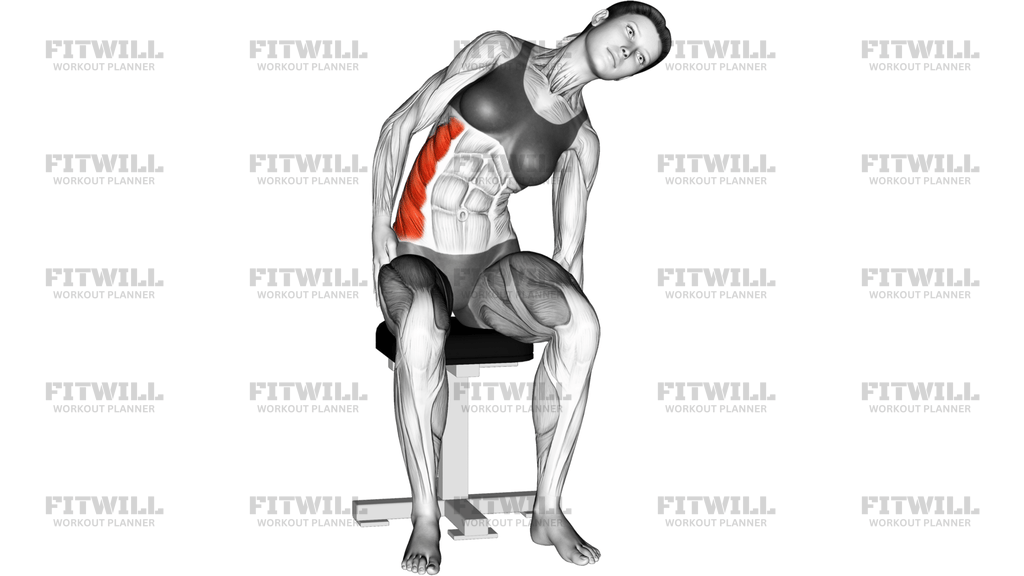
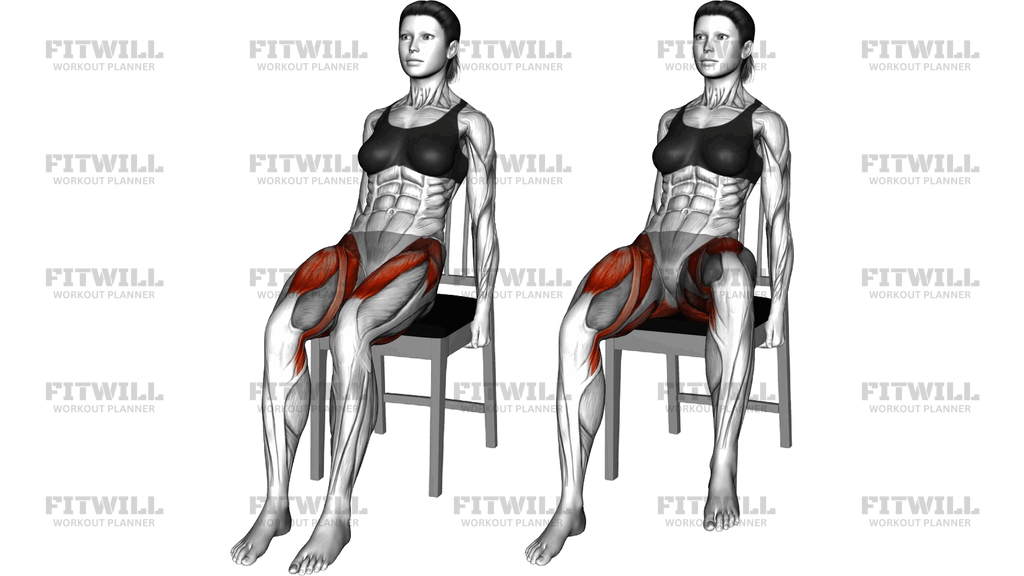
The Seated Alternate Hip Swirl On A Chair is a gentle seated mobility drill in which you rotate both knees side to side while your feet stay planted on the floor. You sit upright on a sturdy chair with your feet about hip-width apart, then let your knees sway like a windshield wiper toward one side, bring them back through center, and repeat toward the other side. The movement happens almost entirely at the hips, and the highlighted areas in the exercise artwork show that the work concentrates around the outer hip and front-of-hip region rather than the thighs themselves.
This drill is especially useful for people who spend long hours sitting, since prolonged sitting tends to leave the hips stiff and the outer-hip muscles underactive. It is also a friendly entry point for beginners, older adults, or anyone recovering general mobility who is not ready for standing hip rotations or floor work. Because the chair supports your full body weight, you can focus entirely on making the rotation smooth and even from side to side.
The primary area trained is the outer hip, including the gluteus medius and the tensor fasciae latae, which control rotation and sideways stability of the thigh. The deep hip rotators and hip flexors lengthen and shorten through the swirl, while your obliques and deep core work quietly to keep your torso upright as your knees travel side to side. Do not expect heavy muscle building from this exercise; treat it as a mobility and control drill that prepares the hips for walking, squats, lunges, or sport.
Setup matters more than it might seem. A stable, armless chair with your sitting bones well placed on the seat gives your hips room to rotate without catching. Keeping your feet flat and roughly hip-width apart anchors the lower legs so the swirl comes from the hip joints instead of the ankles or knees collapsing. If your feet slide or your heels lift, the rotation loses its clean axis and the knees take extra twisting stress.
To execute the movement well, sit tall with your hands resting on the sides of the seat or your thighs, brace your core lightly, and let both knees drift to one side as a unit while the soles of your feet stay glued to the floor. Pause briefly at the end of the range, then reverse through center to the opposite side. The tempo should feel unhurried, roughly two to three seconds in each direction, and both sides should cover the same distance.
Common use cases include desk-break mobility routines, warm-ups before lower-body strength sessions, and seated exercise programs for people with limited standing tolerance. Stop short of any pinching in the groin or sharp twisting discomfort in the knees, and reduce the range if you feel either. A smooth, moderate swirl done consistently does far more for hip comfort than forcing an aggressive rotation.
[ Workout Log & Planner ]
Put your next workout in Fitwill
Keep your plan and training log ready when you are.


Instructions
- Sit on the front half of a sturdy, armless chair with your sitting bones firmly on the seat and your feet flat on the floor about hip-width apart.
- Bend your knees to roughly 90 degrees so your shins are vertical, and place your hands on the sides of the seat or lightly on your thighs for support.
- Sit tall through your spine, draw your shoulders back and down, and brace your core lightly so your torso does not slump as you move.
- Keeping both feet glued to the floor, let both knees sway together to the right, rotating through the hip joints rather than dragging your feet.
- Continue until you feel a comfortable stretch across the outer hip of the trailing leg, and pause there for a breath.
- Reverse the swirl and carry both knees through center over to the left side, matching the same distance and speed you used on the first side.
- Exhale as the knees travel to one side and inhale as they return through center, keeping the breathing steady and continuous.
- Alternate sides for your desired number of repetitions, letting each pass through the middle act as the reset point.
- Finish in the neutral starting position with knees pointing straight ahead and feet flat before standing up from the chair.
Tips & Tricks
- If your knees keep collapsing inward as they cross the center line, slow the tempo down; the inward leg is usually rushing because the outer hip is tight on that side.
- A common mistake is twisting from the lower back so the whole torso swings with the knees. Fix it by imagining your chest facing straight ahead at a fixed point on the wall the entire set.
- Watch your feet: if the soles pivot or the heels lift, your lower leg is rotating instead of your hip. Widen your stance slightly and re-plant the feet before continuing.
- Do not let one side travel farther than the other. If your range is uneven, spend an extra few repetitions on the stiffer side to balance the swirl.
- Keep the movement in the hip joint. Any sharp twisting sensation around the knee joint means the range has gone too far, so shorten the arc immediately.
- Light pressure from your fingertips on the seat edge can help stabilize your torso, but avoid pushing with your arms, which shifts the work away from the hips.
- Breathe out as the knees move away from center rather than holding your breath; breath-holding usually comes with unnecessary tension in the shoulders and neck.
- If the chair slides on a smooth floor, place it against a wall or use a chair on carpet so the seat stays planted under you.
- Use this drill as a warm-up before squats or lunges rather than a finisher, since the hips respond best to swirling when they are not fatigued.
Frequently Asked Questions
What muscles does the Seated Alternate Hip Swirl On A Chair work?
The main work happens in the outer hip, particularly the gluteus medius and tensor fasciae latae, along with the deep hip rotators and hip flexors as the knees rotate. Your obliques and deep core also work to keep the torso facing forward while the legs swirl.
Is this exercise suitable for complete beginners?
Yes, it is one of the most accessible hip mobility drills because the chair bears your weight and no equipment strength is needed. Start with a small arc and let the range grow naturally over a few sessions.
Why should my feet stay flat during the Seated Alternate Hip Swirl On A Chair?
Flat, planted feet anchor the lower legs so the rotation comes cleanly from the hip joints. If your feet pivot or slide, the twisting stress transfers into the knees and ankles instead.
How far should my knees travel to each side?
Go only to the point where you feel a comfortable stretch across the outer hip of the trailing leg, with no pinching in the groin or twisting pain in the knees. Both sides should travel the same distance even if that range is modest.
My lower back twists along with my knees. How do I fix this?
Pick a fixed point on the wall in front of you and keep your chest facing it throughout the set, and rest your hands lightly on the seat to steady the torso. Slowing the tempo also makes it easier to separate hip rotation from spinal rotation.
What can I use if I do not have a suitable chair?
Any firm, stable seat such as a bench works, as long as it has no arms blocking the knees and does not wobble. Avoid soft sofas, because a sinking seat tilts your pelvis and makes the swirl uneven.
How many repetitions of the Seated Alternate Hip Swirl On A Chair should I do?
A practical starting point is 8 to 12 smooth alternations per side, which takes about a minute. Use it once or twice a day as a desk break or before lower-body training.
Is this exercise safe if I have knee problems?
The drill is generally gentle on the knees when the feet stay planted and the range is moderate, but any sharp knee twisting sensation is a signal to shorten the arc or stop. Check with a qualified professional before adding it to your routine if you have a known knee condition.
Should I feel this more on one side of my hips than the other?
Some side-to-side difference is common, especially if you habitually sit with your legs crossed or favor one leg when standing. Give the stiffer side a few extra controlled repetitions rather than forcing a bigger range on that side all at once.