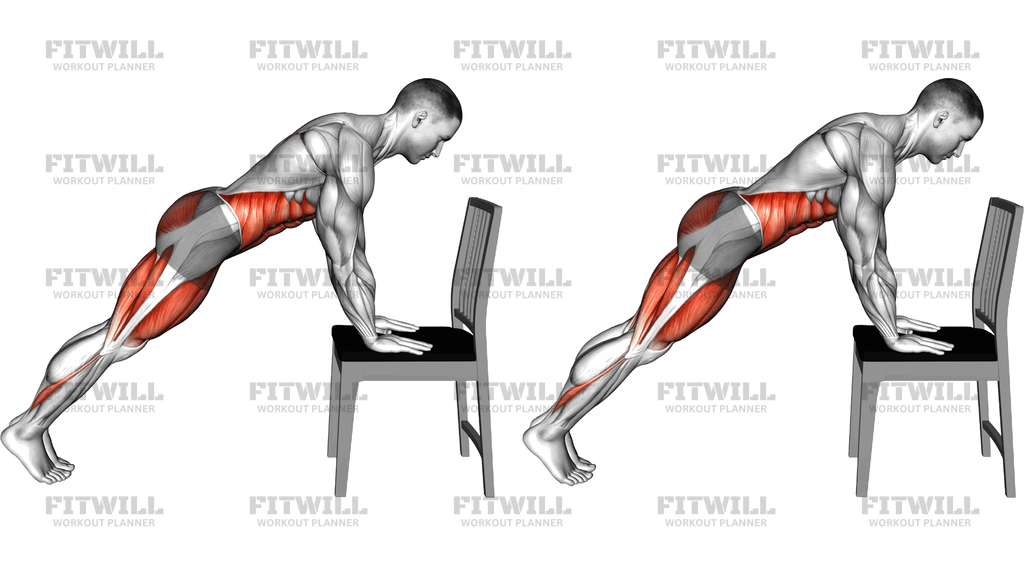
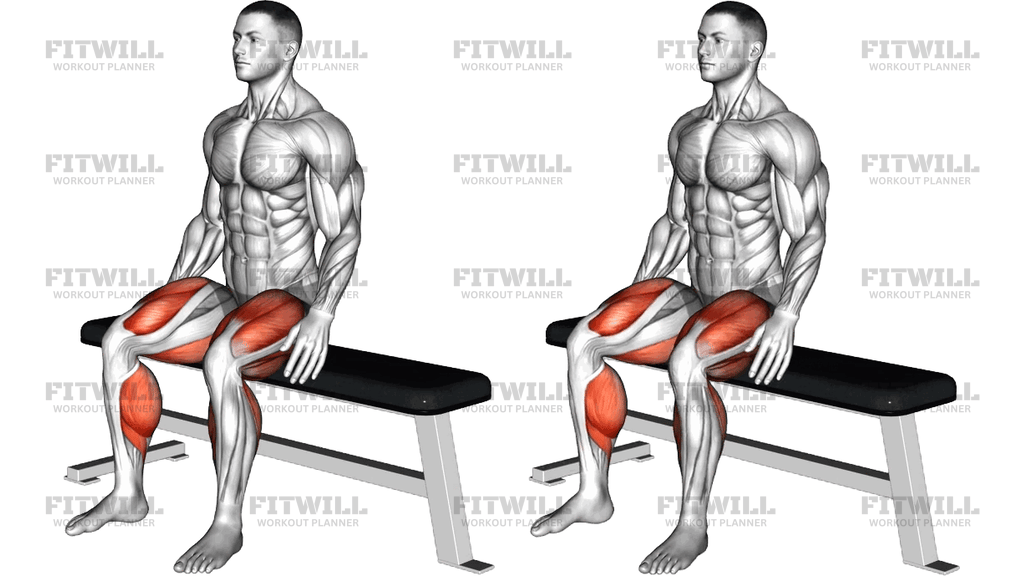
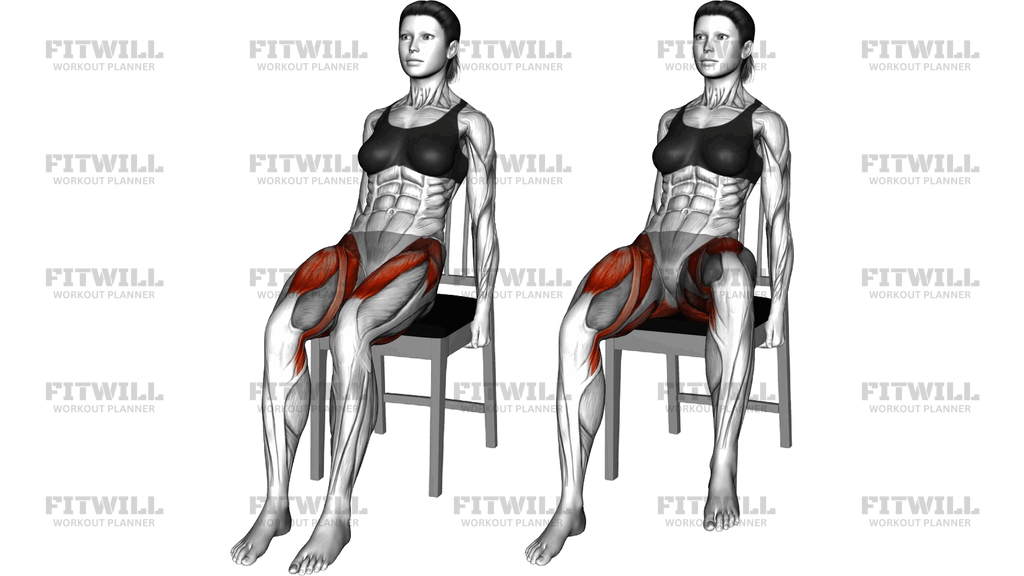
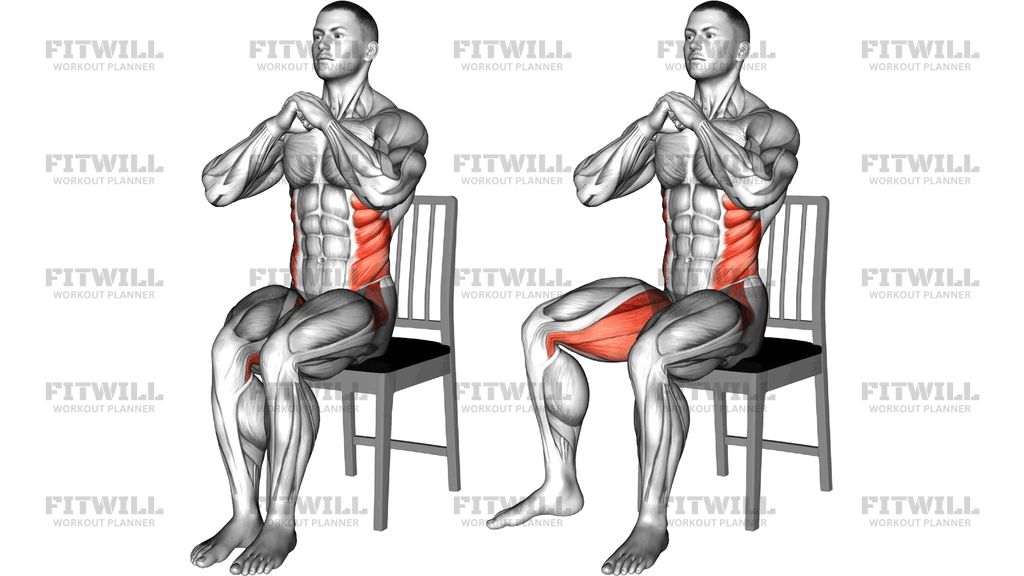
Seated Leg Raises On A Chair
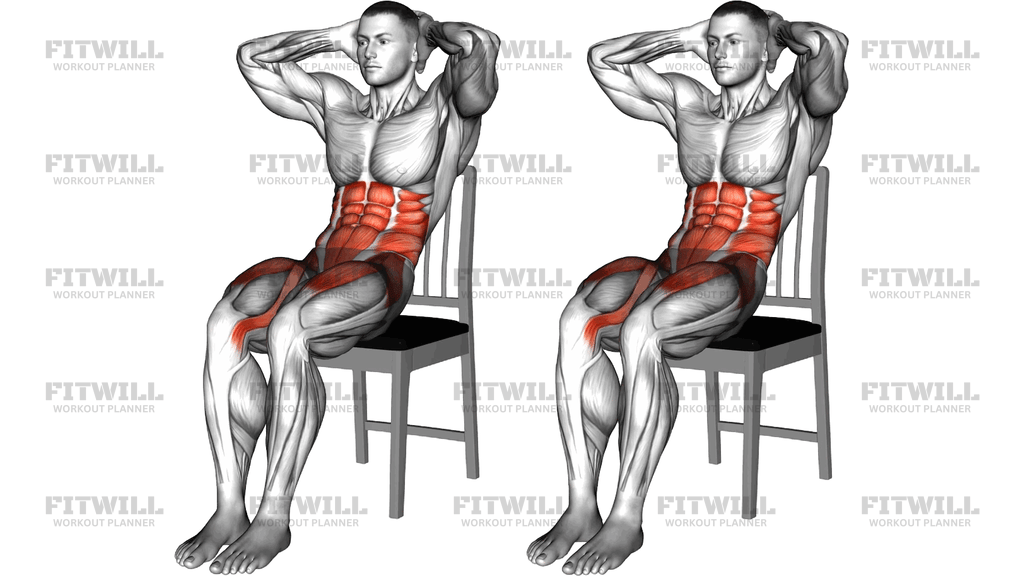
Seated Leg Raises On A Chair is a simple bodyweight movement where you sit on a sturdy chair, grip the sides of the seat for support, and lift your legs up toward your torso before lowering them back down under control. The highlighted work happens through the front of the hip and the abdominal wall, which contract together every time the thighs travel up toward the ribs. Because you are seated and leaning back slightly, your trunk has to stay braced the entire time, which turns what looks like a leg exercise into a genuine core challenge.
This movement is especially useful for people who want to train the hip flexors and lower abs without getting down on the floor. Office workers can do it at a desk between tasks, older adults can use it as a gentle introduction to abdominal training, and anyone rehabbing general strength after a long layoff can scale it easily by bending the knees more or raising one leg at a time. It is also a common stepping stone toward harder hanging knee raises, since it teaches the same hip-flexion pattern with far less load.
The setup matters more than it appears. Sitting too far forward on the chair removes the support base and encourages you to round your lower back, while sitting too upright makes the raise feel easy but strips tension away from the abdominals. A slight backward lean against the chair back, with your hands gripping the seat on either side of your hips, gives you the ideal angle: enough lean to load the abs, enough stability to keep your spine neutral.
To perform it well, think of lifting your knees toward your chest rather than just swinging your feet off the floor. Exhale as the legs rise, pause briefly at the top, then lower slowly and stop just before your feet touch the ground so the muscles stay engaged. The most common errors are rushing the reps, arching the lower back as the legs drop, and pulling with the arms instead of using them only for balance. Keep the movement smooth and the range honest, and the chair leg raise delivers a surprisingly focused dose of work for the abs and hip flexors with zero equipment beyond a seat.
[ Workout Log & Planner ]
Put your next workout in Fitwill
Keep your plan and training log ready when you are.


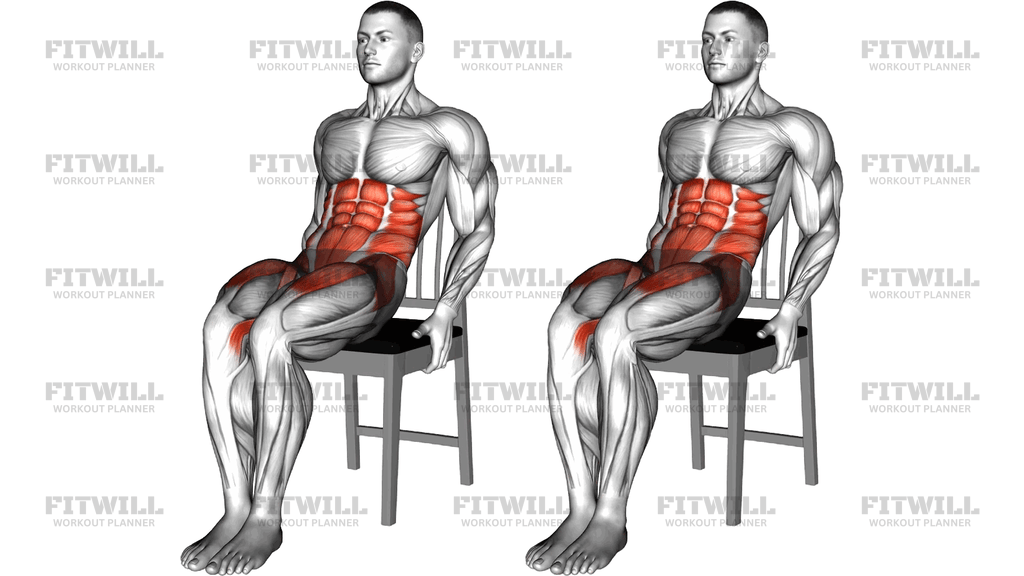
Instructions
- Sit on a stable chair with your feet flat on the floor, positioned toward the front edge of the seat so your hips can move freely.
- Place your hands on the seat on either side of your hips and grip the edge firmly; lean your torso back slightly against or toward the chair back.
- Draw your belly button in and brace your abdominal wall as if preparing for a light push, keeping your chest tall and shoulders relaxed.
- Keeping your knees bent at roughly 90 degrees, lift both feet off the floor a few inches to establish a controlled starting position.
- Exhale and raise your knees up toward your chest, letting your thighs move toward your ribs while your lower back stays in contact with your braced posture rather than rounding or arching.
- Pause for one second at the top of the raise, when your knees are as close to your chest as you can bring them without slumping forward.
- Inhale and lower your legs slowly back toward the floor, resisting gravity instead of dropping your feet.
- Stop the descent just before your feet touch the ground, keeping light tension in the abs and hip flexors.
- Complete your repetitions, then set both feet flat on the floor, release your grip, and reset your posture before the next set.
- If the two-legged version is too difficult, perform the raise one leg at a time while the opposite foot stays grounded for support.
Tips & Tricks
- The most frequent mistake is swinging the legs up with momentum from the hips; if your feet flick upward at the start, slow the first third of the rep deliberately.
- Do not let your lower back round as the legs rise. If your tailbone tucks and your spine curls, reduce the range and lift your knees only as high as you can while keeping your trunk rigid.
- Grip the seat to stabilize, not to lift. If your arms are doing most of the work and your shoulders are shrugging, lighten the effort by raising one leg at a time.
- Keep the knees bent for an easier version; straightening the legs lengthens the lever arm and makes the hip flexors and abs work noticeably harder.
- A chair with armrests or wheels is unsuitable. Pick a fixed chair with a firm, flat seat so your hands have a solid edge to grip.
- If your hip crease pinches at the top of the raise, lift slightly less high and focus on squeezing the lower abs at the peak instead of chasing height.
- Breathe out on the way up every rep. Holding your breath is common on this movement because the brace feels demanding, but it will gasp out your stamina fast.
- Use a slow three-second lowering phase if you only feel the exercise in the fronts of your thighs; the controlled descent shifts more of the work into the abdominal wall.
- Place a folded towel on the seat edge if the grip position presses uncomfortably into your palms.
Frequently Asked Questions
What muscles do Seated Leg Raises On A Chair work?
The primary muscles are the hip flexors at the front of the hip, particularly the iliopsoas, with strong support from the lower abdominals. The quads assist as the knees extend or hold position, and the deep core works to keep your trunk stable throughout.
Is Seated Leg Raises On A Chair good for beginners?
Yes, it is one of the most accessible core exercises because you stay seated and can adjust the difficulty easily. Beginners should start with bent knees and a small lift of a few inches, progressing to higher knee raises as control improves.
Why do I feel Seated Leg Raises On A Chair mostly in my thighs instead of my abs?
The rectus femoris, one of the quadriceps, crosses the hip and assists in lifting the leg, so thigh fatigue is normal to some degree. To bias the abs more, keep the knees bent, slow the lowering phase, and focus on pulling your ribs and pelvis closer together as the knees rise.
How is Seated Leg Raises On A Chair different from hanging knee raises?
Both use the same hip-flexion pattern, but the chair version supports your body weight and removes the grip and shoulder demands of hanging. This makes it an ideal regression to build strength before progressing to hanging or captain's chair knee raises.
What kind of chair should I use for Seated Leg Raises On A Chair?
Use a fixed chair with a firm, flat seat and no wheels, ideally one with a back you can lean lightly against. Your hands need a solid seat edge to grip on both sides of your hips, so avoid stools without edges or anything that can slide.
Should my back stay against the chair during the raise?
A light backward lean is part of the setup because it loads the abdominals, but your lower back should not round or arch during the movement. Keep your trunk braced and let the knees travel up toward the chest without slumping forward or curling your spine.
How many reps of Seated Leg Raises On A Chair should I do?
Start with 2 to 3 sets of 8 to 12 controlled repetitions, focusing on a slow lowering phase on every rep. Once that feels comfortable, progress by extending the legs slightly, adding a pause at the top, or slowing the tempo rather than simply adding many fast reps.
Can I do Seated Leg Raises On A Chair every day?
Because it is a low-load bodyweight movement, most people can perform it frequently without issue. Still, treat it like any strength work: allow at least a day of recovery between harder sessions and stop if you feel strain in the front of the hip or lower back.
What should I do if the two-legged version is too hard?
Perform the raise one leg at a time with the opposite foot staying flat on the floor for support, or simply lift both feet an inch or two off the ground and hold. Both options reduce the lever load while still training the hip flexors and abdominals.
Are Seated Leg Raises On A Chair safe for the lower back?
For most people the exercise is gentle on the lower back as long as the spine stays neutral and the legs are lowered with control. If you feel sharp discomfort or arching in your lower back, reduce the range of motion, keep the knees bent, or use the single-leg variation.