Pelvic Tilt Hold
The Pelvic Tilt Hold is a small, precise core exercise performed lying on your back with the knees bent and feet flat on the floor. Instead of lifting into a bridge, you rock the pelvis backward so the tailbone curls up slightly and the lower back flattens toward the floor, then you hold that position. It is one of the simplest ways to feel the deep abdominal wall working, and it is often the very first core drill taught to people recovering from back discomfort, new to training, or learning how to control the position of their spine.
The main work comes from the deep core, particularly the transverse abdominis and lower portions of the rectus abdominis, with the glutes assisting the backward tilt of the pelvis. Because you are holding an isometric position rather than moving through a large range, the emphasis is on control and endurance rather than strength through motion. The muscles along the lower back are encouraged to lengthen and relax while the front of the trunk does the stabilizing, which is exactly the balance many people are missing.
Setup matters more here than in almost any other core exercise. Lie on your back with the knees bent roughly ninety degrees, feet flat and about hip-width apart, and arms resting at your sides. There should be a natural small arch under the lower back at the start. If the hips are too tight or too far from the feet, the thighs take over; if the knees are collapsed inward or outward, the pelvis cannot tilt cleanly. A firm floor or exercise mat gives just enough cushion without changing pelvic position.
To execute the hold, exhale gently and draw the pubic bone up toward the ribs, pressing the small of the back flat against the floor. Keep the ribs from flaring upward and keep the glutes relaxed rather than clenched. Hold the flattened position for five to ten seconds while breathing shallowly but steadily, then release slowly and let the natural arch return before repeating. The movement is subtle: the hips stay down, and only the pelvis rotates a few degrees.
The Pelvic Tilt Hold is widely used in early-stage core programming, postpartum return to training, warm-ups before squats and deadlifts, and as a teaching tool for anyone who arches or ribs flare during planks and leg raises. It pairs well with dead bugs, glute bridges, and bird dogs as part of a foundational trunk routine.
The most common mistake is turning it into a glute bridge by lifting the hips, or forcing the movement so hard that the breath stops. Stay patient with the small range, keep breathing throughout the hold, and aim for a quality squeeze you can sustain rather than a maximal press into the floor.
[ Workout Log & Planner ]
Put your next workout in Fitwill
Keep your plan and training log ready when you are.


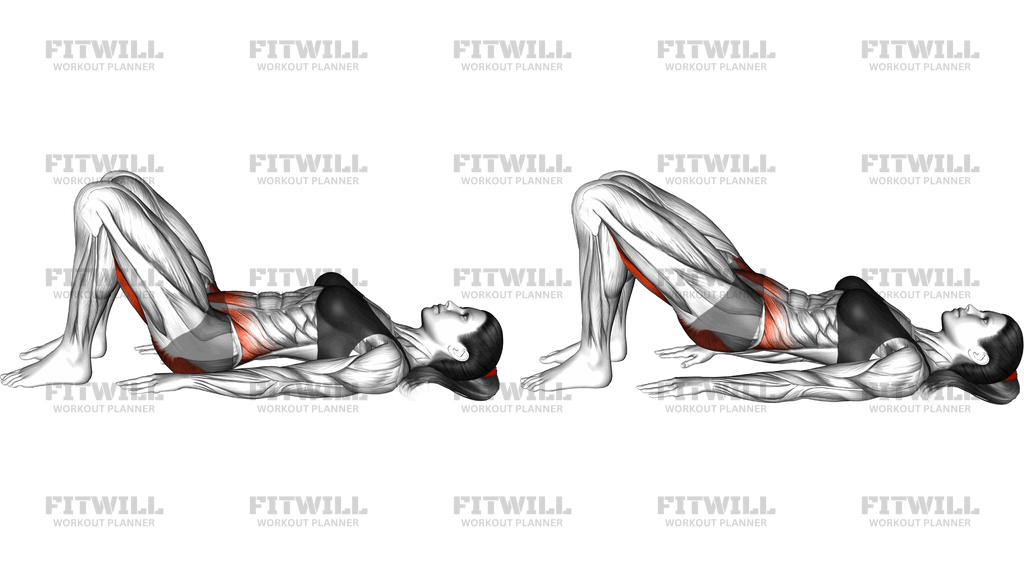
Instructions
- Lie on your back on a firm floor or exercise mat with knees bent and feet flat, hip-width apart, heels about a hand's distance from the hips.
- Rest the arms at your sides with palms down, and let the shoulders and neck relax.
- Notice the natural small gap under your lower back; this is your starting position.
- Exhale slowly and draw the pubic bone up toward the ribcage so the tailbone curls off the floor slightly and the lower back presses flat.
- Keep the hips on the floor and the glutes soft; do not lift into a bridge.
- Hold the flattened position for five to ten seconds, breathing in a slow, shallow rhythm instead of holding your breath.
- Check that the upper back, shoulders, and head stay relaxed and in contact with the floor throughout the hold.
- Release the tilt in a slow, controlled way and let the natural arch under the lower back return before the next rep.
- Reset the feet and pelvis between repetitions if the knees have drifted apart or the hips have shifted.
- Perform eight to twelve repetitions, or hold longer intervals of fifteen to twenty seconds once the position feels easy to maintain.
Tips & Tricks
- A common error is lifting the hips off the floor like a glute bridge; the pelvis should rotate backward while the hips stay grounded.
- If you feel the thighs or hip flexors cramping, move the heels slightly closer to the hips and check that the knees stay hip-width apart.
- Do not clench the glutes hard; the tilt should come from the abdominal wall gently pulling the pelvis back, with the glutes only assisting.
- If the ribs flare upward as you tilt, soften the effort and think about the bottom ribs sliding down toward the hips instead of pressing harder with the low back.
- Keep breathing during the hold; if you have to hold your breath, the tilt is being forced too aggressively.
- Place a hand under the arch of the low back at first to feel the space close as you tilt; this gives instant feedback on whether the pelvis is actually moving.
- Aim for a smooth exhale on the tilt itself; starting the tilt at the beginning of the exhale makes the abdominal engagement much easier to feel.
- If the floor is too hard on the tailbone or shoulder blades, use a thin exercise mat, but avoid thick, soft padding that lets the pelvis sink and twist.
- Stop and reset if you feel the movement drifting into your neck or shoulders; those areas should stay completely relaxed.
- Progress by lengthening the hold or adding slow leg slides, not by tilting harder or pressing the spine down with excessive force.
Frequently Asked Questions
Which muscles does the Pelvic Tilt Hold actually work?
The primary work comes from the deep core, especially the transverse abdominis and lower rectus abdominis, with the glutes assisting the backward rotation of the pelvis. The hamstrings and hip flexors help stabilize the legs in the bent-knee position.
Is the Pelvic Tilt Hold suitable for complete beginners?
Yes, it is one of the most beginner-friendly core exercises because the range of motion is small and no equipment is required. Start with short five-second holds and focus on feeling the lower back flatten against the floor.
Why should my hips stay on the floor during the Pelvic Tilt Hold?
Lifting the hips turns the exercise into a glute bridge and shifts the effort away from the abdominal control the exercise is designed to teach. The goal is a rotation of the pelvis itself, not a hip extension movement.
How long should I hold the pelvic tilt position?
Five to ten seconds per hold is a good starting point, building toward fifteen to twenty seconds as the position becomes comfortable. Quality of the tilt matters more than the duration of the hold.
What is the most common mistake with the Pelvic Tilt Hold?
The most common errors are clenching the glutes maximally, holding the breath, and pushing down so hard that the whole trunk stiffens. Keep the effort moderate, the glutes relaxed, and the breathing continuous.
Can I do the Pelvic Tilt Hold if my lower back feels tight?
Many people use it as a gentle way to move the lumbar spine through a small, controlled range, since the tilt repeatedly rounds and un-rounds the lower back. Move within a comfortable range and stop if any position causes sharp or radiating discomfort.
What can I use instead of the Pelvic Tilt Hold?
The dead bug trains a similar deep-core bracing pattern with more limb movement, and the glute bridge works the pelvis from the hip-extension side. Cat-cow stretches offer a mobile version of the same spinal position on all fours.
Should I breathe in or out during the tilt?
Exhale as you tilt the pelvis back and flatten the lower back, then continue breathing in a slow, shallow rhythm during the hold. Starting the tilt on the exhale makes it easier to engage the abdominal wall.
How do I know if I am doing the Pelvic Tilt Hold correctly?
You should feel the space under your lower back close as the tailbone curls slightly upward, with the work concentrated in the front of the trunk rather than the thighs or neck. Sliding a hand under the low back at first is an easy way to verify the pelvis is actually moving.
Can the Pelvic Tilt Hold help with posture?
It teaches you to control the position of the pelvis, which influences whether the lower back sits in an exaggerated arch during standing, squatting, and lifting. That awareness carries over to other exercises, though it works best alongside broader hip and trunk training.