Side Lying T Thigh Raise Hold
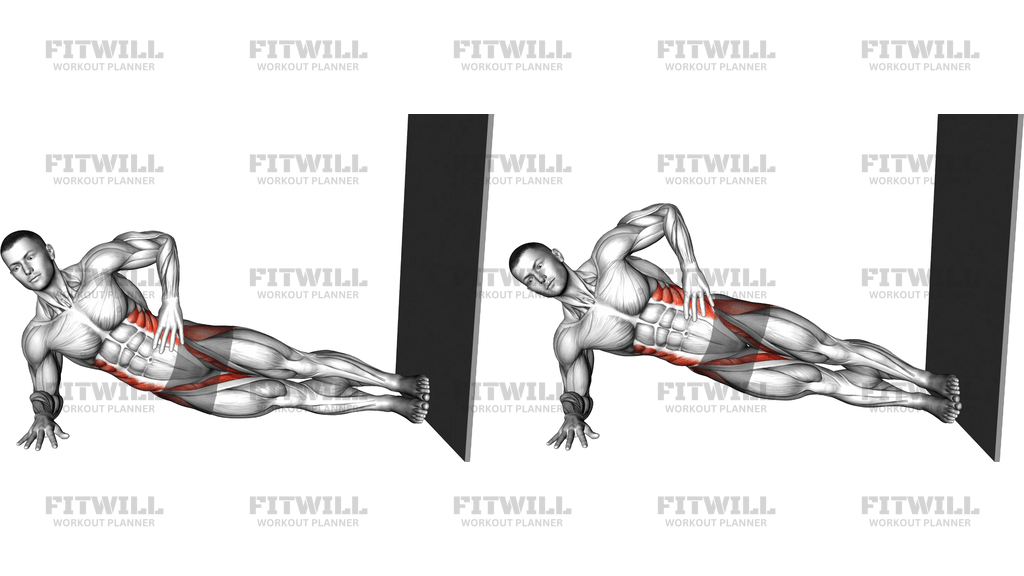
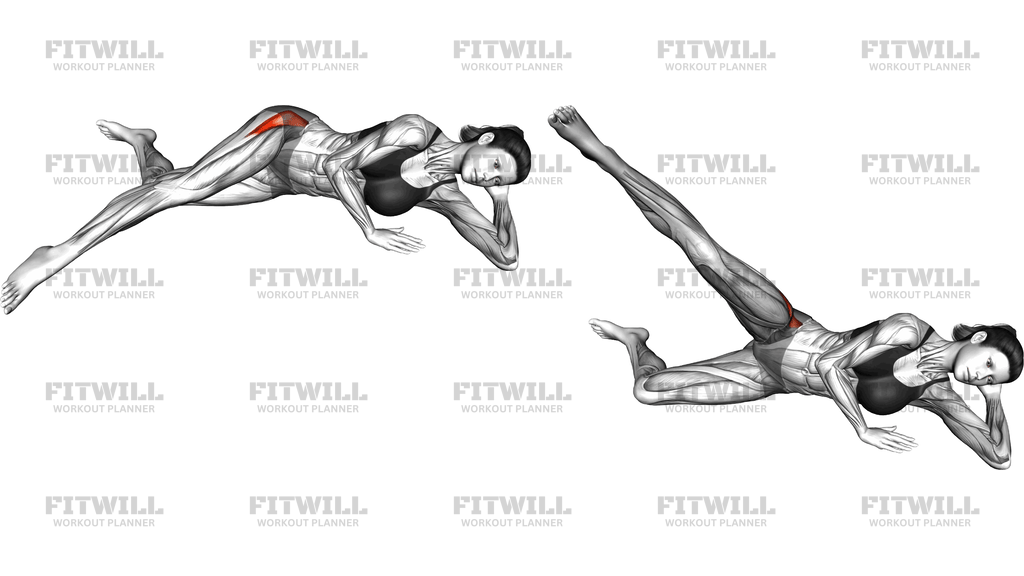
The Side Lying T Thigh Raise Hold is an isometric variation of the classic side-lying leg raise. Instead of lifting the top leg up and down for repetitions, you raise it to a challenging height and hold it there against gravity for a set period of time. The body stays stacked on its side, head supported on the bottom hand, with the top arm placed on the floor in front of the chest for balance, exactly as shown in the starting position of the movement.
This exercise targets the gluteus medius and other hip abductors on the outside of the raised hip, which are responsible for lifting the leg away from the body and stabilizing the pelvis during walking, running, and single-leg activities. Because you are holding the leg aloft rather than swinging it, the muscles must work continuously at a fixed length, which builds endurance and control in a way fast repetitions often miss. The obliques and deep core also work isometrically to keep your trunk from rolling backward or forward as the leg fatigues.
The setup matters more than most people expect. Lying truly on your side, with shoulders, hips, and ankles stacked in one vertical line, ensures the leg travels in a clean arc straight up from the hip. If you let the torso rock back or the hips rotate, the leg drifts forward and the workload shifts away from the hip abductors. Propping your head on your hand keeps the neck relaxed, and the forward hand acts like a kickstand to stop unwanted rotation.
The Side Lying T Thigh Raise Hold is especially useful for runners and cyclists who need hip stability under fatigue, for people rebuilding strength after time off, and for anyone whose hips tend to drop or knees cave inward during squats, lunges, or single-leg work. It requires no equipment beyond a floor and optionally a mat, so it fits easily into warm-ups, rehab-style programming, or home routines.
Because the hold is static, the urge to cheat grows quickly as the set progresses. Expect a burning sensation on the side of the hip rather than the thigh or lower back. If you feel the work migrating away from the hip, the leg is probably too high or the pelvis has started to tilt. Choose a hold time you can complete with the torso still and the leg at a height you genuinely control, and stop the set the moment your form changes.
[ Workout Log & Planner ]
Put your next workout in Fitwill
Keep your plan and training log ready when you are.


Instructions
- Lie on your right side on a mat or firm floor with your body in a straight line, shoulders and hips stacked vertically over each other.
- Bend your bottom arm and rest the side of your head on your hand, then place your top palm flat on the floor in front of your chest to stabilize your torso.
- Keep both legs long with the bottom leg resting on the floor, toes facing forward rather than up, and brace your core lightly.
- Keeping the knee straight and the leg in line with your torso, lift your top leg away from the bottom leg in a smooth arc toward the ceiling.
- Stop when the leg reaches a challenging but controllable height, usually somewhere between 30 and 45 degrees from the bottom leg, without letting the hips roll back.
- Hold this top position isometrically, keeping the foot neutral and the toes pointing forward, while breathing steadily through your nose.
- Watch for your top hip creeping backward or your trunk leaning; correct it by pressing the top palm into the floor and stacking the hips again.
- After the hold time ends, lower the leg under control until it is just above or lightly touching the bottom leg, then either rest and repeat or switch sides.
- Complete the prescribed hold on the right side, then roll over and repeat the same setup and hold time on the left side.
Tips & Tricks
- A common mistake is lifting the leg as high as possible; once the pelvis tilts, the quadratus lumborum in the lower back takes over, so choose a height where the hip stays stacked.
- If your top hip keeps rolling backward, imagine the hip bones stacked like coins and press your top palm slightly into the floor to block rotation.
- Avoid pointing the toes upward, which rotates the whole leg outward; keep the kneecap and toes facing forward so the gluteus medius does the lifting.
- Start with shorter holds of 10 to 20 seconds per side rather than one long set, because form on the second side often degrades if the first side is taken to failure.
- Keep the bottom leg actively resting on the floor with a soft knee; a completely slack bottom leg lets the whole body drift during the hold.
- Do not let the top leg swing forward as it tires; a small forward drift feels easier but quietly shifts work away from the outer hip.
- Exhale on the lift and settle into slow, even breathing during the hold; holding your breath raises tension through the neck and shoulders.
- If the neck feels strained from resting on your hand, fold a small towel under the head or extend the bottom arm flat along the floor instead.
- Progress by adding seconds to the hold or slowing the lowering phase, not by raising the leg higher, which mostly invites compensation.
Frequently Asked Questions
Which muscles does the Side Lying T Thigh Raise Hold work?
The main working muscle is the gluteus medius on the outside of the raised hip, supported by the tensor fasciae latae and other hip abductors. The obliques and deep core also work statically to keep your trunk from rotating while you hold the leg up.
Why hold the leg up instead of doing regular side-lying leg raises?
Holding the leg at a fixed height keeps the hip abductors under continuous tension, which builds muscular endurance and control that fast repetitions can miss. It also exposes small pelvic rotations you might not notice during dynamic reps.
How high should I raise my top leg during the hold?
Lift to roughly 30 to 45 degrees from the bottom leg, or wherever you can hold with your hips still stacked. Going higher usually makes the pelvis tilt and shifts the effort into the lower back rather than the outer hip.
Is the Side Lying T Thigh Raise Hold suitable for beginners?
Yes, it is a low-load body weight exercise that beginners can learn quickly. Start with 10 to 15 second holds per side and only progress the duration once you can keep the torso still for the full set.
Why do I feel this exercise in my lower back instead of my hip?
That usually means the pelvis is tilting and the deep low back muscles are compensating for tired hip abductors. Lower the leg slightly, re-stack your hips, and shorten the hold so the gluteus medius stays the prime mover.
Should the bottom leg do anything during the hold?
It should simply rest on the floor in line with your body with a soft knee. If it drifts or the knee bends significantly, your whole alignment has probably shifted.
How long should I hold the leg up?
Most people do well with 15 to 30 seconds per side for two to three sets. Stop the set as soon as the leg starts to drop or the hips rotate, even if the target time is not reached.
What can I use if I do not have an exercise mat?
Any firm, comfortable surface works, such as carpet or a folded towel. You only need enough padding to keep the side of the hip and shoulder comfortable during the hold.
Can I do this exercise every day?
Because the load is light and the movement is simple, most people can perform it frequently, even as part of a daily warm-up. If the outer hip feels sore the next day, give it a day of rest before repeating.
How does this exercise help with running or single-leg strength?
The gluteus medius keeps the pelvis level every time you stand on one leg, so building its endurance can improve hip stability during running, lunges, and stairs. The isometric hold mimics the sustained stabilizing role the muscle plays in those activities.