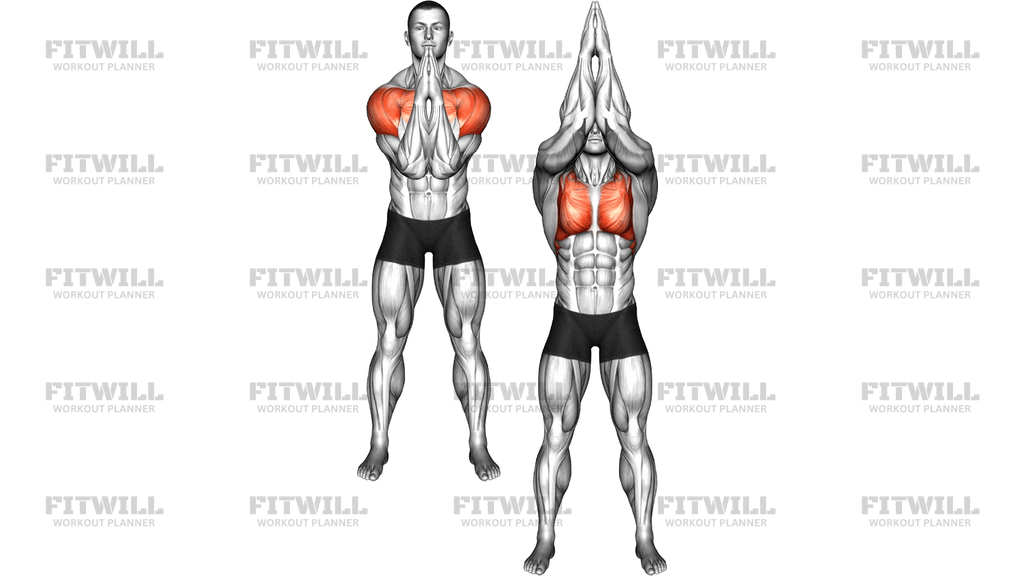
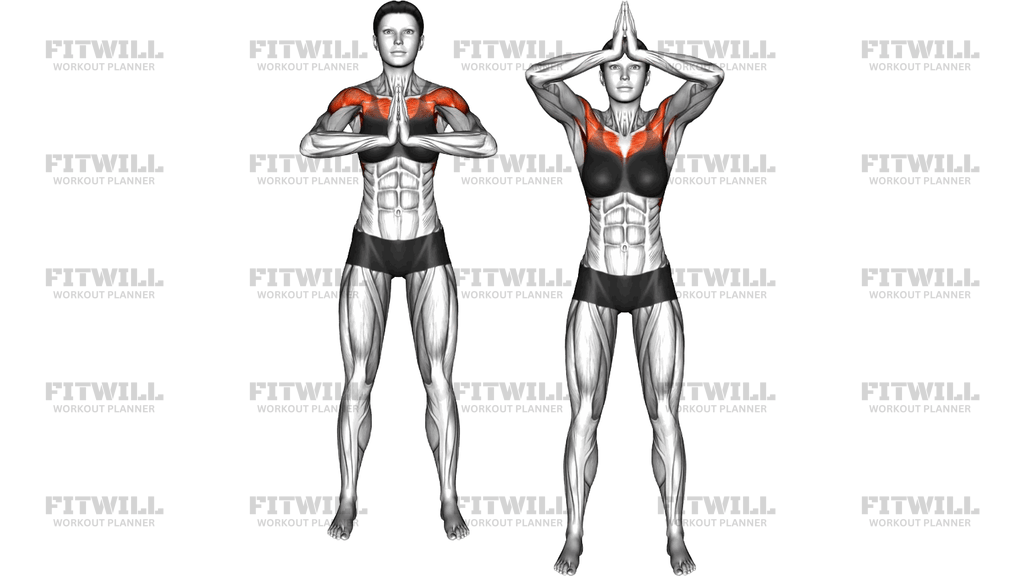
Criss Cross Arms Outer Rotation
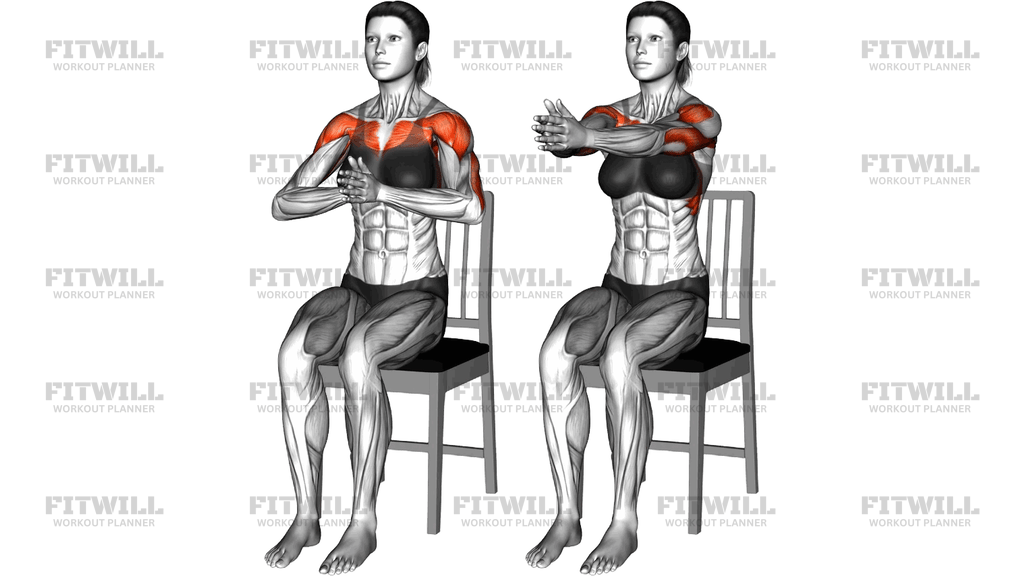
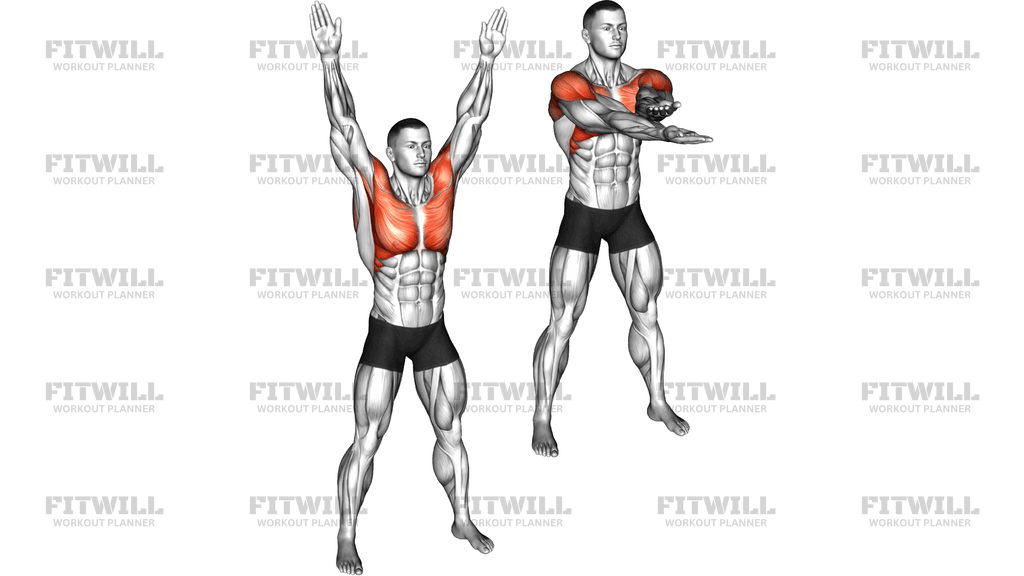
Criss Cross Arms Outer Rotation is a standing bodyweight movement that takes your arms from a wide overhead V-position down into a crossed position in front of your chest, then back up again. As the arms sweep down and across the body, the hands rotate outward so the palms turn away from you, which drives the shoulders through external rotation while the chest performs horizontal adduction. It looks simple, but the combination of crossing, rotating, and lifting in one continuous arc challenges coordination as much as strength.
The main work comes from the pectoralis major, which pulls the arms across the midline, with strong support from the front and middle deltoids. The rotator cuff and the muscles between the shoulder blades control the outward rotation of the hands and keep the shoulder joint tracked correctly through the arc. Because you are standing and moving both arms at once, your core also stays lightly engaged to keep the torso from swaying.
This movement fits well as a warm-up before pressing, pulling, or throwing, and it is equally useful as a low-load activation drill for people who spend long hours at a desk with rounded shoulders. The large, sweeping range of motion opens the chest and wakes up the shoulder external rotators, two areas that tend to get stiff and lazy in daily life. Because there is no external load, it is joint-friendly and easy to scale by adjusting speed, range, or reps.
Setup matters more than it appears. A stable stance with feet roughly shoulder-width apart, a tall spine, and relaxed shoulders down away from the ears gives the arms a fixed base to move from. If the torso leans or the shoulders shrug toward the ears, the shoulder joint loses its clean rotation path and the movement stops targeting the intended muscles.
To perform it well, raise both arms into a wide V overhead with palms facing forward. Sweep the arms down and in front of the chest in one smooth arc, letting each hand rotate outward as it crosses so the palm faces away at the end position. Alternate which arm crosses on top from rep to rep, then reverse the arc back up to the starting V. Keep the elbows soft rather than locked, and move at a pace you can control from start to finish.
You will see this drill used in general warm-ups, shoulder rehabilitation progressions, combat sports and racquet sport prep, and as active recovery between heavier upper body sets. Treat it as a movement quality exercise: aim for smooth, symmetrical arcs rather than speed or burn, and stop short of any pinching sensation in the front of the shoulder.
[ Workout Log & Planner ]
Put your next workout in Fitwill
Keep your plan and training log ready when you are.


Instructions
- Stand tall with your feet about shoulder-width apart, weight spread evenly across both feet, and your core gently braced.
- Raise both arms overhead into a wide V shape with your elbows nearly straight and your palms facing forward, away from your body.
- Draw your shoulder blades down slightly so your shoulders sit away from your ears before you start moving.
- Sweep both arms down and inward in a smooth arc so they cross in front of your chest at roughly shoulder height.
- As each arm crosses the midline, rotate it outward so the palm turns to face away from you at the end of the crossing position.
- Let one arm cross on top and the other underneath, then switch which arm is on top on the next repetition.
- Reverse the arc with control, uncrossing the arms and rotating the hands back so the palms face forward again as the arms return overhead.
- Exhale as the arms sweep down and cross, inhale as they rise back to the starting V.
- Keep your torso upright throughout; do not lean back as the arms lift or hunch forward as they cross.
- Complete your planned repetitions, then shake out the shoulders and check that both sides felt even before moving on.
Tips & Tricks
- If you feel a pinch at the front of the shoulder at the top of the V, narrow the angle of the V slightly so the hands are less wide overhead.
- Shrugging toward the ears is the most common fault here; reset your shoulder blades down before each rep and keep them quiet as the arms move.
- Do not let the crossing become a sloppy clap. Reach the arms across with intent so the chest actually works through horizontal adduction rather than just swinging.
- The outward palm rotation is the point of the exercise. If your hands stay facing forward through the cross, slow down and exaggerate the rotation until it feels deliberate.
- Alternating the top arm every rep keeps the two sides balanced. If one side feels tighter or less coordinated, give it a few extra repetitions on its own.
- Keep a small bend in the elbows. Fully locked elbows make the arc feel jerky and can stress the inner elbow over high rep counts.
- Move slower than feels natural at first. This drill rewards control, and rushing usually hides a shortened range on one side.
- If your lower back arches when the arms go overhead, brace the abs slightly and think about tucking the ribs down a touch rather than leaning back.
Frequently Asked Questions
What muscles does Criss Cross Arms Outer Rotation work?
The chest, especially the pectoralis major, drives the arms across the body, while the front and middle deltoids assist the lift. The rotator cuff and upper back muscles handle the outward hand rotation and keep the shoulder stable through the arc.
Is Criss Cross Arms Outer Rotation suitable for beginners?
Yes. Because it uses only bodyweight and no load, beginners can perform it safely by keeping the range comfortable and the pace slow. It is often easier to learn than loaded shoulder exercises and works well as a first drill in a shoulder routine.
Why do the palms rotate outward during the crossing motion?
The outward rotation trains external rotation of the shoulder as the arms cross, which combines two actions the shoulder rarely performs together. This challenges the rotator cuff and helps balance out all the internal-rotation-dominant activities in daily life.
Should I alternate which arm crosses on top?
Yes, switch the top arm each repetition so both sides get the same slightly deeper range and rotation. If you always cross the same arm on top, one shoulder can gradually get more work than the other.
Can I use Criss Cross Arms Outer Rotation as a warm-up before bench pressing?
Absolutely. It raises the temperature of the chest and shoulders and takes the shoulder joints through a broad, unloaded range before you press. Two or three sets of ten to fifteen smooth repetitions work well before upper body training.
What is the most common mistake with this exercise?
Shrugging the shoulders toward the ears and rushing the arc so the arms simply flap across the chest. Keep the shoulder blades drawn down and move slowly enough that the palm rotation stays visible and controlled.
How many repetitions should I do?
Ten to twenty controlled repetitions per set is a practical range, since this is a mobility and activation drill rather than a maximum strength lift. Stop when the arcs start losing smoothness rather than pushing to fatigue.
My shoulder clicks or pinches when my arms go overhead. Should I stop?
Reduce the width of the overhead V and work in a range that is pain-free, since a narrower angle often removes the pinch. If the discomfort persists or is sharp, skip the movement and consult a qualified professional before continuing.
What can I substitute if I want a similar effect with equipment?
Light resistance band pull-aparts with an external rotation finish, or cable external rotations, train overlapping qualities. The bodyweight version remains valuable because the full overhead-to-cross arc is hard to replicate with bands alone.