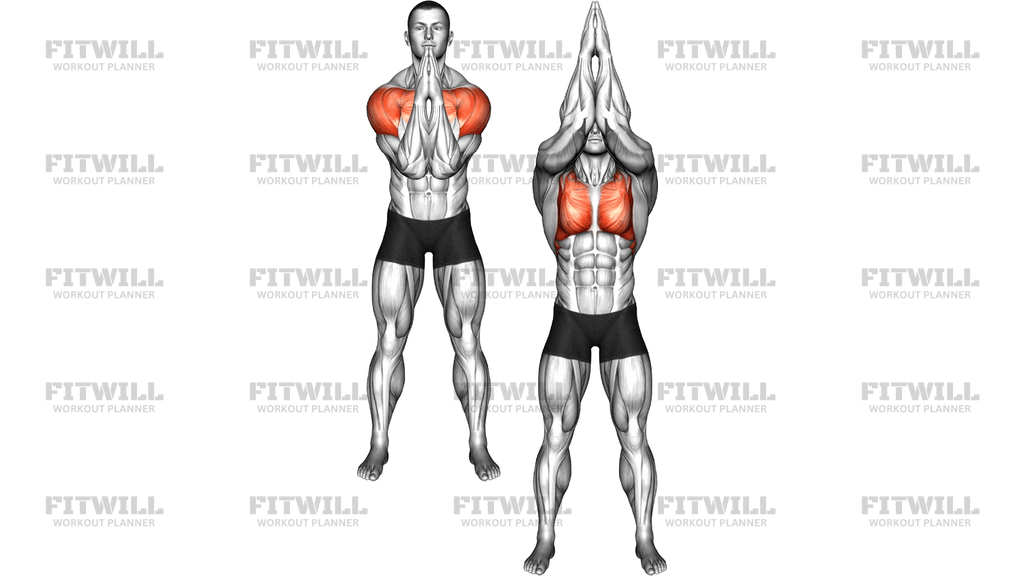
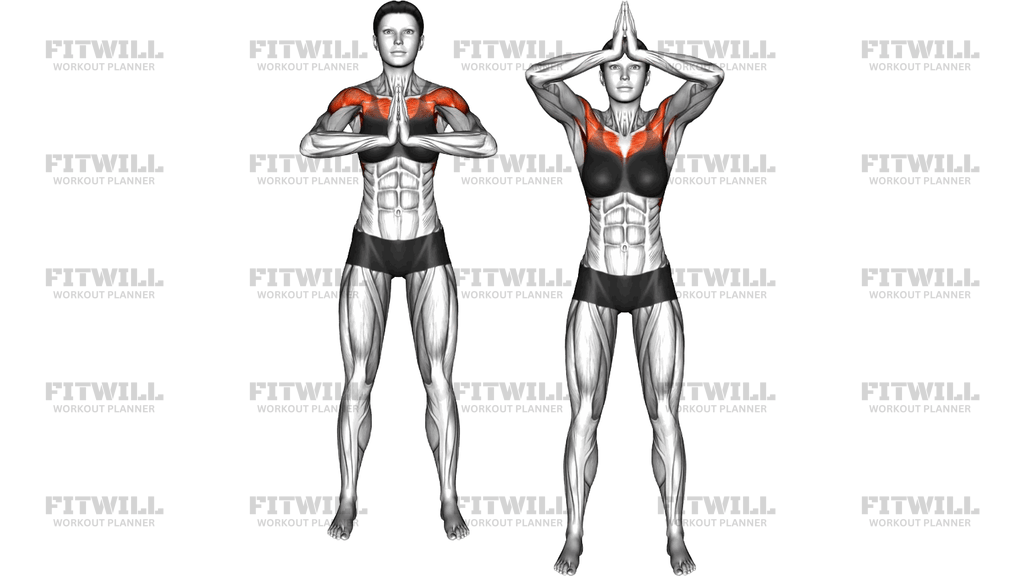
Forward Side Top Presses
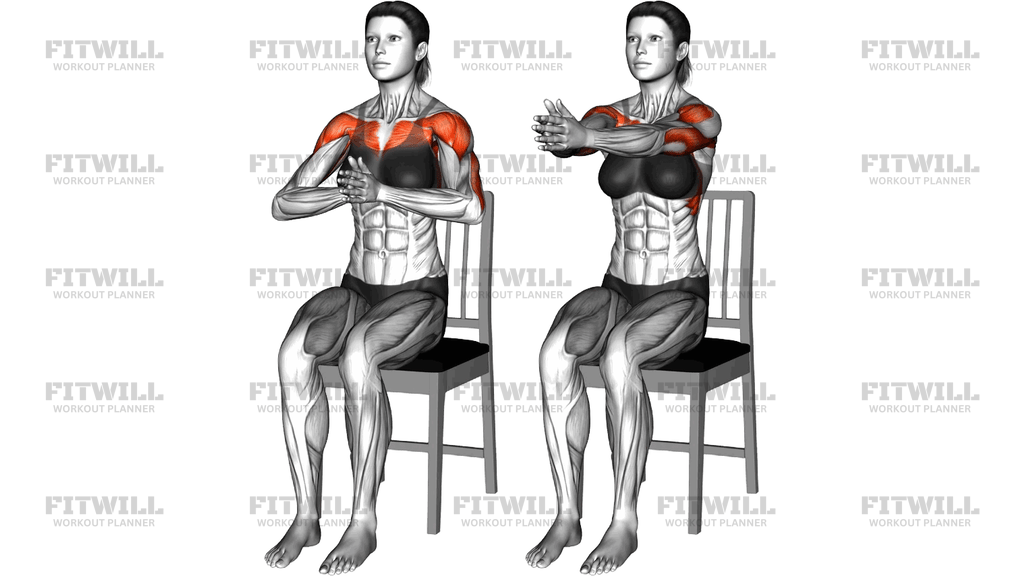
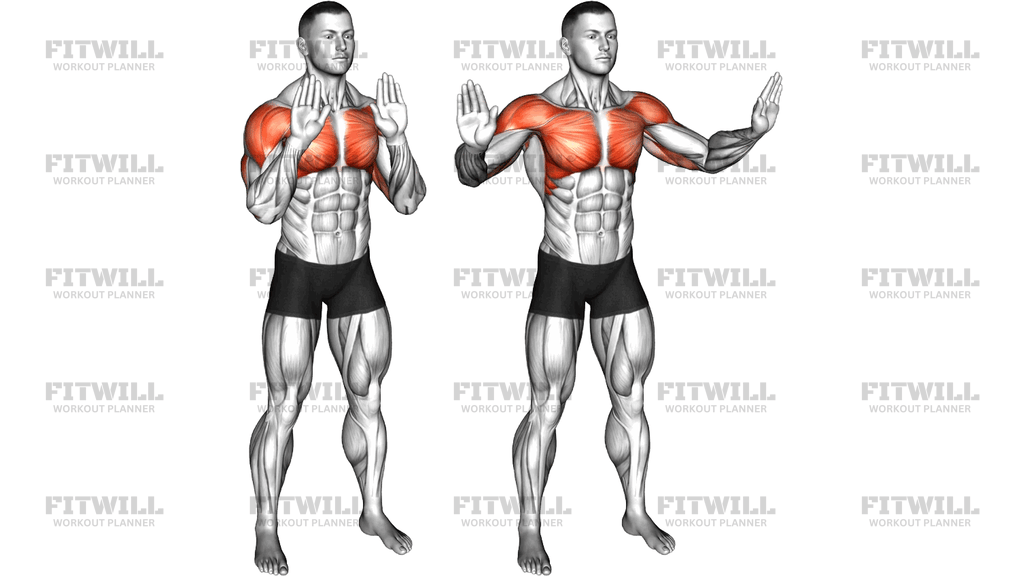
Forward Side Top Presses are a standing, equipment-free pressing pattern where you start with both hands raised to upper chest height, palms facing forward and elbows bent close to your ribs, then press the arms out and forward until they extend at roughly shoulder height and width. Because there is no external load, the resistance comes from actively squeezing the chest and shoulder muscles through the full arc, which makes the movement as much about deliberate muscular tension as it is about the visible arm path.
The exercise targets the pectorals as the primary movers, with the front deltoids assisting on the press and the triceps locking the arms out at the end position. The standing position also quietly trains the core and upper back, since your torso has to stay tall and stable while the arms move away from the body. This makes it a useful teaching tool for anyone learning how the chest should feel during pressing before adding weight.
This is a great fit for complete beginners, for warm-up sets before bench or dumbbell pressing, for people recovering training consistency after a layoff, and for situations where no equipment is available such as hotel rooms or home workouts. Because the load is self-regulated, you can make the contraction as light or as hard as you choose by how forcefully you press the palms away from each other and forward.
Setup matters more than it looks. Stand with feet about hip-width apart, a soft bend in the knees, and the ribcage stacked over the pelvis rather than arched back. Raise the upper arms so the elbows sit slightly below shoulder level at your sides, forearms vertical, and the backs of the hands facing forward. If the elbows drift up too high or the shoulders shrug toward the ears, the front delts and upper traps take over and the chest stops doing the work.
Execution is a controlled press, not a swing. Drive the palms forward and slightly outward as if pushing two invisible panels away from your chest, feeling the chest compress and shorten across the front of the torso. Pause briefly with the arms extended at shoulder height, then reverse the path, drawing the elbows back down toward the ribs while keeping the palms facing forward the entire time.
A common mistake is rushing the reps or letting the hands travel inward so the movement becomes a narrow triceps push. Keep the pressing arc wide enough that the forearms stay roughly in line with the chest throughout. If you feel pinching at the front of the shoulder, reduce the height of the end position slightly and shorten the range until the movement feels smooth.
[ Workout Log & Planner ]
Put your next workout in Fitwill
Keep your plan and training log ready when you are.


Instructions
- Stand upright with feet hip-width apart, knees softly bent, and your weight balanced evenly across both feet.
- Raise both arms so your elbows sit at your sides slightly below shoulder height, forearms vertical, with palms facing forward and fingers pointing up.
- Pull your shoulders down away from your ears and brace your abdominals lightly to keep the torso tall and still.
- Exhale as you press both palms forward and slightly outward, as if pushing two invisible walls away from your upper chest.
- Continue pressing until the arms are extended at shoulder height, spread just wider than shoulder-width, and feel the chest squeeze at the front.
- Pause for one second in the extended position, keeping the palms facing forward and the shoulders down.
- Inhale as you slowly reverse the path, bending the elbows and drawing them back toward your ribs without letting the hands turn inward.
- Stop when the forearms are vertical again and the hands are beside your upper chest, then begin the next rep.
- Keep your head neutral and eyes forward throughout, resisting the urge to lean the torso backward as the arms press out.
- Complete your target repetitions with the same tempo in both directions, then lower the arms fully and roll the shoulders to reset.
Tips & Tricks
- The most common fault is turning this into a narrow push: if your hands end up close together in front of your face, widen the arc so the forearms track outward in line with the chest.
- Shrugging is a sign the upper traps are stealing the work; consciously press the shoulder blades down before the first rep and check them again at every lockout.
- Since there is no weight to create resistance, generate it by pressing your palms forcefully against imaginary resistance — a lazy press produces a lazy stimulus.
- If your lower back arches as the arms extend, tighten the abdominals and slightly tuck the pelvis so the ribs stay stacked over the hips.
- A one-second hold in the fully extended position dramatically increases chest involvement compared with bouncing straight through the rep.
- Keep the palms facing forward for the entire set; rotating them inward shifts the emphasis toward the front delts and reduces the chest stretch on the return.
- If you feel front-of-shoulder discomfort, lower the end position an inch or two so the arms finish just below shoulder level instead of forcing full height.
- Use a slower return than press — around two seconds back to the start — because the eccentric phase is where most of the chest tension actually happens in this bodyweight version.
- Warm-up users should keep the reps high and tension light; as a standalone strength exercise, slow the tempo down and treat each press as a maximal effort against nothing but air.
Frequently Asked Questions
Which muscles do Forward Side Top Presses work the most?
The pectorals of the chest are the primary muscles, assisted by the front deltoids during the press and the triceps as the arms lock out. The core and upper back work statically to keep the torso stable in the standing position.
Are Forward Side Top Presses effective without any equipment?
Yes, but only if you create tension deliberately. Since there is no external load, pressing the palms hard against imaginary resistance and pausing at lockout replaces the weight that a dumbbell or machine would normally provide.
Why should my palms stay facing forward during the exercise?
The forward-facing palms keep the elbows tracking out and to the sides, which lets the chest lengthen and shorten through the arc. Turning the hands inward narrows the path and shifts the work toward the triceps and front delts.
How high should my arms finish at the end of each press?
Aim for arms extended at about shoulder height, spread just wider than shoulder-width. If you feel pinching at the front of the shoulder, finish slightly lower and rebuild the range gradually.
Is this a good exercise for beginners?
It is an excellent first pressing exercise because it teaches the chest-driven arm path and shoulder-down position with zero injury risk from load. Beginners can master the pattern here before moving to push-ups or dumbbell presses.
Can I use Forward Side Top Presses as a warm-up before bench pressing?
Yes, one or two sets of fifteen to twenty light, smooth reps activate the chest and front delts and groove the pressing pattern without fatiguing the muscles. Keep the tension moderate so you save strength for the main lift.
Why do my shoulders shrug up toward my ears during the set?
Shrugging means the upper traps are compensating because the shoulders were never pulled down at the start. Reset before each rep by actively drawing the shoulder blades down and back, then keep them there through the whole arc.
How can I make Forward Side Top Presses harder?
Slow the tempo to a three-second press and a three-second return, add a two-second squeeze at full extension, or increase the effort of each press as if pushing against a heavy object. You can also hold light dumbbells or a resistance band once bodyweight tension feels easy.
My lower back arches when I press out — how do I fix it?
That usually happens because the torso leans back to help the arms. Brace the abdominals, tuck the pelvis slightly, and think about pressing the arms away from a tall, motionless torso rather than letting the body follow the hands.
What can I substitute if standing presses bother my shoulders?
Try the same pressing arc lying on your back on the floor, which limits how far the arms can travel behind the torso and often removes the pinch. Wall pushes with the same wide, forward path are another low-irritation option.