Cable Single Leg Tuck Reverse Crunch
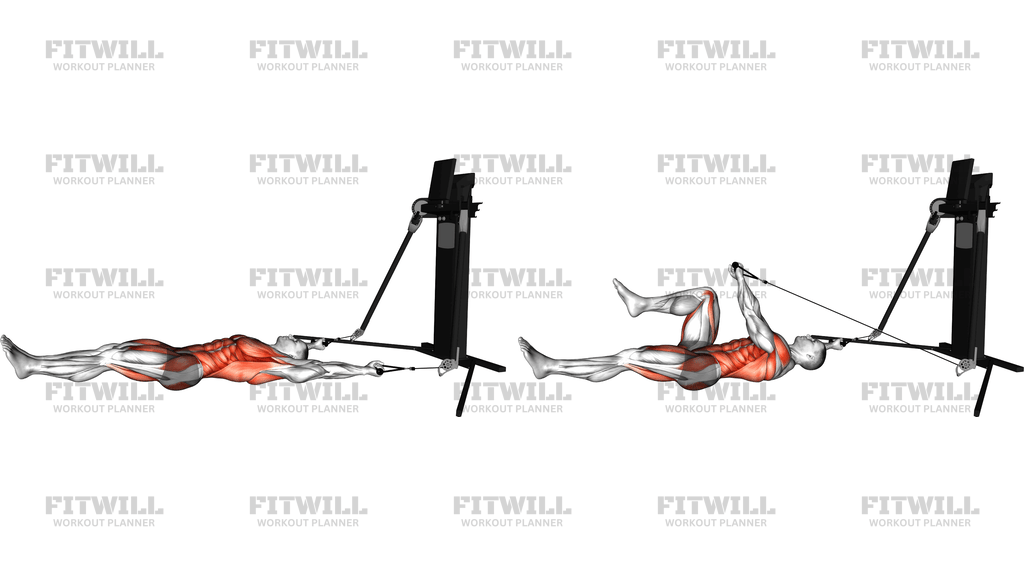
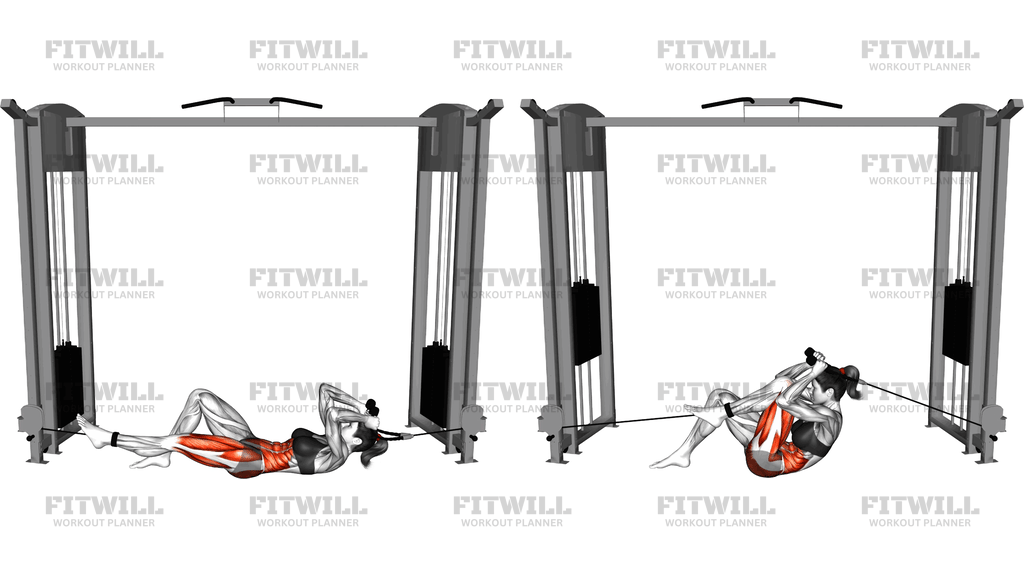
The Cable Single Leg Tuck Reverse Crunch is a cable-based abdominal exercise performed lying on your back in front of a dual pulley setup. One ankle is secured in an ankle strap attached to a low pulley, while both hands grip a cable handle from the opposite low pulley and hold it behind your head. From there, you curl your pelvis toward your ribcage while tucking the strapped knee in toward your chest, then lower back down under control.
This movement earns its place in a core routine because it combines two actions that are hard to load with body weight alone: spinal flexion driven from the bottom of the rectus abdominis, and hip flexion against resistance. Working one leg at a time also exposes left-right differences and forces your trunk to resist rotating as the strapped knee pulls in, which brings the obliques and deep core stabilizers into play more than a standard two-leg reverse crunch.
The setup matters more than it might seem. Anchoring the handle behind your head gives your upper body a stable reference point so the pull comes from your abs, not your arms, and the ankle strap keeps consistent tension on the working leg through the entire range. Because the cable stack provides smooth, adjustable resistance, this exercise suits intermediate lifters who find floor reverse crunches too easy, as well as anyone rehabilitating back toward loaded flexion work who needs a controllable load.
To execute it well, lie far enough from the pulleys that the cable on your ankle stays taut even at the start, keep your lower back pressed into the floor, and think about rolling your hips up rather than just pulling your knee in. The lifted position should show a clear curl of the pelvis and rounded lower spine, with the knee drawn close to the chest, not simply a leg raise with a flat back. Exhale as you tuck, inhale as you extend back out, and keep the tempo slow on the way down so the abs, not momentum, control the return.
Common use cases include lower-ab focused gym sessions, athletic training where hip flexion strength matters for sprinting and kicking, and programs progressing from body weight crunches to loaded core work. Keep the weight modest at first; if your lower back arches or your body slides toward the machine, the load is too heavy for your abs to control.
[ Workout Log & Planner ]
Put your next workout in Fitwill
Keep your plan and training log ready when you are.


Instructions
- Set both pulleys of the cable machine to the lowest position. Attach an ankle strap to one low pulley and a handle to the opposite low pulley.
- Lie on your back on the floor with your head closest to the handle side. Secure the ankle strap around one ankle and clip it to the low pulley cable.
- Reach overhead with both hands, grip the handle, and hold it firmly behind your head with elbows bent. This anchors your upper body for the set.
- Bend the strapped knee slightly and extend the leg so the ankle cable is taut. Brace your core and press your lower back into the floor.
- Exhale and pull the strapped knee in toward your chest while curling your pelvis up and rolling your hips off the floor slightly. Let the torso lift into a crunch as you tuck.
- Squeeze hard at the top, with the knee close to your chest and your lower spine visibly curled off the ground.
- Inhale and lower slowly, extending the strapped leg back until the cable is taut and your pelvis settles flat on the floor. Keep the handle held behind your head throughout.
- Complete all reps on one leg, unclip the strap, switch it to the other ankle, and repeat for the same number of reps on the second side.
Tips & Tricks
- If your body slides toward the machine during each rep, you are seated or lying too close. Move back until the ankle cable stays taut at full extension without dragging you.
- A common mistake is turning this into a knee pull with a flat back. The lower abs only get the work if your pelvis curls and your tailbone lifts; watch that your hips move, not just your leg.
- Do not let the handle drift forward over your head as you crunch. Keeping it pressed behind your head stops your arms and lats from stealing the work.
- Choose a weight you can control for a slow lowering phase. If the stack slams down between reps or your back arches at full extension, drop the load.
- Keep the non-working leg relaxed on the floor with a soft knee. Bracing both legs hard often turns into a hip-hike that pulls your lower back off the ground.
- Exhale forcefully as you tuck. Holding your breath tends to make people arch the lumbar spine at the bottom of the rep.
- The cable should pull straight along the line of your extended leg. If the strap is rotated on your ankle or the cable rubs your other leg, reposition before starting the set.
- Stop the set when the top position loses the pelvis curl. Once you can only pull the knee in without rolling the hips, the abs have stopped doing the meaningful work.
Frequently Asked Questions
What muscles does the Cable Single Leg Tuck Reverse Crunch work?
The primary targets are the lower abs, specifically the lower fibers of the rectus abdominis, with strong assistance from the hip flexors as the strapped knee drives toward the chest. The obliques and deep core work to keep your trunk from rotating as you pull on one side at a time.
Why does this version use a handle held behind the head?
Gripping the handle from the opposite low pulley anchors your upper body so the pulling force transfers through your trunk instead of shifting your position. It also keeps your arms from swinging and lets the ankle-side cable do its job consistently.
Is the Cable Single Leg Tuck Reverse Crunch suitable for beginners?
It is better suited to intermediates who can already perform body weight reverse crunches with a clean pelvis curl. Beginners should master floor reverse crunches first, then start on this cable version with a light stack weight.
How is this different from a regular reverse crunch?
The cable adds constant resistance to the hip flexion, and working one leg at a time creates an asymmetrical pull that challenges your trunk to resist rotation. The tuck position with the knee driven to the chest also allows a fuller contraction than a straight-leg variation.
My lower back arches when I extend the strapped leg. What should I change?
Reduce the weight and do not extend the leg all the way out; stop where you can still keep your lower back flat on the floor. Over time, extend a little further as your control improves.
What can I use instead if my gym has only one adjustable cable pulley?
You can anchor a resistance band low for the ankle strap and hold a stationary object or a second band behind your head, or simply perform single-leg reverse crunches on a mat with no upper-body anchor and add resistance later.
Should the straps and handles be set on the same side or opposite sides?
Set them on opposite low pulleys, as shown in the standard setup: the handle comes from one side to be held behind your head, and the ankle strap attaches to the pulley on the other side so the cable runs along your extended leg.
How many reps and sets should I do?
Two to four sets of 8 to 12 controlled reps per leg works well for strength and muscle. Because the goal is a quality pelvis curl on every rep, favor fewer reps with a full contraction over high reps done with a flat back.
Is it safe to do this exercise with lower back discomfort?
Loaded spinal flexion is not comfortable for everyone, so keep the weight light, limit the range to what you can do with your lower back supported on the floor, and stop if symptoms worsen. Check with a qualified professional if you have a history of back problems.