Deep Push Up Hold
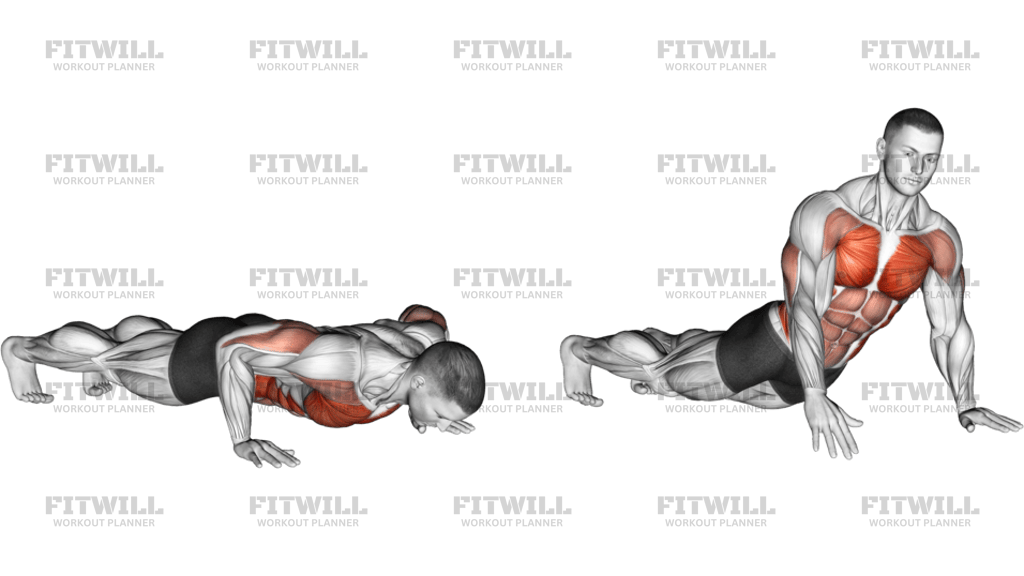
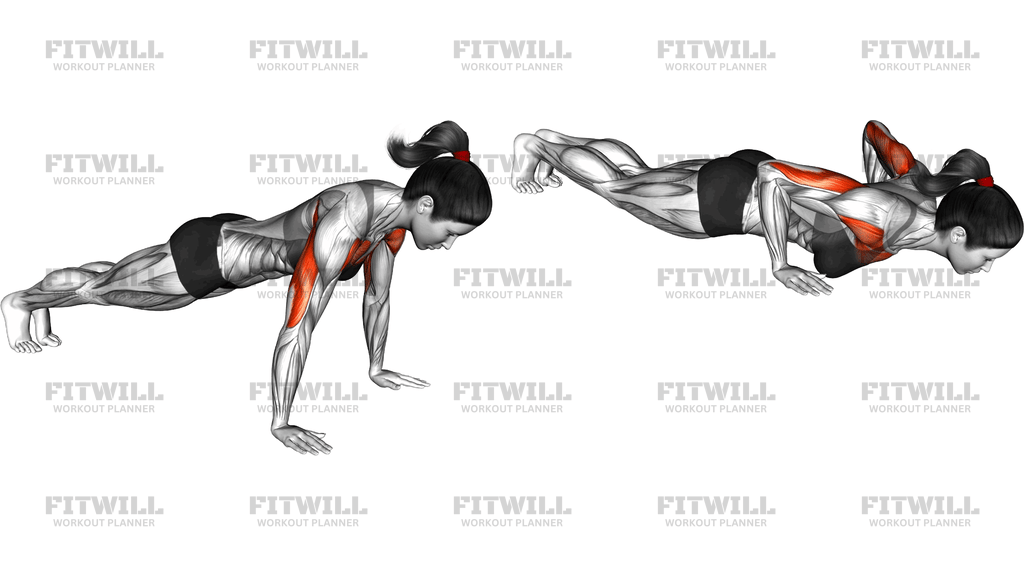
The Deep Push Up Hold is a push-up variation where you lower your chest all the way to just above the floor and pause there under full tension before pressing back up. Instead of relying on momentum or the stretch reflex at the bottom, you sit in the hardest part of the movement — elbows bent deeply, chest loaded, core braced — and let the muscles work isometrically. It turns a standard push-up into a strength and control drill that exposes exactly where your pressing power runs out.
This exercise is useful for two groups in particular. If you can do regular push-ups but your form collapses in the last few inches of the descent, holding the deep position builds the specific strength needed to own that range. If you are already strong, the hold increases time under tension in the stretched position, which many lifters find harder to train with normal push-ups. It also doubles as a self-test: a shaky, short-breathed hold tells you more about your pressing weaknesses than a dozen quick reps.
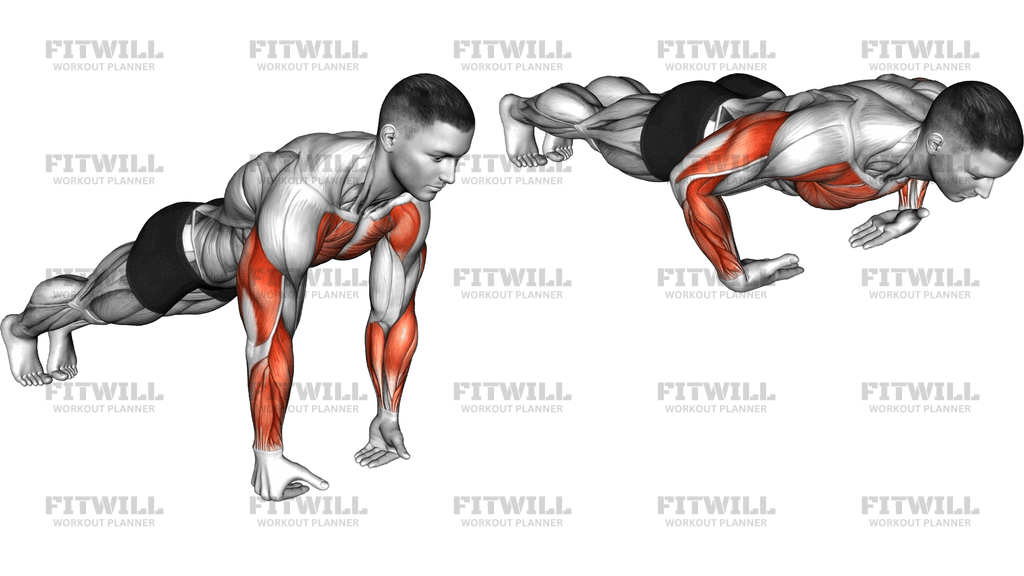
The primary muscles working are the chest, with heavy contributions from the triceps and front shoulders. Because you are holding a rigid plank position at the same time, the abs, glutes, and the muscles around the shoulder blades work overtime to keep your body in one straight line while your arms are at their weakest angle. That combination of deep-range pressing and full-body bracing is what makes the hold demanding even though no weight is moving.
Setup matters more here than in a fast push-up because any alignment error gets magnified the longer you hold. Hands should be set slightly wider than shoulder width, directly under or just outside the shoulders, with fingers spread and pressure spread across the whole palm. Your body should form one line from head through hips to heels — if your hips sag or pike during the hold, the load shifts away from the chest and onto your lower back or shoulders.
To execute it well, lower yourself under control over two to three seconds rather than dropping into the bottom. Stop when your chest is a few centimeters from the floor and your elbows sit roughly at 45 degrees to your torso, then hold that position while breathing shallow, steady breaths. Press back up by driving the floor away, finishing with your arms extended but not locked. Aim for holds of 5 to 20 seconds depending on your level, and stop the set when your hips start to drop or your elbows flare.
A few practical points keep this safe and productive. Warm up your wrists and shoulders first, since the deep position loads both. If a full-depth hold is too hard, drop to your knees or place your hands on a low bench to reduce the load while keeping the same body line. Keep the hold in a range where you can maintain position — grinding out a trembling 40-second hold with a sagging spine teaches your body poor habits, not strength.
Fitwill
Log Workouts, Track Progress & Build Strength.
Achieve more with Fitwill: explore over 9600 exercises with images and videos, access built-in and custom workouts, perfect for both gym and home sessions, and see real results.
Start your journey. Download today!




Instructions
- Place your hands on the floor slightly wider than shoulder width, directly under your shoulders, with fingers spread and palms flat.
- Extend your legs back and set your feet about hip width apart so your body forms one straight line from head to heels, resting on the balls of your feet.
- Squeeze your glutes and brace your abs as if preparing for a light tap to the stomach before you bend your elbows.
- Lower your chest toward the floor over two to three seconds, keeping your elbows at about 45 degrees to your torso rather than flared straight out.
- Stop when your chest is a few centimeters from the floor and your upper arms are roughly parallel to the ground — this is the deep hold position.
- Hold that bottom position for 5 to 20 seconds, keeping your shoulder blades pulled gently back and your hips from sagging or lifting.
- Breathe in slow, shallow breaths through your nose during the hold instead of holding your breath.
- Press the floor away to return to the top, extending your arms fully without locking your elbows hard.
- Reset your brace at the top for a moment before starting the next repetition or hold.
- End the set as soon as your hips drop toward the floor or your elbows flare upward — those are signs the hold is breaking down.
Tips & Tricks
- If your lower back aches during the hold, your hips are sagging — tuck your tailbone slightly and squeeze your glutes harder before descending.
- Elbows that shoot out to the sides shift stress to the shoulder joints; cue yourself to point them back at about 45 degrees toward your hips.
- A common mistake is descending too fast and bouncing into the bottom, which defeats the purpose — the two-to-three second lowering phase is where much of the benefit lives.
- If you cannot hold the deep position for at least five seconds with a straight body, elevate your hands on a bench or drop to your knees rather than shortening your range.
- Keep weight spread across the whole palm and fingertips; loading only the heel of the hand irritates the wrist in the deep position.
- Your head should stay in line with your spine — craning to look forward at the bottom rounds the neck and destabilizes the hold.
- Start with shorter holds than you think you need; quality 10-second holds build more strength than one trembling 30-second effort with a collapsed plank.
- If your shoulders roll forward at the bottom, think of pushing the floor apart slightly to engage the muscles around the shoulder blades.
Frequently Asked Questions
What muscles does the Deep Push Up Hold work?
The chest is the primary muscle, with the triceps and front shoulders pressing and stabilizing. Your abs, glutes, and shoulder blade muscles work hard isometrically to keep the plank position during the hold.
How long should I hold the bottom of the Deep Push Up Hold?
Start with 5 to 10 second holds for 3 to 5 repetitions and build toward 20 seconds as your strength improves. If your hips sag or your elbows flare before time is up, the hold was too long.
Is the Deep Push Up Hold good for beginners?
Yes, with modifications. Beginners can perform it from the knees or with hands elevated on a bench, which reduces the load while keeping the same straight body line and deep hold.
How is the Deep Push Up Hold different from a regular push-up?
A regular push-up moves continuously through the rep, while this version pauses in the deepest, hardest position. That removes momentum, increases time under tension in the stretched range, and builds strength exactly where normal push-ups tend to fail.
Why do my hips sag when I hold the deep position?
Sagging hips usually mean the core and glutes are not braced hard enough, or the hold has simply exceeded your current capacity. Squeeze your glutes and shorten the hold duration, or switch to a knee or hands-elevated version.
Can the Deep Push Up Hold help me do more push-ups?
It can, because it strengthens the weakest point of the push-up range. Once you can comfortably hold the bottom position, the transition through that depth during normal reps feels much stronger.
My wrists hurt at the bottom of the Deep Push Up Hold — what should I do?
Spread your fingers, distribute pressure across the whole palm, and warm up your wrists before training. If discomfort continues, use push-up handles or fists to keep your wrists straighter, or elevate your hands to reduce the load.
Should I breathe during the hold or hold my breath?
Breathe with slow, shallow breaths through the nose. Holding your breath spikes internal pressure and usually causes the plank position to break down faster.
How do I progress the Deep Push Up Hold over time?
Progress by lengthening the hold a few seconds at a time, adding repetitions, or moving from knees or elevated hands to a full floor position. Feet-elevated versions come later once the standard hold feels controlled.
Where should my elbows be during the deep hold?
Keep them bent fully with your upper arms at roughly 45 degrees to your torso, forming an arrow shape from above rather than a T. This protects the shoulders and keeps the chest doing the work.