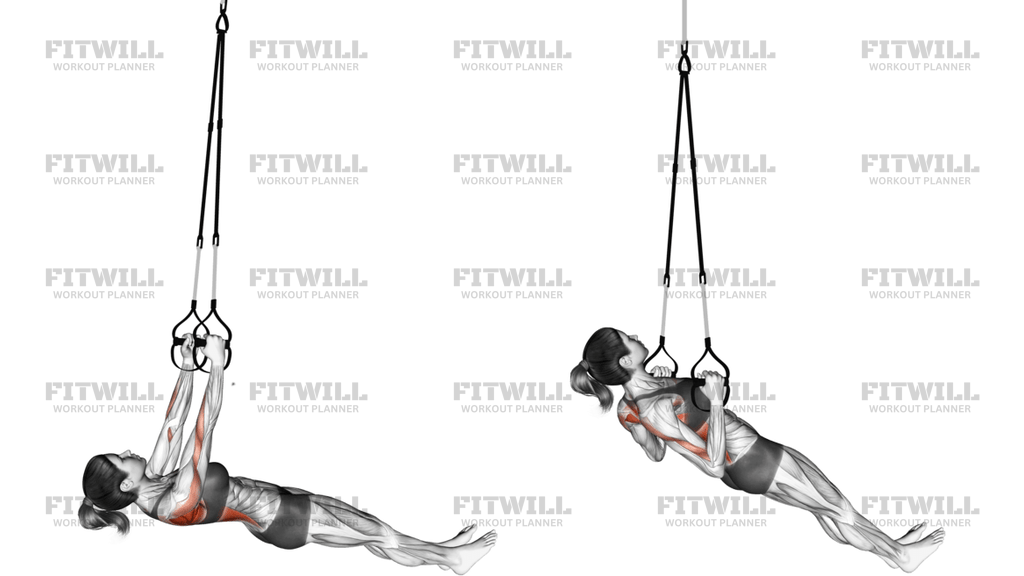
Ring Neutral Grip Chin Up
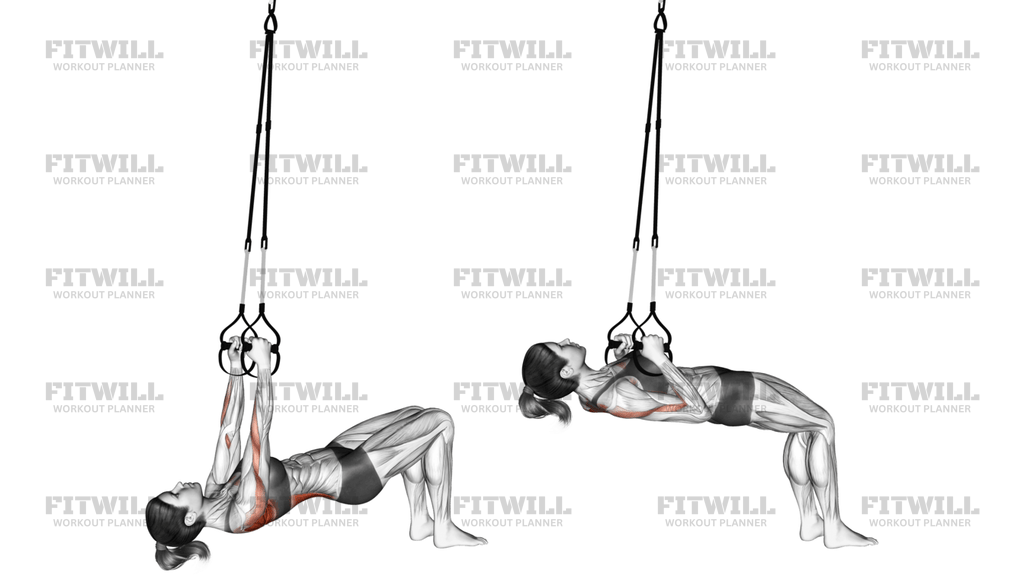
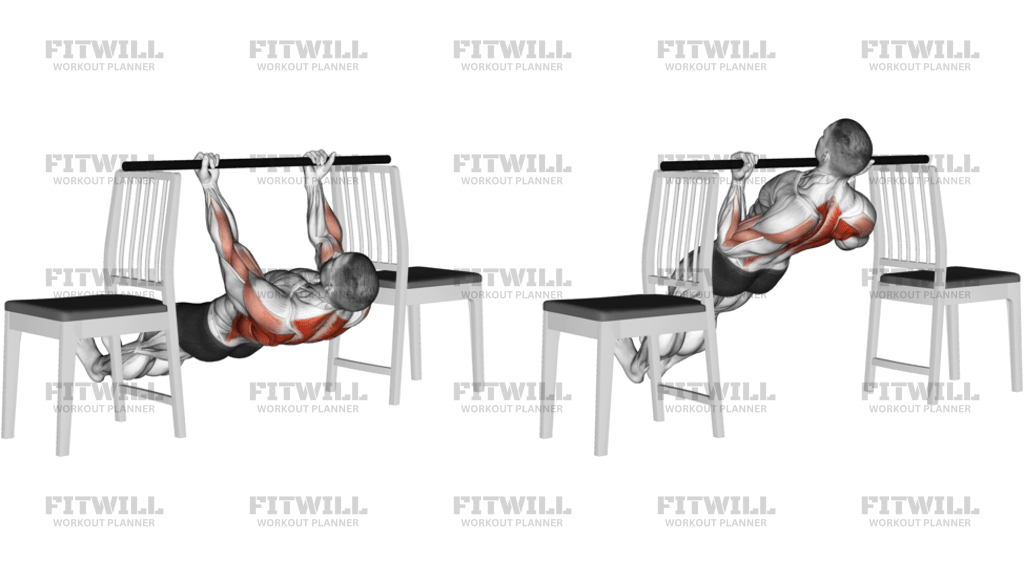
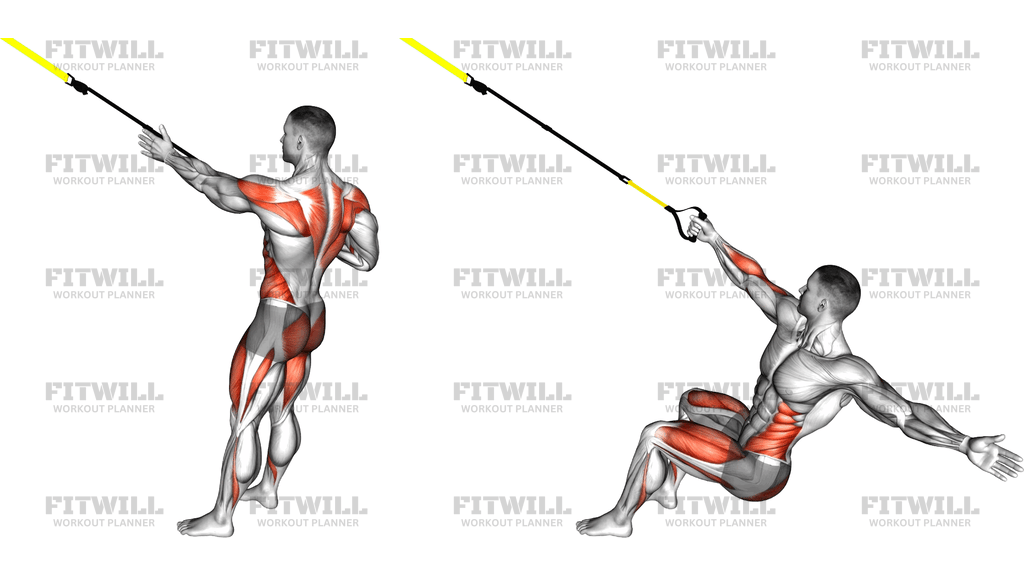
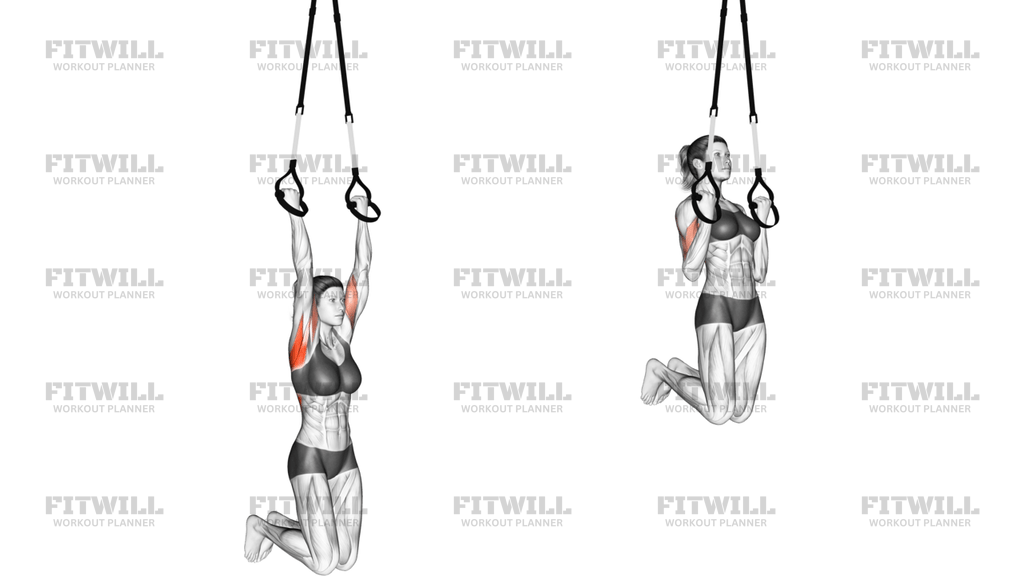
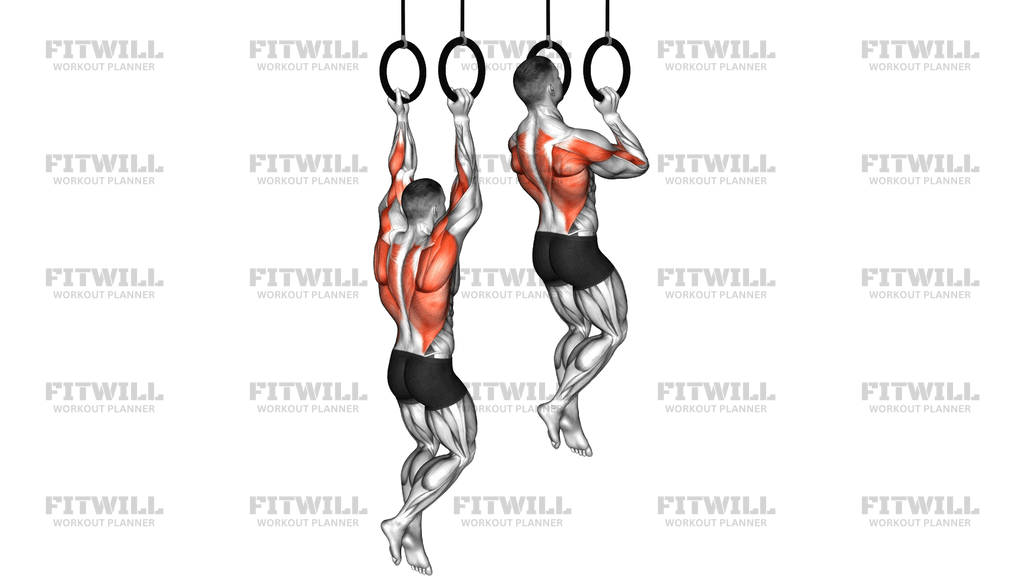
The Ring Neutral Grip Chin Up is a body weight pulling exercise performed on freely hanging gymnastic rings, with your palms facing each other in a neutral, hammer-style grip. Unlike a fixed pull-up bar, the rings rotate and shift with you, so every rep demands a little more coordination and stability from your shoulders, elbows, and core. That combination of classic chin-up strength and ring instability makes it one of the most complete pulling movements you can do with nothing but a pair of rings and somewhere safe to hang them.
Because the rings move independently, your grip naturally settles into whatever shoulder position feels strongest, which many lifters find friendlier on the elbows and shoulders than a rigid pronated or supinated bar grip. The neutral grip still loads the lats heavily through the pull, while the biceps, brachialis, and forearms work hard as the elbows flex, and the mid-back muscles pull your shoulder blades down and together at the top. Your abs, hip flexors, and lower back stay engaged the whole time to stop your legs from swinging as your body travels up and down.
This movement suits intermediate lifters who can already perform several solid dead hangs and a few bar chin-ups, as well as calisthenics and CrossFit athletes who want to build ring-specific strength. It is also a smart progression tool: because the handles can turn freely, the same setup scales down to ring rows with your feet on the floor, or up to weighted ring chin-ups once body weight becomes easy.
Setup matters more here than on a bar. Set the rings so that hanging with straight arms leaves your feet clear of the floor, either by adjusting strap height or bending your knees behind you. Check that both straps are even, the anchors are secure, and the rings are not twisting before you load your weight onto them. A sloppy or uneven ring setup costs you reps and makes the movement harder to control.
To execute well, start from a dead hang with elbows fully extended, squeeze the rings inward to stabilize, and think about driving your elbows down toward your ribs rather than simply yanking with your arms. Pull until your chin clears the rings or your chest touches the ring line, keeping your torso close to vertical rather than leaning back excessively. Lower yourself under control to a full hang, then reset your brace before the next rep. Kipping, swinging, and half-range pulls are the most common faults; both reduce the training effect and increase stress on the shoulders and elbows.
Expect to feel your lats and upper back working first, with a strong biceps contraction at the top of each rep. If you cannot yet control the full range on rings, build volume with bar chin-ups and ring rows first, and always exit a failing rep by lowering safely to a hang rather than dropping.
[ Workout Log & Planner ]
Put your next workout in Fitwill
Keep your plan and training log ready when you are.


Instructions
- Hang a pair of gymnastic rings from a secure anchor and adjust both straps to equal length so the rings hang at the same height.
- Grip each ring with your palms facing inward toward each other in a neutral grip, then hang with your arms fully extended and your feet off the floor, bending your knees behind you if you need extra clearance.
- Squeeze the rings inward slightly with your hands to lock your shoulders into a stable position and pull your shoulder blades down away from your ears.
- Brace your abs and squeeze your glutes lightly so your legs stop swinging and your torso stays close to vertical.
- Pull yourself up by driving your elbows down toward your sides, keeping the rings close to your body as you rise.
- Continue until your chin clears the top of the rings and your chest is near ring height, holding the rings firmly so they do not rotate outward.
- Lower yourself under control until your elbows are completely straight and you are back in a dead hang.
- Exhale as you pull up, and inhale during the controlled descent.
- Pause briefly at the bottom of each rep to kill any swing, re-brace, and repeat for your target repetitions.
- When finished, step down carefully or lower to the floor; never drop from the top position.
Tips & Tricks
- The most common fault on rings is letting the handles drift apart as you fatigue. Cue yourself to press the rings toward each other throughout the set to keep your shoulders packed.
- If your body swings forward and back, your legs are loose. Cross your ankles and squeeze your glutes to turn your lower body into a stable counterweight.
- Chin-up failure on rings usually shows up as a shortened range at the bottom. Film a set from the side and check whether your elbows reach full extension; if not, reduce reps and pull through the whole range.
- Keep your chin level and your neck long. Craning your chin over the rings early shifts tension away from your lats and strains your neck.
- The neutral grip lets your wrists and shoulders find their natural angle, so avoid forcing your elbows into an exaggerated flare; keep them tracking down and slightly back.
- If the rings rotate inward at the top, you are pulling with your hands rather than your elbows. Think about pulling the rings down to your chest instead of pulling your chin up.
- Add tempo work, such as a three-second descent, if the unstable rings cause you to rush reps; the slower lowering phase builds control faster than extra volume.
- Straps that are too long make mounting and dismounting awkward. Shorten them so a straight-arm hang leaves a few inches of clearance under your feet.
- Do not chase reps on rings the way you would on a bar. Quality reps at five to eight per set build more stable strength than grinding out kipped singles.
Frequently Asked Questions
Which muscles does the Ring Neutral Grip Chin Up work?
The lats are the primary movers, supported strongly by the biceps and forearms due to the neutral grip. The traps, rhomboids, and rear shoulder muscles stabilize and retract the shoulder blades, while the core keeps your legs from swinging.
How is the Ring Neutral Grip Chin Up different from a bar chin-up?
The rings hang freely, so they move and rotate with your body instead of staying fixed. This makes the grip easier on the wrists and elbows, adds a stability challenge for the shoulders, and prevents you from compensating with an uneven bar path.
Is the neutral grip on rings better for people with shoulder discomfort?
The neutral, palms-facing grip generally allows a more natural shoulder and elbow angle than a wide pronated pull-up, and many lifters find it more comfortable. If you have an existing shoulder issue, clear any new pulling variation with a qualified professional first.
Can beginners do the Ring Neutral Grip Chin Up?
Most beginners should start with ring rows with the rings set low and feet on the floor, plus dead hangs and bar-assisted chin-ups. Once you can do several strict bar chin-ups, the ring version becomes a realistic next step.
Why do my rings swing so much during the exercise?
Swinging usually comes from pulling explosively from a dead stop, loose legs, or dropping too fast from the top. Start each rep from a still hang, cross your ankles and brace your glutes, and lower in two to three seconds to keep the rings quiet.
How high should I set the rings for the Ring Neutral Grip Chin Up?
Set them so that hanging with straight arms leaves your feet clear of the floor, either with straight legs or knees bent behind you. If the anchor is high and the straps cannot be shortened enough, bend your knees and cross your ankles for clearance.
What can I substitute if I have no rings?
A neutral-grip pull-up station or a parallel-handle attachment on a pull-up bar replicates the grip, though it removes the instability. Suspension trainer rows with feet forward are a good scalable alternative while you build strength.
How many reps should I aim for?
Because rings are less stable than a bar, expect your reps to be a bit lower at first; three to five sets of three to eight strict reps is a solid target. Progress by adding reps before adding external weight.
Is it safe to drop off the rings when I fail a rep?
No. Dropping from the top leaves you no chance to control the landing and puts sudden stress on your shoulders and elbows. If a rep stalls, lower yourself deliberately to the dead hang, then release one hand at a time with your feet ready to take your weight.