Landmine Standing Side Bend
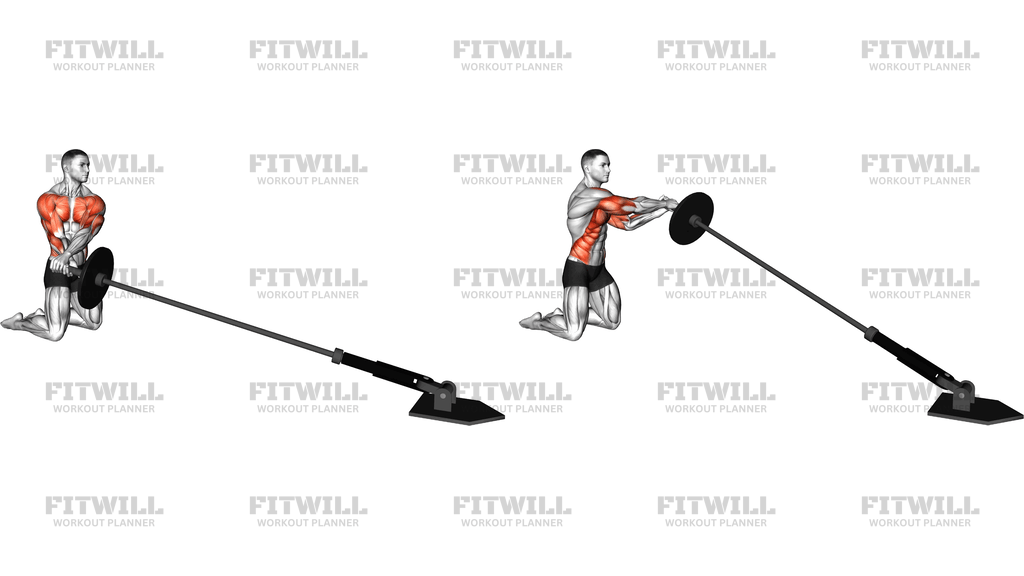
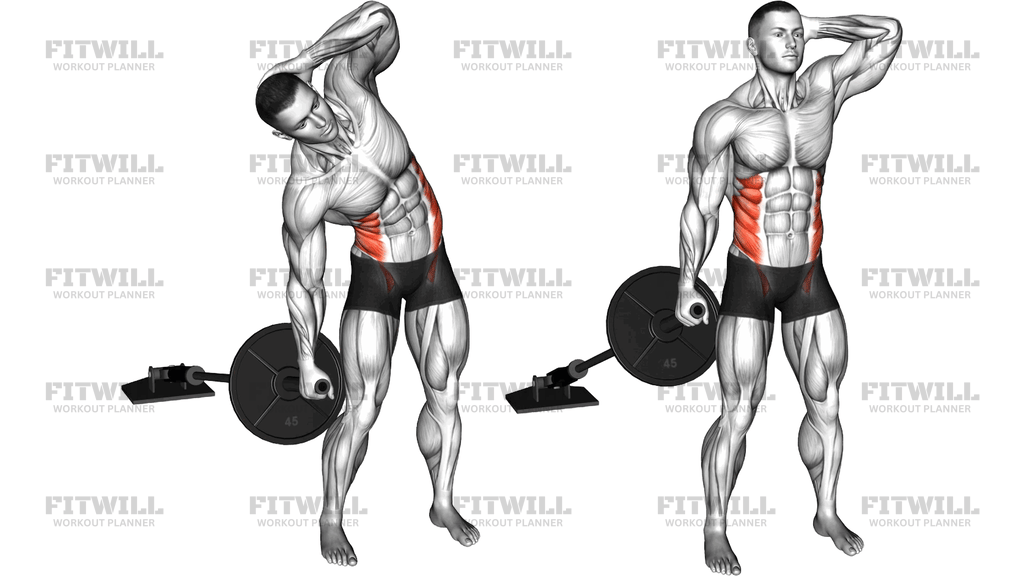
The Landmine Standing Side Bend is a unilateral core exercise performed with a barbell set up in a landmine attachment or wedged into a corner. You grip the free end of the bar at your side with one hand, let the plate-loaded end hang just outside your hip, and bend sideways toward the weight before pulling yourself back upright using the muscles along the opposite side of your waist. Because the bar sits at an angle against the floor or landmine collar, the resistance has an arcing path that keeps tension on your obliques through the whole range.
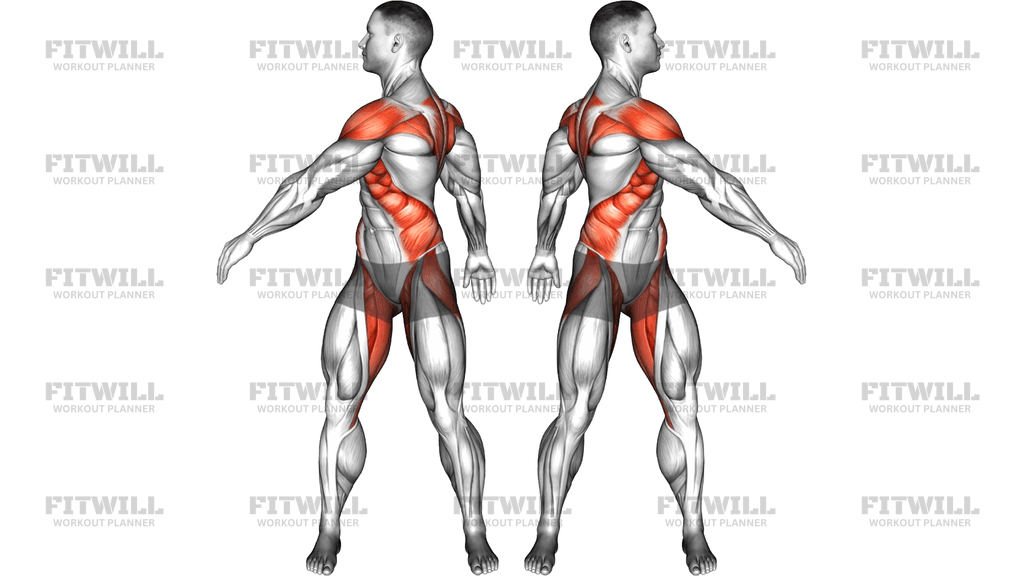
This movement primarily targets the obliques on the side you are bending away from, with the quadratus lumborum and deep core stabilizers doing much of the work to control the return. Your grip, forearm, and shoulder on the working arm hold the bar in place, while your legs and hips stay planted to keep your lower body out of the motion. Compared with a dumbbell side bend, the landmine setup changes the angle of pull slightly and often feels smoother at the bottom of the rep, where a hanging dumbbell can get awkward.
The setup matters more than people expect. The bar needs a secure anchor point, a collared plate so it cannot slide off, and enough floor space that the sleeve and plate can swing freely without hitting anything. Standing too close or too far from the anchor changes the arc and can turn the exercise into something closer to a hinge or a row, so take a moment to get your position right before adding load.
Execution should stay disciplined: the bend happens at your waist in one plane, not through your hips, spine rotation, or a shrug. A useful cue is to imagine shortening the distance between your bottom rib and your hip bone on the side away from the bar. Keep the arm long and relaxed so it acts like a strap, not a pulling lever.
This exercise fits well into core finishers, athletic training blocks for sports with lateral force like tennis, baseball, or rugby, and general strength programs where the obliques need direct loaded work. Because each side is trained separately, it also helps expose and correct side-to-side differences in trunk strength. Most lifters do well with moderate weight, controlled reps, and alternating sides set to set, treating it as a precision movement rather than something to load heavily and rush through.
[ Workout Log & Planner ]
Put your next workout in Fitwill
Keep your plan and training log ready when you are.


Instructions
- Set one end of a barbell in a landmine attachment or firmly wedged into a corner, and slide a plate onto the free end with a collar so it cannot slide off.
- Stand beside the free end of the bar with the plate hanging just outside the hip on that side, feet about hip-width apart and knees softly bent.
- Grip the sleeve or bare bar end with one hand at your side, arm hanging long, and place your free hand behind your head or across your chest.
- Brace your core, keep your chest tall and shoulders square to the front, and make sure both feet stay flat on the floor.
- Inhale, then bend sideways at the waist toward the weighted end, letting the plate travel down along an arc while your hips stay level and facing forward.
- Descend until you feel a clear stretch along the opposite side of your waist, usually when the plate is near knee height.
- Exhale and pull yourself back to a tall standing position by contracting the obliques on the side away from the bar, not by yanking with your arm.
- Pause briefly at the top, then repeat for your target reps before switching to the other side with the opposite hand on the bar.
- Reset your stance and brace between sets, and release your grip only after the bar has settled so the plate does not swing.
- Keep the weight controlled through the whole set; if the plate swings or your torso twists, set the bar down and reduce the load.
Tips & Tricks
- Keep your free hand behind your head rather than pulling on your neck; it gives you a reference point for how much your torso is actually tilting.
- A common mistake is letting the hips sway toward the bar as you bend. Imagine your pelvis bolted between two walls so the only hinge is your waist.
- Do not twist your torso as you bend. If your chest rotates toward or away from the bar, drop the weight until you can move purely in the frontal plane.
- Keep a slight bend in the elbow-free feeling on the working arm: a stiff, pulling arm turns the rep into a partial upright row and robs the obliques of the work.
- The landmine arc means the bar wants to drift forward or back. Adjust your distance from the anchor until the plate travels in a smooth path beside your leg.
- Control the bottom of the rep instead of dropping into it. Bouncing out of the stretch uses momentum and puts the load on passive structures in your lower back.
- Alternate sides each set and match reps, not load, so your stronger side does not quietly set the pace.
- If the bar end is rough on your grip, use a pad or towel around the sleeve, but keep your hand in the same position each rep.
- Start lighter than you think you need. The obliques handle lateral load well, but the lower back ends up absorbing any sloppy reps.
Frequently Asked Questions
Which muscles does the Landmine Standing Side Bend work?
The obliques on the side opposite the bar do most of the pulling, supported by the quadratus lumborum and deep core muscles that control the bend and return. The grip and shoulder on the working arm hold the bar but should not be doing the lifting.
Should I bend toward the weight or away from it with the Landmine Standing Side Bend?
You bend toward the weighted side on the way down, then contract the obliques on the opposite side of your waist to pull yourself upright. That opposite-side contraction is the working portion of the rep.
Can beginners do the Landmine Standing Side Bend?
Yes, and it is a good first loaded side bend because the angled landmine path feels more natural than a hanging dumbbell for many people. Beginners should start with one small plate and focus on moving straight sideways without twisting.
Why use a landmine instead of a dumbbell for side bends?
The anchored bar creates an arc of resistance and stays more stable at the bottom of the rep, which makes it easier to control and keeps tension on the obliques. It also frees your other hand, which helps you monitor torso position.
How far down should I bend during the Landmine Standing Side Bend?
Bend until you feel a distinct stretch along the side of your waist opposite the bar, which for most people is when the plate is around knee height. Going deeper usually means the hips are shifting or the lower back is rounding rather than more oblique work.
My hips move every time I bend sideways. How do I fix this?
Narrow your focus to keeping both feet flat and your pelvis square to the front, and lighten the load until the tilt happens only at your waist. Practicing in front of a mirror or filming from the front makes the hip drift easy to spot.
How heavy should I go on the Landmine Standing Side Bend?
Choose a weight you can lower slowly and lift back up without twisting or swinging, usually for 8 to 15 controlled reps per side. This is a movement where clean reps beat heavy plates by a wide margin.
What can I substitute if I do not have a landmine setup?
A single dumbbell or kettlebell side bend is the closest substitute, and a cable side bend with a low pulley and single handle also works well. Each changes the resistance angle slightly, so expect a slightly different feel.
Is the Landmine Standing Side Bend safe for the lower back?
When done with controlled reps, a stable pelvis, and a moderate load, it is a standard way to train the lateral core. Avoid bouncing out of the bottom, twisting under load, or forcing an extreme range, and skip the movement if bending sideways currently causes discomfort.