Standing Torso Twist Arms Swing
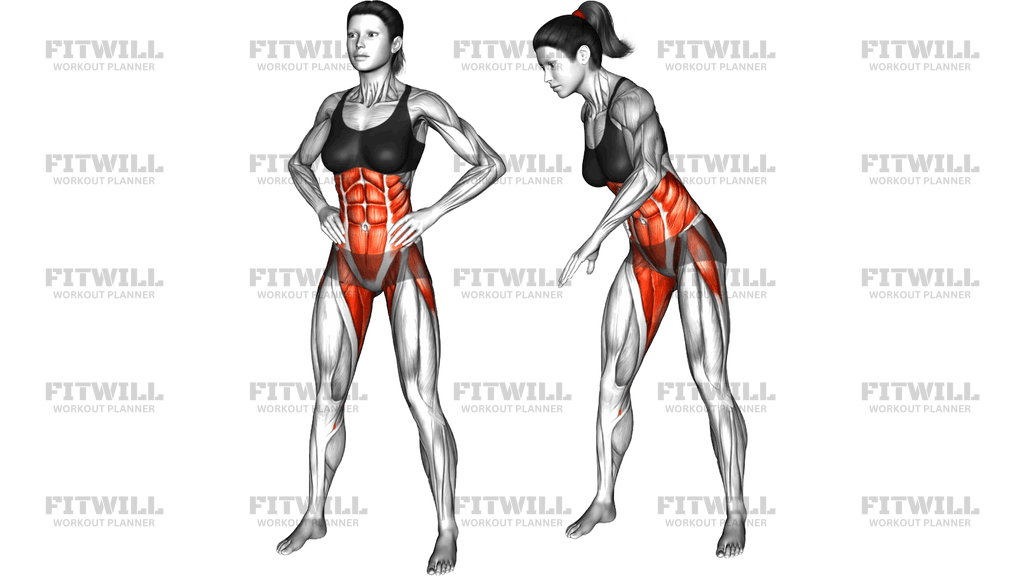
The Standing Torso Twist Arms Swing is a dynamic, bodyweight movement where you rotate your upper body from side to side while your arms swing freely with the momentum of each turn. You stand with feet roughly shoulder-width apart, keep the lower body quiet, and let the twist travel through your waist and mid back as the arms sweep around you. It is one of the simplest rotational drills you can do, requiring no equipment and very little space.
This movement is primarily a warm-up and mobility drill. It raises your core temperature, loosens the obliques, and prepares the mid back and hips for anything that involves rotation or swinging — racket sports, golf, baseball, throwing, or barbell work like squats and cleans. It is also a gentle reintroduction to movement for people who sit for long hours, since prolonged sitting tends to stiffen the thoracic spine and the muscles around the waist.
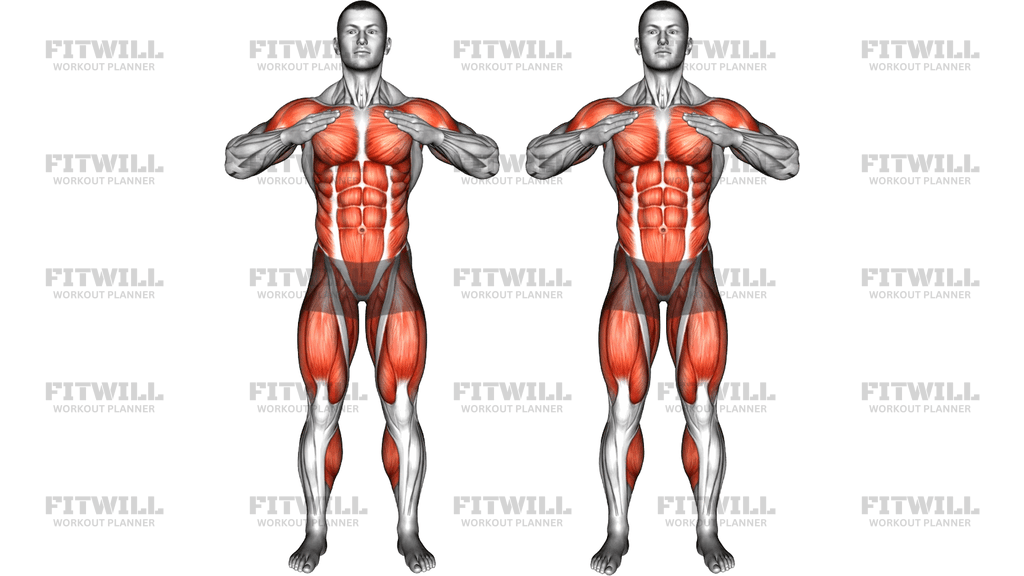
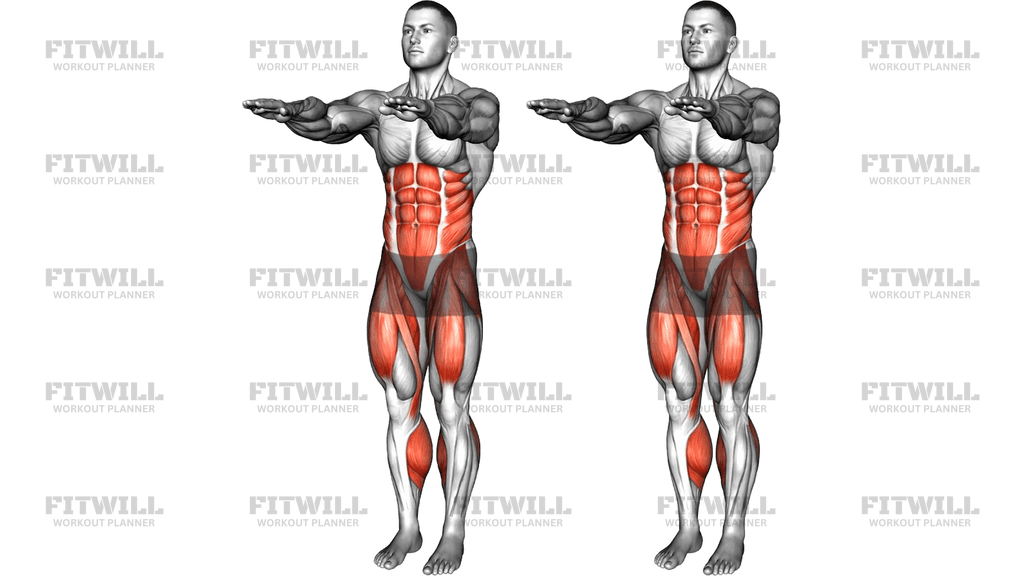
The muscles doing most of the work are the obliques on the sides of your waist, which shorten on one side as you twist and lengthen on the other. The deep core stabilizes the spine through each turn, the erector spinae along the lower back controls the rotation, and the shoulders and upper back contribute as the arms swing across and away from the body. Because the arms act as a counterweight, the swing itself helps drive the range of motion without forcing it.
Setup matters more than it looks. Your feet should stay planted and your knees soft but largely still — if your legs start whipping side to side, the rotation is coming from momentum in the lower body instead of controlled turning through the waist. Keep your torso tall and your gaze forward or tracking slightly with the turn, and let the arms stay relaxed rather than rigid. A stiff, muscle-gripped swing defeats the purpose of the drill.
To execute it well, start with small, easy rotations and gradually widen the arc as your back and waist warm up. Exhale as you turn in each direction and let the arms follow the shoulders rather than leading the movement. Common use cases include pre-workout warm-ups, morning mobility routines, breaks between long training sets, and active recovery days. Ten to twenty smooth repetitions per side is usually enough to feel the waist and back loosen.
A few practical safety points: keep the rotation comfortable and pain-free, especially if you have a history of lower back sensitivity, and avoid cranking the twist to its end range with speed. The goal is fluid, repeated turning — not how far you can whip your torso. If you feel any sharp or pinching sensation, narrow the range and slow the tempo before continuing.
[ Workout Log & Planner ]
Put your next workout in Fitwill
Keep your plan and training log ready when you are.


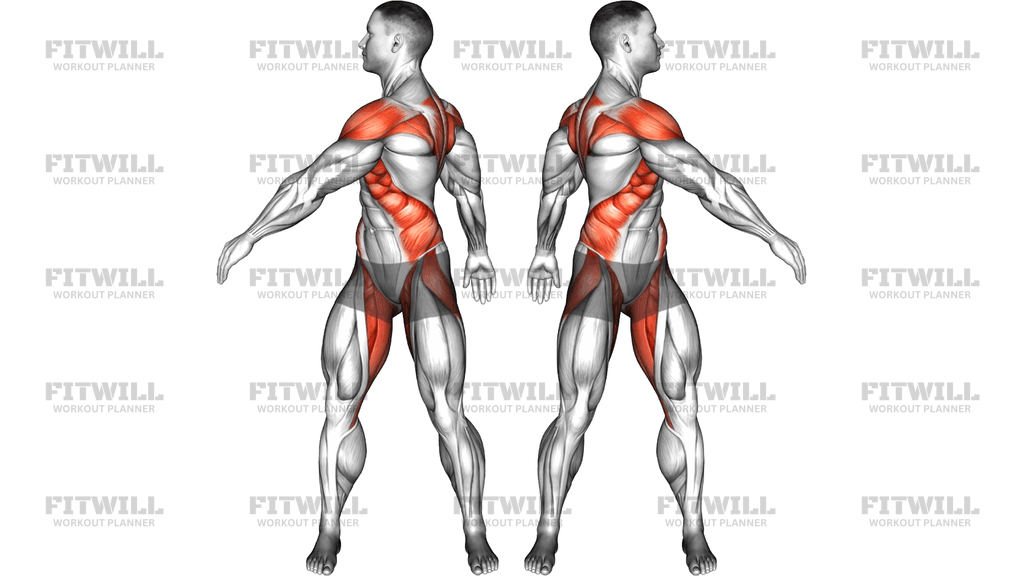
Instructions
- Stand tall with your feet about shoulder-width apart, toes pointing forward, and let your arms hang relaxed at your sides.
- Soften your knees slightly and engage your core lightly so your lower body stays planted throughout the set.
- Bring your arms out to a comfortable, loose position — slightly bent and ready to swing freely.
- Rotate your upper body to the right, letting your left arm swing across the front of your body and your right arm swing behind you.
- Reverse the rotation smoothly to the left, keeping your hips and feet facing forward as your waist and mid back do the turning.
- Continue alternating sides in a steady rhythm, starting with a small arc and widening it gradually as you loosen up.
- Exhale as you turn into each twist and inhale during the transition back through center.
- Keep your shoulders relaxed and your head traveling with the rotation rather than snapping ahead of it.
- After your final repetition, slow the arc down, let the swings shrink back toward center, and come to a still standing position before moving on.
Tips & Tricks
- Anchor your feet before you start — if your heels or toes are lifting and pivoting with each turn, you are twisting from the ground up instead of isolating the waist.
- Keep the arms loose like ropes, not straight and tense; rigid arms turn the swing into a shoulder exercise and rob the movement of its rhythm.
- Start smaller than feels necessary for the first few reps. Jumping straight into a full-range whip is the most common way people tweak their lower back with this drill.
- Let your breathing set the tempo — one twist per exhale keeps the movement smooth and stops you from rushing.
- If your lower back feels pinched, reduce the arc and focus the turn higher, feeling the rotation come from your mid back rather than your lumbar spine.
- Avoid locking your knees. Soft knees act as shock absorbers and keep the twist from jarring the hips and spine.
- Progress by speed and duration, not by force. A longer set of easy swings warms you up better than a short set of hard ones.
- Use this drill before any rotational sport or lift — five minutes of swinging before golf or tennis noticeably eases the first few full swings.
Frequently Asked Questions
What muscles does the Standing Torso Twist Arms Swing work?
The obliques on the sides of your waist do most of the work, supported by the deep core and the erector spinae of the lower back. The shoulders and upper back are involved as the arms swing with each rotation.
Is the Standing Torso Twist Arms Swing a warm-up or a strength exercise?
It is best used as a dynamic warm-up and mobility drill rather than a strength builder. Its main value is loosening the waist and mid back and raising your body temperature before more demanding training.
Should my feet move during the Standing Torso Twist Arms Swing?
No — keep your feet planted and your hips facing forward so the rotation comes from your waist and mid back. If your feet are pivoting with each swing, the movement is too forceful or too large for your current control.
How many repetitions should I do?
Ten to twenty smooth swings per side is a good starting point, or about 30 to 60 seconds of continuous alternating twists. Stop when your waist and back feel loose rather than fatigued.
My lower back feels uncomfortable when I twist — what should I change?
Shrink the arc, slow the tempo, and think about turning from your ribcage instead of your lumbar spine. If discomfort persists, skip the drill and consult a qualified professional before continuing.
Can beginners do the Standing Torso Twist Arms Swing?
Yes, it is one of the most accessible rotational drills because it uses only your body weight and a self-selected range of motion. Beginners should simply start with smaller swings and a slower rhythm.
What can I use instead if I want a similar rotational warm-up?
Seated or standing torso rotations without the arm swing, hip swings, or arm circles paired with gentle turning all cover similar ground. A light resistance band twist also works if you want a little more feedback through the turn.
How fast should I swing my arms during the Standing Torso Twist Arms Swing?
Use a moderate, controlled rhythm — fast enough that the arms flow naturally with the momentum, but never so fast that your torso whips or your head snaps around. Speed can increase gradually as you warm up.
Can I do this exercise every day?
Yes, a daily set of easy torso swings is generally fine for healthy individuals and works well as a morning mobility habit. Keep the intensity low so it stays a loosening drill rather than a strenuous effort.