Knee Tap Sky Reach
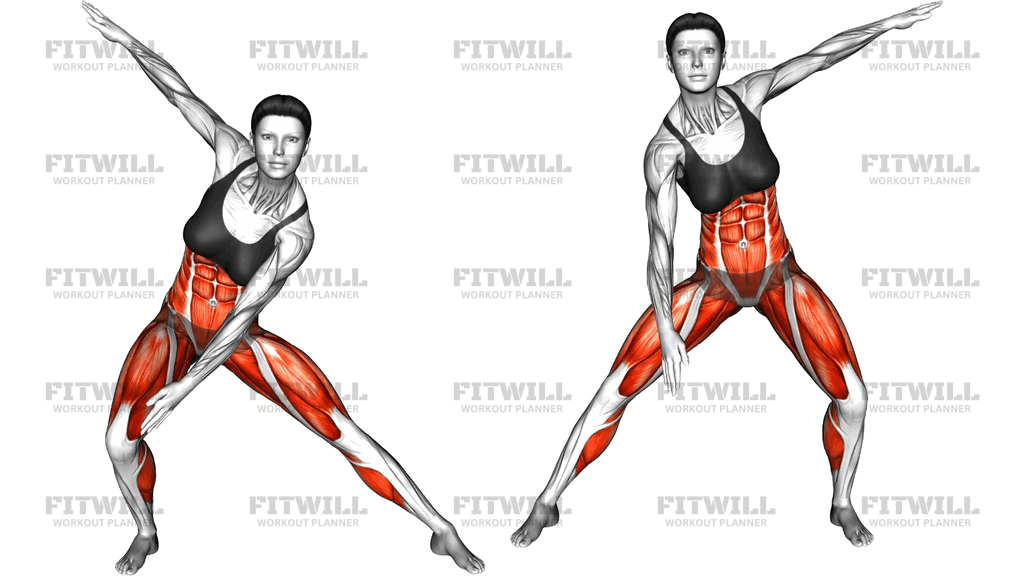
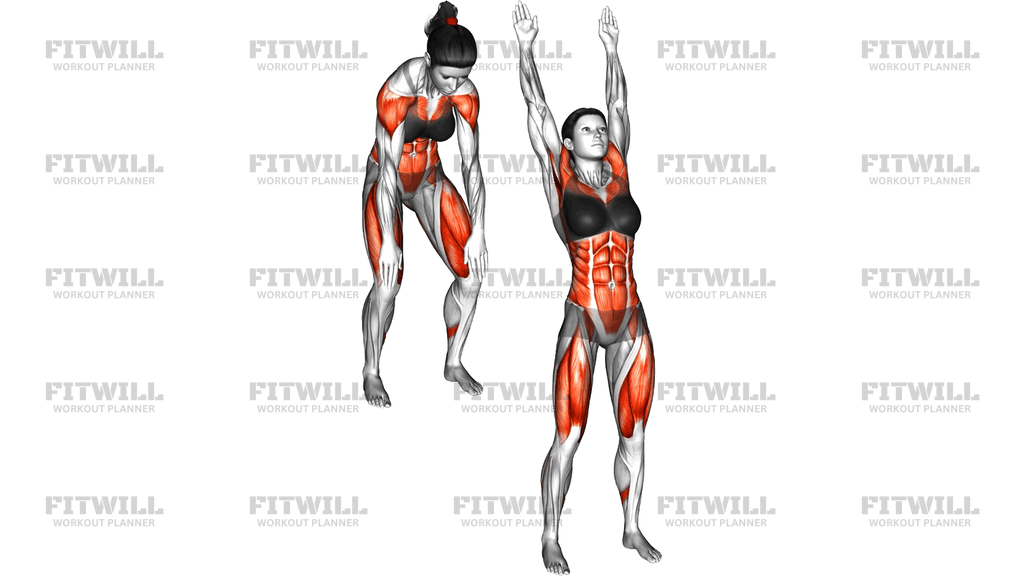
Knee Tap Sky Reach is a body weight movement that links two simple actions into one flowing rep: a hip hinge down to tap or brush your knees with your hands, followed by a tall stand with both arms reaching straight overhead. It works as a dynamic warm-up, a low-impact activation drill, and a teaching tool for the hip hinge pattern that carries over into deadlifts, kettlebell swings, and squats.
The exercise trains the back side of the body through the hinge portion. As you push your hips back and fold forward, your hamstrings and glutes load under stretch, and your lower back muscles work to hold your spine in a neutral position instead of rounding. The stand-and-reach phase then switches the demand: your glutes drive the hips forward to full extension, your abs brace to keep the ribs from flaring, and your shoulders work through a full overhead range.
Because there is no equipment and no external load, the Knee Tap Sky Reach suits almost anyone. It is especially useful before lower body strength sessions, as a movement break during long desk days, and for beginners who need to learn where their hips should be during a hinge without worrying about a barbell or hinge cue overload. Older adults and people returning from time off also benefit from the controlled rhythm and the balance element of moving from folded to standing.
The setup matters more than it looks. Your feet stay roughly hip-width apart with weight spread across the whole foot, and your knees stay softly bent while the movement comes from the hips, not from squatting down. If your knees shoot forward and your chest drops straight down, you turn the hinge into a squat and lose the hamstring stretch that makes the exercise valuable. Keeping a long spine as you fold is what protects your lower back.
To execute it well, think of the reps as one continuous wave rather than two separate positions. Hinge until your fingertips tap or lightly brush the front of your knees, then reverse by driving your hips forward, squeezing your glutes at the top, and letting your arms travel up so they finish in line with your ears. Exhale as you stand, inhale as you fold, and keep the pace smooth enough that you could talk through a set.
A practical guideline is 10 to 15 controlled repetitions as a warm-up, or 2 to 3 sets of 12 to 15 reps as a standalone activation circuit. If you feel the work in your hamstrings and glutes rather than in your lower back, your hinge position is where it should be. If you feel pinching in the front of your shoulders at the top, lower the reach slightly to a Y angle instead of forcing the arms straight overhead.
[ Workout Log & Planner ]
Put your next workout in Fitwill
Keep your plan and training log ready when you are.


Instructions
- Stand with your feet about hip-width apart, toes pointing forward, and your weight spread evenly across both feet.
- Soften your knees slightly and pull your shoulders back so you start tall with your arms hanging relaxed at your sides.
- Brace your abs lightly as if preparing for a light push to the stomach, and keep your neck in line with your spine.
- Push your hips back and hinge forward, letting your chest lower toward your thighs while your knees stay softly bent and do not travel forward.
- Reach your hands down until your fingertips tap or lightly brush the front of your knees, keeping your back long rather than rounded.
- Reverse the hinge by driving your hips forward and squeezing your glutes until your hips are fully extended under your shoulders.
- As you stand, sweep both arms up in front of your body and reach straight overhead so your hands finish above your shoulders with palms facing each other.
- Exhale through the stand and reach, then inhale as you lower your arms back down and hinge toward the knees for the next rep.
- Complete each rep at a steady tempo, and reset your stance and brace if you feel your balance shift or your lower back start to round.
Tips & Tricks
- If your fingertips cannot reach your knees without rounding, hinge less deeply or bend the knees a touch more; range should come from the hips, not from your spine.
- Watch that your knees do not slide forward as you fold. If they do, mentally push your hips toward the wall behind you until your hamstrings feel the stretch.
- Do not hyperextend your lower back at the top. Finish the stand by squeezing the glutes, not by leaning your ribcage forward past your hips.
- If overhead reaching makes your shoulders pinch, spread your arms into a slight Y shape instead of forcing them parallel overhead.
- Keep your neck neutral as you fold. Looking up at the bottom of the hinge is a common mistake that strains the back of the neck.
- Move slowly enough to feel the hamstring stretch at the bottom; bouncing through reps turns a hinge drill into momentum work.
- If balance is shaky, hold the fold position lightly with both hands on your knees for a second before standing, then progress to a quick tap.
- Breathe in a set rhythm: inhale on the way down, exhale on the drive up. Holding your breath usually signals you are moving too heavy or too fast for the pattern.
- Keep your weight in the middle of your feet. Shifting onto your toes at the bottom is a sign the hips are not traveling back far enough.
Frequently Asked Questions
What muscles does the Knee Tap Sky Reach work?
The glutes and hamstrings do the main work during the hinge and the drive to standing, while your abs and lower back stabilize the spine. The shoulders and upper back are active as you reach overhead.
Is the Knee Tap Sky Reach good for beginners?
Yes, it is one of the simplest ways to learn the hip hinge because the knee tap gives you a clear target and there is no load to manage. Beginners should prioritize a long back over depth.
Should my knees bend during the Knee Tap Sky Reach?
They should stay softly bent the whole time, but they should not move forward as you fold. If your knees travel toward your toes, you are squatting instead of hinging at the hips.
How deep should I hinge if I cannot reach my knees comfortably?
Only hinge as far as you can keep your spine long. Tight hamstrings may stop you well above the knees at first, and that is fine; your range will improve as flexibility develops.
Can I use the Knee Tap Sky Reach as a warm-up before squats or deadlifts?
Absolutely. It grooves the hinge pattern, loads the hamstrings and glutes lightly, and opens the shoulder reach, making it a good first drill before lower body or pulling sessions.
Why do my arms not go straight overhead without shoulder discomfort?
Limited shoulder or upper back mobility can make a strict overhead position uncomfortable. Reach into a wider Y position, and if pinching continues, reduce the height of the reach.
How many reps of the Knee Tap Sky Reach should I do?
Ten to fifteen smooth reps work well as a warm-up. As a standalone activation circuit, aim for two to three sets of twelve to fifteen reps with a controlled tempo.
My lower back feels sore after this movement. What am I doing wrong?
Soreness usually means your spine is rounding at the bottom or arching at the top. Hinge less deeply, keep your abs braced, and finish each stand by squeezing the glutes instead of leaning back.
What can I substitute if knee discomfort makes the tap awkward?
Skip the tap and simply hinge toward your thighs before standing and reaching, or perform the same pattern with your hands resting lightly on a sturdy chair or rack for balance support.
Should I hold the knee tap position or move continuously?
Continuous reps are the standard way to perform it, but a one-second pause at the tap is a useful variation if you want extra hamstring stretch or are working on balance.