Seated Chest Out Hands Behind (Hold) On A Padded S
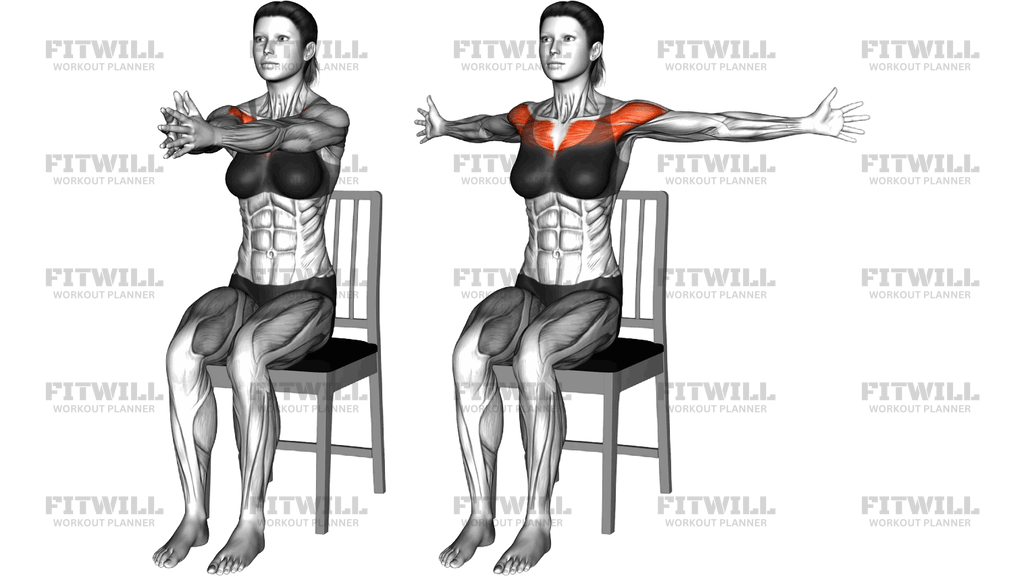
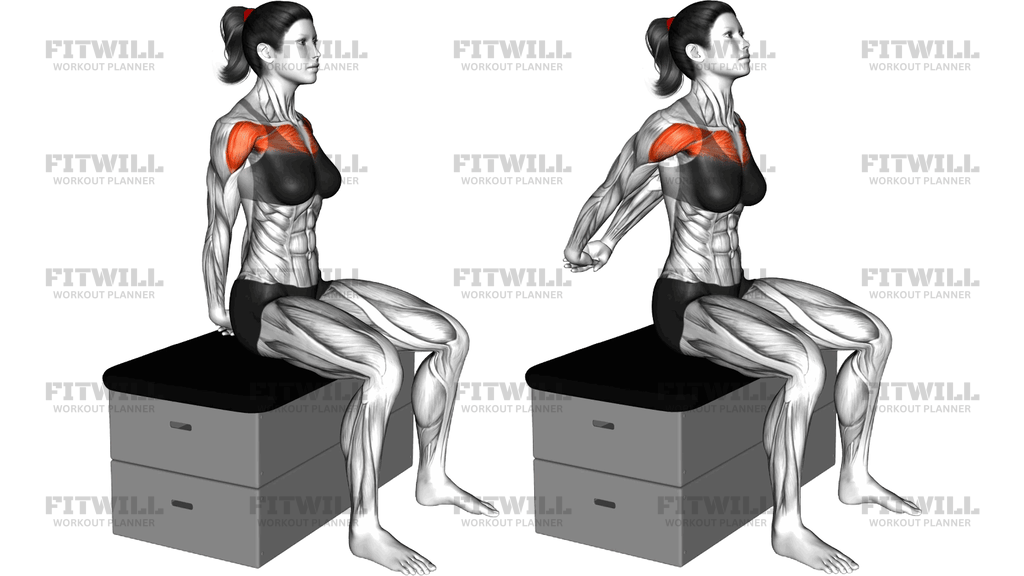
The Seated Chest Out Hands Behind (Hold) On A Padded Seat is a static stretch that targets the pectoral muscles and the front of the shoulders. You sit upright on a padded bench or box with your feet planted, clasp your hands behind your back, and gently lift your arms away from your body while pushing your chest forward. The position is then held for a set period, letting the tight front-line tissue of the upper body lengthen slowly and safely.
This stretch is especially useful for anyone who spends long hours sitting at a desk, driving, or training pressing movements like bench presses and push-ups. Those habits tend to pull the shoulders forward and round the upper back, shortening the chest muscles over time. Because you perform it seated, your hips stay anchored and your spine is easier to keep tall, which means the stretch lands where you want it — across the chest and front delts — rather than being lost in a leaning, arched torso.
The main muscles being lengthened are the pectoralis major and pectoralis minor, along with the anterior deltoid. The biceps and front of the shoulder also get a mild stretch because the arms extend behind the body. Meanwhile, the muscles between the shoulder blades and the upper back have to work lightly to hold your torso upright and open, which reinforces good postural positioning while the chest releases.
Setup matters more than intensity here. A stable, padded seat of roughly knee height lets you sit with thighs level and feet flat on the floor. Sitting too low or on an unstable surface forces you to slump, which defeats the purpose of the stretch. Keep the ribs stacked over the pelvis rather than flaring the lower back to fake a bigger chest opening — the extension should come from the shoulders moving back and down, not from arching the spine.
To execute it well, sit tall, interlace your fingers behind you, straighten (or nearly straighten) the elbows, and raise the arms only as far as a comfortable pull across the chest allows. Breathe steadily and hold for 20 to 45 seconds, letting the range increase gradually as the tissue relaxes. Avoid cranking the arms up or shrugging the shoulders toward the ears; the stretch should feel like a broad opening across the chest, never a pinch at the front of the shoulder.
Use this movement as part of a warm-up before upper-body pressing days, as a break during long sitting periods, or as a cooldown stretch after chest and shoulder training. It is a low-load, easily adjustable hold, which makes it suitable for beginners as well as experienced lifters who need to restore shoulder range after heavy pressing work.
[ Workout Log & Planner ]
Put your next workout in Fitwill
Keep your plan and training log ready when you are.


Instructions
- Sit on a padded bench or box at about knee height with your feet flat on the floor and your knees bent roughly 90 degrees.
- Sit up tall so your ears, shoulders, and hips line up vertically, and rest your hands at your sides for a moment to find a neutral spine.
- Reach both arms behind your back and interlace your fingers, or hold onto a towel or strap behind you if your shoulders feel tight.
- Draw your shoulder blades gently together and down, then lift your chest forward without arching your lower back.
- Keeping the elbows soft but mostly straight, raise your clasped hands away from your body until you feel a stretch across your chest and the front of your shoulders.
- Hold this end position for 20 to 45 seconds, keeping your neck relaxed and your gaze level.
- Breathe slowly and evenly throughout the hold — inhale through the nose, exhale through the mouth, and let the chest open a little more on each exhale.
- To release, slowly lower your hands back down behind you before unclasping the fingers, then bring your arms forward to your sides.
- Rest briefly and shake out the shoulders, then repeat for a second hold if you are doing multiple rounds.
Tips & Tricks
- If your shoulders are too tight to interlace your fingers, hold a towel between your hands behind your back instead of forcing the clasp.
- A common mistake is arching the lower back to push the chest out — keep your ribs down and let the shoulder blades do the opening.
- Do not shrug toward your ears as you lift the arms; keep the shoulders heavy and the neck long.
- Stop the arm lift at the first point of stretch, not at maximum height — height does not equal a better stretch here.
- If you feel a pinching sensation at the front of the shoulder, lower your hands slightly and widen your grip on the towel or strap.
- Keep your feet flat and press them lightly into the floor; this steadies your pelvis and helps you sit tall through the hold.
- Because the elbows are extended behind you, anyone with a history of elbow or shoulder discomfort should keep a small bend in the arms.
- Perform the hold after training or after long sitting sessions, when the chest muscles are warm and respond better to stretching.
- Exhale slowly during the hold rather than holding your breath — tension in the breath usually shows up as tension in the shoulders.
Frequently Asked Questions
Which muscles does the Seated Chest Out Hands Behind (Hold) stretch?
It primarily lengthens the pectoralis major and pectoralis minor in the chest, along with the anterior deltoid at the front of the shoulder. The biceps receive a milder stretch because the arms are extended behind the body.
Is this stretch suitable for beginners?
Yes. Because you are seated on a stable padded surface with no load involved, the intensity is entirely under your control. Beginners can simply use a towel behind the back and keep the arm lift small.
Why is the Seated Chest Out Hands Behind (Hold) done on a padded seat instead of standing?
Sitting anchors the hips and makes it easier to keep the spine tall, so the stretch stays focused on the chest rather than being diluted by a forward lean or an arched lower back. The padding also keeps pressure off the sitting bones during longer holds.
How long should I hold the position?
Aim for 20 to 45 seconds per hold, repeating two to three rounds. Longer, relaxed holds are more effective for tight chest muscles than short, forceful pulls.
I cannot clasp my hands behind my back — what should I do?
Hold a towel or strap between your hands and gradually narrow your grip over weeks of practice. The stretch effect is the same; forcing the clasp only strains the shoulders.
Can I substitute a standing version of this stretch?
You can, but the seated version gives you more torso control and less temptation to arch the lower back. If you stand, keep the feet hip-width apart, brace the abdominals lightly, and avoid pushing the hips forward.
When is the best time to do the Seated Chest Out Hands Behind (Hold)?
It works well as a cooldown after chest or shoulder pressing workouts, and also as a posture break during long periods of sitting. Avoid aggressive stretching right before heavy pressing, when temporary changes in tissue tension are not ideal.
What should I do if I feel a pinch at the front of my shoulder?
Lower your hands a few inches, bend the elbows slightly, and widen your grip if you are using a towel. A stretch should feel like a pull across the chest, never a sharp or pinching sensation at the shoulder joint.
Will this stretch improve rounded shoulders from desk work?
It can help as part of a broader routine, because it lengthens the shortened chest muscles that pull the shoulders forward. Pair it with upper-back strengthening exercises for a more complete postural effect.
Should I keep my arms completely straight during the hold?
Nearly straight is fine, but a small bend in the elbows is safer for anyone with elbow or shoulder sensitivity. Straightening them completely behind the body increases the stretch on the biceps and front shoulder and can push the joint into discomfort.