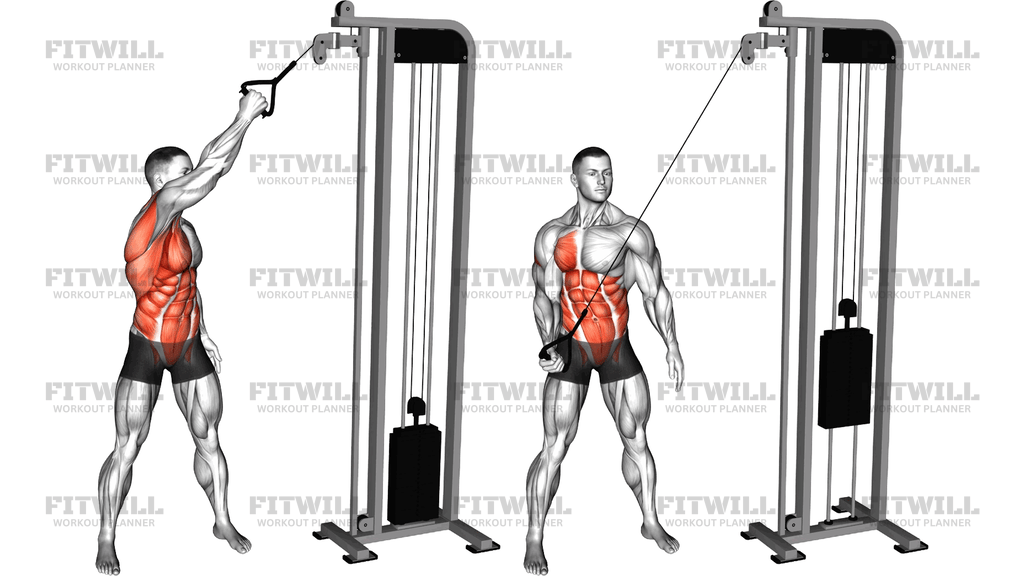
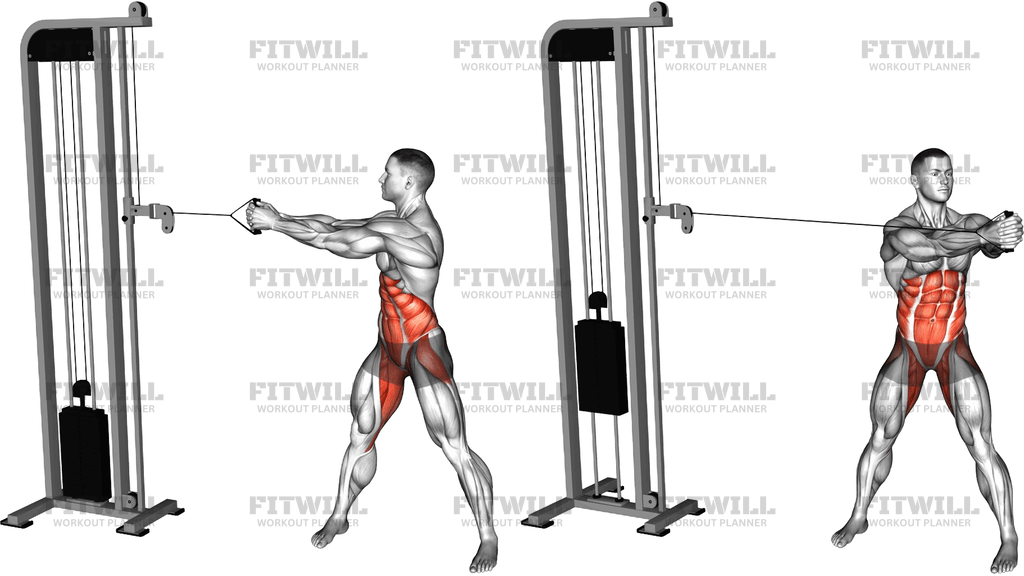
Cable Horizontal Pallof Press
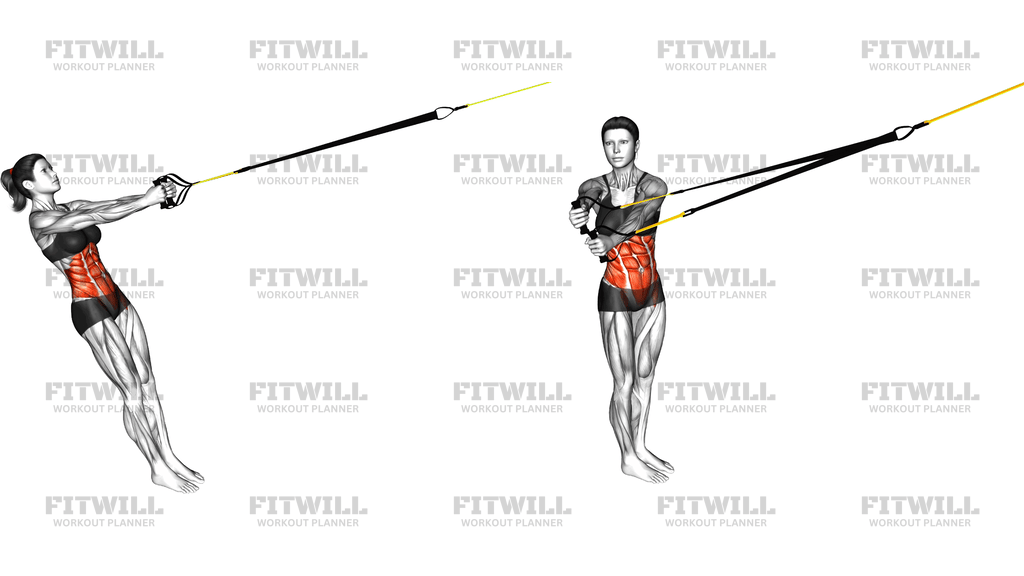
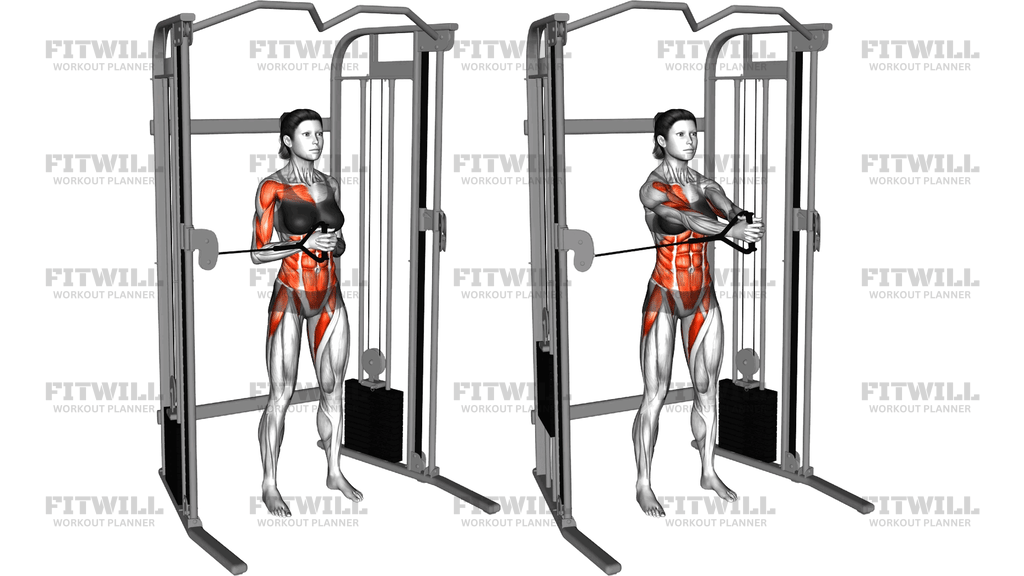
The Cable Horizontal Pallof Press is an anti-rotation core exercise that trains your trunk to resist twisting rather than produce it. You stand sideways to a cable machine with a single handle set around chest height, hold the handle against your sternum with both hands, and press it straight out in front of you. As the cable tries to pull your torso back toward the stack, your deep core and obliques have to brace and hold your ribcage square to the front. The result is a pressing motion on the outside and a hard, quiet stabilization job on the inside.
This movement is useful for nearly everyone because rotational stress shows up in everyday lifting, swinging sports, and simply carrying things on one side of the body. Lifters use it to protect the lower back during heavy squat and deadlift training, and athletes in golf, tennis, baseball, and hockey use it to build a stable trunk that transfers force cleanly. It is also a smart early core exercise for people who find dynamic crunch-style work uncomfortable, since the spine stays neutral the entire time.
The muscles doing the real work are the deep stabilizers of the trunk, especially the transverse abdominis and the obliques on the side away from the cable. Your rectus abdominis assists with bracing, the glutes and legs anchor your stance, and the shoulders and upper back handle the actual press while keeping the shoulder blades settled. The load is deliberately modest; this is an exercise where feeling steady and square matters far more than moving heavy weight.
Setup details make or break the Cable Horizontal Pallof Press. Set the pulley at mid-torso height, stand far enough from the machine that the cable stays taut even with your arms at your chest, and position yourself so the cable runs perpendicular to your chest. Your feet should be about hip-width apart with a slight bend in the knees, weight spread evenly, and hips level. If you stand too close, tension disappears; if your stance is too narrow or your hips drift, the exercise turns into a torso twist instead of an anti-rotation hold.
Execution is simple but demanding. Brace your midsection as if preparing for a light push, press the handle straight out until your arms are fully extended at chest height, and pause long enough to feel the cable trying to rotate you. Keep your shoulders down, your chest facing forward, and your hips pointing squarely ahead. Then draw the handle back to your sternum under control, exhale, and repeat. Expect a shaking, burning sensation through the midsection on the side facing away from the stack, which is a normal sign the stabilizers are working.
A few practical points will keep the exercise productive and safe. Start with a light weight and moderate holds, and complete all repetitions on one side before switching so you can compare how each side feels. If you notice your torso rotating toward the machine, your hips swiveling, or your lower back arching as you press, reduce the load and shorten the pause. Move deliberately rather than quickly, because speed lets momentum do the stabilizing that your core should be doing.
[ Workout Log & Planner ]
Put your next workout in Fitwill
Keep your plan and training log ready when you are.


Instructions
- Attach a single handle to a cable machine and adjust the pulley to roughly chest height.
- Stand sideways to the machine with the cable coming from your side, and step out until the cable is taut while the handle rests at your sternum.
- Interlace your fingers over the handle, set your feet hip-width apart with soft knees, and square your hips and chest to the front.
- Brace your midsection firmly and take a breath in through your nose before pressing.
- Press the handle straight out in front of your chest until your elbows are fully extended, keeping the path level and directly forward.
- Pause with the arms extended for two to three seconds while resisting the cable's pull toward the machine; keep your chest, ribs, and hips facing forward.
- Slowly draw the handle back to your sternum over two to three seconds, maintaining tension in the cable.
- Exhale as the handle returns to your chest, re-brace, and repeat for the desired number of repetitions.
- Complete all reps on one side, then turn around so the cable comes from the opposite side and repeat.
- Step toward the machine to release the cable tension before letting go of the handle.
Tips & Tricks
- The most common fault is rotating the torso as the arms extend. Watch yourself in a mirror or have a partner check that your sternum stays pointed straight ahead throughout the press.
- If your hips swivel toward the machine, widen your stance slightly and squeeze your glutes; the press should challenge your trunk, not your footing.
- Keep the pressing path at sternum height. Pressing too high lets the shoulders shrug and the lower back arch, while pressing too low invites a forward slump.
- Do not let the cable rest slack at your chest between reps. Step farther from the stack or add a small amount of weight so tension is constant from start to finish.
- Choose a load you can hold square for a full two-second pause. If the weight spins you toward the machine, the stabilizing demand has exceeded your control.
- Breathe steadily instead of holding your breath for the whole set. Inhale at the chest, brace, press, and exhale as you return.
- Avoid letting the extended arms drift across your midline toward the far side. The finish position should be centered on your body, not pointed wherever the cable angle pulls.
- Expect one side to feel less stable than the other, especially if you play a one-sided sport. Match the work on both sides rather than chasing extra reps on the strong side.
- Keep your knees soft rather than locked. Stiff, locked knees encourage you to lean back against the cable's pull instead of bracing.
Frequently Asked Questions
What muscles does the Cable Horizontal Pallof Press work?
The primary work comes from the deep core stabilizers, particularly the transverse abdominis and the obliques resisting rotation. Your abs, glutes, shoulders, and upper back assist with bracing and the pressing motion.
Why is the Cable Horizontal Pallof Press called an anti-rotation exercise?
Because the goal is not to twist your torso but to prevent it from twisting. The cable pulls you toward the machine, and your trunk muscles work isometrically to keep your chest and hips facing forward.
How high should I set the cable for the Cable Horizontal Pallof Press?
Set the pulley at about sternum or chest height so the handle presses straight out level with your torso. A pulley set too high or too low changes the pull angle and makes the bracing position harder to hold square.
How far should I stand from the cable machine?
Stand far enough that the cable stays taut with the handle held at your chest before you even press. If the cable goes slack at any point, step back a few inches until tension is constant.
Is the Cable Horizontal Pallof Press suitable for beginners?
Yes, and it is often a better beginner core exercise than crunches because the spine stays neutral. Start with a very light weight, short two-second holds, and focus entirely on keeping your torso from rotating.
How many reps and sets should I do?
Eight to twelve controlled presses per side for two to three sets is a solid starting range. Some people prefer timed holds of fifteen to thirty seconds with the arms extended; both approaches train the same anti-rotation quality.
My torso keeps turning toward the machine during the press. How do I fix it?
Reduce the weight first, then squeeze your glutes and think about pressing the handle away from your chest rather than letting the cable pull your hands anywhere. A wider stance and a firmer pre-brace usually solve the rest.
Can I do the Cable Horizontal Pallof Press without a cable machine?
Yes. A resistance band anchored to a sturdy rack or pole at chest height works with the same body position and press, though the resistance rises as you extend instead of staying constant like a cable.
Should I feel this in my lower back?
You should feel working sensations in your midsection, not strain in your lower back. If your lower back takes over, you are likely arching or letting your hips rotate, so lighten the load, soften your knees, and tighten your brace.
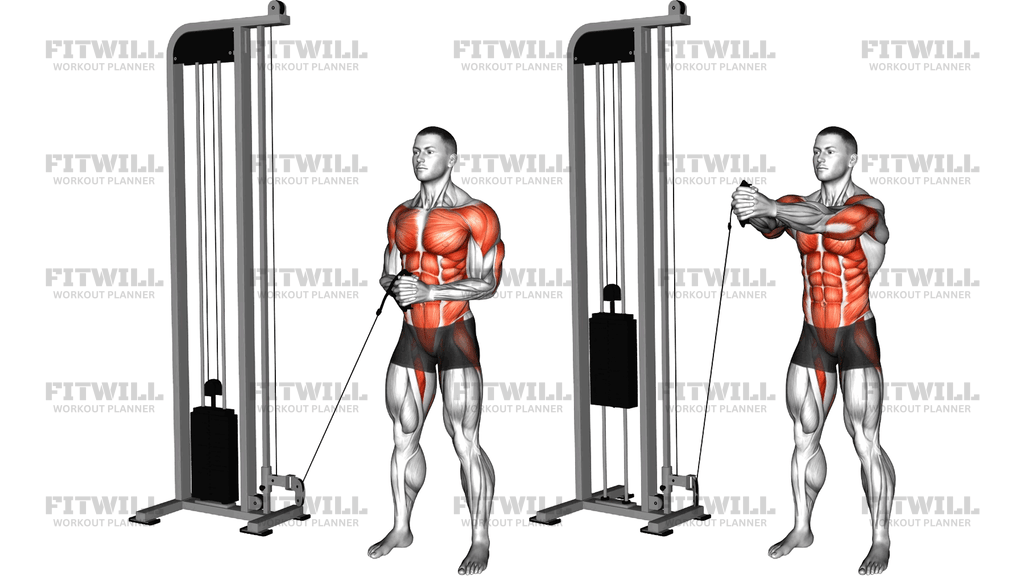
How is the Cable Horizontal Pallof Press different from a regular cable press?
A regular cable chest press trains pushing strength with the load aligned in front of you. The Pallof Press positions the load to the side, so the pressing muscles do less work and the anti-rotation demand on the trunk becomes the point of the exercise.