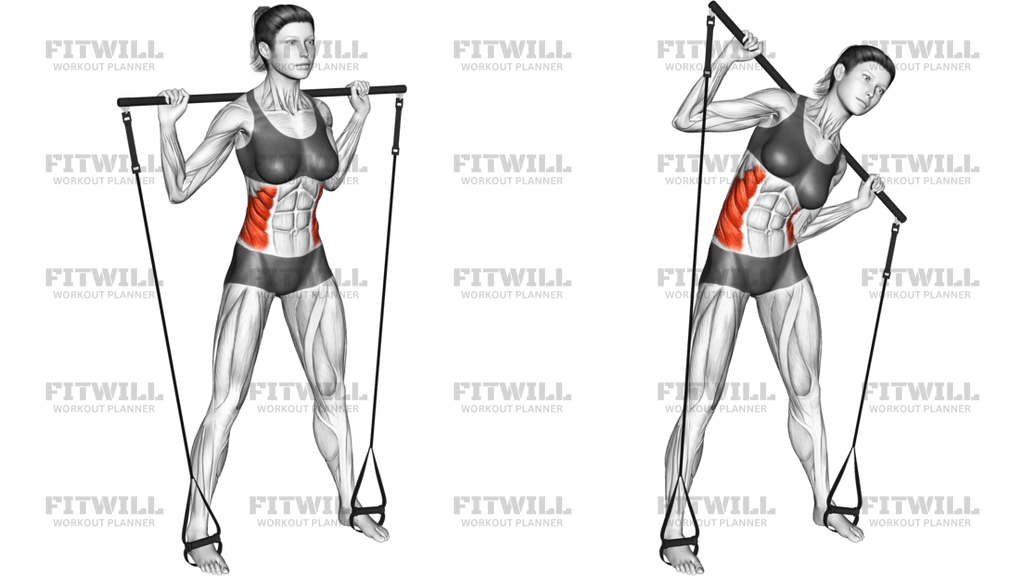
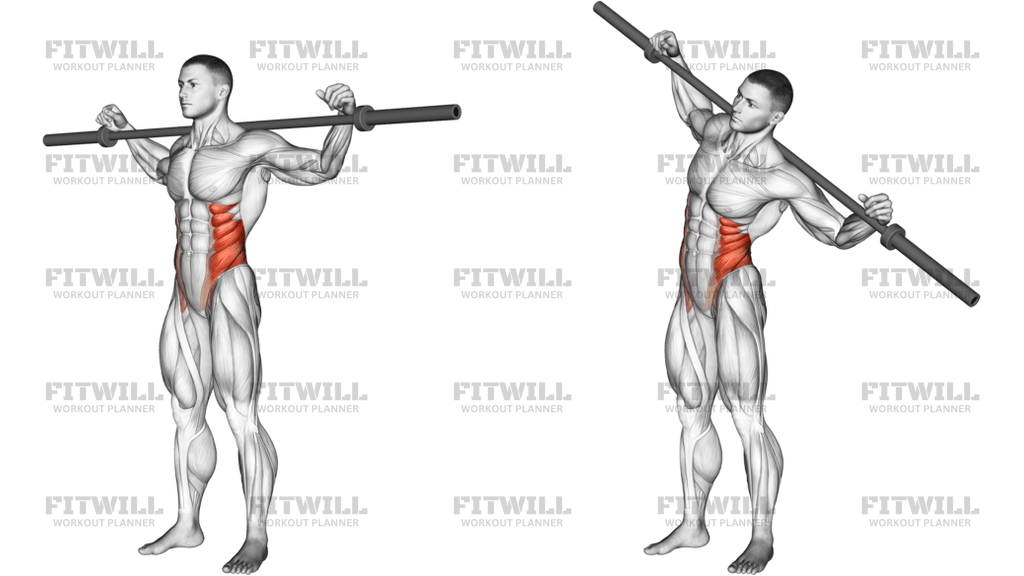
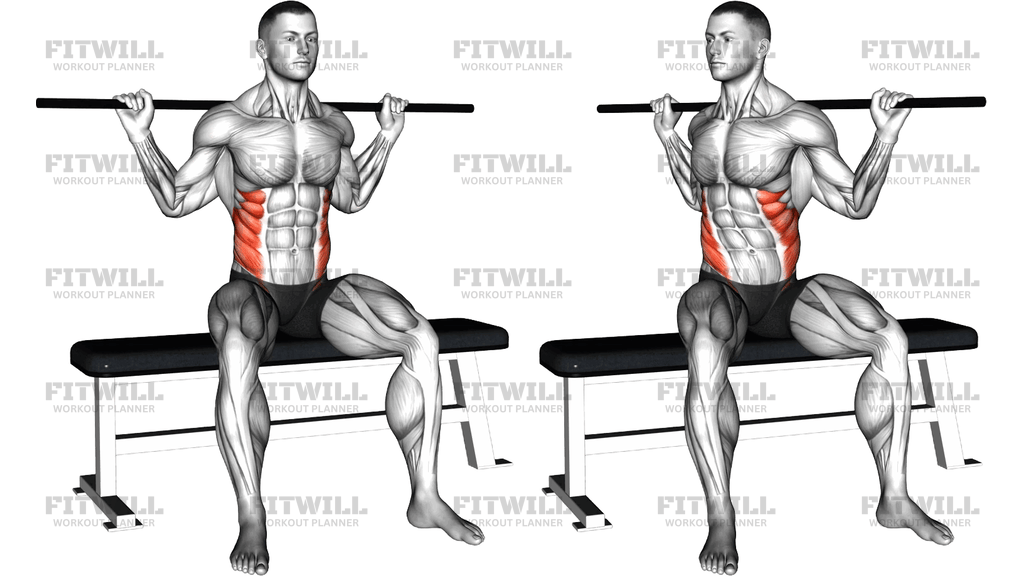
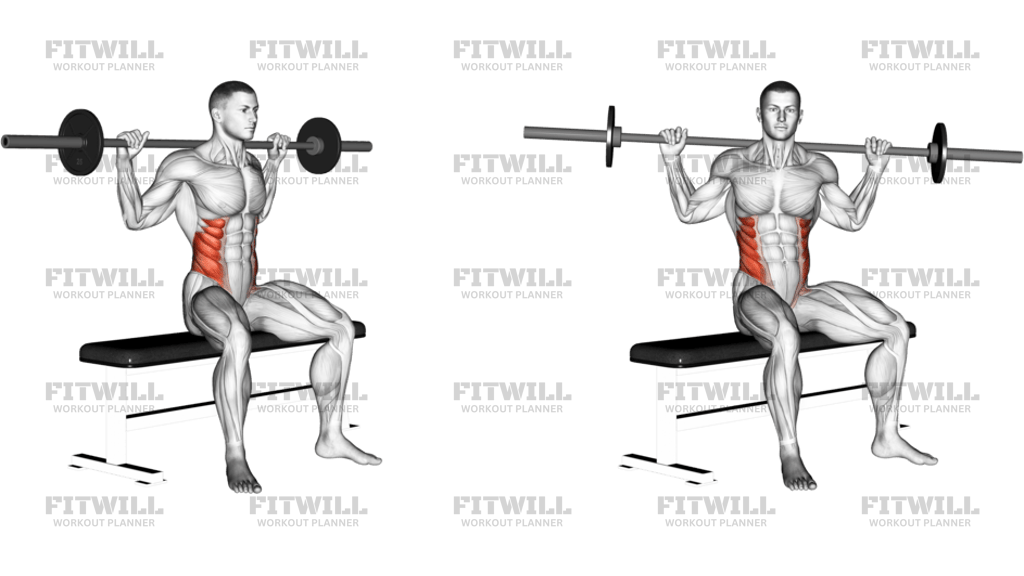
Landmine Standing Side Bend
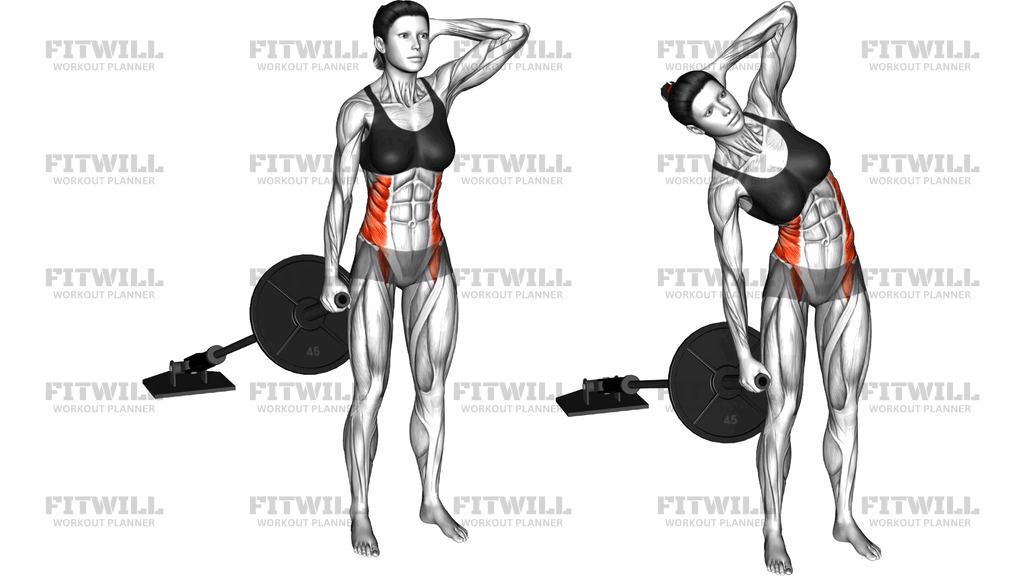
The Landmine Standing Side Bend is a unilateral core exercise that uses one end of a barbell anchored in a landmine attachment or wedged into a corner, with the free sleeve loaded with a plate and held in one hand. From a tall standing position, you let the bar pull you into a side bend toward the weighted side, then pull yourself back upright by contracting the obliques on the opposite side of your waist. Because the bar sits to one side of your body, your trunk has to resist and control sideways forces the entire time, which is exactly what this drill trains.
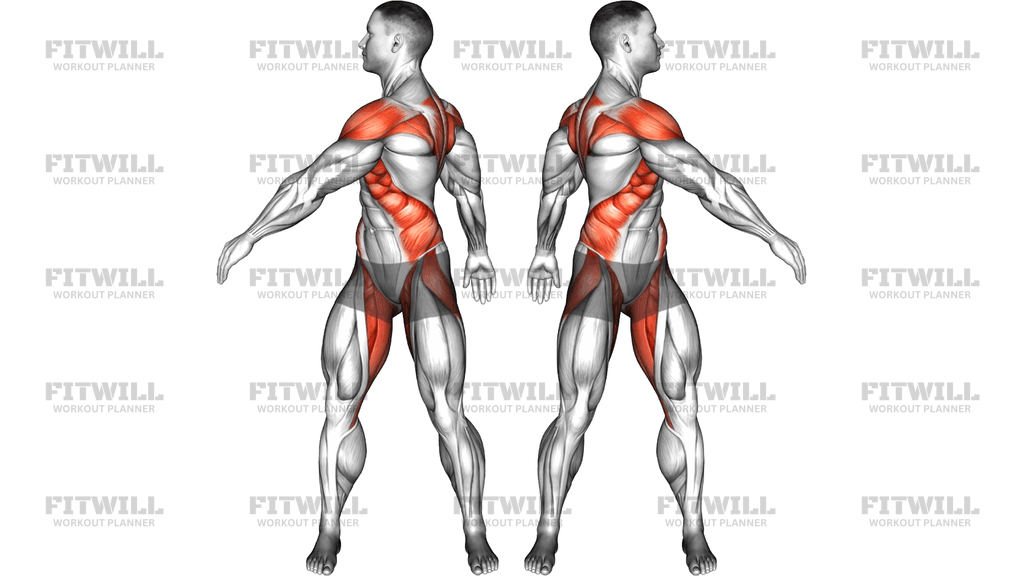
This movement is primarily a challenge for the obliques, the muscles running along the sides of your torso, with supporting work from the deep core and the quadratus lumborum in the lower back. It also demands a surprising amount of leg, hip, and shoulder stability, since your standing posture has to stay solid while the load drifts out to the side. Lifters usually train one side at a time, then switch hands to work the other, which makes it easy to spot and correct a left-to-right strength difference.
Compared with a dumbbell side bend, the landmine setup offers a distinct advantage: the angled bar path keeps tension on the obliques through a smoother arc, and the weight hangs closer to the body's center of mass, making it friendlier to the lower back when loaded sensibly. The bar is also easier to bail from, since you simply release your grip and the bar swings away. That makes this version a solid choice for people building stronger, more resilient lateral core strength without wanting a heavy dumbbell dangling at their side.
Anyone who needs lateral strength in real life or sport will find a use for this exercise. Rotational and side-to-side power in tennis, baseball, golf, and combat sports all start with obliques that can decelerate and re-drive the trunk. The movement is also popular in general strength training for developing visible side-waist musculature and for teaching lifters to brace and move the spine with control rather than flopping sideways under load.
Setup quality determines everything here. Stand sideways to the landmine, grip the sleeve with the near hand, and keep your feet roughly hip-width apart with your weight balanced through both legs. The common failure is letting the torso hinge forward or hunching the shoulder as the bar drops; keep the chest tall, the hips square, and the bend happening purely in the frontal plane. Move slowly and deliberately, and treat this as a control exercise rather than a max-load test.
[ Workout Log & Planner ]
Put your next workout in Fitwill
Keep your plan and training log ready when you are.


Instructions
- Place one end of a barbell in a landmine attachment or firmly wedged into a corner, and slide a plate onto the free sleeve you will be holding.
- Stand sideways to the bar with the loaded sleeve next to your hip, and take an overhand grip on the sleeve with your near hand, arm hanging straight down at your side.
- Set your feet about hip-width apart, spread your weight evenly, and place your free hand behind your head with the elbow out to the side.
- Brace your core, pull your shoulders back, and make sure your hips stay square to the front before you begin the bend.
- Inhale, then let the weight of the bar pull your torso into a side bend toward the loaded side, feeling a stretch along the opposite waist.
- Bend only sideways out of a tall torso; avoid leaning forward or twisting as the bar lowers.
- Exhale and pull yourself back upright by squeezing the obliques on the side opposite the bar until your torso is again vertical.
- Keep your head neutral and your shoulders level, using your free hand's raised elbow to stay tall rather than collapsing toward the bar.
- Complete all repetitions on one side, then switch your grip and repeat on the other side for balanced development.
- Reset your stance and brace between reps if your posture drifts, and set the bar down with control rather than dropping the sleeve.
Tips & Tricks
- Keep the bend in one plane only. If your chest rotates toward the bar or your hip juts out as you lower, reduce the load and recheck that your hips stay facing forward.
- Do not chase depth. Bending far past the point where your torso stays tall usually means you are side-bending through the lower back instead of the waist; a comfortable stretch on the far side is enough.
- Resist the temptation to swing. Momentum makes the bottom of the rep feel easy and the top feel productive, but the slow controlled return is where the obliques do most of the work.
- Watch your shoulder. Shrugging the loaded side as the bar descends shifts work to the traps; think long arm, relaxed shoulder, and let the waist move the bar.
- The free hand behind the head is a guide, not a handle. Keep the elbow wide and use it to stay tall instead of cranking your head sideways.
- Start lighter than you think you need. Because the bar is angled and the bail-out is easy, it is tempting to load heavy, but form quality drops fast when the waist is overloaded.
- If you feel the work in your lower back rather than the sides of your waist, tighten your brace before each rep and shorten the range until the stretch sits clearly along the obliques.
- Train both sides with the same volume, and start with your weaker side if you notice a difference, so the strong side does not set the load.
Frequently Asked Questions
Which muscles does the Landmine Standing Side Bend work?
The obliques on the sides of your waist are the primary movers, especially on the side opposite the loaded bar as they pull you upright. The deep core, lower back stabilizers, and your legs working to keep you steady provide support throughout.
How is the Landmine Standing Side Bend different from a dumbbell side bend?
The angled landmine bar follows a smoother arc and keeps the weight closer to your body, which places less bending stress on the lower back and makes the resistance easier to control. It is also simpler to bail out of, since you just release your grip.
Is the Landmine Standing Side Bend suitable for beginners?
Yes, provided you start with a light plate or even just the empty sleeve and focus on a tall torso and a controlled range. Beginners often benefit from learning this before loaded dumbbell variations because the setup teaches better posture.
Why do I feel this in my lower back instead of my obliques?
That usually means the bend is happening at the lumbar spine or your brace has softened, letting the load dump stress into the lower back. Tighten your core before each rep, keep the chest tall, and reduce the range until the stretch sits along the side of your waist.
How heavy should the plate be on the landmine bar?
Choose a weight you can bend with and return from over about two to three seconds each way without your torso rotating or your shoulder shrugging. Most lifters do well with a single modest plate and progress volume before adding load.
How many sets and reps should I do?
Two to three sets of ten to fifteen controlled reps per side works well for strength and control. Because the obliques recover quickly, you can train this exercise two or three times per week alongside your regular core work.
Should I hold the bar with the same-side hand and bend toward or away from it?
You grip the loaded sleeve with the near hand and let it pull you into a side bend toward that side, then return to vertical using the opposite obliques. The stretch hits the far side of the waist and the contraction happens as you stand back up.
Can I do this exercise without a landmine attachment?
Yes. Wedging the bare end of the barbell firmly into a corner with a towel or pad protecting the wall is the standard alternative. Just make sure the bar cannot slide or rotate while you are gripping the sleeve.
Is side bending safe for the spine?
When performed with a controlled range, a solid brace, and moderate loads, lateral trunk flexion is a normal and trainable movement. Avoid jerky reps, extreme ranges, and heavy loads if you are fatigued or new to the pattern.
What is the most common mistake with the Landmine Standing Side Bend?
Leaning forward or twisting as the bar drops instead of staying in one vertical plane. Keep your hips square, your shoulders level, and move straight out to the side and straight back up.