Resistance Band Standing Balance Glute Kickback
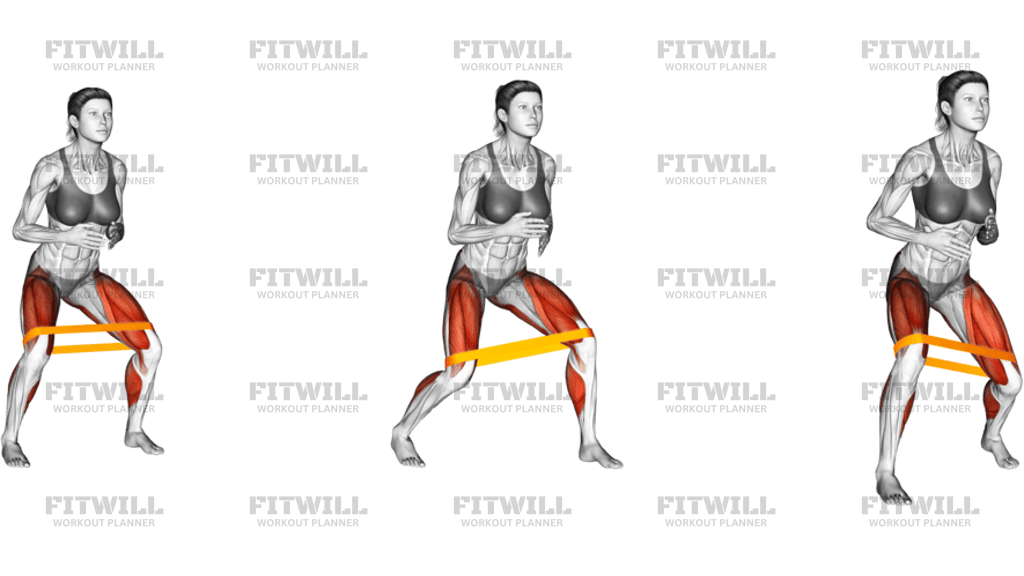
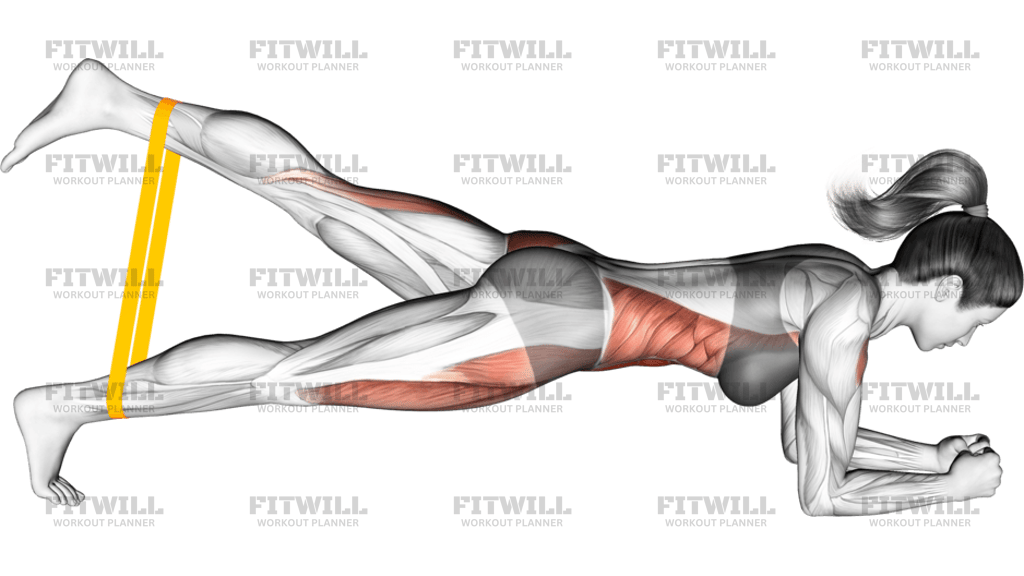
The Resistance Band Standing Balance Glute Kickback is a single-leg hip extension performed with a closed loop band wrapped around both legs. You stand tall on one leg, let the band create tension between the working leg and the standing leg, then drive the free leg straight back against the resistance. Because there is no anchor point and nothing to hold onto unless you choose to, your own balance becomes part of the exercise.
The main target is the gluteus maximus on the moving leg, which extends the hip against the band. The hamstrings assist on the kickback, while the gluteus medius and smaller hip stabilizers on the standing leg work hard to keep your pelvis level and your torso from swaying. Your core braces throughout to hold an upright posture with only a slight forward lean.
This movement suits people who want to train their glutes without a gym setup, as well as lifters looking for a low-fatigue accessory after squats, deadlifts, or lunges. It is also a practical choice for anyone rehabbing into single-leg work, since the band provides smooth resistance that is easy to scale by adjusting band thickness or how far back you kick.
Setup matters more here than in most glute exercises. The band must sit evenly around both legs so the pull runs straight back from your hip; if it sits crooked or at very different heights, the resistance will drag your leg or twist your pelvis. Stand with feet about hip-width apart so the band already has light tension before you move, and keep a soft bend in the standing knee rather than locking it out.
To execute well, shift your weight fully onto one leg, brace your stomach, and squeeze the working glute to send that leg straight behind you. Think about pushing the wall behind you with your heel rather than simply lifting your foot. Kick back only as far as you can keep your hips square and your lower back neutral, pause briefly at the top, then resist the band as it pulls your leg forward on the way in.
Because you balance on one leg, expect your first few sessions to feel wobblier than they should given the light resistance. That is normal. Use a wall, a chair back, or a squat rack upright with one fingertip for stability until your standing leg control catches up, then progress to hands-free reps for a stronger balance and hip stability stimulus.
[ Workout Log & Planner ]
Put your next workout in Fitwill
Keep your plan and training log ready when you are.


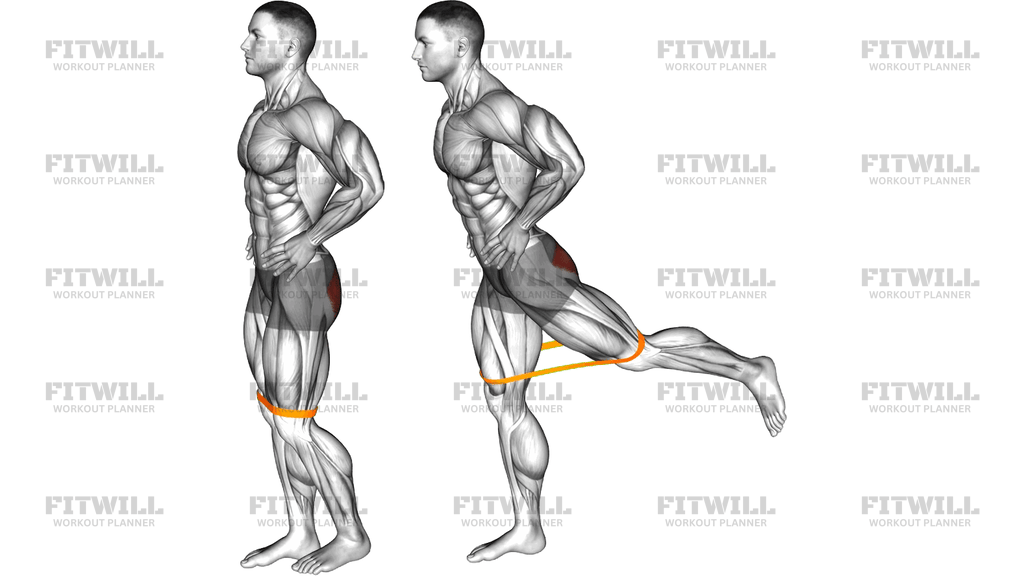
Instructions
- Loop a closed resistance band around both legs so it rests just above your knees with your feet about hip-width apart, and adjust it so it sits at the same height on each leg.
- Stand tall with your hands on your hips, or place one hand lightly on a wall or sturdy object if you need balance support.
- Shift your weight onto your left leg and bend that knee slightly, letting your right foot hover just off the floor beside it.
- Brace your abdominal muscles and keep your chest lifted with only a small forward lean from the hips.
- Squeeze your right glute and drive your right leg straight back behind you, pushing against the band so it stretches toward your rear ankle while staying taut around your standing leg.
- Stop when your leg is extended behind you at roughly hip height or slightly lower, with your hips square to the front and your toes pointing down or forward.
- Hold the top position for one to two seconds and feel the contraction in the glute of the moving leg.
- Slowly bring your leg forward under control, resisting the band's pull instead of letting it snap your leg back to the start.
- Exhale as you kick back and inhale as you return, keeping your breathing steady rather than holding it.
- Complete all reps on the right leg, reset your stance so the band sits evenly again, then switch to the left leg.
Tips & Tricks
- If your lower back arches at the top of the kickback, you have gone past your hip's range of motion — shorten the kick slightly and focus on squeezing the glute instead of reaching further back.
- A common fault is the pelvis rotating open as the leg swings back; imagine your hip bones pointing at an imaginary wall in front of you for the whole set.
- Do not let the band snap your leg forward between reps — the eccentric return is where a lot of the glute and hamstring work happens, so take two counts to come back in.
- Keep the band level on both legs before every set; a crooked loop changes the pull angle and can drag the working leg inward or outward.
- If you wobble badly on the standing leg, hold a wall with one fingertip rather than gripping it hard — light support is enough to steady you while the glute still does the work.
- Keep a soft bend in the standing knee; locking it out makes balancing harder and shifts tension away from the hip stabilizers.
- Lean forward only a few degrees from the hips; leaning too far turns this into a hamstring-dominant movement and rounds your lower back.
- Point the toes of your working leg slightly down or forward — flaring the foot out to the side usually means the hip is rotating instead of extending.
- If the band feels too easy even at full extension, use a thicker loop or shorten it by adding a twist, rather than kicking farther with poor hip position.
Frequently Asked Questions
Which muscles does the Resistance Band Standing Balance Glute Kickback work?
The gluteus maximus of the kicking leg is the primary mover, with the hamstrings assisting on the hip extension. The standing leg's gluteus medius and deep core muscles work isometrically to keep you balanced and your pelvis level.
Where should the band sit for this exercise?
Place the loop around both legs just above the knees with feet hip-width apart. When you kick back, the band should stretch taut between your standing leg and your rear ankle — if it slides or sits unevenly, reposition it before your set.
Is the Resistance Band Standing Balance Glute Kickback good for beginners?
Yes, it is a beginner-friendly glute exercise because the resistance is light and adjustable. Beginners should start with a fingertip on a wall for balance and a thin band, then progress to hands-free reps once the hip extension feels smooth.
Why do I wobble on my standing leg during this exercise?
Single-leg balance demands a lot from the hip stabilizers and ankle of the supporting leg, and they fatigue quickly at first. Reduce the band tension, slow the tempo, and use light support until your stability improves — the wobble usually fades within a few sessions.
How far back should I kick my leg?
Kick back only until your leg reaches about hip height behind you or slightly lower, with your hips staying square. Extending much higher typically causes your lower back to arch and your pelvis to tilt rather than adding glute work.
What is the most common mistake in the Resistance Band Standing Balance Glute Kickback?
The most common mistake is arching the lower back and rotating the hips open to get more range. Both shift the work away from the glutes and can strain the lower back — keep your torso steady, hips forward, and let the glute limit your range.
How many reps and sets should I do?
Two to three sets of 10 to 15 reps per side works well as a glute accessory or warm-up drill. Since the resistance is light, focus on a strong glute squeeze at the top and a slow return rather than chasing high numbers.
What can I use instead of a resistance band for this movement?
A cable machine with an ankle attachment is the closest substitute, since it provides constant tension in the same backward arc. Without any equipment, a bodyweight standing kickback works the same pattern but with much less resistance.
Should I hold onto something for balance?
Holding a wall, chair, or rack with one fingertip is fine, especially while learning the movement. Just avoid leaning your weight into the support, which unloads the standing leg and defeats the balance component of the exercise.
Can I do the Resistance Band Standing Balance Glute Kickback every day?
Because the load is light, frequent practice is generally fine and can even speed up your balance and hip control. Still, treat it like any strength exercise — if your glutes or standing leg feel sore, give them a day before training hard again.