Knee Hug Glute Stretch
The Knee Hug Glute Stretch is a seated mobility drill where you pull one knee in toward your chest while sitting upright on the floor with your other leg extended in front of you. The act of drawing the knee up and slightly across the body puts the glute on that side under a direct, controllable stretch, while the long sitting position keeps your hips honest and your lower back supported. It requires no equipment beyond a bit of floor space, which makes it one of the easiest glute stretches to slot into a warm-up, a cool-down, or a mid-day desk break.
This stretch is especially useful for anyone whose glutes feel tight or dormant from long hours of sitting. Office workers, runners, cyclists, and lifters who squat or hinge heavy all tend to accumulate tension around the hips, and a seated knee hug gives that tissue a gentle release without forcing the knee into risky positions. It is also a common rehabilitation-style drill for people easing back into lower-body training, because the intensity is entirely governed by how hard you pull.
The main target is the gluteal group, particularly the gluteus maximus and the upper, outer fibers of the gluteus medius. As the knee travels toward the chest, the hip flexors on the moving leg are briefly shortened while the hip extensors and deep external rotators are lengthened, and many people also feel a pleasant release through the lower back as the pelvis tilts. The extended leg stays active, which keeps the hamstring and calf of that side lightly engaged and stops you from slumping.
Setup matters more than it looks. Sitting tall on your sit bones, rather than rolled back onto your tailbone, determines whether the stretch lands in the glute or just rounds your lumbar spine. Keep the foot of your hugging leg either flexed or relaxed depending on comfort, and let your hands clasp around the shin or behind the thigh rather than pressing on the kneecap itself. Pulling on the kneecap is the most common setup error and the easiest one to fix.
To execute well, draw the knee toward the same-side shoulder or slightly across the midline, breathe steadily, and hold the top position for twenty to thirty seconds before lowering the leg with control. You should feel a deep but tolerable stretch in the buttock, never sharp pain in the hip socket or knee. Because each side is worked separately, always match the hold time on both sides, and repeat for two to three rounds if you are using it as a dedicated flexibility session.
[ Workout Log & Planner ]
Put your next workout in Fitwill
Keep your plan and training log ready when you are.


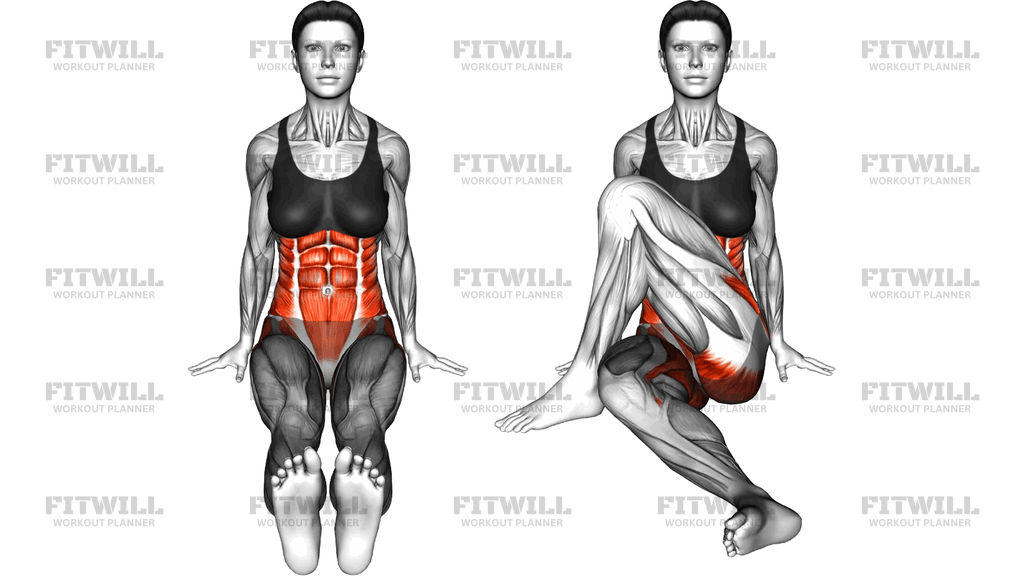
Instructions
- Sit on the floor with your legs extended straight in front of you, feet together, and place your palms on the floor beside your hips for balance.
- Sit up tall on your sit bones so your spine is neutral, then bend your right knee and lift the foot off the floor.
- Clasp your hands around the back of the right thigh or shin, just below the knee, keeping your chest lifted and shoulders relaxed.
- Brace your core lightly and keep the extended left leg long and active, with the kneecap facing the ceiling.
- Draw the right knee in toward your chest, letting it drift slightly toward the opposite shoulder if you want a stronger glute stretch.
- Stop when you feel a firm stretch through the right buttock and outer hip, and hold that position for twenty to thirty seconds while breathing slowly.
- Lower the right leg back to the floor in a slow, controlled motion rather than dropping it.
- Switch sides and repeat the same pull-and-hold sequence with the left leg, matching the hold time.
- Complete two to three reps per side, resetting your seated posture tall between each rep.
- Inhale as you lift the knee and exhale as you pull it in, using each exhale to settle slightly deeper into the stretch.
Tips & Tricks
- If you find yourself rolled back onto your tailbone, prop yourself up on a folded towel or sit at the edge of a low cushion so your pelvis stays upright and the stretch stays in the glute.
- Do not press directly on the kneecap when pulling; grip behind the thigh or on the shin so the knee joint itself is never loaded.
- A crossed-body pull biases the outer glute and piriformis area, while a straight-up pull toward the same-side shoulder targets the gluteus maximus more generally — pick the angle that matches where you feel tightest.
- Keep the extended leg's toes pulled back and the kneecap facing up; letting that leg flop outward usually means your torso is twisting to compensate.
- If grabbing behind the thigh is hard due to long legs or tightness, wrap a towel around the shin and hold the ends instead of forcing your arms around it.
- Avoid yanking the knee in with a quick tug; the stretch should deepen over several breaths, and forcing it fast tends to make the hip muscles guard and tighten.
- Stop and reduce the range if you feel pinching in the front of the hip or any knee discomfort — pull less far, and keep the knee more in line with the shoulder.
- Warm hips stretch better, so this drill works well after walking, light cardio, or at the end of a lower-body workout rather than as the very first thing you do cold.
Frequently Asked Questions
What muscles does the Knee Hug Glute Stretch target?
It primarily stretches the gluteus maximus and the outer glute fibers, with secondary stretch through the deep hip rotators. The lower back often feels a mild release as the pelvis tilts during the pull.
Why do I perform the Knee Hug Glute Stretch seated instead of lying on my back?
Sitting keeps the extended leg on the floor and forces you to hold an upright spine, which isolates the stretch to one hip at a time. The supine version is gentler on the lower back, but the seated version gives you more control over the pull angle.
Is the Knee Hug Glute Stretch good for beginners?
Yes, it is low-skill and self-regulated, since you control the depth by how hard you pull. Beginners should start with a lighter pull and a shorter hold, around fifteen to twenty seconds per side.
How long should I hold the Knee Hug Glute Stretch?
Twenty to thirty seconds per side is a solid default, and two to three rounds works well for a dedicated flexibility session. For a quick pre-workout release, one hold of fifteen seconds per side is usually enough.
Should I pull my knee toward my chest or across my body?
Pulling straight toward the chest gives a general glute stretch, while angling the knee toward the opposite shoulder targets the outer hip and deep rotators more. Try both angles and use the one that best matches where you feel tight.
Is it a mistake to press on the kneecap during this stretch?
Yes, pulling on the kneecap transfers force into the knee joint rather than the hip. Grip behind the thigh or on the shin so the stretch stays at the glute.
What can I substitute if sitting on the floor is uncomfortable?
A standing version where you hug one knee to your chest near a wall for balance works the same hip angle, or you can lie on your back and pull the knee toward your chest. Both are reasonable swaps if floor sitting bothers your tailbone or knees.
Can I do the Knee Hug Glute Stretch every day?
Generally yes, since it is a gentle, body-weight stretch with no load involved. If you are doing it daily, keep the intensity moderate and avoid aggressively cranking the knee in every session.
When is the best time to use the Knee Hug Glute Stretch?
It fits well as a cool-down after squats, lunges, running, or cycling, or as a midday break from prolonged sitting. Doing it after light activity rather than completely cold usually produces a more comfortable, effective stretch.
Is it normal to feel the Knee Hug Glute Stretch in my lower back instead of my glutes?
That usually means your pelvis has tucked under and your spine is rounding. Sit up taller on your sit bones, reduce how far you pull the knee in, and the sensation should shift back into the buttock.