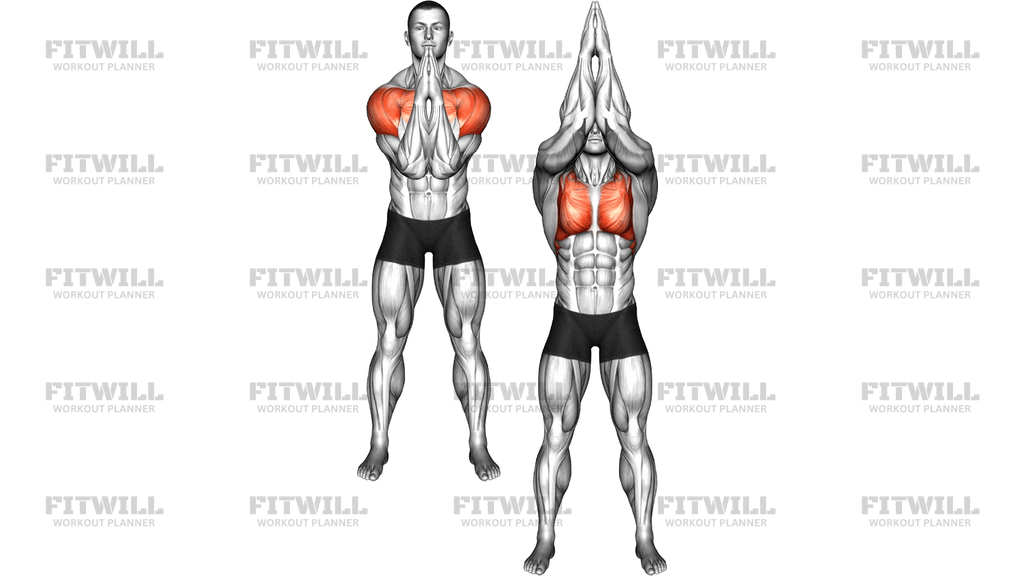
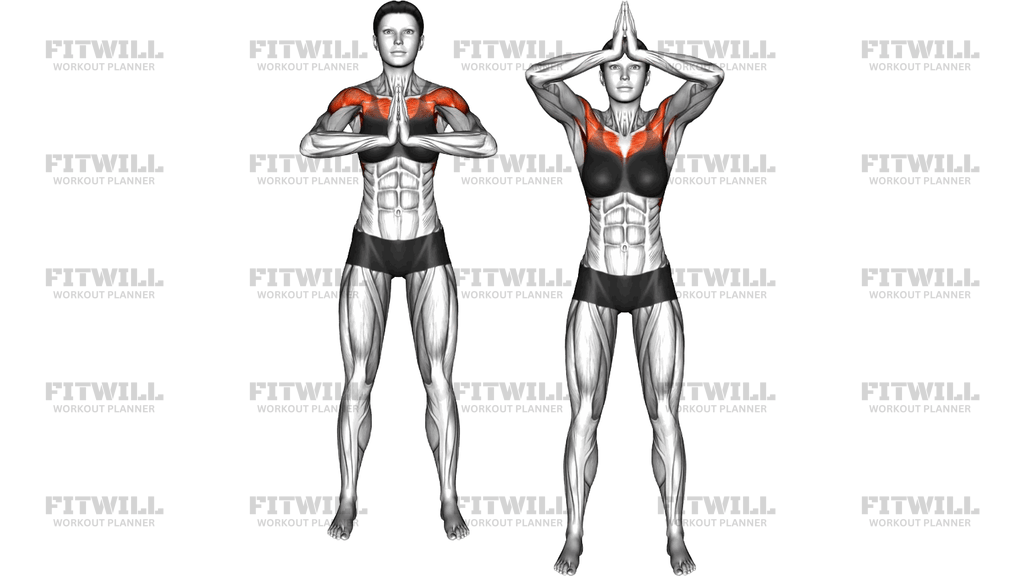
Interlock Fist Circle Draw
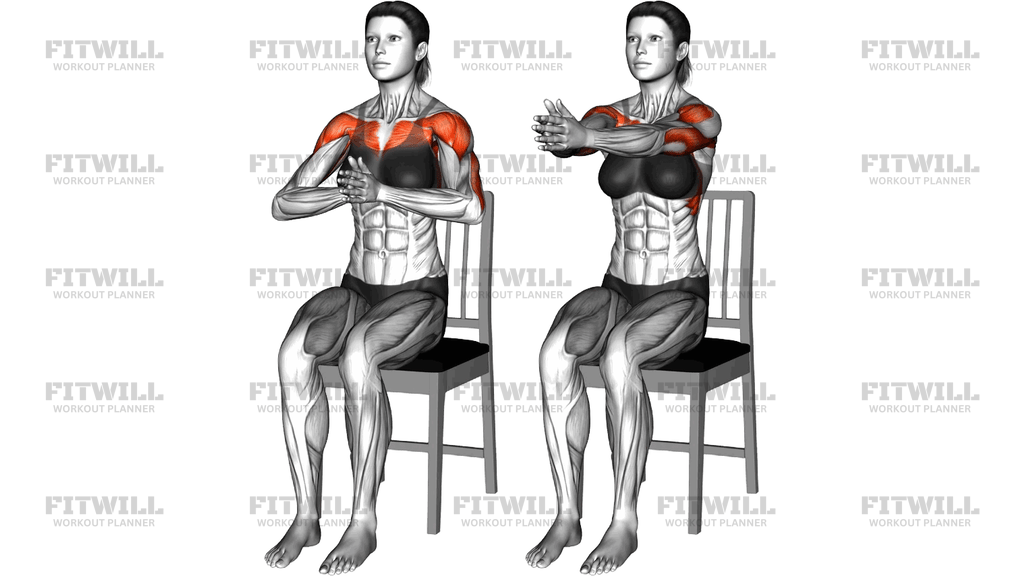
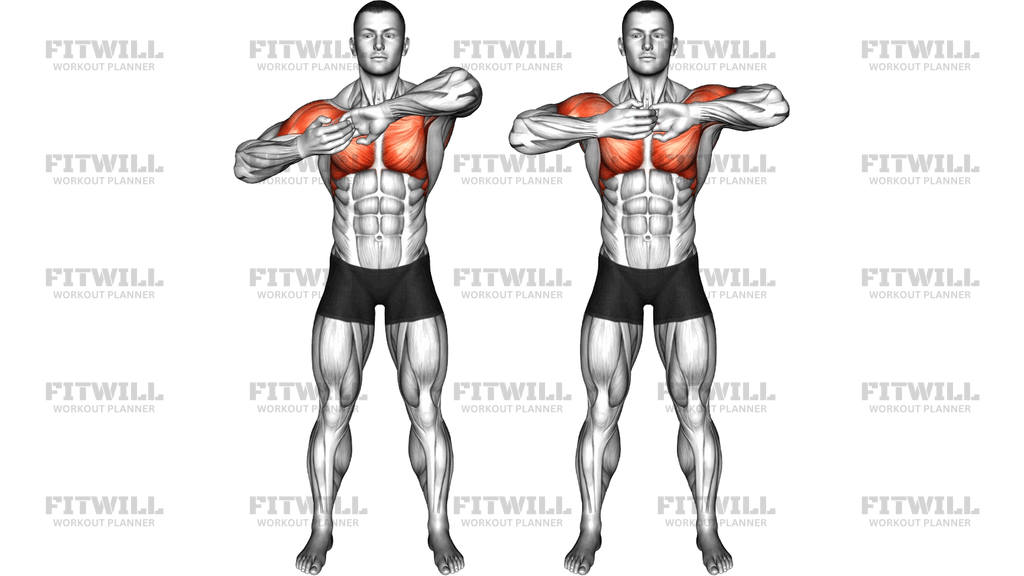
The Interlock Fist Circle Draw is a standing, body-weight drill where you clasp your hands together at chest height, create tension by pulling the fists against each other, and trace slow circles with your interlocked hands and elbows. It looks deceptively simple, but the moment you link your fingers and press or pull, your chest has to generate force with nothing but its own contraction, and the circular path keeps that contraction alive through multiple angles.
This movement is useful for two groups of people. First, anyone warming up for pressing work — bench presses, push-ups, dumbbell presses — because it raises the temperature in the chest and front shoulders and rehearses the feeling of squeezing the pecs without load. Second, people who spend long hours sitting with rounded shoulders, since lifting the elbows to shoulder height and pulling the hands apart opens the chest and encourages the shoulder blades to sit back in a healthier position.
The main muscles working are the pectorals, which drive the outward pull of the interlocked fists. The front deltoids assist as the elbows hold at or near shoulder height, and the muscles of the upper back and shoulder blades stabilize the whole setup so the arms can move in a smooth arc. Because your hands are locked together, the chest works isometrically the entire time — it never gets a full rest — while the circling motion adds a dynamic element on top of that constant tension.
Setup matters more than it appears to. Your stance, elbow height, and how hard you pull determine whether this is a productive chest drill or just arm waving. Stand with feet about hip-width apart, interlace your fingers in front of your sternum, and turn your attention to the pull itself: each fist should genuinely fight the other, not simply rest in its grip. If the hands are loose, the circle does nothing for the chest.
To execute it well, raise the interlocked hands until the elbows reach roughly shoulder level, keep the forearms and elbows fairly horizontal, and begin drawing controlled circles — imagine stirring a large pot with your fists while never letting the pull between your hands fade. Move in one direction for the desired reps, then reverse. The circles should be slow enough that you can feel the chest working through every degree of the arc.
Common use cases include pre-workout activation, active recovery between pressing sets, desk-break mobility routines, and rehabilitation-style warm-ups where light, joint-friendly chest work is preferred. If you feel pinching in the front of the shoulder, lower the elbows slightly or make smaller circles. Stop if you feel any sharp pain in the wrists or fingers, since the interlocked grip puts them under steady tension.
[ Workout Log & Planner ]
Put your next workout in Fitwill
Keep your plan and training log ready when you are.


Instructions
- Stand upright with your feet hip-width apart, knees soft but not bent, and your torso tall.
- Interlace your fingers in front of your chest and clasp your hands so the fists are firmly linked.
- Pull your fists against each other to create steady tension through the chest before the circles begin.
- Brace your core lightly, roll the shoulders back and down, and keep your neck relaxed.
- Raise the interlocked hands until your elbows sit at or just below shoulder height, elbows pointing out to the sides.
- Keeping the pull between the fists constant, draw a slow, controlled circle with your hands and elbows, as if stirring a wide ring in the air.
- Complete the desired number of circles in one direction, then reverse the direction without dropping the tension.
- Breathe steadily throughout — inhale and exhale smoothly rather than holding your breath during the pull.
- When finished, gently release the finger grip, lower the arms to your sides, and shake out the hands and shoulders before the next set.
Tips & Tricks
- The most common mistake is letting the grip do the work — the fingers hold, but the fists should actively pull apart, or the chest gets almost no stimulus.
- Keep the elbow height consistent; letting the elbows drift down as you tire converts the movement into a front-shoulder shrug and takes work off the chest.
- Make the circles large enough to feel the chest through the whole arc, but small enough that your shoulders stay comfortable — roughly the size of a dinner plate is a good starting point.
- Do not let your head jut forward toward the hands; the chin should stay level, which keeps the neck out of the movement.
- If your wrists ache, try interlacing with the opposite hand on top, or shorten the sets rather than loosening the pull.
- Avoid leaning back to help lift the elbows; a tall torso keeps the chest in a lengthened, working position.
- Move slower than feels necessary — most people circle too fast and turn a chest drill into momentum practice.
- Do equal time in both directions so the shoulders and chest are loaded evenly through the arc.
- Use this before pressing exercises as an activation tool, not as a finisher after heavy pressing when the chest is already fatigued and the pull quality will drop.
Frequently Asked Questions
What muscles does the Interlock Fist Circle Draw work?
The chest, particularly the pectoralis major, does most of the work by pulling the interlocked fists apart. The front deltoids assist at shoulder height, and the upper back stabilizes the shoulder blades throughout the circles.
How hard should I pull my fists together during the Interlock Fist Circle Draw?
Pull hard enough that you feel a clear contraction across the chest, but not so hard that your hands or wrists shake. Aim for a firm, sustainable tension you can hold for the entire set of circles.
Is the Interlock Fist Circle Draw suitable for beginners?
Yes, it requires no equipment and very little coordination, so beginners can learn it in a minute or two. Start with small circles and lighter tension before increasing either.
How many circles should I do in each direction?
A practical starting point is 8 to 10 circles each way. If your grip or wrists give out before your chest does, reduce the tension rather than the reps.
My wrists hurt when my fingers are interlaced — what should I do?
Try interlacing with the other hand on top, soften the pull slightly, or make smaller circles. If discomfort persists, stop the drill and choose a chest activation option that does not load the wrists.
Can I use the Interlock Fist Circle Draw as a warm-up before bench press?
It works well as part of a warm-up because it activates the chest without fatigue and opens the shoulders. Do it before your barbell work, and keep the tension moderate so pressing strength is untouched.
Why do my shoulders rise up toward my ears during the circles?
That usually means the elbows have dropped or the pull has faded, so the upper traps take over. Reset the elbows to shoulder height, pull the fists apart again, and think of keeping space between your ears and shoulders.
What can I substitute if I cannot interlace my fingers comfortably?
Press your palms together in front of your chest with fingers pointing up and perform the same circles, or hold a light ball between your palms to create the tension without locking the fingers.
Should I breathe in a specific pattern during the Interlock Fist Circle Draw?
Breathe continuously and calmly through the whole set. Holding your breath while pulling the fists apart raises unnecessary tension in the neck and face.