Weighted Neutral Grip Chin Up
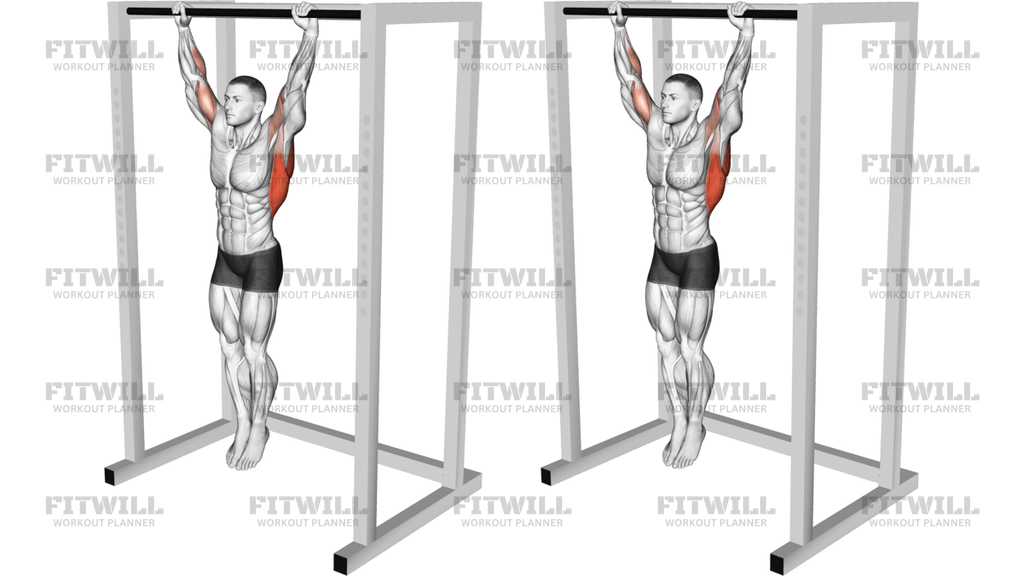
The Weighted Neutral Grip Chin Up is a vertical pulling exercise performed on a pull-up station using parallel handles so your palms face each other throughout the movement. Additional load is added around your waist with a dipping belt, making this a progression for lifters who already handle several bodyweight reps with clean technique. The neutral grip sits between a fully supinated chin up and a wide pronated pull up, which many people find the most comfortable hand position for the shoulders and elbows while still allowing a strong pull.
This movement primarily trains the lats, with heavy involvement from the biceps, brachialis, and forearm flexors, plus the mid and lower traps and rhomboids as the shoulder blades pull down and together at the top. Because the added weight increases the demand on everything from your grip to your trunk, the exercise also builds serious core stability — you have to keep your ribs down and legs controlled while hauling a heavier body up the bar.
Setup matters more here than in a bodyweight chin up. Once a belt and plates are hanging between your legs, any sway or swing gets amplified, so you want to start each rep from a quiet, dead hang with your shoulders pulled slightly down away from your ears. Grip the parallel handles with arms fully extended, cross your ankles behind you, and let the weight hang straight down rather than swinging forward.
Execution is simple but demanding: drive your elbows down toward your hips until your chin clears your hands, pause briefly at the top, then lower yourself under control all the way back to a full hang. Half reps and fast negatives are the two most common ways lifters cheat this exercise, and both rob the lats of the work they need to keep progressing. Treat every rep as if it were being judged from a dead hang to chin over handle height.
This exercise fits best in strength-focused pull days, typically programmed in low rep sets of 3 to 6 with substantial rest, or in moderate sets of 5 to 8 once the added load is modest. It is a go-to for building an upper back that can be loaded progressively over years, something bodyweight-only pulling struggles to provide. If you cannot yet do 8 to 10 strict bodyweight neutral grip chin ups, spend time there first before attaching plates or a dumbbell to a belt.
[ Workout Log & Planner ]
Put your next workout in Fitwill
Keep your plan and training log ready when you are.


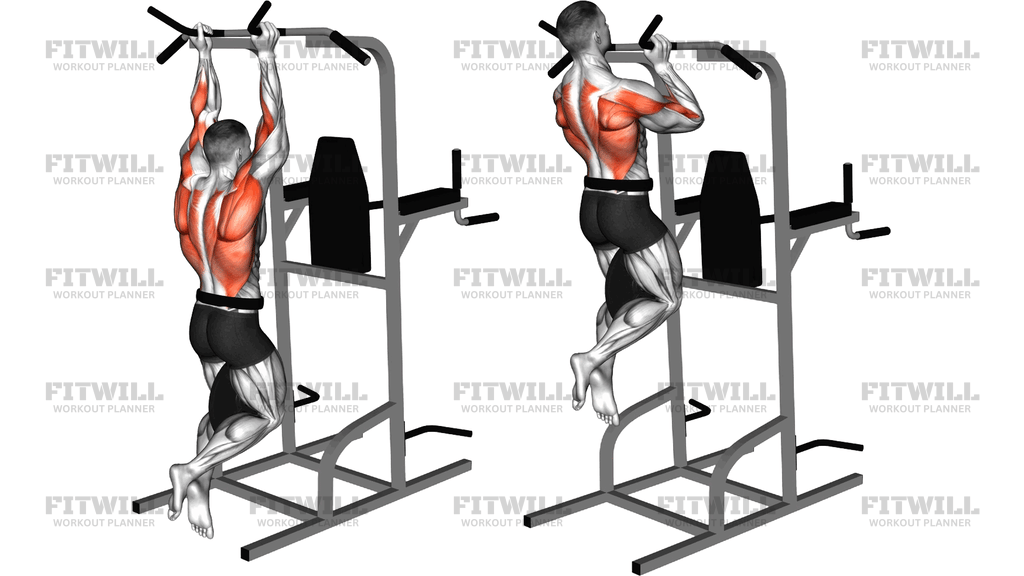
Instructions
- Attach a dipping belt around your waist and connect a weight plate or dumbbell to the chain so it hangs at about knee height between your legs.
- Take hold of the parallel handles of the pull-up station with a neutral grip, palms facing each other, and let your arms reach full extension.
- Step off the platform or floor and let the weight settle so it hangs directly beneath you without swinging; cross your ankles behind you.
- Brace your trunk, draw your shoulder blades down slightly, and pull your ribs down so your torso stays upright and stacked.
- Pull by driving your elbows down toward your hips, keeping them tracking fairly close to your sides rather than flaring wide.
- Continue until your chin clears the top of the handles and your upper chest is near hand level, then pause for a beat with your shoulder blades pulled down and together.
- Lower yourself under control until your arms are fully straight and you are back in a complete dead hang; avoid dropping into the bottom.
- Exhale as you pull up, inhale at the top or during the descent, and keep breathing steadily rather than holding your breath through the set.
- Reset at the bottom of each rep: let the hanging weight go still, re-brace, and start the next pull from a dead hang.
- When finished, bend your knees and step back onto the platform or lower the weight to the floor before releasing your grip.
Tips & Tricks
- If your torso swings forward as you pull, the hanging weight is likely drifting — start each rep only after the belt and plate have gone completely still.
- A common mistake is stopping the rep short of a full hang at the bottom; locked elbows at the bottom is what counts as a complete rep here, and partial hangs let the lats off the hook.
- Chin craning over the handles does not count as a completed rep; drive your chest toward the handles instead of reaching with your jaw.
- Use lifting straps only if grip failure is cutting sets short, but expect that training the grip is part of the value of this movement.
- Keep the knees slightly bent and ankles crossed behind you; letting the legs dangle loose invites sway once the added weight starts moving.
- Do not rush the negative — a two- to three-second descent keeps tension on the lats and protects the elbows, which take extra stress in the neutral grip position.
- If your shoulder pinches at the top, check that you are not shrugging into your ears; pull the handles down by depressing the shoulder blades rather than lifting your body with the traps.
- Progress load in small jumps, typically 2.5 to 5 pounds at a time; weighted pull-ups punish big jumps with form breakdown faster than most exercises.
- Warm up with a few strict bodyweight neutral grip chin ups before adding the belt so the shoulders and elbows are ready for the loaded position.
Frequently Asked Questions
Which muscles does the Weighted Neutral Grip Chin Up work the most?
The lats are the primary movers, supported strongly by the biceps and forearm flexors. The mid and lower traps and rhomboids work hard at the top of each rep as the shoulder blades retract and depress.
How is the neutral grip different from a regular chin up or pull up?
The neutral grip places your palms facing each other on parallel handles, which sits between the supinated chin up and the pronated pull up. Many lifters find it the most joint-friendly hand position while still allowing a strong biceps contribution.
How strong should I be before adding weight to the Weighted Neutral Grip Chin Up?
A reasonable benchmark is 8 to 10 strict bodyweight reps with a full dead hang at the bottom and chin clearing the handles at the top. Adding load before that usually just converts weaknesses into swinging reps.
How do I attach the weight for this exercise?
A dipping belt worn around the hips with a chain is the standard setup, loaded with a plate or a dumbbell that hangs between your legs. Make sure the chain is secure and the weight cannot slide off before you step off the platform.
Why do my reps swing when I use added weight?
The hanging load acts like a pendulum, so any leg drive or rushed start gets magnified. Let the weight settle completely before each rep, keep your ankles crossed and legs still, and pull in a straight vertical line.
What counts as a full rep on the Weighted Neutral Grip Chin Up?
Start from a dead hang with arms fully straight, and finish with your chin clearing the top of the handles. Anything less — a partial hang or a chin that only barely reaches handle level — should not be counted at your working weight.
Can beginners do the Weighted Neutral Grip Chin Up?
Most beginners should build up with bodyweight neutral grip chin ups, assisted variations, or slow negatives first. Once strict bodyweight reps are comfortable, adding a small amount of weight is a safe and effective next step.
What can I use instead of a Weighted Neutral Grip Chin Up if my station has no parallel handles?
A close-grip pronated pull up on a straight bar is the closest substitute and keeps the elbows relatively tucked. You can also use a V-handle hung over a bar, which recreates the neutral hand position on many setups.
How should I program sets and reps for this exercise?
For strength, work in 3 to 5 sets of 3 to 6 reps with two to three minutes of rest. For a mix of strength and size, 4 sets of 5 to 8 reps with a moderate load works well, keeping technique strict on every rep.
Is it safe to drop from the top of the Weighted Neutral Grip Chin Up?
No — landing with a loaded belt swinging between your legs puts unnecessary stress on your elbows, shoulders, and lower body. Lower yourself under control to a dead hang, then step down onto the platform or floor before releasing the handles.