Resistance Band Assisted Neutral Grip Chin Up
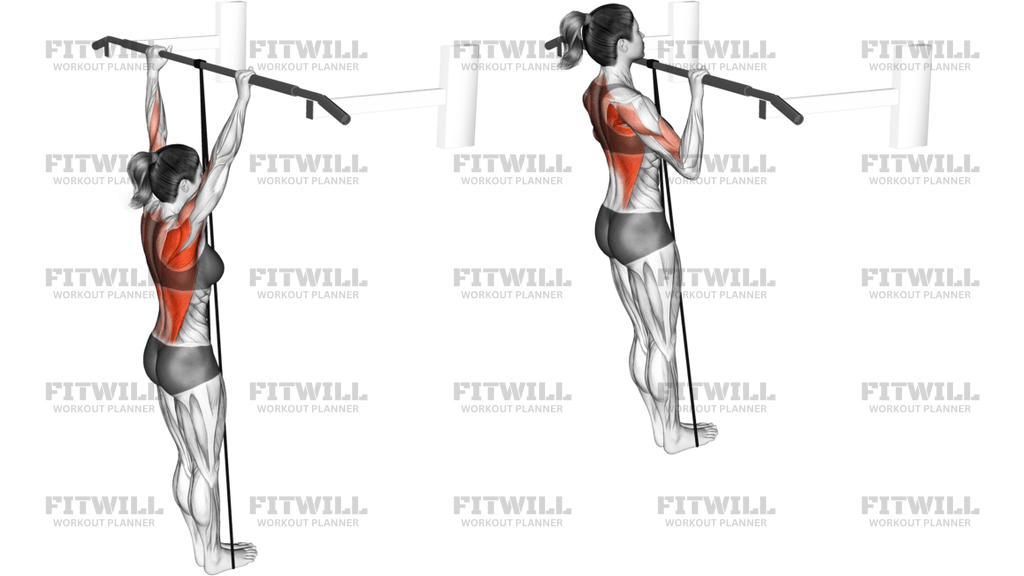
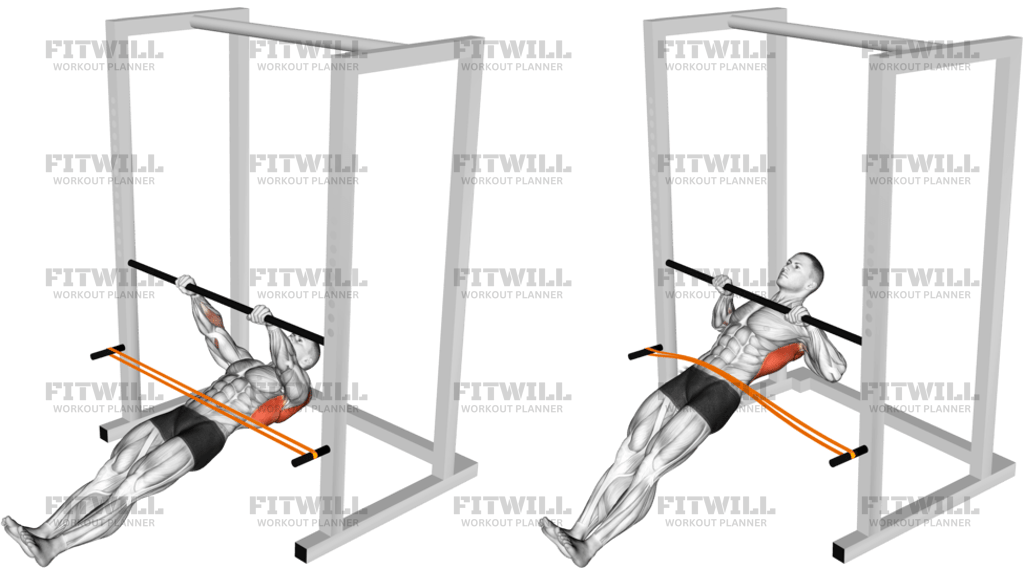
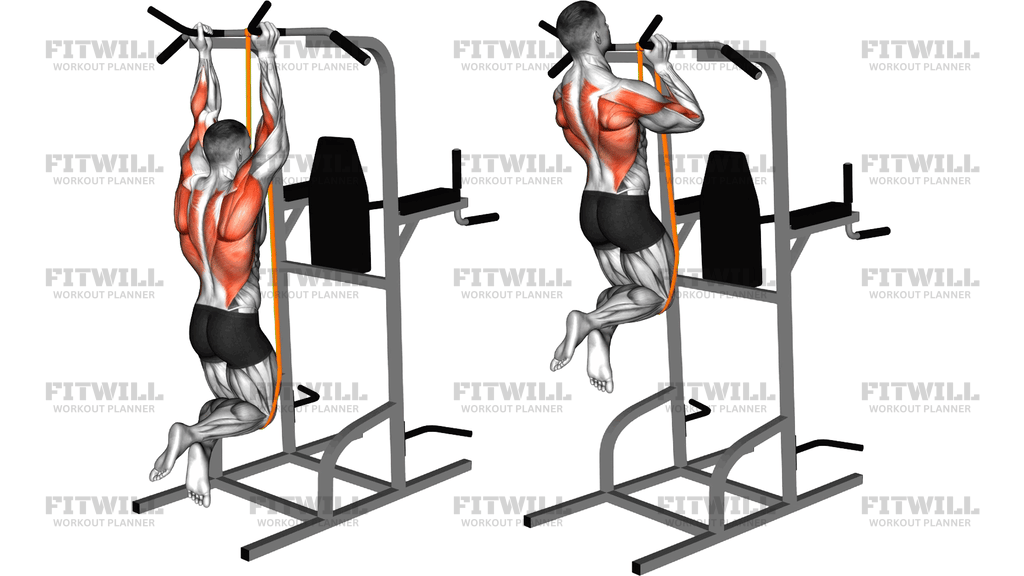
The Resistance Band Assisted Neutral Grip Chin Up is a bodyweight pulling exercise performed on a pull-up station with parallel handles, using a resistance band looped over the bar and under the knees or shins to reduce the load you have to lift. The neutral grip, with palms facing each other, sits comfortably on the shoulders and wrists, which makes it one of the most joint-friendly ways to learn and practice vertical pulling. The band provides the most help at the bottom of the rep, where the movement is hardest, and less help as you approach the top, so you still have to produce real strength through most of the pull.
This variation is ideal if you cannot yet perform full bodyweight chin ups, or if you are returning from a layoff and need to rebuild pulling volume without grinding through singles. It also works well as a high-repetition accessory for experienced lifters who want extra lat and biceps volume with less systemic fatigue. Because the band offloads part of your bodyweight, you can accumulate more quality reps and practice the exact movement pattern of an unassisted neutral grip chin up.
The main muscles worked are the lats, which drive the shoulders down and pull the elbows toward the torso, along with the biceps and brachialis, which flex the elbows as you rise. The middle traps and rhomboids retract the shoulder blades, especially near the top, and the forearms and grip work hard to keep you anchored to the handles. Your core stays engaged throughout to stop the legs from swinging once your feet leave the floor.
Setup matters more than most people expect. The band must be securely seated over the bar and positioned under your body before you let go of the ground, and your knees should stay on the band for the entire set. A band that slips off the shin mid-rep can snap up toward your face or drop you to the floor, so always test the band by loading it gently from a stable position before committing to a full hang.
To execute the rep well, start from a dead hang with arms extended, pull your shoulder blades down first, then drive the elbows down and back until your chin clears the bar and your chest is close to your hands. Lower yourself under control rather than dropping into the stretch, since the lowering phase is where much of the strength adaptation happens. Keep the band tension even by keeping both knees seated on it, and avoid letting one knee slip off, which twists your body and shifts the work to one side.
[ Workout Log & Planner ]
Put your next workout in Fitwill
Keep your plan and training log ready when you are.


Instructions
- Loop a resistance band over the neutral grip handles' bar of a pull-up station, pulling one end through the other so it locks securely in place.
- Grip the parallel handles with palms facing each other, then place one knee and then the other onto the band so it sits just below the kneecaps or across the shins.
- Let yourself hang with arms fully extended, feet off the floor, and let the band settle so it supports your legs evenly.
- Brace your core, squeeze your glutes lightly, and cross your ankles behind you to keep the band in place and stop your legs from swinging.
- Start the pull by drawing your shoulder blades down and together before bending your elbows.
- Pull until your chin clears the handles and your upper chest is close to your hands, keeping elbows tracking down toward your ribs.
- Pause briefly at the top without shrugging your shoulders up to your ears.
- Lower yourself slowly over two to three seconds until your arms are fully extended again.
- Exhale as you pull up and inhale as you lower down, keeping your breathing steady through the set.
- After your last rep, lower fully, place one foot on the floor or station step to unload the band, then carefully free your other knee before letting go.
Tips & Tricks
- Choose a band thickness that leaves you two to three solid reps in reserve; if your form breaks down on rep four, the band is too light for right now.
- If the band slides toward your ankles during the pull, cross your ankles behind you and actively press your shins back into the band.
- A common mistake is pulling with the arms first and shrugging at the top; cue yourself to lead with the elbows dropping toward your ribs to keep the lats doing the work.
- Do not cut the lowering phase short. Dropping into the stretch wastes half the exercise and makes the transition to unassisted chin ups much slower.
- Check that the band is looped over the bar itself, not just the handle mount, and give it a test stretch before every set.
- Keep your chin neutral and look slightly up at the bar rather than craning your neck over it, which helps you clear the handles with your chest instead of your chin alone.
- If your body rotates during the rep, one knee has probably slipped off the band; reset your knees evenly before continuing rather than fighting the twist.
- As you get stronger, alternate band thicknesses week to week rather than jumping straight to unassisted reps, so the strength gap closes gradually.
- Chalk or a firm full grip on both handles matters here, because a slipping hand while the band is loaded can throw you off balance at the bottom.
Frequently Asked Questions
What muscles does the Resistance Band Assisted Neutral Grip Chin Up work?
The lats are the primary movers, with strong contributions from the biceps and brachialis because of the elbow flexion. The middle traps, rhomboids, forearms, and core work to stabilize the pull and control the shoulder blades.
Is the neutral grip easier than a regular chin up?
For most people, yes. The neutral grip aligns the shoulders and wrists more comfortably and places the biceps in a strong pulling position, so it usually feels more natural than a fully pronated pull-up grip.
Where should the resistance band sit on my legs?
Just below the kneecaps or across the shins is the sweet spot. Higher on the thighs gives more assistance but can slip, and near the ankles gives less help while making the band harder to keep in place.
How thick should the band be for this exercise?
Pick a band that lets you complete eight to ten controlled reps while still feeling the lats work near the top, where the band helps least. As you get stronger, switch to a thinner band rather than adding extra reps indefinitely.
Will Resistance Band Assisted Neutral Grip Chin Ups help me get my first unassisted chin up?
Yes, this is one of the most direct progressions because the movement path and grip match the unassisted version exactly. Progress by reducing band thickness over time and adding slow negatives once you can handle a lighter band.
Why do my arms fatigue before my back during this exercise?
This usually means the biceps are dominating the pull. Focus on pulling the shoulder blades down first and driving the elbows toward your ribs rather than just bending your arms, and think of the hands as hooks.
Can beginners use this exercise safely?
Yes, provided the band is secured properly and the station is stable. Beginners should start with a thick band, keep the range controlled, and practice mounting and dismounting with the band loaded before doing full sets.
What can I use instead if I do not have a resistance band?
An assisted pull-up machine with a knee pad is the closest substitute, followed by jumping chin ups with a slow lower, or lat pulldowns to build the same pulling pattern while you develop the strength for bodyweight work.
How do I get off the bar safely when the band is under my knees?
Lower to a full hang, place one foot on the floor or the station's step to remove the band tension, then lift that knee free before releasing the other leg. Never jump down while the band is still stretched under you.