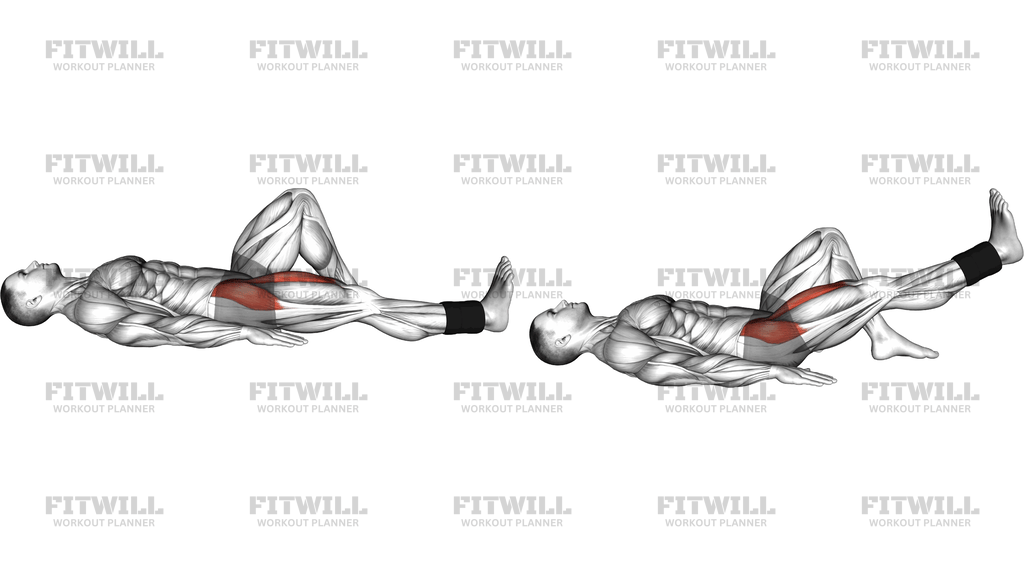
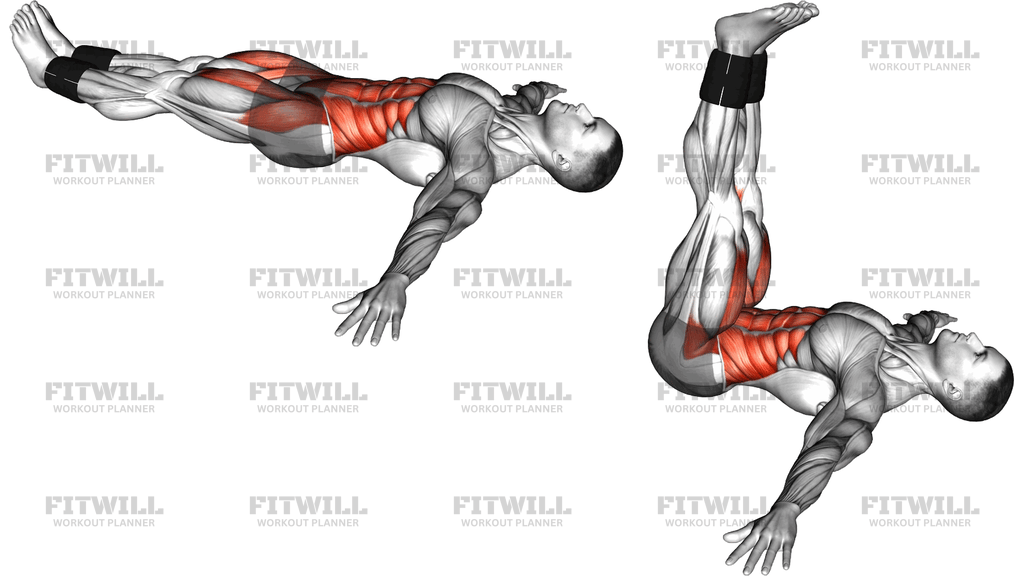
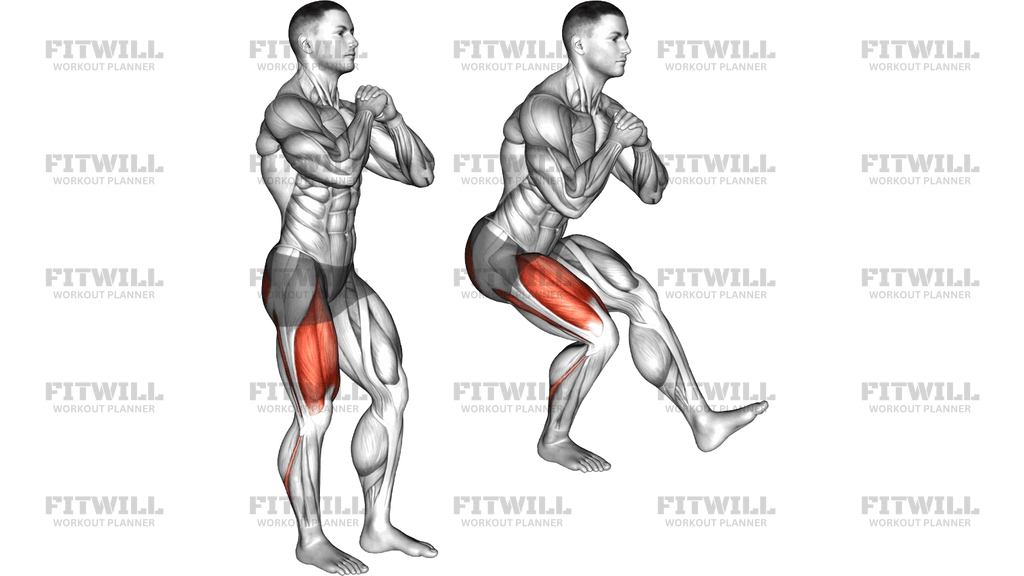
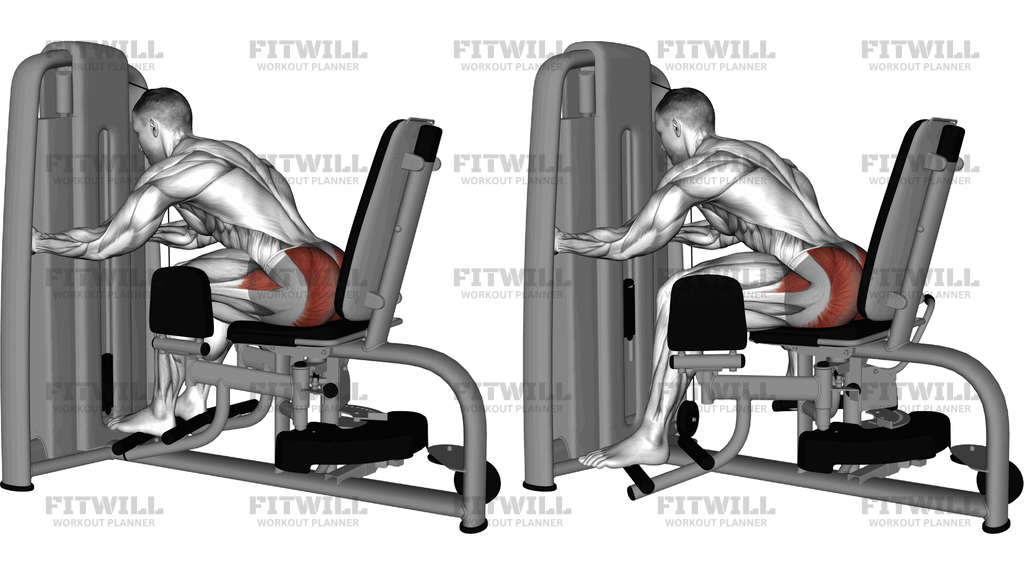
Cable Standing Hip Flexion
Cable Standing Hip Flexion is a single-leg isolation exercise performed on a cable machine with an ankle strap attached to the working foot. You stand facing away from a low pulley, brace your hands against the machine frame for support, and drive your knee up toward your chest against the backward pull of the cable. The working hip lifts while the strap provides constant resistance through the entire arc, which is something bodyweight knee raises cannot easily replicate.
The main muscles worked are the hip flexors, especially the iliopsoas and the rectus femoris at the front of the thigh. Your standing leg works quietly the whole time as the glutes and hip stabilizers on that side keep your pelvis level, and your lower abs help control the position of your torso as the knee rises. Because you are standing rather than hanging or lying down, the demand on balance and trunk control is real but manageable.
This movement is useful for runners, sprinters, martial artists, and anyone who wants a stronger, more responsive knee drive. It is also a practical rehab-friendly option: the cable allows small, precise loading increments, so you can start very light after time off or when easing back into hip-dominant work. People who sit for long hours often find that direct, controlled hip flexor training improves their awareness of these muscles, which normally only work in short bursts.
Setup matters more than most lifters expect. The pulley should sit at its lowest position and directly behind your working leg, so the cable pulls straight back rather than at an angle. Your distance from the machine determines the starting tension and how far your leg travels behind you, so take a moment to find a spot where the strap is lightly loaded before the rep begins. Holding the frame with both hands lets you stay tall and stops you from cheating with your upper body.
Execution comes down to one clean idea: lift the knee, do not swing it. Keep your torso upright, pull the knee up toward chest height by flexing the hip, pause briefly at the top, then lower the leg back under control until the hip is extended behind you. The lowering phase is where most of the benefit hides; dropping the leg quickly turns the set into momentum practice. Move at a tempo you could repeat for every rep, and keep the working foot relaxed so the effort stays in the hip rather than the shin.
In a normal program, two to four sets of eight to fifteen controlled reps per side works well, usually placed early enough in a session that fatigue has not wrecked your balance. Switch sides without unclipping the strap if your machine allows it, and match the work exactly between legs.
[ Workout Log & Planner ]
Put your next workout in Fitwill
Keep your plan and training log ready when you are.


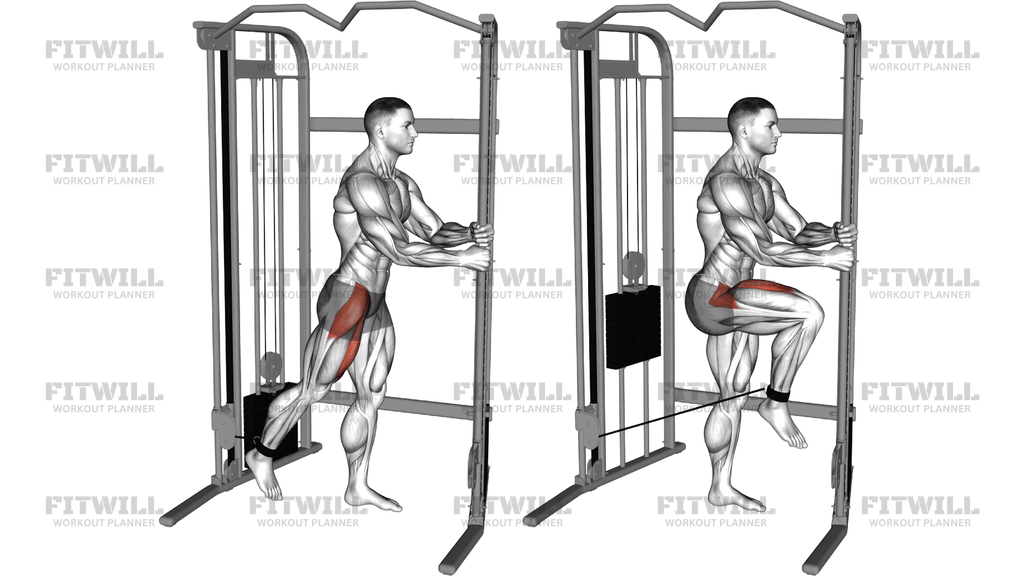
Instructions
- Set the cable pulley to its lowest position and attach an ankle strap securely around your working ankle, with the buckle fastened so it cannot loosen mid-set.
- Face away from the machine and step forward with your non-working leg, so the cable runs behind the working leg and pulls it backward toward the pulley.
- Lean forward slightly and grip the machine frame with both hands at roughly chest height, keeping your arms fairly straight for support.
- Brace your core and set your torso tall; the working leg should start behind your body with light, even tension on the cable.
- Exhale and pull your working knee up and forward toward your chest, letting the knee bend naturally as the hip flexes.
- Pause for a beat at the top, when the thigh is at or just above parallel to the floor, keeping your back from arching or rounding.
- Inhale and lower the leg slowly back behind you until the hip is extended and the cable tension is still present at the bottom.
- Complete all reps on one side, then unclip or switch the strap to the other leg and match the repetitions.
- Reset your stance and grip between sets so every set starts from the same balanced position.
Tips & Tricks
- If your torso leans back hard as the knee rises, the weight is too heavy or you are using your lower back instead of your hip flexors; drop the load and stay tall.
- Do not let the working foot swing behind you at the bottom for a running start — the cable should already be taut before the knee starts to lift.
- Keep the standing knee slightly soft rather than locked; a locked knee makes balance harder and shifts work away from the hip you are training.
- Point the knee of the working leg straight ahead or very slightly out; letting it drift inward changes the line of pull and stresses the hip unevenly.
- Grip the frame lightly rather than squeezing it — death-gripping the uprights usually means you are pulling yourself through the rep with your arms.
- The strap should sit snugly around the ankle, not the arch of the foot; a loose strap slides down and shortens your range at the top.
- If your lower back feels the exercise instead of your hip, reduce the range at the top and focus on pressing your ribs down as the knee lifts.
- Because it is a single-leg cable exercise, do it before heavy squats or deadlifts only if you want hip flexor work fresh; otherwise treat it as an accessory at the end.
- Use a slow two-count on the lowering phase — the hip flexors work eccentrically here and that is where most people rush.
Frequently Asked Questions
What muscles does Cable Standing Hip Flexion work?
The primary movers are the hip flexors, mainly the iliopsoas and rectus femoris at the front of the hip and thigh. Your lower abs and the glute stabilizers of the standing leg assist with posture and balance throughout the set.
How is Cable Standing Hip Flexion different from hanging knee raises?
In the standing version the cable provides continuous resistance and your upper body is supported by the frame, so it is easier to isolate one hip at a time. Hanging knee raises load both hip flexors together and demand much more grip and trunk strength.
Can beginners do Cable Standing Hip Flexion?
Yes, it is one of the more beginner-friendly hip flexor exercises because the machine supports your balance and the weight stack starts very light. Begin with a load you can lift for twelve to fifteen clean reps and prioritize a slow lowering phase.
How high should I drive my knee during Cable Standing Hip Flexion?
Aim to bring your thigh to parallel with the floor or slightly higher if you can do it without your back arching or your torso falling backward. Height that comes from leaning away from the machine is not real hip flexion range.
Why does my lower back feel Cable Standing Hip Flexion instead of my hips?
That usually happens when the weight is too heavy or the torso sways as the knee lifts, so the lumbar muscles take over the stabilization job. Reduce the load, keep your ribs down, and hold the frame more firmly to lock your upper body in place.
Where should the ankle strap sit for this exercise?
Fasten it snugly around the ankle, just above the ankle bones, not around the middle of the foot. A strap on the foot changes the leverage and tends to slip as the knee comes up.
What can I use instead of Cable Standing Hip Flexion if my gym has no low pulley?
A resistance band anchored low behind you with the loop around your ankle reproduces the same backward pull. Standing knee raises without resistance are a simpler substitute that still trains the pattern.
How many sets and reps of Cable Standing Hip Flexion should I do?
Two to four sets of eight to fifteen reps per leg is a solid working range. Since it is an isolation exercise for relatively small muscles, controlled reps with moderate weight beat heavy, jerky sets.
Is Cable Standing Hip Flexion safe if I have tight hip flexors or have been sitting all day?
Generally yes, since it actively strengthens and moves the hip through flexion and extension under light load, but start with a modest weight and a comfortable range. If a specific position causes sharp pain, shorten the range or skip that side and get it assessed.
Should I train one leg fully before switching, or alternate legs each rep?
Finish all your reps on one side before switching, because unclipping and reclipping the strap between every rep breaks your rhythm and setup. Alternating sides each set keeps the workload even between legs.