Weighted Standing Hip Flexion
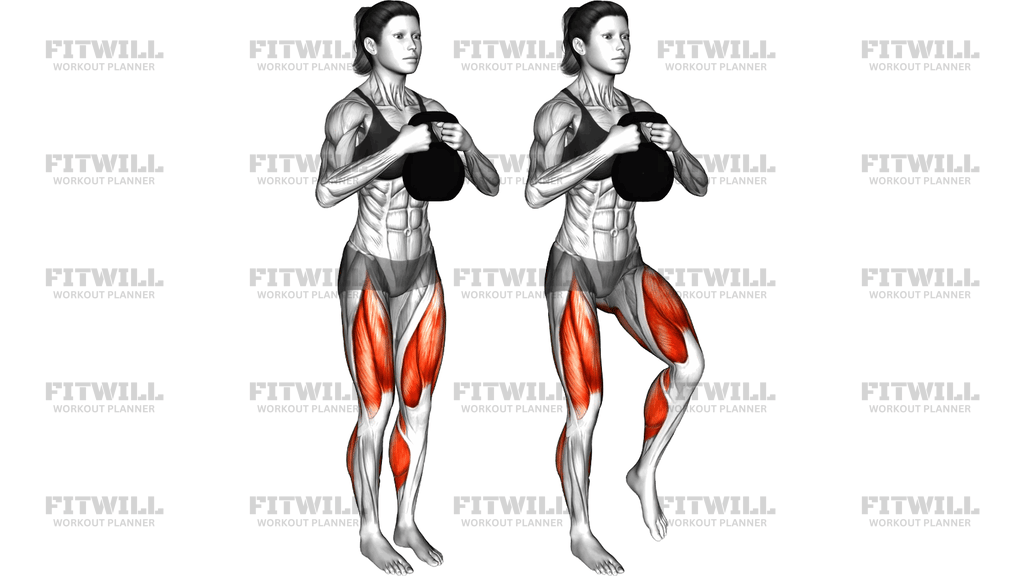
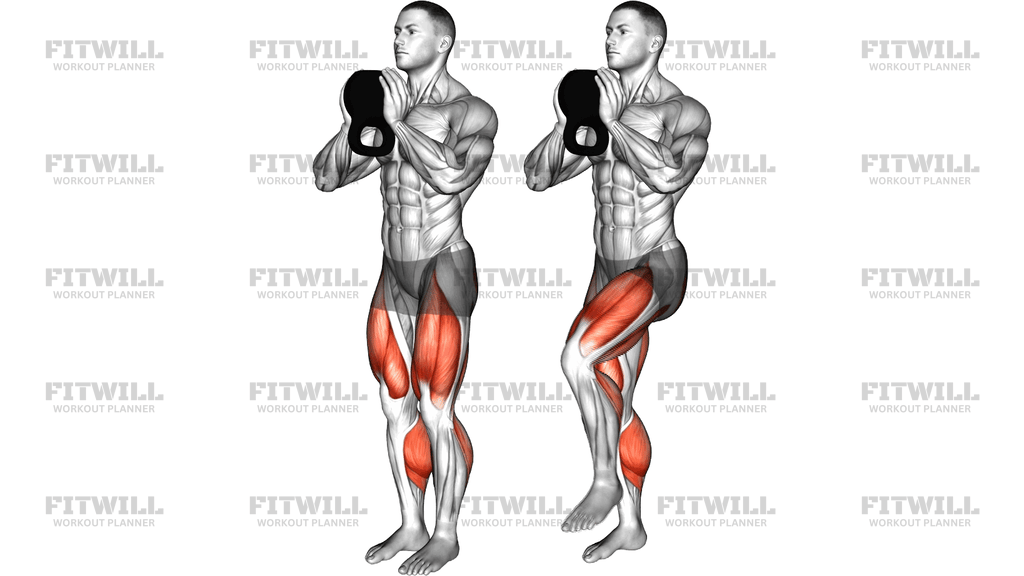
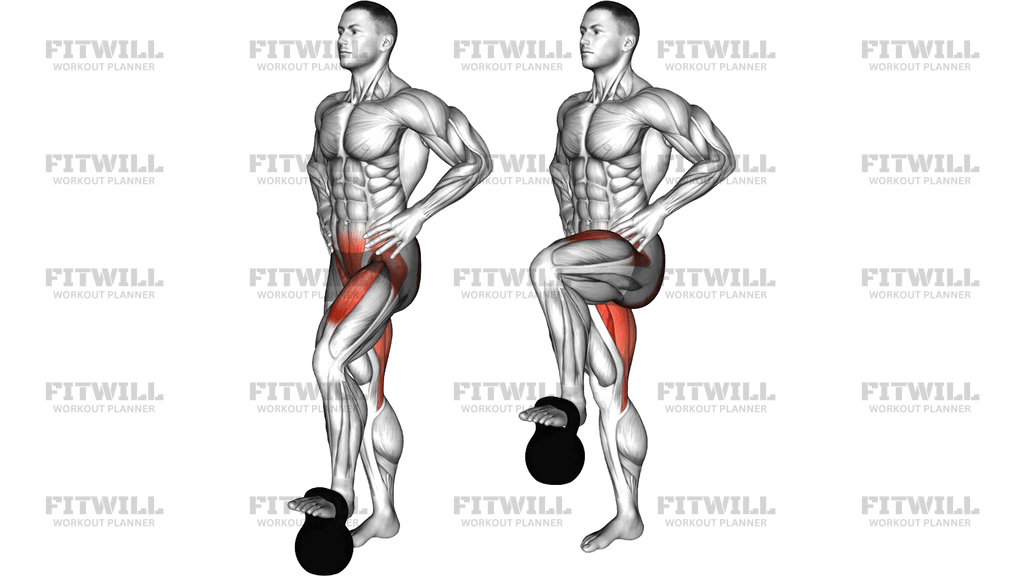
Weighted Standing Hip Flexion is a single-leg strength exercise where you hook a kettlebell over one foot and drive the knee up toward your chest from a standing position. The working hip flexors lift the weighted leg while the standing leg, glutes, and core work overtime to keep you balanced and upright. Because the load hangs from the foot rather than being held in the hands, the demand is very targeted: the resistance travels exactly where the leg goes, and nothing else compensates for it.
This movement is particularly useful for runners, sprinters, martial artists, and anyone whose sport involves driving the knee forward forcefully. It also suits lifters who want to address a weak or asymmetrical hip drive, since each side is trained on its own and any left-right difference becomes obvious quickly. Compared with standing knee raises without weight, adding the kettlebell lets you load the hip flexors in a strength-building rep range instead of doing high-rep endurance work.
The setup matters more than it looks. The kettlebell must be hooked securely over the top of the foot with the toes slightly flexed up to trap the handle, and your hands stay on your hips so they cannot assist or stabilize through the arms. Standing tall with ribs stacked over the pelvis gives the hip flexors a fair test; if you lean your torso back, you turn the movement into a momentum-driven swing and reduce the work the iliopsoas actually does.
Execution is straightforward but demanding. From a tall stance, lift the knee up and across slightly toward the opposite shoulder until the thigh is at least parallel to the floor, pause briefly at the top, then lower the foot back to the floor with control so the kettlebell does not slam down. The standing leg stays soft but stable, and your trunk should not rotate or collapse toward the working side.
Because balance is part of the challenge, start lighter than you think you need and treat the first few sessions as skill practice. Perform all reps on one side, then switch feet and re-hook the kettlebell before working the other leg. If balance is limiting you before the hip flexors are challenged, hold a wall or rack lightly with one hand until your stability catches up.
[ Workout Log & Planner ]
Put your next workout in Fitwill
Keep your plan and training log ready when you are.


Instructions
- Stand tall with your feet hip-width apart and place a kettlebell on the floor in front of one foot.
- Hook the top of that foot up into the kettlebell handle so the bell hangs from your forefoot, toes flexed upward to trap it securely.
- Place both hands on your hips, brace your abs, and pull your ribs down so your torso is stacked directly over your pelvis.
- Shift your weight fully onto the unloaded standing leg and find your balance before moving.
- Drive the weighted knee up and slightly across your body until your thigh reaches at least parallel to the floor.
- Pause for a beat at the top without letting your torso lean backward or your hips rotate.
- Lower the leg under control until your foot touches the floor and the kettlebell settles, keeping tension rather than dropping it.
- Exhale as you drive the knee up, inhale as you lower it back down.
- Complete all reps on one leg, then carefully unhook the kettlebell, reset it under the other foot, and work the opposite side.
Tips & Tricks
- If the kettlebell slips off your foot mid-set, the problem is usually ankle position: actively pull your toes toward your shin so the handle is trapped between the top of the foot and the shin, not just resting on the toes.
- A common fault is leaning the torso back as the knee rises, which shortens the lift the hip flexors must produce. Watch yourself sideways in a mirror and keep your ear, shoulder, and hip in one line.
- Do not swing the weighted leg. If the kettlebell is momentum-driven at the bottom, the working muscles get a free ride for the first half of the rep; cut the weight and lift slower instead.
- Keep the standing knee slightly bent and the foot gripping the floor. A locked-out, rigid standing leg makes balance harder and gives you nothing to absorb small wobbles.
- If your standing hip or lower back aches from balancing, lightly touch a wall or squat rack with one hand. Use the lightest possible fingertip contact so you still own the movement.
- Lift the knee slightly toward the opposite shoulder rather than straight up in front; this path follows the natural angle of the hip joint and keeps the femur tracking cleanly.
- Avoid shrugging or twisting your hands against your hips for leverage. They are there for posture feedback, not support.
- Set the kettlebell down on a stable, flat surface and step out of it rather than shaking your foot free while standing on one leg, which is when most slips happen.
Frequently Asked Questions
What muscles does Weighted Standing Hip Flexion work?
The primary movers are the hip flexors, mainly the iliopsoas and rectus femoris. Your standing-leg glutes, quads, and calves, along with your deep core, work hard to keep you balanced throughout the set.
Why is the kettlebell hooked on the foot instead of held in the hands?
Loading the foot lets the resistance follow the leg directly, so the hip flexors do all the lifting with no help from the arms or trunk. It also frees your hands to stay on your hips, making torso lean or arm-swing cheating obvious.
Is Weighted Standing Hip Flexion suitable for beginners?
Yes, but start with a very light kettlebell or even a small dumbbell and expect the balance demand to be the limiting factor at first. Beginners often benefit from a few weeks of bodyweight standing knee raises before adding load.
How high should I raise my knee during Weighted Standing Hip Flexion?
Aim to bring the thigh to at least parallel with the floor, or slightly higher if your mobility allows. If you cannot reach parallel without leaning back, reduce the weight and work within the height you can control.
How many reps and sets should I do?
Because the range is short and the muscles are small, 3 to 4 sets of 8 to 12 controlled reps per side works well for strength. Rest briefly between sides so balance does not deteriorate on the second leg.
What is the most common mistake with this exercise?
Leaning the torso backward as the knee drives up, which turns the lift into a momentum swing and takes work away from the hip flexors. Keep your hands on your hips and your ribs stacked over your pelvis to catch it.
What can I use if I do not have a kettlebell?
A small dumbbell held vertically and hooked under the foot, or a ankle-weight cuff, works as a substitute. Ankle Strap setups on a low cable are another option, though the cable changes the resistance angle slightly.
My foot cramps when the kettlebell is hooked on it. What should I do?
Foot cramps usually come from gripping the handle too hard with the toes. Flex the ankle just enough to trap the handle, keep the toes relaxed, and shorten your sets until the foot adapts.
Is it safe to do Weighted Standing Hip Flexion with hip or lower back issues?
If you currently have hip or lower back pain, clear the movement with a qualified professional first, since loaded hip flexion places demands on both areas. When cleared, start with light weight, a reduced knee height, and light hand support for balance.