Weighted Lying Supine Straight Knee Raise
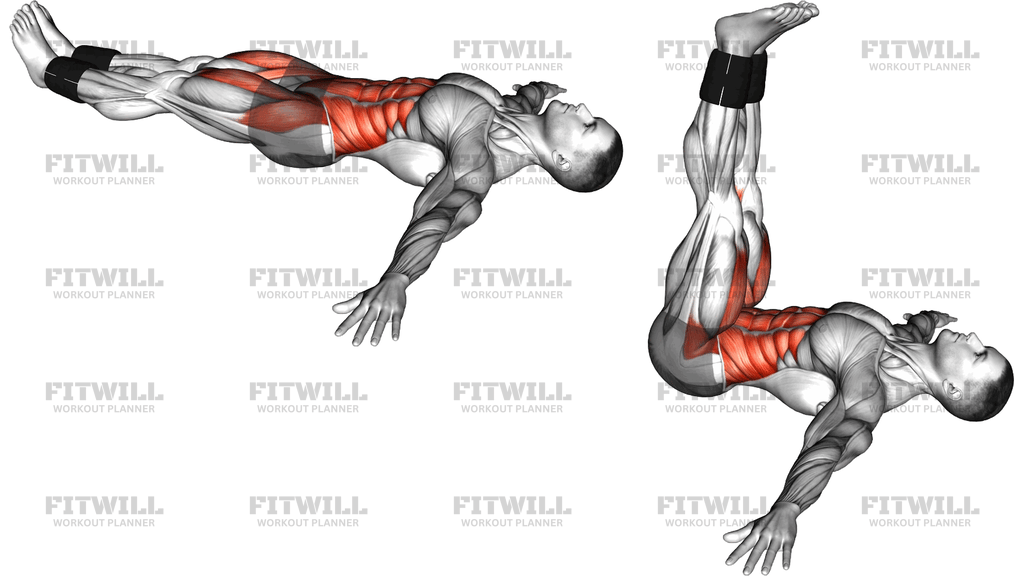
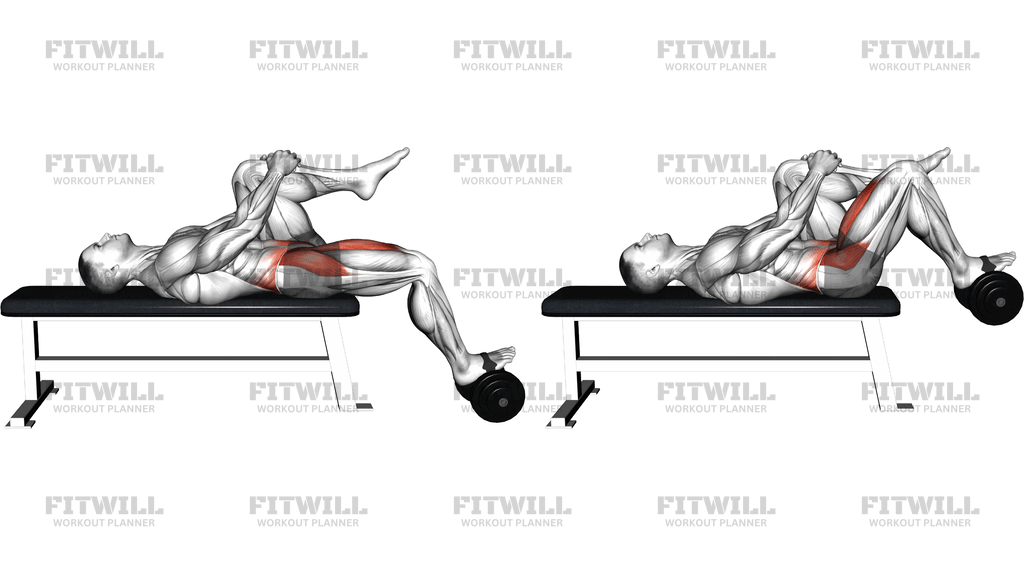
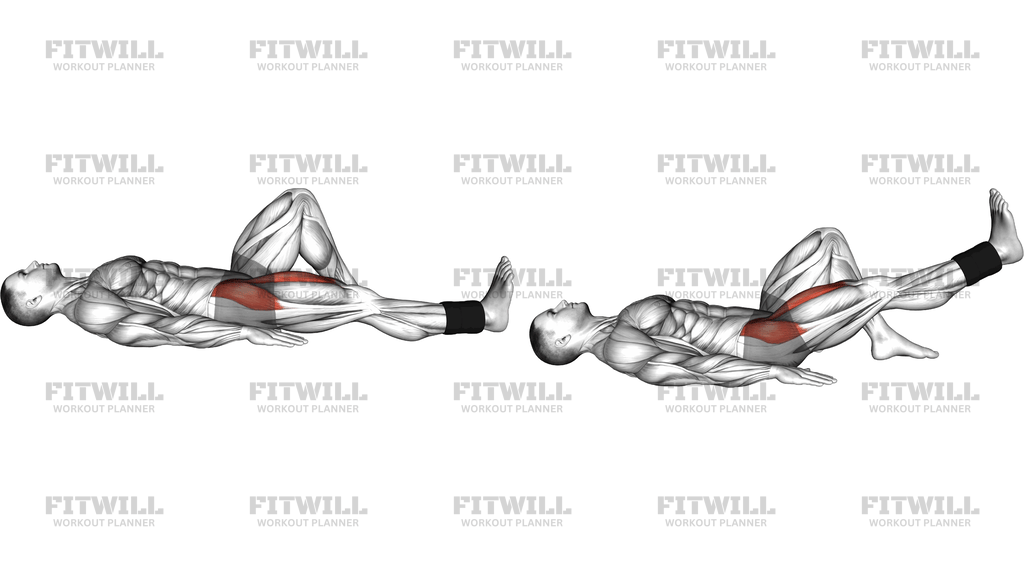
The Weighted Lying Supine Straight Knee Raise is a floor-based hip flexor exercise performed with a weight attached around the ankle. You lie on your back with one knee bent and that foot planted for stability, while the working leg stays fully straight throughout the set. From there, you lift the weighted leg up toward the ceiling and lower it back down under control, keeping the knee locked straight the entire time. The bent-knee position on the non-working side is a deliberate detail: it tilts the pelvis slightly and takes pressure off the lower back, which matters a lot once load is added at the ankle.
This movement primarily targets the hip flexors, especially the iliopsoas and the rectus femoris, which crosses both the hip and the knee and is most loaded when the knee stays extended. Because the leg moves as a long lever with weight at the end, the abs also work hard isometrically to hold the ribcage down and keep the pelvis from tilting forward. The result is a movement that trains hip flexion strength and trunk stability at the same time, which is exactly what running, kicking, sprinting, and climbing demand.
Athletes who sprint or kick often use this exercise to strengthen the hip flexion that drives knee drive and leg speed. It is also useful for anyone whose hip flexors are undertrained compared to the rest of the legs, since most squat and hinge variations never challenge hip flexion directly. Because you are lying on the floor with one leg anchored, the setup is self-limiting and forgiving, making it accessible to intermediate lifters who already have some core control.
Setup details make a real difference here. Keep the non-working knee bent with the foot flat on the floor, arms relaxed at your sides with palms down for balance, and the working leg extended straight from the hip. The weight, usually an ankle strap loaded or an ankle weight secured just above the ankle joint, should sit snug so it does not slide during the rep. Before each lift, brace the abs lightly and press the lower back toward the floor; this prevents the pelvis from anteriorly tilting as the leg rises.
Execution comes down to control at both ends of the range. Raise the straight leg until the thigh approaches vertical or until you feel the pelvis begin to move, then lower slowly back toward the floor without letting the heel slam down or the lower back arch away. If the lower back lifts or you feel strain in the lumbar area, bend the working knee slightly, reduce the weight, or shorten the range. Breathe out on the lift, in on the descent, and reset the brace before every rep so the trunk stays solid from start to finish.
[ Workout Log & Planner ]
Put your next workout in Fitwill
Keep your plan and training log ready when you are.


Instructions
- Lie on your back on an exercise mat with your non-working knee bent and that foot planted flat on the floor.
- Secure an ankle strap or ankle weight snugly around the ankle of your working leg and extend that leg fully straight so it rests in line with your torso.
- Place your arms at your sides with palms facing down, and gently press your lower back toward the floor.
- Brace your abdominal muscles and keep the ribcage down before starting the lift.
- Exhale and raise the straight leg upward, leading with the heel, until the thigh approaches vertical or just before the pelvis begins to tilt.
- Keep the working knee locked straight and the toes pulled back toward the shin throughout the lift.
- Pause briefly at the top without letting the hips roll or the lower back arch.
- Inhale and lower the leg slowly back toward the floor, stopping just before the heel touches down or the lower back lifts.
- Complete all repetitions on one leg, then re-brace and switch sides, keeping the opposite knee bent and foot flat each time.
Tips & Tricks
- If your lower back arches as the leg lowers, stop the descent higher and shorten the range instead of letting the heel reach the floor.
- A weight that slides along the ankle mid-set shifts the lever arm and changes the effort, so tighten the strap just above the ankle bone before starting.
- Pointing the toes tends to make the quad and hip flexor work harder at the top; pulling the toes toward the shin keeps tension more even across the range.
- Avoid pushing off with the planted foot; the bent knee is there to stabilize the pelvis, not to assist the lift.
- Start with a light ankle weight and prioritize a slow two- to three-second lowering phase, because the descent is where most people lose control.
- If the straight-knee position causes pulling behind the knee or in the hamstring, perform a brief hamstring stretch first or reduce the load before modifying the knee angle.
- Keep both sides balanced by matching reps exactly; the leg on your dominant side will usually feel stronger and tempt you to add reps.
- Do not hold your breath at the top of the rep; the combination of breath-holding and maximal hip flexion can spike intra-abdominal pressure.
- Place the working leg slightly closer to your midline than the bent leg if you feel the hip drift outward as it rises.
Frequently Asked Questions
Which muscles does the Weighted Lying Supine Straight Knee Raise work?
The primary movers are the hip flexors, mainly the iliopsoas and rectus femoris. The lower abs work isometrically to keep the pelvis and lower back stable while the weighted leg moves.
Why does the Weighted Lying Supine Straight Knee Raise keep the working leg straight instead of bent?
A straight knee lengthens the leg lever and loads the rectus femoris, which crosses both the hip and knee. Bending the knee would shorten that muscle and reduce its contribution to the lift.
Why is one knee bent while the other leg raises?
The bent knee with the foot planted stabilizes the pelvis and reduces strain on the lower back. It gives you a fixed base so the effort stays on the hip flexors of the moving leg.
Is the Weighted Lying Supine Straight Knee Raise suitable for beginners?
Beginners should start without weight or with a very light ankle weight and a shortened range. Once you can lower the straight leg slowly without the lower back arching, adding load makes sense.
How heavy should the ankle weight be for this exercise?
Choose a weight you can lift for 8 to 12 controlled reps without the pelvis tilting or the knee bending. Because the weight sits at the end of a long lever, even small additions feel significantly harder.
What is the most common mistake in the Weighted Lying Supine Straight Knee Raise?
Letting the lower back arch and the pelvis tilt forward as the leg lowers. This shifts work away from the hip flexors and puts the lumbar spine under stress, so stop the descent where control ends.
What can I use instead of an ankle strap or ankle weight?
A small dumbbell held gently between the feet or a light resistance band looped around the ankle can work, but a secured ankle weight is safest because it cannot slip or require gripping with the foot.
How is this different from a hanging knee raise?
The lying position supports your back and removes grip demands, letting you focus purely on hip flexion. The hanging version requires far more trunk and grip strength and uses body weight as the load.
How many sets and reps should I do?
Two to three sets of 8 to 15 slow reps per leg works well for most training goals. Because the hip flexors are involved in running and daily movement, avoid training them to failure every session.
Should I feel this behind the knee or in the front of the hip?
The effort should sit at the front of the hip and top of the thigh. Tight hamstrings can create pulling behind the knee when the leg is straight, so stretch the hamstrings first or reduce the load if that happens.