Sitting Swimming Knee Raise On A Chair
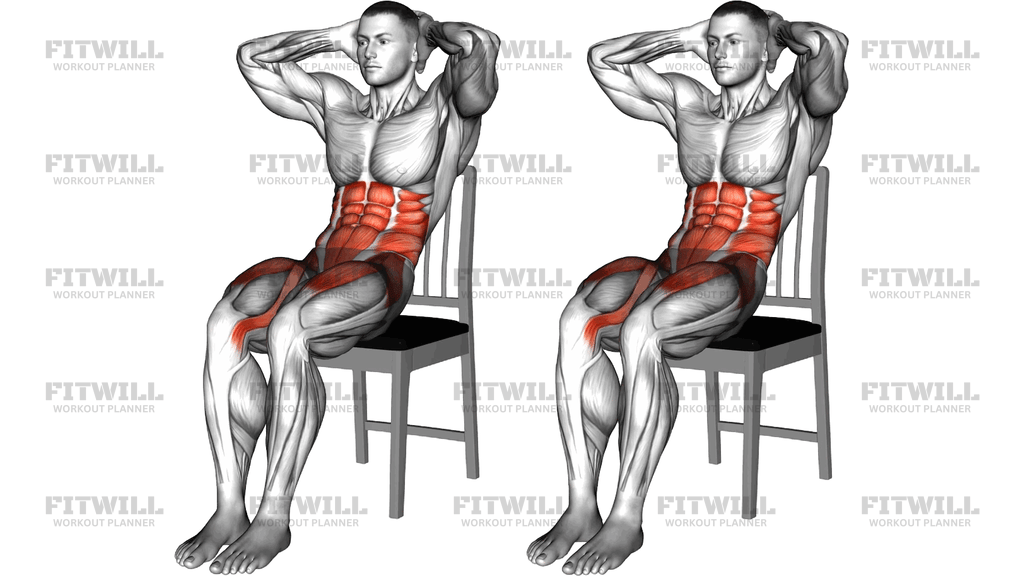
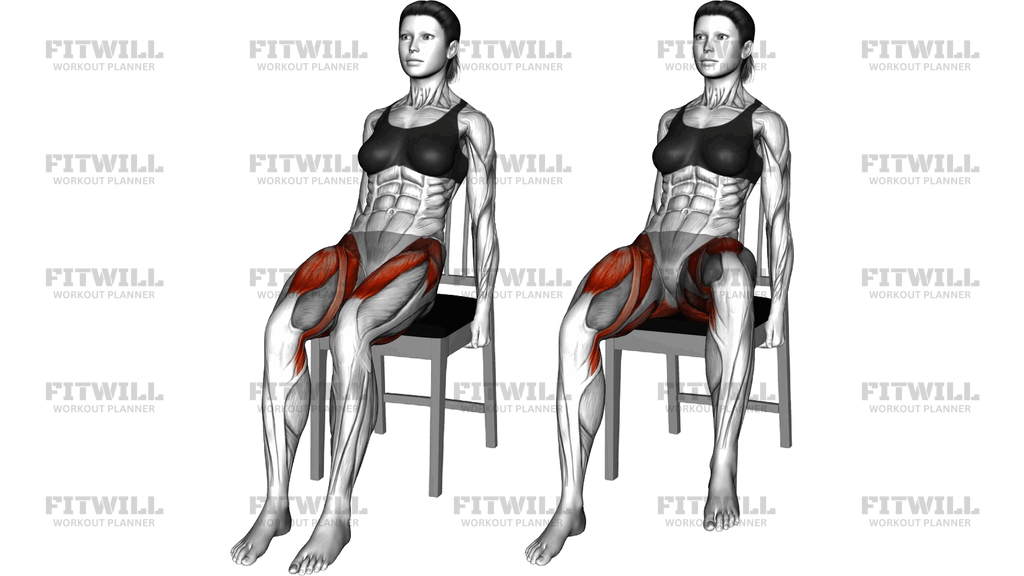
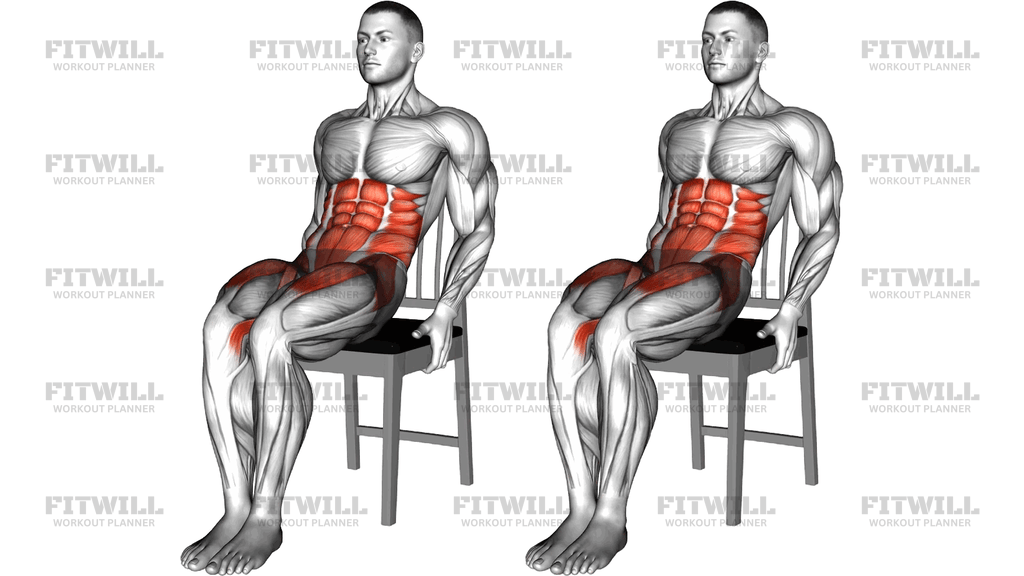
Sitting Swimming Knee Raise On A Chair is a seated, low-equipment core drill that combines a knee lift with a swimming-style arm sweep. You sit upright on a sturdy chair with both arms extended straight ahead at chest height, then lift one knee toward your torso while your arms sweep down and back past your hips, before returning to the start and repeating on the other side. The two frames of the movement create a coordinated, almost rowing-like rhythm that keeps your trunk working from start to finish.
Because you are seated and supported, this exercise removes the balance and wrist demands of floor work, which makes it a practical choice for beginners, older adults, office workers, or anyone recovering tolerance for core and hip flexor work who cannot get down onto a mat comfortably. It also fits well into desk-break routines, warm-ups, or seated circuit training, since a single stable chair is all you need.
The main work comes from the hip flexors driving the knee up, while the abs and obliques brace your torso and stop you from slumping or twisting excessively as the knee rises. Holding the arms forward and sweeping them back adds light, sustained work for the shoulders and upper back, and it serves another purpose: when your arms stay active and your chest stays tall, it is much harder to cheat the knee lift with a rounded, collapsed posture.
Setup matters more than it looks. Sitting too far back on the seat gives your hips nowhere to travel and turns the drill into a soft leg curl; sitting near the front edge with a long spine and feet flat on the floor gives the knee a clear path upward and keeps the working hip honest. Your hands should hover rather than rest, so your trunk, not the chair, controls your position.
Execute each rep deliberately: exhale as the knee lifts and the arms sweep back, pause briefly when the knee is at its highest point with your torso tall, then control everything back to the start before switching sides. Rushing the arm swing is the most common fault, because momentum from the shoulders can disguise a lazy hip flexor. Keep the tempo smooth and let the knee lead the movement.
If you want more challenge, slow the lowering phase, hold the top position for two or three breaths, or add a light ankle weight. If it feels too difficult at first, lift the knee a shorter distance or perform the arm sweep and knee raise separately until the coordination feels natural.
[ Workout Log & Planner ]
Put your next workout in Fitwill
Keep your plan and training log ready when you are.


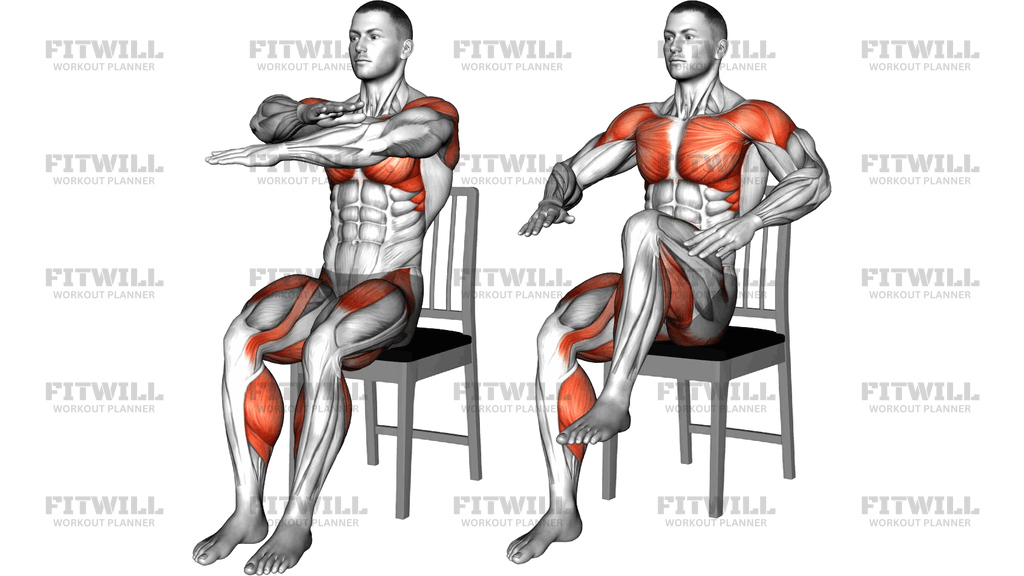
Instructions
- Sit on the front half of a sturdy chair with your feet flat on the floor, hip-width apart, and your sitting bones planted firmly on the seat.
- Extend both arms straight forward at chest height, palms facing down or inward, elbows fully straight, and lift your chest so your spine is long.
- Brace your abdominal wall as if preparing for a light push to the stomach, and keep your shoulders down away from your ears.
- Exhale and lift one knee up toward your chest while sweeping both arms down and back past your hips, as if completing a swimming stroke.
- Pause at the top with the knee raised, your torso tall, and your hands just behind your hips; avoid letting your lower back round.
- Inhale and control the knee back down to the floor while your arms travel forward again to the extended start position.
- Repeat the knee raise and arm sweep on the opposite leg, alternating sides for the desired number of repetitions.
- Keep your breathing rhythmic throughout: exhale on the lift and sweep, inhale on the return.
- Between sets, rest your hands on your thighs, reset your posture, and re-check that your feet are flat and your seat position has not shifted.
Tips & Tricks
- The most common mistake is powering the knee up with a trunk lean-back; if your torso tips away from upright, the hip flexors are being bypassed by momentum, so slow the lift down by half.
- Do not let the arms drop below chest height at the start of each rep; low arms encourage a rounded chest and turn the drill into a slouched leg lift.
- Keep the lifting knee tracking straight ahead rather than flaring outward; a knee that drifts to the side usually means the hip is compensating for a tired hip flexor.
- Press the foot of the non-working leg gently into the floor; this gives your trunk a stable base and stops you from rocking side to side as you alternate.
- Sit far enough forward that your thigh can travel upward freely, but not so far that your pelvis slides off the seat edge when the knee lifts.
- If you feel the work in your neck or shoulders instead of your hips and abs, your arms are doing too much; reduce the sweep to a small, controlled pull and refocus on the knee.
- A brief pause at the top of each knee raise is worth more than extra speed, because the hold is where the deep core has to stabilize the raised leg.
- If the chair is light or on a slippery floor, place it against a wall so it cannot slide when you pull your arms back.
Frequently Asked Questions
What muscles does Sitting Swimming Knee Raise On A Chair work?
The hip flexors lift the knee and are the primary movers, while the abs and obliques stabilize your trunk. The shoulders and upper back contribute during the arm sweep, though at a lighter intensity.
Can beginners do Sitting Swimming Knee Raise On A Chair?
Yes, it is one of the most beginner-friendly core exercises because the chair supports your weight and there is no floor work involved. Start with a modest knee height and fewer alternating reps before increasing the range.
Why do the arms sweep back during the knee raise?
The swimming-style sweep coordinates the upper and lower body and adds light shoulder work, but it also reinforces an upright torso. With the arms moving actively, it is much harder to slump or lean back to cheat the lift.
How high should I raise my knee?
Lift only as high as you can while keeping your chest tall and your spine neutral. For most people, that means the knee rises until the thigh is clearly off the seat without the lower back rounding.
Should my back stay in contact with the chair?
Sit on the front half of the seat so only your sitting bones rest on it, and keep your upper back free of the chair back. Leaning against the backrest flattens your brace and reduces the core demand.
My lower back arches when I lift my knee. What should I change?
That usually means the lift is too high or too fast for your current control. Reduce the range, exhale fully as you lift, and imagine gently drawing your lower abdomen inward as the knee travels up.
What can I use if I do not have a suitable chair?
Any stable seat without wheels works, such as a bench or the edge of a sturdy stool. Avoid rolling office chairs or soft couches, which either slide or let your hips sink and round your posture.
How can I make Sitting Swimming Knee Raise On A Chair harder?
Slow the lowering phase to a three-count, pause for two or three breaths at the top of each lift, or wear a light ankle weight. Adding tempo before adding load keeps the movement quality high.
Is this exercise safe if I have knee discomfort?
Because the knee stays bent and unloaded throughout, the joint is not stressed the way it is in squats or lunges. If lifting the knee itself causes discomfort, reduce the range or check with a qualified professional before continuing.
How many repetitions should I do?
Alternating sides, 8 to 12 lifts per leg is a solid starting point, performed slowly with a visible pause at the top. Focus on keeping the last few reps as tall and controlled as the first.