Seated Knee Hug Glute Stretch
The Seated Knee Hug Glute Stretch is a floor-based flexibility exercise where you sit with one leg extended and draw the opposite knee in toward your chest, wrapping your hands around the shin to gently pull it closer. The stretch targets the gluteal muscles on the bent-leg side, along with the deep hip rotators and the outer hip area, which is why it shows up in so many warm-up and cool-down routines.
This movement is especially useful for anyone who sits for long hours, since prolonged sitting leaves the glutes dormant and the hips tight. It is also a favorite among runners, cyclists, and lifters who put repeated workload through their hips, and it works well as a low-effort recovery option on rest days. Because it requires no equipment and very little space, you can do it on a living room floor, in a hotel room, or on a mat after training.
The setup matters more than it looks. Sitting tall with the extended leg straight gives your pelvis a stable base, which lets the stretch land in the glute of the bent leg instead of collapsing into a rounded lower back. Where you pull the knee makes a difference too: drawing it straight up biases the gluteus maximus, while angling it toward the opposite shoulder reaches the outer hip and deeper rotators.
To perform it well, sit upright on the floor with both legs extended, bend one knee, and clasp your hands around that shin just below the kneecap. Keep the extended leg's kneecap pointing at the ceiling and the foot relaxed. Pull the bent knee toward your chest, exhaling as you draw it in, and hold a moderate, comfortable tension for 20 to 45 seconds. Switch legs and repeat on the other side, keeping the shoulders down and the neck relaxed throughout.
A few practical points will keep the stretch safe and effective. Pull with your arms, but let the hip relax rather than fighting the pull with your shoulders. Avoid forcing the knee past the point of a comfortable stretch — a steady, tolerable tension is more productive than a sharp or pinching sensation. If your hamstrings or lower back complain in the seated position, elevating your hips on a folded towel or firm cushion will tilt the pelvis upright and make the position far easier to hold.
[ Workout Log & Planner ]
Put your next workout in Fitwill
Keep your plan and training log ready when you are.


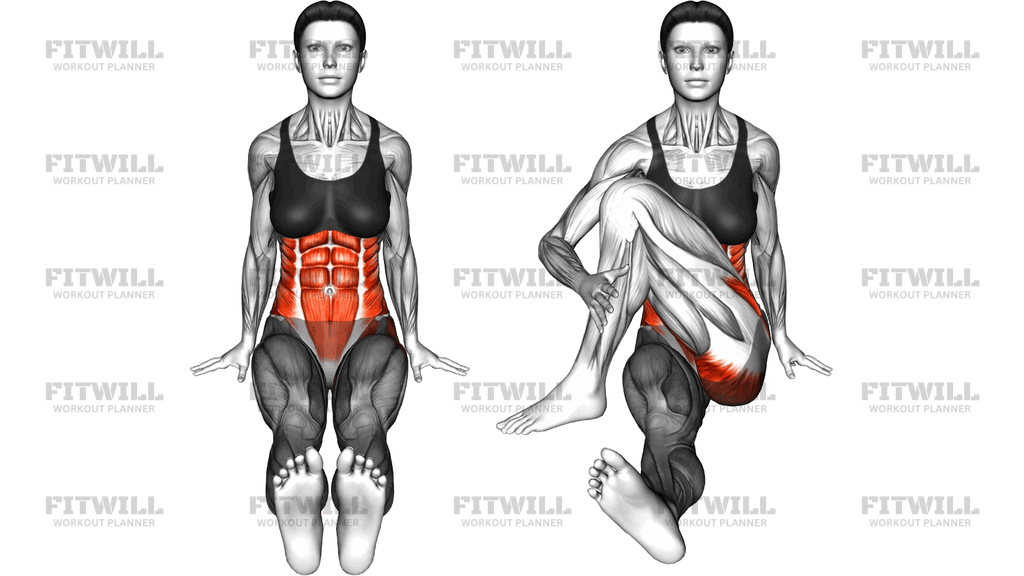
Instructions
- Sit on the floor or a mat with both legs extended straight in front of you and your hands resting lightly on the floor beside your hips.
- Roll your shoulders back and down, lengthen through the spine, and sit as tall as you can so your pelvis is upright rather than tipped backward.
- Bend your right knee and lift your foot off the floor, keeping your left leg extended with the kneecap facing the ceiling.
- Clasp both hands around the right shin just below the knee, interlacing your fingers or overlapping your hands for a secure hold.
- Exhale and draw the right knee in toward your chest, guiding it slightly across your midline toward the opposite shoulder to reach the outer glute.
- Keep the extended leg flat and active on the floor, pressing the back of that thigh gently down as you hold the stretch.
- Hold the end position for 20 to 45 seconds, breathing slowly and letting the hip release a little further with each exhale.
- Release your grip slowly and lower the right foot back to the floor with control rather than letting it drop.
- Extend the right leg, bend the left knee, and repeat the same hold on the other side.
- Complete one to three holds per side, resetting your tall seated posture between each repetition.
Tips & Tricks
- If your lower back rounds the moment you sit down, prop yourself on a folded towel or firm cushion — a neutral pelvis is what sends the stretch into the glutes instead of the spine.
- Pull the knee toward the opposite shoulder to bias the outer hip and deeper rotators; pulling it straight toward the same shoulder keeps the focus more on the gluteus maximus.
- Keep the extended leg engaged by pressing the back of that thigh toward the floor. A slack, flopped-out leg lets the pelvis tilt and weakens the stretch on the other side.
- Pull with your arms, not your shoulders. If your shoulders creep up toward your ears, relax your grip, reset them down, and re-clasp lower on the shin.
- Do not yank the knee into position. Ease into the hold over two or three breaths — a gradual pull relaxes the hip, while a quick tug often triggers it to guard and resist.
- If you feel a pinching sensation at the front of the bent hip, back off the depth slightly and widen the angle of the knee away from your midline before settling back in.
- Keep your neck long and your gaze forward. Craning your chin down to watch the knee shortens the neck muscles and does nothing for the hip.
- For a stronger hold, flex the bent foot as if pressing it toward a wall — this engages the leg and gives your hands more resistance to pull against.
- If floor sitting bothers your hamstrings, perform the same knee hug seated on the edge of a sturdy bench or chair instead; the stretch on the hip is nearly identical.
Frequently Asked Questions
What muscles does the Seated Knee Hug Glute Stretch target?
The main target is the gluteal muscles on the bent-leg side, particularly the gluteus maximus along with the outer hip and deep rotators. The lower back works only to hold your seated posture, not as a stretch target.
Why pull the knee toward the opposite shoulder?
Angling the knee across your midline adds horizontal adduction at the hip, which reaches the outer hip and deep rotator area more directly. Pulling the knee straight up keeps the emphasis on the main glute muscle, so you can adjust based on where you feel tightest.
How long should I hold the Seated Knee Hug Glute Stretch?
Hold for 20 to 45 seconds per side, and repeat one to three rounds. Shorter holds of around 20 to 30 seconds fit well before a workout, while longer holds toward 45 seconds suit cool-downs and recovery sessions.
Can beginners do this stretch safely?
Yes, it is one of the more accessible hip stretches because you control the depth with your own hands. Beginners should simply pull less far, keep the shoulders relaxed, and stop at a comfortable tension rather than chasing an extreme range.
My lower back rounds when I sit on the floor — what should I change?
Elevate your hips on a folded towel, cushion, or the edge of a low step so the pelvis can stay upright. You can also bend the extended leg slightly if a straight knee pulls you backward.
What is the most common mistake in this stretch?
Rounding the whole torso over the knee and pulling with hunched shoulders. That collapses the spine and lets the hip off the hook. Sit tall, grip the shin, and pull the knee in while your chest stays lifted.
Is this stretch good before or after training?
It works in both slots. Shorter, moderate holds before running or leg training help free up the hips for movement, while longer holds after training or before bed take advantage of a warm, pliable muscle.
What can I use if sitting on the floor is uncomfortable?
Sit on the front edge of a sturdy chair or bench and hug the knee up from there — the hip angle and stretch are essentially the same. A yoga block or firm cushion under the sit bones also works if the floor itself is the issue.
Should I feel the stretch in the extended leg too?
Mild tension in the hamstring of the extended leg is normal, but the primary sensation should be in the bent-leg glute. If the straight-leg hamstring dominates, soften that knee slightly or elevate your hips to level the pelvis.
Are there any situations where I should avoid the Seated Knee Hug Glute Stretch?
Skip it or scale it back if you have an acute hip, knee, or lower back injury that pulling the knee toward the chest aggravates, or if the position produces pinching rather than a stretch. Move well within a pain-free range and consult a professional if symptoms persist.