Reverse Crunch Leg Drop
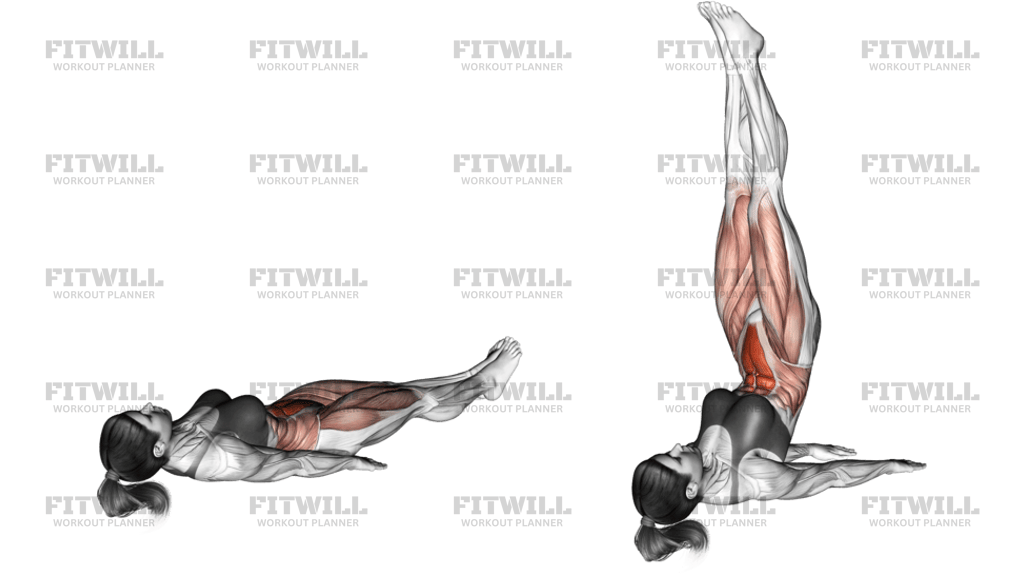
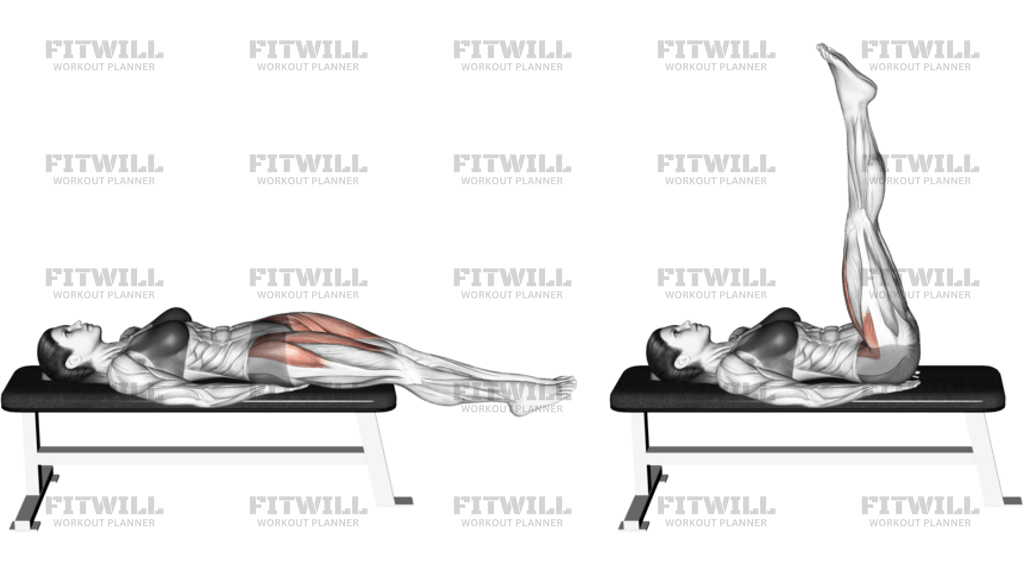
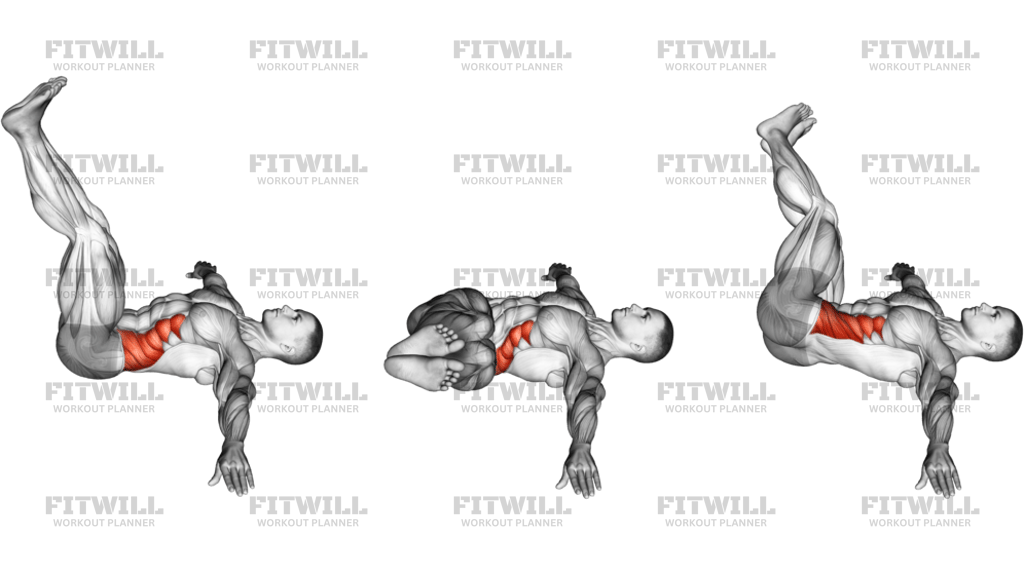
The Reverse Crunch Leg Drop is a floor-based abdominal exercise that combines two of the most demanding lower-ab patterns into one continuous movement. You start lying flat on your back with your legs extended along the floor, draw your knees in toward your chest by curling the pelvis upward, then slowly lower your legs back down to the extended position under control. That long, slow return leg is what separates this from a standard reverse crunch — the drop phase forces the lower abdominals to control the weight of your legs through a much larger range.
This movement is especially useful for anyone who feels crunches mostly in the upper abs or neck. Because the work happens at the hip joint and the lumbar spine, the emphasis shifts toward the lower portion of the rectus abdominis and the deep stabilizers that control pelvic position. It also trains your ability to keep the lower back pressed toward the floor while your legs move, which is one of the most transferable core skills for lifting, running, and everyday movement.
Setup matters more here than in most ab exercises. Lie on your back on a mat with your arms relaxed at your sides, palms down, and your legs straight. Before you move, gently flatten your lower back into the floor by tilting the pelvis slightly posteriorly. If you start with an arched lower back, the first thing that happens during the leg drop is lumbar extension rather than abdominal work, which is where most lower-back discomfort with this exercise comes from.
To execute it well, think of the repetition as two distinct phases. On the way in, pull your knees toward your chest and lift your hips slightly off the floor, letting your spine curl rather than just swinging the legs up. On the way out, extend the legs forward and lower them toward the starting position as slowly as you can manage without the lower back lifting. Exhale on the curl in, inhale on the drop, and stop the descent at the exact point where your back stays flat.
This exercise fits well near the end of a workout when the core is pre-fatigued but you can still maintain form, or as a focused lower-ab block two to three times per week. Beginners can bend the knees more and shorten the drop range; more advanced trainees can slow the lowering phase to a count of four to six seconds or pause with the legs hovering just above the floor.
The main safety point is simple: the movement should stop the moment you feel your lower back peel off the floor or your speed turn into a swing. Shorten the range instead of pushing through an arch, and keep the tempo honest — a slow, controlled drop with a shorter range builds far more abdominal tension than a fast, long one.
Fitwill
Log Workouts, Track Progress & Build Strength.
Achieve more with Fitwill: explore over 9600 exercises with images and videos, access built-in and custom workouts, perfect for both gym and home sessions, and see real results.
Start your journey. Download today!




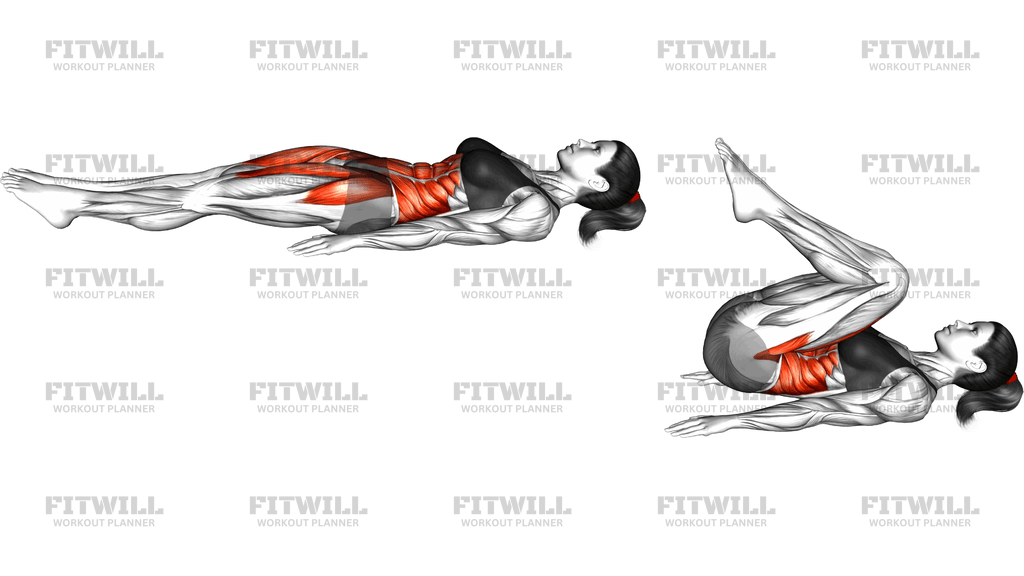
Instructions
- Lie flat on your back on an exercise mat with your legs fully extended and your arms resting at your sides, palms facing down against the floor.
- Press your lower back gently toward the mat and tilt your pelvis slightly under so there is little to no gap between your lumbar spine and the floor.
- Brace your abdominal muscles as if preparing for a light exhale, keeping your neck and shoulders relaxed and your head resting on the mat.
- Bend your knees and draw them in toward your chest, curling your hips up off the floor so your knees travel toward your torso rather than just folding at the hips.
- At the top, your knees should be near or past your hips with your pelvis lifted slightly, and your weight should be resting on your upper back and shoulders.
- Begin the leg drop by slowly uncurling your hips back down to the mat, then extend your legs forward toward the starting position.
- Lower your legs under control for roughly three to five seconds, stopping at the point just before your lower back would arch away from the floor.
- Exhale as you pull the knees in and curl up; inhale slowly as you extend and drop the legs back down.
- Pause briefly at the bottom to reset your brace and confirm your back is flat, then begin the next repetition.
- Complete your set before fatigue forces your hips to slap down or your lower back to lift, and roll to one side to stand up rather than sitting straight up from a fully extended position.
Tips & Tricks
- If your lower back arches during the drop, do not reach your legs all the way to the floor — stop the descent higher and gradually extend the range over several weeks as your control improves.
- A common mistake is swinging the legs up with momentum from the hips; eliminate this by pausing for one second at the top of every curl so each rep starts from a dead stop.
- Think about curling your pelvis toward your ribs on the way in instead of just bending your knees — if your hips never lift, you are doing a knee tuck, not a reverse crunch.
- Keep your palms pressed lightly into the mat for stability, but avoid pushing down hard enough to lift your shoulders; the arms should assist, not drive, the movement.
- If your hip flexors cramp or dominate the set, your pelvis is likely tipping forward early — re-tilt it under before each rep and make the curl phase slower.
- The legs should feel heavy on the way down; if the drop takes less than two seconds, you are letting gravity do the work the lower abs are supposed to control.
- Keep your chin neutral and your head on the mat — jutting the chin forward is a sign the core is disengaging and the neck is compensating.
- Adding a brief pause with the legs extended but hovering just above the floor turns the bottom of the drop into an isometric hold that most people find harder than the curl itself.
- Doing this exercise on a hard floor without a mat is uncomfortable on the spine and sacrum; use a mat so you can focus on pelvic movement rather than guarding the contact point.
Frequently Asked Questions
Which muscles does the Reverse Crunch Leg Drop work most?
The primary work comes from the lower portion of the rectus abdominis along with the deep core muscles that control pelvic tilt. The hip flexors assist strongly on the knee pull, and the obliques help stabilize the pelvis throughout.
How is the Reverse Crunch Leg Drop different from a regular reverse crunch?
A regular reverse crunch starts and ends with the knees bent or hips flexed, so the legs travel a short distance. This version returns the legs to a fully extended position on the floor, adding a long controlled lowering phase that challenges the lower abs through a much greater range.
Is the Reverse Crunch Leg Drop suitable for beginners?
Yes, with a modified range. Beginners should drop the legs only partway and keep the knees more bent, then gradually extend the legs and lower the range as they can keep the lower back flat throughout.
Why does my lower back lift off the floor during the leg drop?
That happens when the weight of the extending legs pulls the pelvis into a forward tilt faster than your abdominals can resist. Stop the descent earlier, slow the tempo, and rebuild the range only when your back stays flat.
Should I feel the Reverse Crunch Leg Drop in my hip flexors?
Some hip flexor involvement is normal because they bend the hips on the way in, but they should not dominate. If you feel mostly hip flexor tightness or cramping, refocus on the pelvic curl and control the drop more slowly.
How many reps and sets should I do of the Reverse Crunch Leg Drop?
Two to four sets of 8 to 15 controlled repetitions works well, taken to the point where form would start to slip. Because the tempo is slow, quality reps matter far more than a high count.
What can I use instead of the Reverse Crunch Leg Drop?
A standard reverse crunch from a bent-knee start, a lying leg raise with bent knees, or a hanging knee raise all train a similar pattern. Each offers a shorter or supported range if the full leg drop is currently too demanding.
Can the Reverse Crunch Leg Drop aggravate my lower back?
It can if you lower the legs into an arched position or swing through the range. Keep the pelvis tucked, shorten the drop so the back never lifts, and stop the set if you feel any strain rather than muscular effort.
Do I need any equipment for the Reverse Crunch Leg Drop?
No, it is a body weight exercise that only needs enough floor space to lie down with your legs extended. A mat is recommended for comfort and to keep your back and pelvis from sliding during the movement.