Standing Chest And Biceps Stretch Agains Wall
The Standing Chest And Biceps Stretch Against Wall is a simple static stretch that uses a plain wall to open up the front of the shoulder girdle. You stand beside a wall, place one forearm or hand against it at roughly shoulder height, and then rotate your body away from the arm until you feel a stretch across the chest and along the front of the arm. Because the wall provides a fixed point, you can dial the intensity up or down simply by turning more or less of your torso away from the arm.
This stretch is especially useful for anyone who spends long hours sitting at a desk, driving, or looking at a phone, since those habits tend to pull the shoulders forward and shorten the chest muscles. It is also a go-to for lifters who press frequently, such as bench press and overhead press enthusiasts, because tight pecs can limit shoulder range of motion and encourage rounded posture. Combining the chest and biceps in one position makes it an efficient choice before or after upper body training sessions.
The primary targets are the pectoral muscles of the chest, particularly the sternal portion, with the front deltoid assisting in the stretch. As the arm extends behind the body with the palm contacting the wall, the biceps and the connective tissue of the front arm are lengthened at the same time. Keeping the arm at or slightly below shoulder height keeps the stretch in the chest and biceps rather than stressing the shoulder joint itself.
Setup matters more than most people expect. Your hand position on the wall determines which tissue gets lengthened: a hand placed level with the shoulder emphasizes the chest, while letting the arm drift slightly lower brings more of the biceps into play. Your stance should be far enough from the wall that you can rotate the torso without the arm buckling, and your feet should stay planted so the rotation comes from the trunk and hips, not from shuffling.
To execute well, move into the stretch gradually and stop at the point of a clear but comfortable pull, never sharp pain. Breathe steadily and let each exhale soften the tension a little. Hold for roughly twenty to thirty seconds per side, then switch arms so both sides receive equal attention.
The most common errors are shrugging the shoulder up toward the ear, arching the lower back to fake extra range, and pushing into a painful position. Keep the shoulder blade gently settled down the back, the ribs stacked over the pelvis, and the neck relaxed. If you have a current shoulder injury or had recent surgery, keep the range very small or choose a gentler doorway version until cleared to stretch more deeply.
[ Workout Log & Planner ]
Put your next workout in Fitwill
Keep your plan and training log ready when you are.


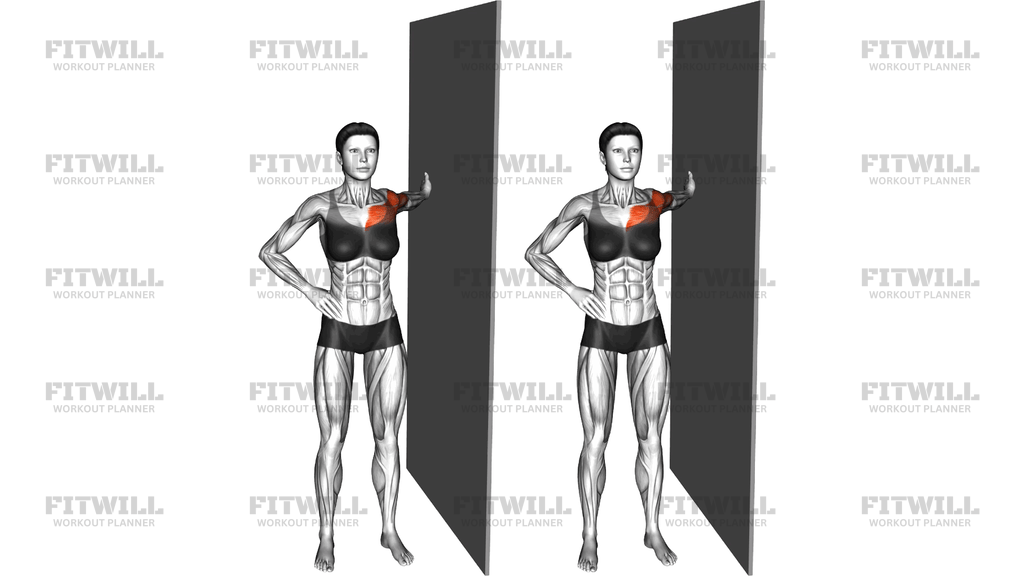
Instructions
- Stand beside a clear section of wall with your feet about hip-width apart and your toes facing roughly parallel to the wall.
- Extend the arm nearest the wall out to your side at shoulder height and place your palm or forearm flat against the wall, fingers pointing back or up.
- Rest your free hand on your hip to help guide the rotation and keep your torso tall.
- Draw your shoulder blade down away from your ear so the shoulder does not shrug as you stretch.
- Slowly rotate your chest and hips away from the wall, letting the arm stay in contact with the wall as it travels slightly behind your body.
- Stop when you feel a firm, comfortable stretch across the chest and along the front of the upper arm, and hold that position without bouncing.
- Breathe slowly and steadily, allowing the tension to ease slightly with each exhale, and hold for 20 to 30 seconds.
- Rotate your body back toward the wall under control until the stretch releases, then lift the arm away.
- Turn around and repeat the same steps on the opposite side, matching the hold time on each arm.
Tips & Tricks
- If you feel the stretch mostly in the shoulder joint instead of the chest, lower your hand a few inches below shoulder level before rotating away.
- To shift more emphasis into the biceps, straighten the arm fully and turn your palm to face the wall rather than using a flat forearm contact.
- Avoid stepping closer to the wall to force a deeper pull; rotating the torso farther is a safer way to progress than collapsing the arm.
- Watch for the ribcage flaring upward as you rotate; keeping the core lightly engaged prevents the lower back from arching to fake extra range.
- Do not lock the knees hard; a soft knee keeps blood moving and lets you stand tall through the stretch.
- If the wall surface is slippery against your skin, place your hand higher and use the forearm contact instead, or wear a sleeve to reduce friction.
- Keep your head looking straight ahead rather than turning toward the stretched arm, which keeps the neck out of the stretch.
- Warm the tissue first with a few arm circles if you are stretching before training; cold, tight pecs respond better after light movement.
- Compare sides and give the tighter side an extra hold, since one chest is often noticeably tighter than the other from daily habits.
Frequently Asked Questions
Which muscles does the Standing Chest And Biceps Stretch Against Wall target?
The main target is the pectoralis major of the chest, with the front deltoid and the biceps lengthened as the arm extends behind the body against the wall.
How high should my hand be on the wall?
Start with the hand at shoulder height to emphasize the chest. Lowering the hand slightly shifts more of the stretch into the biceps and front shoulder.
Is this stretch suitable for beginners?
Yes, it is one of the easiest chest stretches to learn because the wall gives instant feedback and you control the depth by how far you rotate your body.
Should my palm or forearm touch the wall?
A flat forearm is gentler on the wrist and shoulder, while an open palm with a straighter arm increases the pull through the biceps and chest.
Why do I feel this stretch in my shoulder instead of my chest?
This usually means the arm is too high or the shoulder is shrugging. Drop the hand slightly below shoulder height and pull the shoulder blade down before rotating away.
How long should I hold the Standing Chest And Biceps Stretch Against Wall?
Aim for 20 to 30 seconds per side, repeating two to three rounds if the chest feels particularly tight before or after training.
Can I do this stretch every day?
Yes, daily practice is reasonable for desk workers and frequent lifters, as long as you stay in a comfortable range and never push into sharp pain.
What can I use if no wall is available?
A doorway works well: place the forearm against the door frame and step through with the opposite foot to create the same chest and biceps stretch.
Is it safe to do this stretch with a shoulder injury?
If you have a current or recent shoulder injury, keep the range very shallow, avoid forcing the arm behind the body, and check with a qualified professional before stretching deeply.