Seated Wrist Flexors Stretch
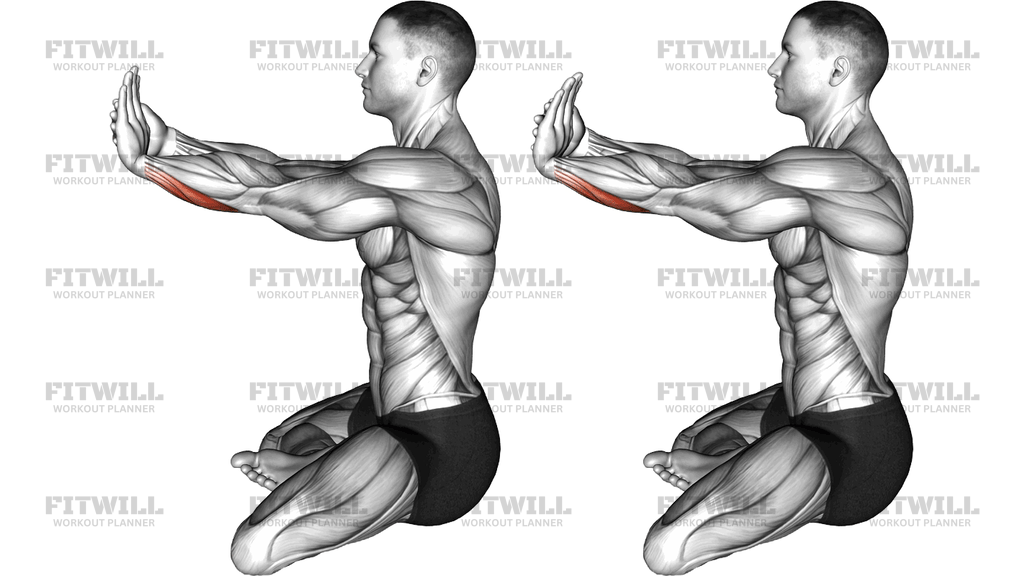
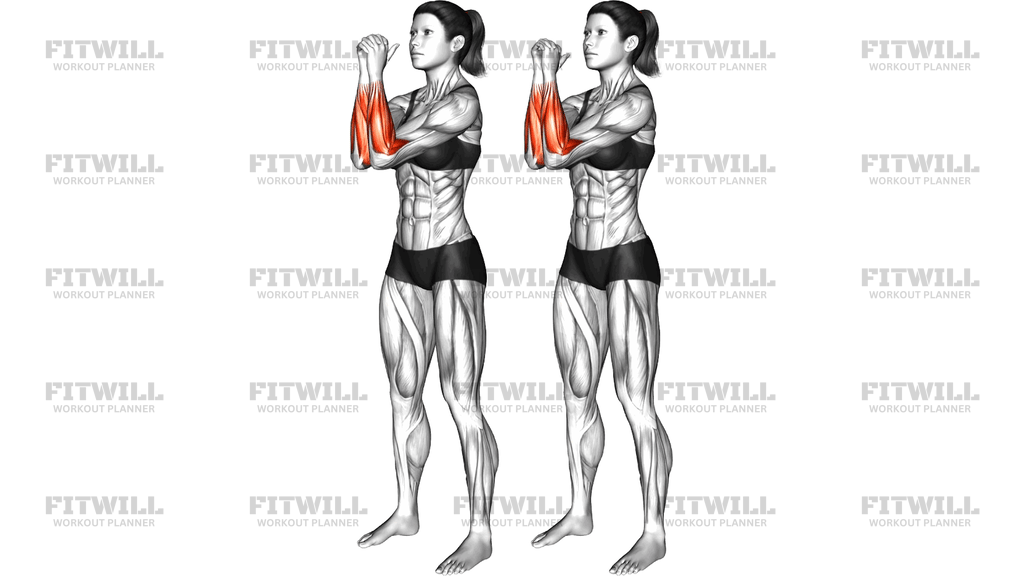
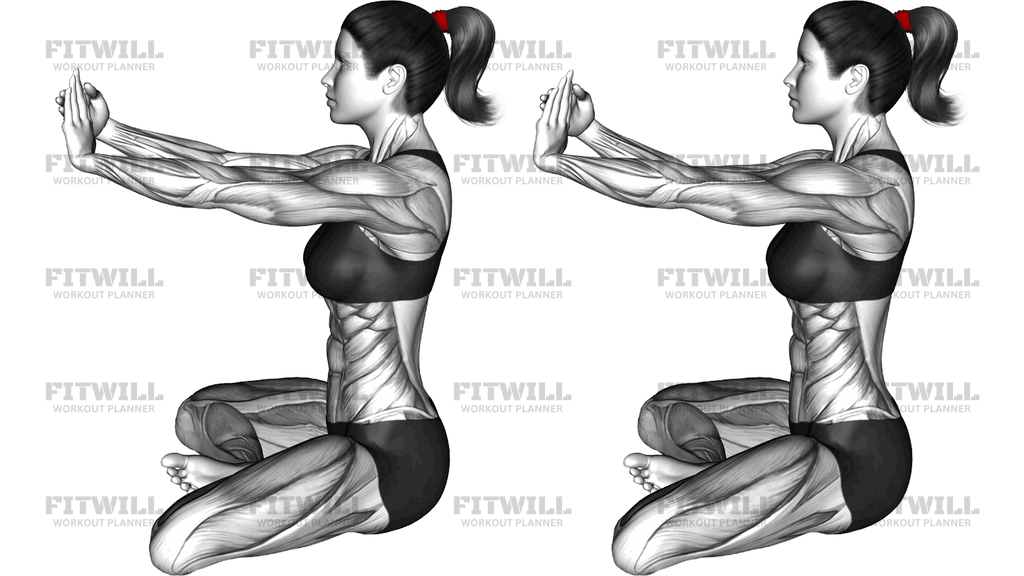
The Seated Wrist Flexors Stretch is a simple body-weight stretch that targets the muscles on the palm side of the forearm. You sit comfortably on the floor, extend both arms straight in front of you at about shoulder height, and turn your palms so the fingers point up and away while the heels of the hands press forward. This position places the wrist in extension, which lengthens the wrist flexors that constantly work during gripping, lifting, typing, and climbing.
This stretch is especially useful for anyone whose hands and forearms take a daily beating. Office workers who type all day, gym-goers who grip barbells and dumbbells heavily, climbers, racket-sport players, and manual workers all tend to develop tight forearm flexors. When these muscles get short and overworked, the wrists and elbows often feel stiff and achy, so a regular flexor stretch is one of the cheapest pieces of maintenance you can do.
The seated position matters more than it looks. Sitting cross-legged or on your heels keeps your torso upright and your shoulders relaxed, so the arms can extend freely without the shoulders or neck compensating. If you tried this stretch standing while hunched over a desk, you would lose wrist range and pick up tension in the shoulders instead. A stable, upright base lets the stretch stay isolated in the forearms where you want it.
To execute the stretch well, extend the arms fully but without locking the elbows hard, spread the fingers, and gently push the palms forward as if pressing against an invisible wall. You should feel a clear pull along the underside of the forearm and sometimes into the base of the palm. The sensation should be strong but never sharp, tingling, or painful. Hold for twenty to thirty seconds, breathing steadily, then ease off before repeating.
Keep the shoulders down and away from the ears and the elbows soft. If one wrist is tighter than the other, you can work the arms one at a time or slightly bend the tighter arm and re-extend it gradually. Avoid forcing the hands back with the other hand in this version; the extended-arm position and gentle palm pressure provide plenty of stretch on their own.
Because it needs no equipment and very little space, the Seated Wrist Flexors Stretch fits easily into warm-ups before upper-body training, cooldowns after pulling or gripping work, or short breaks during a long day at the keyboard. Two to three rounds per side, a few times per week, is usually enough to keep the forearms feeling loose and responsive.
[ Workout Log & Planner ]
Put your next workout in Fitwill
Keep your plan and training log ready when you are.


Instructions
- Sit on the floor on an exercise mat, crossing your legs or resting on your heels, and sit tall with your spine neutral and shoulders relaxed.
- Extend both arms straight out in front of you at roughly shoulder height, elbows nearly straight but not forcefully locked.
- Turn your palms to face away from you, spread the fingers, and let the hands fall back so the fingers point upward and the wrists move into extension.
- Gently press the heels of your palms forward, as if pushing against a wall in front of you, to deepen the wrist extension.
- Draw your shoulder blades down and keep your neck long so the stretch stays in the forearms rather than creeping into the shoulders.
- Hold the position for 20 to 30 seconds while breathing slowly and evenly through your nose.
- Ease the palm pressure off gradually, let the wrists return to neutral, and shake out the hands briefly.
- Repeat the stretch 2 to 3 times, and if one forearm feels tighter, give that side an extra hold.
Tips & Tricks
- If you feel pinching at the front of the wrist rather than a stretch along the forearm, back off the palm pressure slightly and rebuild it over several breaths.
- Bent elbows are the most common mistake here; the stretch shifts toward the biceps and shoulder when the arms shorten, so check that the arms are genuinely long in front of you.
- Keep the fingers active and spread. Collapsed, curled fingers shorten the flexors and cut the stretch short at exactly the point you are trying to lengthen.
- Do not let the shoulders ride up toward the ears as you press the palms forward; drop them first, then add the wrist extension.
- A mild ache in the forearm is expected, but any tingling into the fingers is a signal to reduce the angle of wrist extension immediately.
- Warm forearms stretch better than cold ones, so this works well after pulling exercises, or do a few easy wrist circles first if you are stretching cold.
- If sitting on the floor bothers your hips or knees, sit on a low cushion or folded mat so the pelvis is elevated and the torso can stay upright.
- Exhale slowly as you press the palms forward; trying to force a deeper stretch while holding your breath usually tightens the forearms instead of relaxing them.
- Because this version stretches both wrists at once, start with less pressure than you think you need and let the tighter wrist set the depth.
Frequently Asked Questions
Which muscles does the Seated Wrist Flexors Stretch target?
It primarily lengthens the wrist flexors on the palm side of the forearm, including the flexor carpi radialis, flexor carpi ulnaris, and palmaris longus. The fingers and hand also contribute to the stretch position.
Why are the arms extended straight forward instead of pulling the fingers back with the other hand?
Extending both arms with the palms pressed forward creates a self-regulated stretch: the further you push the palms, the deeper the wrist extension. This makes it easier to control intensity and stretch both sides evenly without overloading one wrist.
Is the Seated Wrist Flexors Stretch suitable for beginners?
Yes, it is one of the most accessible forearm stretches because it needs no equipment and the intensity is controlled entirely by how far you press the palms. Beginners should simply start with light pressure and shorter holds of about 15 seconds.
Can I do this stretch if sitting on the floor is uncomfortable?
Yes. Elevate your hips on a folded mat or cushion, or perform the same arm position while sitting on a bench or chair. The stretch happens in the wrists and forearms, so the seated base only needs to keep your torso upright.
What is the most common mistake in this stretch?
Letting the elbows bend and the shoulders shrug, which shifts tension away from the forearms. Keep the arms long, shoulders down, and fingers spread so the stretch stays where it belongs.
How long should I hold the Seated Wrist Flexors Stretch?
A hold of 20 to 30 seconds works well for most people, repeated 2 to 3 times. If the forearms feel very tight, several shorter holds with brief rest between them are easier than one long, forced hold.
Should I feel the stretch in my fingers or hand?
A mild pull into the base of the palm or fingers is normal because the flexor tendons cross the wrist. Sharp pain, numbness, or tingling into the fingers is not; reduce the wrist extension angle if that happens.
When is the best time to use this stretch?
It fits well as a warm-up before heavy gripping work such as deadlifts, rows, or climbing, and as a cooldown after any forearm-heavy session. It is also a practical break during long typing days.
Can the Seated Wrist Flexors Stretch help with elbow discomfort from lifting?
Tight forearm flexors are often a contributing factor when the inner elbow feels irritated from heavy gripping, so keeping them flexible is sensible maintenance. If pain persists or worsens, have it assessed by a qualified professional rather than stretching through it.