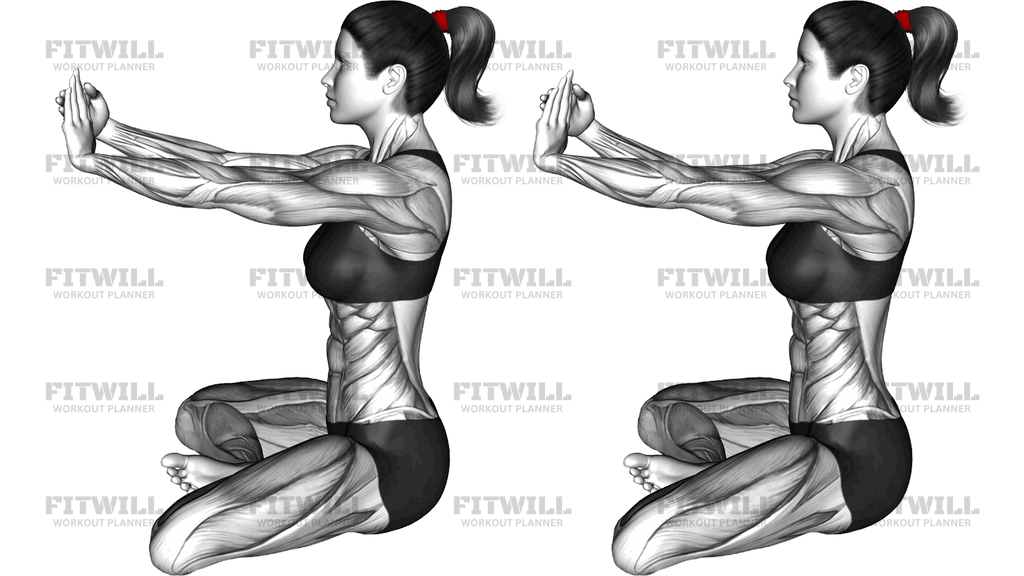
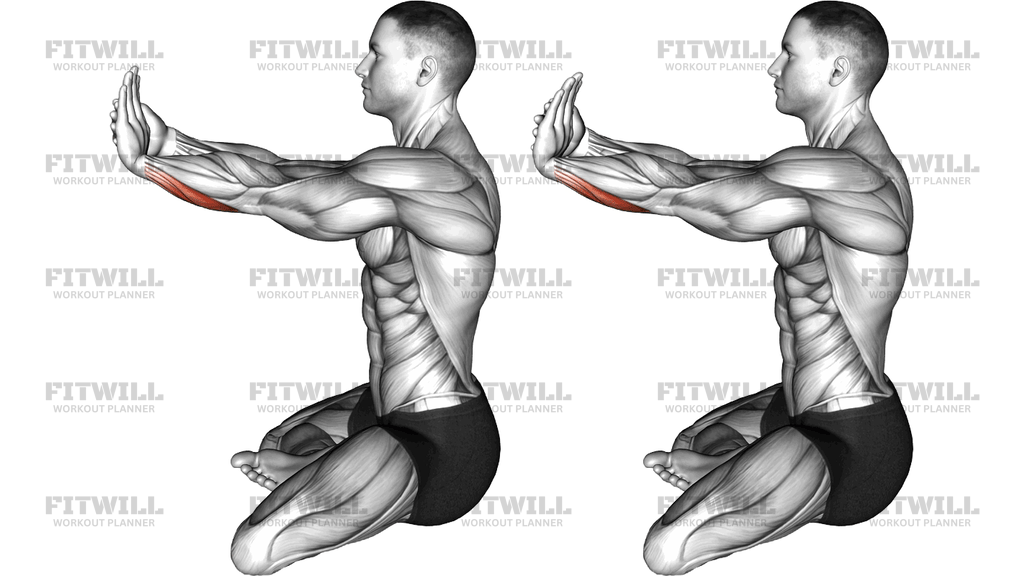
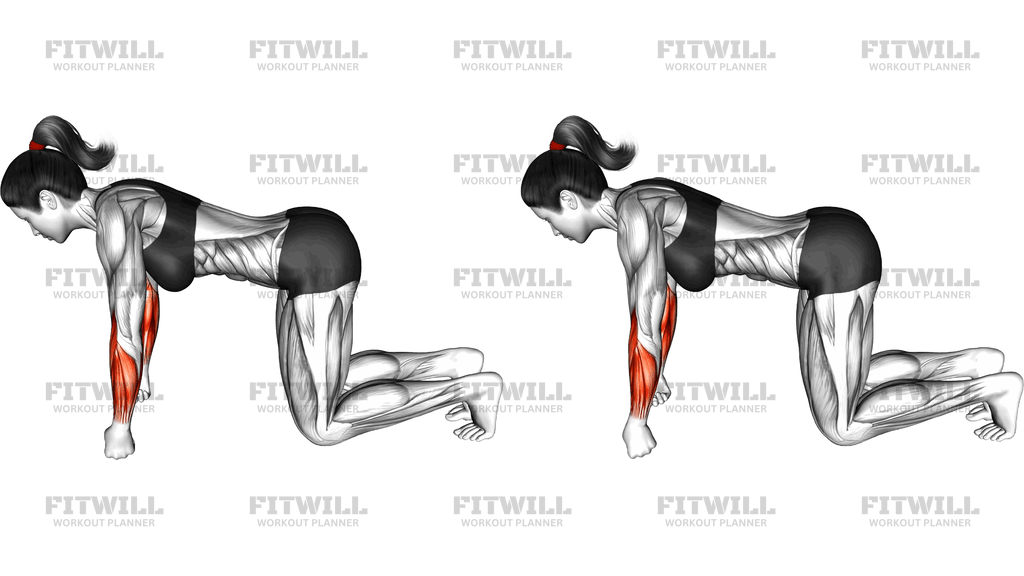
Standing Wrist Rotation
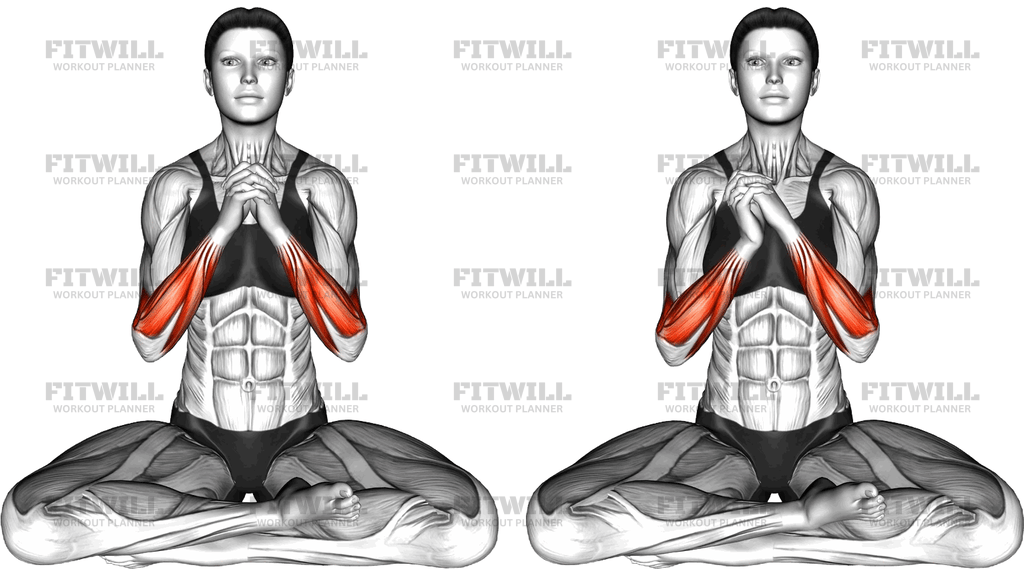
Standing Wrist Rotation is a simple body-weight movement that targets the muscles of the forearms by having you clasp your hands together in front of your chest and rotate your wrists against each other. Because you press your palms and fingers into one another while turning, the working wrist meets real resistance without any equipment, making this one of the most accessible ways to load the forearm flexors and extensors at the same time.
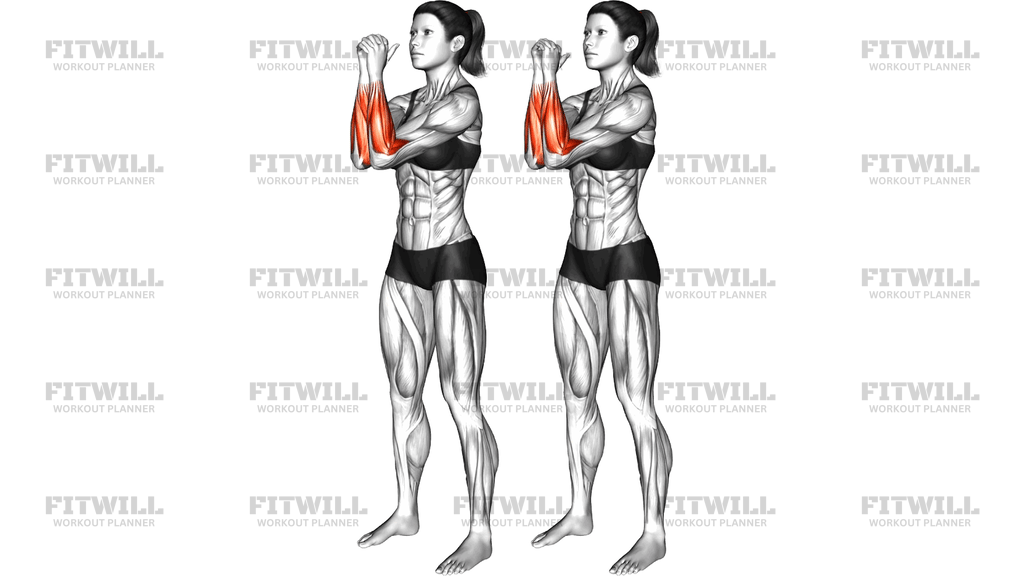
The muscles doing most of the work are the wrist flexors on the underside of the forearm and the wrist extensors along the top, with the brachioradialis and grip muscles helping to hold the clasp together. Highlighted areas in the demonstration show exactly that band of muscle from the elbow down to the wrist, which is where you should expect to feel the effort. Since both arms work simultaneously against each other, each side naturally matches the other's effort level.
This movement is especially useful for people whose wrists and forearms take a beating from typing, climbing, racket sports, golf, or heavy grip work in the gym. It warms up the wrist joint through its rotational range, builds endurance in the small stabilizing muscles around the wrist, and can be slotted into a warm-up, a cooldown, or repeated throughout a workday as a short mobility and strength break.
Setup matters more than it looks. Stand tall with feet roughly hip-width apart, brace your trunk lightly, and bring both elbows up so your forearms point forward with the elbows bent and tucked near your ribs. Clasp your hands firmly so the fingers interlock or the palms press together, then keep your forearms relatively still while the rotation happens at the wrists. If your shoulders shrug or your elbows drift, the wrists stop being the pivot point and the exercise loses its purpose.
To execute it well, rotate one hand over the top while the other turns underneath, feeling one wrist extend as the other flexes, then reverse the direction. Keep the turning speed slow enough that you can feel the muscles contracting the whole way, and keep the pressure between your hands constant rather than letting the clasp loosen at the top or bottom of the turn. Breathe steadily throughout and avoid forcing the rotation into a painful range.
A practical safety note: the wrist is a small joint, and cranking it aggressively under pressure is the fastest way to make this exercise uncomfortable. Start with gentle pressure and a moderate range, and only increase hand tension as your wrists become comfortable with the motion. If you have a current wrist or hand injury, get clearance before adding resistance of any kind.
[ Workout Log & Planner ]
Put your next workout in Fitwill
Keep your plan and training log ready when you are.


Instructions
- Stand upright with your feet about hip-width apart, weight balanced evenly across both feet.
- Bend your elbows and raise both hands in front of your chest so your forearms point forward and stay close to your body.
- Clasp your hands together firmly, interlocking your fingers or pressing your palms and fingers into each other so there is steady tension between the hands.
- Draw your shoulders down and back, and lightly brace your stomach so your torso stays quiet during the movement.
- Rotate one wrist over the top while the other turns underneath, letting one hand flex forward as the other extends back, keeping your forearms still.
- Pause briefly at the end of the rotation where the wrists feel comfortably stretched but not strained.
- Reverse the rotation so the hand that was on top now turns underneath, completing one full cycle in each direction.
- Exhale as you rotate into the turn and inhale as you return through the middle position.
- Keep the pressure between your hands constant from start to finish rather than relaxing the clasp halfway through.
- Complete your set, then release the clasp gently and shake out your wrists and hands before the next set.
Tips & Tricks
- The most common mistake is turning the whole forearm from the elbow instead of rotating at the wrist; pin your elbows lightly against your ribs and you will feel the difference immediately.
- Do not let your shoulders creep up toward your ears as your hands rise to chest height — shrugging shifts tension away from the forearms and can leave your neck tight.
- If your fingers do the work and your wrists barely move, ease off the grip pressure slightly so the wrist joint can actually rotate through its range.
- Start with mild hand pressure for the first set; the resistance comes from how hard you press, so it is easy to overshoot on day one.
- Keep the rotation smooth and continuous rather than jerking through the middle position, which is where the wrist changes from flexion to extension.
- If one wrist feels tighter than the other, match the range to the stiffer side instead of chasing the looser side's range.
- Perform the movement in front of a mirror at first to confirm your forearms are staying level and your torso is not twisting to help the turn.
- A light warm-up set with no pressing tension at all is a good idea if your wrists have been idle, such as after long periods of typing or driving.
Frequently Asked Questions
Which muscles does the Standing Wrist Rotation work?
It primarily works the wrist flexors on the underside of the forearm and the wrist extensors on top, with the brachioradialis and grip muscles assisting to maintain the hand clasp. Because your hands resist each other, both forearms are trained at once.
Do I need any equipment for the Standing Wrist Rotation?
No. The resistance is created entirely by pressing and rotating your clasped hands against each other, so all you need is enough space to stand with your elbows bent in front of your chest.
How do I know I am rotating from the wrist and not the shoulder or elbow?
Keep your elbows pinned near your ribs and your forearms pointing forward; the only thing that should move is the turning of your hands. If your forearms swing or your torso twists, reset and slow the movement down.
How hard should I press my hands together?
Press firmly enough that the rotating wrist has to work, but not so hard that the movement becomes jerky or your fingers ache. Start light and increase pressure only when the motion feels smooth.
Is the Standing Wrist Rotation good for beginners?
Yes, it is very beginner-friendly because the load is self-regulated — you control the resistance with your own hand pressure. Beginners should favor a smaller range of motion and gentler pressure for the first few sessions.
Should I rotate in both directions?
Yes. Turning one hand over the top and then reversing so the other hand leads keeps the flexors and extensors of both wrists working evenly and avoids developing a lopsided pattern.
Can the Standing Wrist Rotation help with stiff wrists from desk work?
Moving the wrists through rotation under light resistance is a common way to warm them up and build endurance in the surrounding muscles. It is a reasonable short break during the day, though persistent wrist pain should be assessed by a professional.
What can I use instead if clasping my hands is uncomfortable?
You can perform slow wrist circles with one hand lightly resisting the other, or hold a light stick or handle in one hand and rotate it with the other hand providing resistance. Both keep the same rotational wrist action.
How many reps and sets should I do?
Because the resistance is modest, this movement works well in the 10–20 rotations per direction range for 2–3 sets, either as a forearm warm-up before lifting or as a standalone endurance set.
Is it normal to feel a stretch near the elbow during the rotation?
A mild working sensation along the forearm from elbow to wrist is expected since these muscles cross both joints. Sharp pain at the elbow or wrist is not, so reduce your hand pressure and range of motion if that occurs.