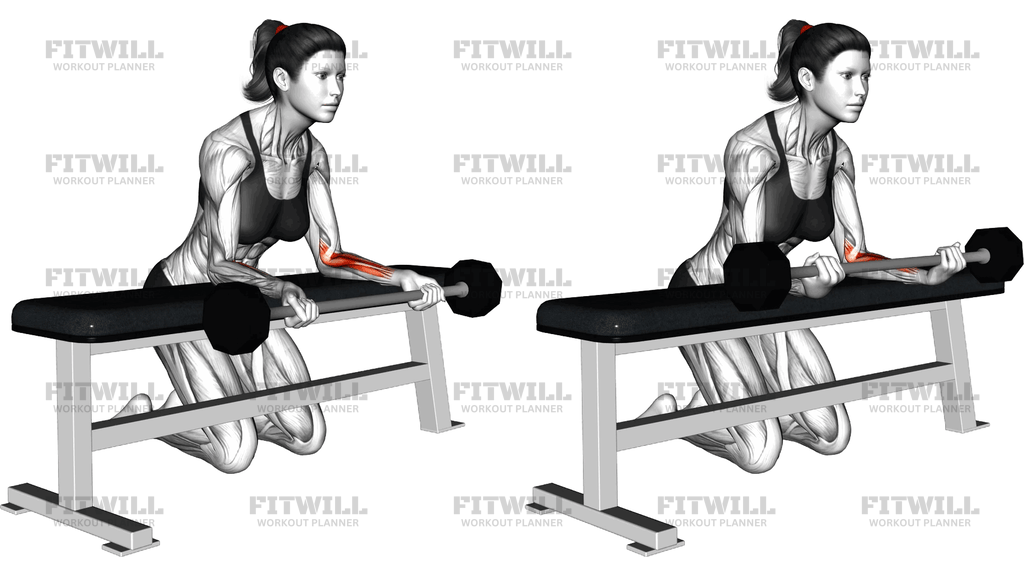
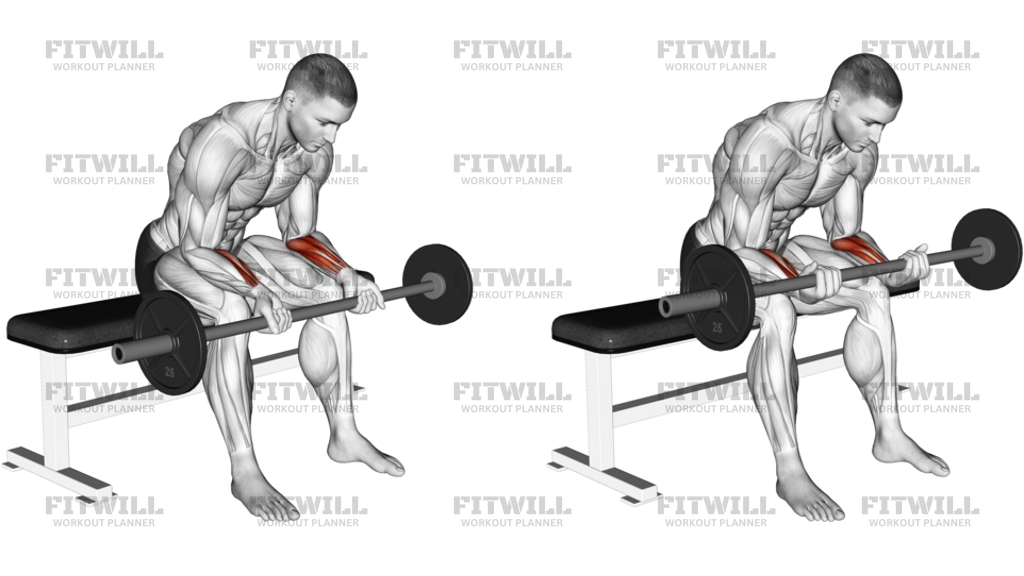
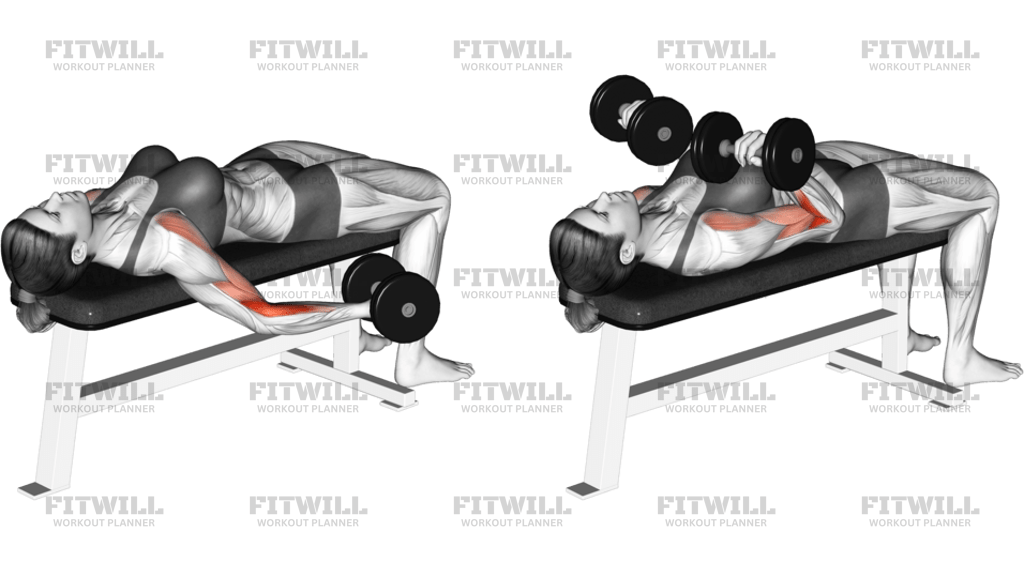
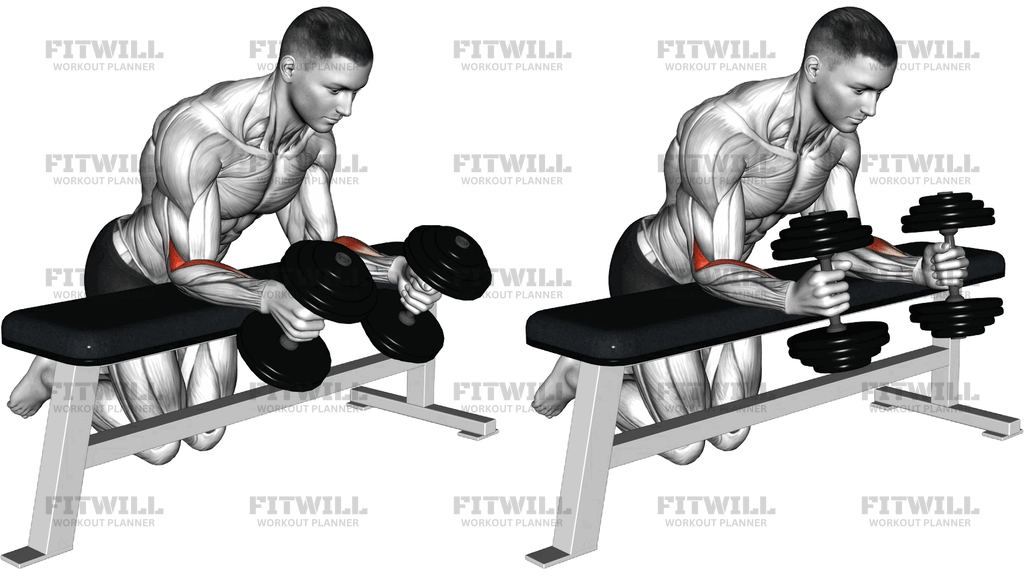
Bent Over Single Arm Wrist Flexors Stretch
The Bent Over Single Arm Wrist Flexors Stretch is a self-applied stretch that targets the muscles on the palm side of the forearm. You set up beside a flat bench, plant one palm flat on the bench pad with the arm straight, then hinge your torso over the working arm and gradually shift your body weight onto the wrist. That forward lean forces the wrist into extension while the elbow stays long, which is exactly what elongates the wrist flexor group.
This stretch is especially useful for anyone whose training or daily work loads the front of the forearm repeatedly. Heavy pulling days, deadlifts, barbell curls, climbing, racquet sports, and long hours of typing all leave the wrist flexors tight and short. Because you work one arm at a time, you can angle the hand slightly inward or outward to bias different parts of the flexor mass and compare sides directly.
The setup matters more than most people expect. The bench needs to be stable and around knee-to-mid-thigh height so you can place the palm flat with the fingers pointing forward and the elbow fully extended without rounding your back. Your feet stay staggered and grounded so you control the amount of weight you transfer, rather than dumping your full mass onto a cold wrist. The stretch should come from the forward angle of your torso over the fixed hand, not from bending the elbow or shrugging the shoulder up.
To execute it well, ease into position in stages. Start with only a fraction of your weight on the hand, let the wrist extend slowly, and stop at the first clear stretch along the underside of the forearm from the inner elbow down toward the heel of the hand. Breathe steadily, and on each exhale let the torso sink a little closer to the bench if the tissue allows. Hold for twenty to forty seconds, then push lightly through the palm to lift yourself back out before switching arms.
A few practical points keep this stretch productive and safe. Warm the wrists up first with a few gentle circles or light wrist movements, never stretch into sharp pain or tingling in the fingers, and keep the shoulder pulled gently down so the stretch stays in the forearm instead of wandering into the shoulder or neck. Two to three rounds per side after upper body sessions or at the end of a workday is plenty for most people.
[ Workout Log & Planner ]
Put your next workout in Fitwill
Keep your plan and training log ready when you are.


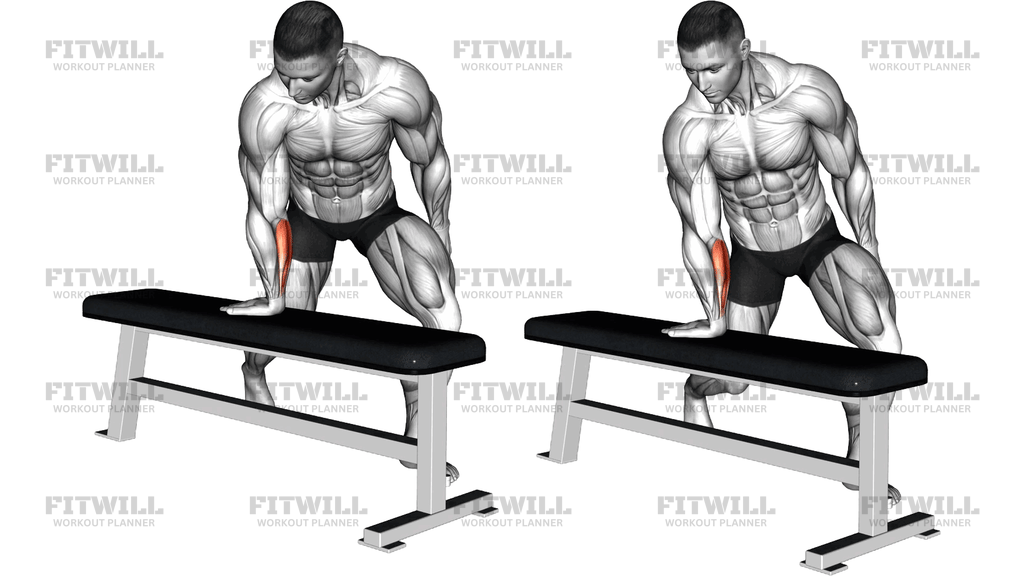
Instructions
- Stand beside a stable flat bench set at roughly knee height, with your feet in a staggered stance so you can shift weight forward and back.
- Hinge forward at the hips and place your working palm flat on the bench pad, fingers pointing forward, with the arm straight and the elbow unlocked but extended.
- Draw the shoulder down away from your ear and keep the elbow from bending so the line from shoulder to hand stays long.
- Brace your trunk lightly and keep the back relatively neutral as you lean your torso over the hand.
- Gradually transfer body weight onto the working arm, letting the wrist extend until you feel a firm stretch along the palm side of the forearm.
- To bias different fibers, rotate the hand slightly so the fingers point a little inward or outward, and re-lean into the stretch.
- Hold the end position for 20 to 40 seconds while breathing slowly, letting the torso sink slightly on each exhale without bouncing.
- To release, press lightly through the palm and shift your weight back over your legs until the load comes off the wrist.
- Shake out the hand and wrist, then repeat on the other arm, spending extra time on the tighter side if there is a clear difference.
Tips & Tricks
- If your wrist protests at full extension, start with only your fingertips and heel of hand lightly touching the bench and build the lean over several sessions.
- The most common mistake is bending the elbow as you lean, which steals the stretch from the wrist flexors; check that the arm stays visibly straight throughout.
- Do not let the shoulder creep up toward the ear — that shifts tension into the traps and neck, so keep the shoulder blade pulled gently down the back.
- Keep your fingers relaxed and long on the pad; clawing the bench turns the stretch into a grip effort and blunts the forearm stretch.
- If the stretch feels sharp at the inner elbow rather than broad along the forearm, reduce the forward lean and re-set with the shoulder lower.
- Stagger your feet far enough that your legs, not the wrist, control the depth — you should be able to exit the stretch instantly by shifting back.
- Slight changes in hand rotation change the sensation noticeably, so experiment with fingers angled a few degrees left or right to find the tightest line.
- Avoid bouncing at the end range; this tissue responds better to steady holds with slow breathing.
- Save this stretch for after training or after the forearms are warm, rather than as the first thing you do cold.
Frequently Asked Questions
Which muscles does the Bent Over Single Arm Wrist Flexors Stretch target?
It primarily stretches the wrist flexors on the palm side of the forearm, including the flexor carpi radialis, flexor carpi ulnaris, and palmaris longus. The fingers stay relaxed so the stretch concentrates in the forearm rather than the hand.
Why is one hand placed on a flat bench for this stretch?
The bench gives you a fixed, padded surface at a workable height so your own body weight controls the intensity. Leaning the torso over the planted hand extends the wrist without needing external force.
Is the Bent Over Single Arm Wrist Flexors Stretch suitable for beginners?
Yes, as long as the lean is added gradually. Beginners should start with light weight on the hand and short holds, and only deepen the stretch once the forearm tolerates full wrist extension comfortably.
How long should I hold each rep of the Bent Over Single Arm Wrist Flexors Stretch?
Twenty to forty seconds per arm works well, repeated two to three rounds per side. Longer holds are fine once the position feels comfortable, but keep the intensity moderate rather than aggressive.
Why do I feel this stretch near my inner elbow instead of my forearm?
That usually means the lean is too deep or the elbow has crept into a bend, concentrating stress at the flexor origin. Back off the weight shift, straighten the arm fully, and re-approach the stretch gradually.
Can I do this stretch without a bench?
Yes, any stable padded surface around knee height works, such as a sturdy box or padded table edge. Avoid soft or movable surfaces, because the hand must stay fixed while your torso leans over it.
When is the best time to use the Bent Over Single Arm Wrist Flexors Stretch?
It fits best at the end of pulling sessions, after grip-heavy work, or after long periods of typing and climbing. Doing it when the forearms are already warm makes the stretch more comfortable and productive.
Should my fingers point straight forward on the bench?
Straight ahead is the standard position, but rotating the hand a few degrees inward or outward shifts the emphasis across the flexor group. Use the rotation that gives you the clearest stretch along the underside of the forearm.
Is it normal to feel tingling in my fingers during the stretch?
No, tingling or numbness means the stretch is too intense or the wrist is compressed. Shift your weight back immediately, reduce the range, and rebuild the position with less load on the hand.