Fist Push Up
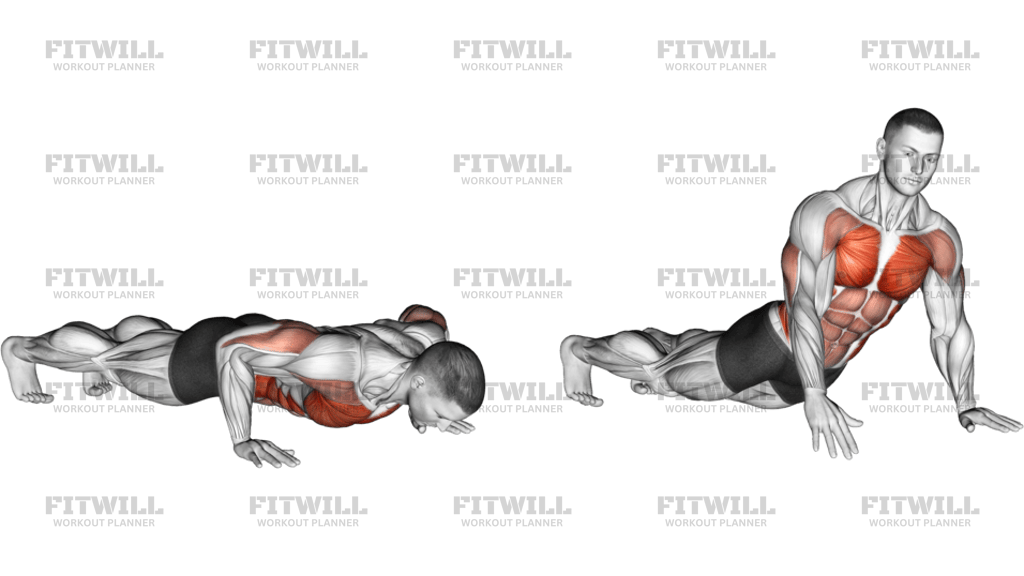
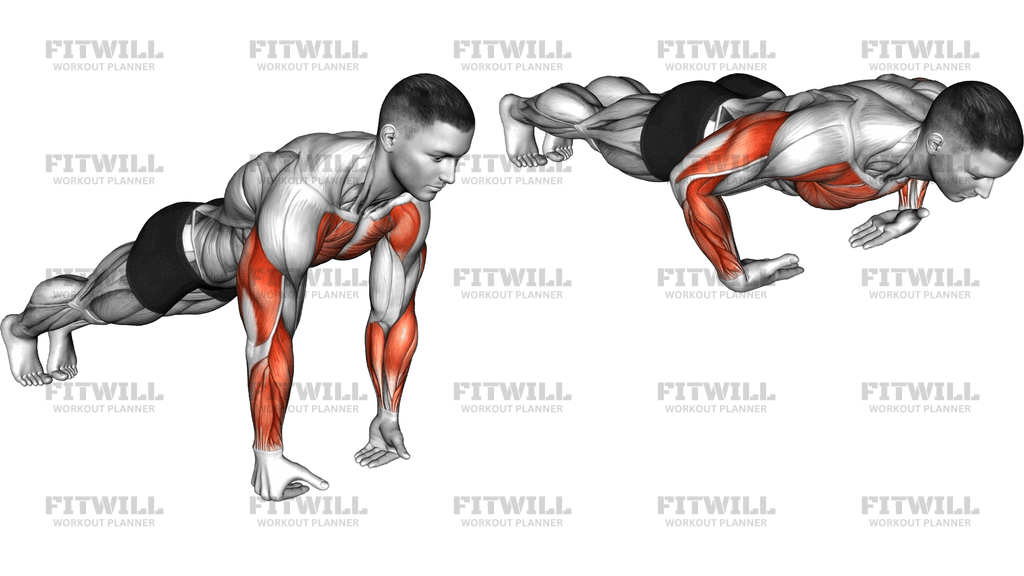
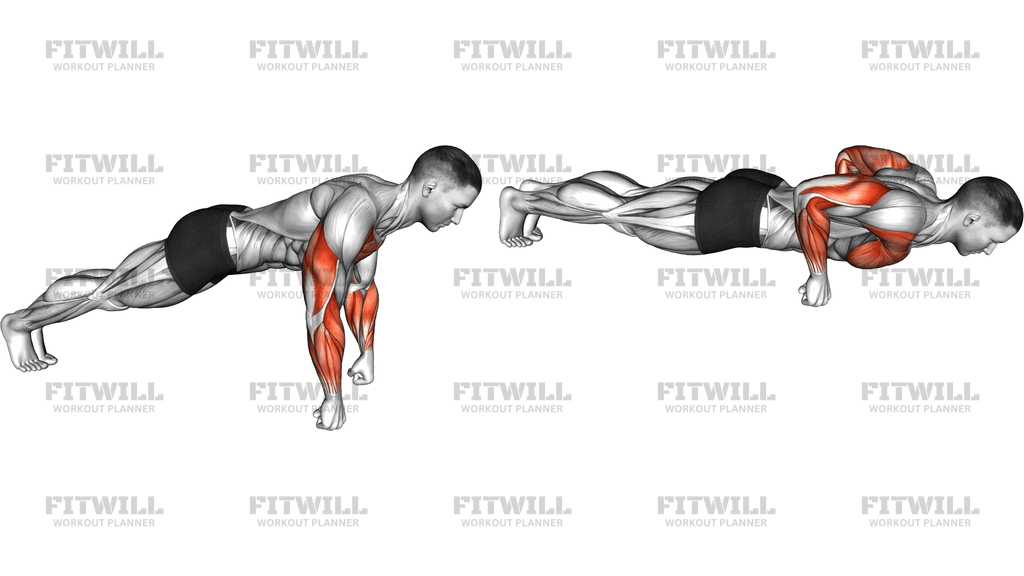
The Fist Push Up is a push-up variation performed while balancing on your closed fists instead of your open palms. From a standard high plank, you make tight fists, place the flat first two knuckles on the floor directly under your shoulders, and lower your chest toward the ground before pressing back up. Everything else about the movement matches a regular push-up: a straight line from head to heels, elbows tracking back at roughly 45 degrees, and full control through the entire range.
The main reason lifters switch from palms to fists is wrist comfort and wrist conditioning. Bending the hand back under body weight aggravates many people's wrists, especially during high-rep push-up work. Resting on the knuckles keeps the wrist perfectly straight and stacked, so the load travels through the forearm bones instead of through a bent wrist joint. This makes the Fist Push Up a favorite among boxers and martial artists, who also gain punching-specific conditioning for the knuckles and forearm muscles.
In terms of muscle work, the Fist Push Up trains the same prime movers as a regular push-up: the chest drives the press, the triceps straighten the elbows, and the front shoulders assist. What changes is the added demand on the forearms and wrist stabilizers, which must hold the fist rigid and keep the knuckle base level as you descend and press. Your core, glutes, and legs also stay busy holding the plank position throughout every rep.
Setup matters more here than in a palm push-up. If your fists drift outside your shoulders or roll backward onto the smaller knuckles, the pressure becomes uncomfortable and the pressing line gets weaker. Keep the fist vertical, the first two knuckles flat against the floor, and the wrists locked in a neutral line from forearm to knuckles. Most people also benefit from doing this on a mat, a towel, or grass, especially on hard floors.
To perform it well, think about gripping the floor with your fists, pulling your shoulders down away from your ears, and lowering until your chest is a few inches from the ground with your elbows around 45 degrees from your torso. Press the floor away and finish with the arms extended, without letting the hips sag or the head poke forward. The movement should feel like one solid plank being lowered and raised as a unit.
The Fist Push Up fits well as a substitute for standard push-ups in home workouts, boxing and martial arts conditioning, and any pressing session where wrist extension causes discomfort. Start with fewer reps than your normal push-up sets, because the knuckles and forearms need time to adapt to the new contact position. If knuckle pain persists beyond mild pressure, move to a push-up handle or dumbbells, which achieve the same straight-wrist benefit with far less skin stress.
[ Workout Log & Planner ]
Put your next workout in Fitwill
Keep your plan and training log ready when you are.


Instructions
- Kneel on the floor and close both hands into tight fists, tucking your thumb outside your fingers so the first two knuckles are flat and even.
- Place your fists on the floor slightly wider than shoulder width, then walk your feet back until your body forms one straight line from head to heels, balancing on your fists and the balls of your feet.
- Stack your fists directly under your shoulders and lock your wrists so the forearm, wrist, and knuckles form one vertical column.
- Brace your abs, squeeze your glutes, and pull your shoulder blades down and slightly together to set a stable upper back.
- Inhale, then bend your elbows to lower your chest toward the floor, keeping the elbows at about a 45-degree angle to your torso and your head in line with your spine.
- Stop when your chest is a few inches from the ground, or as low as you can go without letting the hips drop or the elbows flare wide.
- Exhale and press the floor away through your first two knuckles, extending the elbows until the arms are straight and your plank position is restored.
- Reset your brace at the top, check that your fists have not rolled backward, and begin the next rep.
- When you finish the set, rock back to your knees before lifting your fists off the floor rather than collapsing straight down.
Tips & Tricks
- Squeeze the fists hard for every rep. A loose fist lets the knuckles sink unevenly and shifts pressure onto the smaller finger joints.
- Keep the thumb wrapped outside the fingers, not tucked inside them, so your body weight never presses on the thumb joint.
- If your knuckles ache on a hard floor, place a folded mat or towel under the fists. The wrist position stays the same; only the contact surface gets friendlier.
- Watch for the fists rolling backward as you fatigue, which quietly reintroduces the bent-wrist position you were trying to avoid. Reset them between reps if needed.
- Do not let the elbows drift out to 90 degrees from the torso. Wide elbows strain the shoulders and reduce triceps contribution on the press.
- A common mistake is sagging hips, which turns the bottom position into a lower back stretch instead of a chest press. Squeeze the glutes before every descent.
- Start with half your usual push-up volume. The forearms and skin over the knuckles need gradual exposure, not an all-out first session.
- If balancing on two small knuckle bases feels shaky at first, practice holding the top position for 20 to 30 seconds before adding full reps.
- Work on a slightly textured surface if possible. Smooth floors can let the fists slide outward as you press, which weakens the lockout.
Frequently Asked Questions
What muscles does the Fist Push Up work?
The chest is the primary mover, supported by the triceps and front shoulders. Compared with a palm push-up, the forearms and wrist stabilizers work noticeably harder to keep the fists rigid and level.
Why do the Fist Push Up on knuckles instead of palms?
Fists keep the wrist perfectly straight, so people with wrist discomfort during regular push-ups can press without bending the joint back under load. Boxers and martial artists also use it to condition the knuckles and forearms for punching.
Is the Fist Push Up safe for beginners?
Yes, as long as you can hold a solid plank and perform at least a few regular push-ups with good form. Beginners should do them on a mat or soft surface and start with low volume while the knuckles adapt.
Which knuckles should touch the floor in the Fist Push Up?
The flat first two knuckles, the index and middle finger knuckles, should carry the weight. They are the strongest, most stable contact points and keep the wrist aligned over the forearm.
My knuckles hurt after the Fist Push Up. Is that normal?
Mild pressure or skin reddening on a hard floor is common at first, but sharp or lingering pain is not. Use a mat or towel, keep the fist tight and vertical, and build volume gradually.
Can I do the Fist Push Up if regular push-ups bother my wrists?
In many cases yes, because the straight-wrist position removes the backward bend that usually causes the problem. If even the neutral fist position hurts, try push-up handles or dumbbells, which keep the wrist straight with no knuckle pressure.
How is the Fist Push Up different from a regular push-up?
The pressing muscles and movement pattern are essentially the same; the difference is the contact point and the extra stiffness demand on the fists, forearms, and wrists. The bottom range can also feel slightly shorter because the fist adds height under the chest.
What should I do if I lose balance on my fists during the descent?
Slow the lowering phase down and keep the fists stacked directly under the shoulders rather than drifting forward or outward. Practicing static holds in the top position builds the wrist and forearm stability you need for smooth reps.
Can I add weight to the Fist Push Up?
Yes, once your knuckles and wrists are comfortable, a weighted vest or a plate on your upper back works well. Progress the load slowly, since the contact points experience the same added weight as your pressing muscles.