Seated Side Glute Lift On A Chair
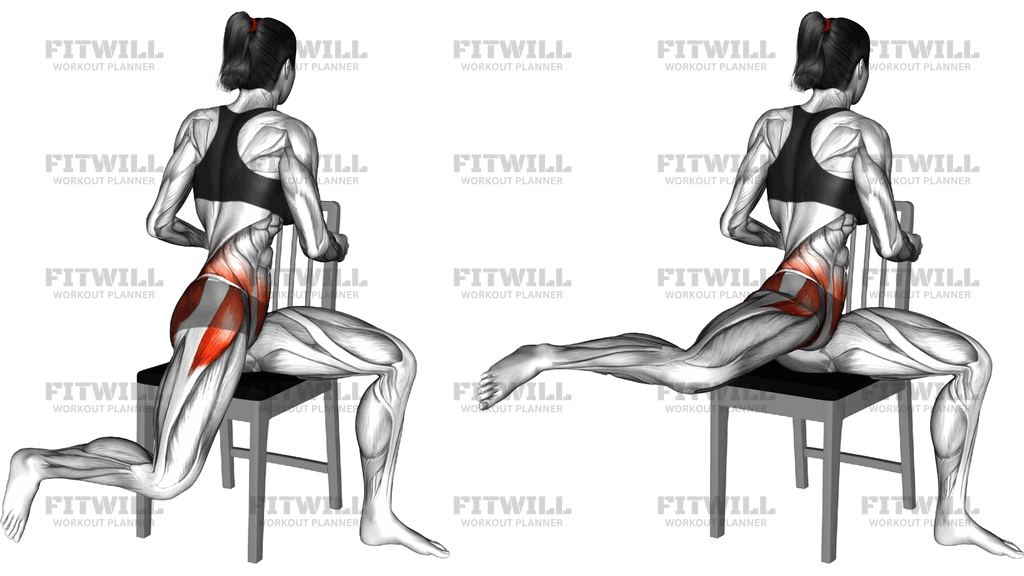
The Seated Side Glute Lift On A Chair is a bodyweight isolation exercise performed while sitting sideways on a sturdy chair. You lean forward and grip the chair back for support, extend one leg behind you, and lift it out to the side against gravity. The image shows the two key positions: the working leg reaching back at roughly hip height in the start, then rising up and out to the side in a smooth arc before lowering back down.
This movement targets the gluteus medius and the muscles along the outer hip, with the gluteus maximus assisting as the leg extends behind the body. Because the torso is angled forward over the chair, the hip works through a longer range than many standing side-leg raises, which is exactly why the outer glute feels this so strongly. The supporting leg stays planted and bent, which keeps the pelvis from swinging and forces the working hip to do the lifting on its own.
This is a practical choice for people who spend long hours sitting and want to wake up sleepy hip muscles without getting down on the floor. It suits beginners learning to feel their glutes activate, older adults who need a stable seated setup, and anyone rehabbing back into hip training who finds standing abduction or floor work awkward. It also works well as a warm-up drill before squats, lunges, or running.
Setup matters more than it looks. Sit sideways so the working hip is free and the chair back gives your hands a firm anchor. Leaning forward onto your forearms or hands tips the pelvis into a slight anterior tilt, which places the glutes in a favorable line of pull. If you sit too upright, the hip flexors and lower back take over and the lift becomes a swing rather than a controlled glute contraction.
Execution should be slow and deliberate: sweep the leg back, lift it out to the side only as high as you can without rotating the torso, pause briefly at the top, and lower under control. The leg stays straight but the knee stays soft. Height is not the goal; a clean, felt contraction at the side of the hip is. If your torso twists or your lower back arches to gain range, the lift is too high.
Use this exercise in two to four sets of ten to twenty controlled reps per side. Because the resistance is only the weight of the leg, higher reps and strict tempo are what make it productive. Stop if you feel pinching in the front of the hip or strain in the lower back, and shorten the range rather than forcing depth.
[ Workout Log & Planner ]
Put your next workout in Fitwill
Keep your plan and training log ready when you are.


Instructions
- Sit sideways on a sturdy chair so your inner thigh rests on the seat and your hands can grip the chair back for support.
- Lean your torso forward onto the chair back with your forearms or hands, keeping the working-side hip free of the seat.
- Extend the outside leg straight behind you with the knee soft and the toes relaxed, so it hovers just off the floor behind the chair.
- Brace your core lightly and keep your shoulders square to the chair back so your torso will not twist during the lift.
- Inhale, then sweep the straight leg out to the side, lifting it in an arc away from the supporting leg while keeping the hips level.
- Stop at the highest point you can reach without rotating your waist or arching your lower back, and hold for a one-count squeeze in the outer glute.
- Exhale as you lower the leg back down and behind you with control until it returns to the hovering start position.
- Complete all reps on one side, then switch sides so the opposite hip rests on the seat and the other leg becomes the working leg.
- Between sets, stand up and shake out the hips briefly to reset before starting the next set.
Tips & Tricks
- The most common fault is swinging the leg up for height; the chair back is there to anchor your torso, so grip it firmly and let the glute, not momentum, move the leg.
- If your lower back arches at the top of the lift, you have gone past your hip's available range; cut the height back until only the leg moves.
- Check that the working hip stays stacked directly over the supporting leg—if it drifts backward or forward, the arc changes and the outer glute loses tension.
- Point the toes of the lifting leg slightly down or straight ahead; turning the foot up rotates the thigh and shifts work away from the gluteus medius.
- A one-second pause at the top is worth more than five extra fast reps, since the seated position gives you no load other than time under tension.
- If the chair back is too high to lean on comfortably, rest your forearms on it instead of your hands, or place a folded towel on the edge for padding.
- Feel it in the front of the hip instead of the side? You are likely lifting too far forward; start the lift from a position further behind the body.
- On a chair with a cushioned seat, sit closer to the edge so the working hip hangs completely clear and cannot press into the pad during the lift.
- Warm the hips up with a few gentle standing side leg swings before starting, since cold glutes often make this position feel pinchy on the first reps.
Frequently Asked Questions
Which muscles does the Seated Side Glute Lift On A Chair work?
The gluteus medius along the outer hip is the primary mover, with the gluteus maximus assisting as the leg extends behind you. Your core works lightly to keep the torso from twisting against the chair back.
Why is the leg lifted from behind rather than straight out to the side?
Starting with the leg extended behind the body puts the gluteus medius and outer hip in a stronger line of pull and reduces hip flexor involvement. Lifting straight sideways from a seated position tends to pinch at the front of the hip for many people.
Is the Seated Side Glute Lift On A Chair suitable for beginners?
Yes, it is one of the more beginner-friendly hip exercises because the chair provides balance support and there is no external load. Beginners should focus on slow tempo and feeling the outer glute rather than chasing lift height.
How high should I lift my leg during the Seated Side Glute Lift On A Chair?
Lift only as high as you can without your torso rotating or your lower back arching, which for most people is somewhere between 30 and 45 degrees of hip abduction. Height gained by twisting the waist is not working the glute.
What kind of chair works best for this exercise?
A stable chair without wheels, with a back you can grip and a seat low enough that your supporting foot rests flat on the floor. Avoid padded stools or chairs that can tip, since you are leaning weight onto the backrest.
My lower back feels this instead of my glutes. What am I doing wrong?
Your torso is probably too upright or you are arching to gain range at the top. Lean further forward onto the chair back, brace your core, and shorten the lift until the movement is isolated to the hip.
How many reps and sets should I do of the Seated Side Glute Lift On A Chair?
Two to four sets of ten to twenty reps per side works well since the resistance is just your leg. Progress by slowing the tempo, adding a longer top pause, or increasing reps before considering added resistance.
What can I substitute if I don't have a suitable chair?
A bench, sturdy armrest, or kitchen counter works the same way, as long as you can lean forward and grip for support. Standing side leg raises holding a wall are a reasonable alternative, though the range differs slightly.
Is it safe to do this exercise every day?
For most people, yes, since it is a light bodyweight movement, but daily use offers little extra benefit over training the hips two to four times per week. Skip it if you feel hip pinching or lower back soreness that does not ease with a shorter range.
Should my foot be flexed or pointed during the lift?
Keep the ankle neutral or the toes relaxed and slightly down. Actively pointing or flexing the foot tenses the wrong muscles and can pull the leg out of its clean side arc.