Dumbbell Incline Wide Grip Bench Press
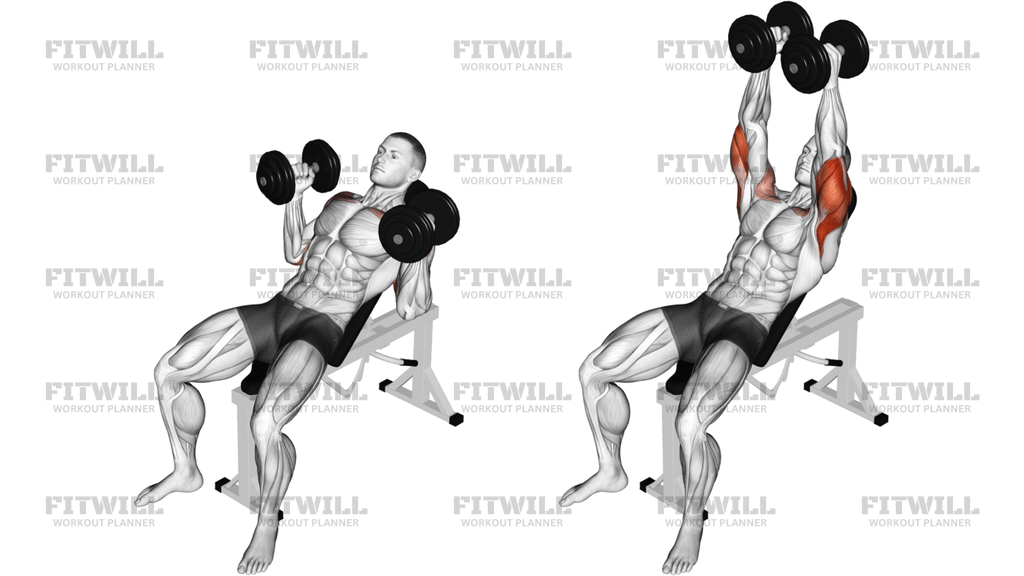
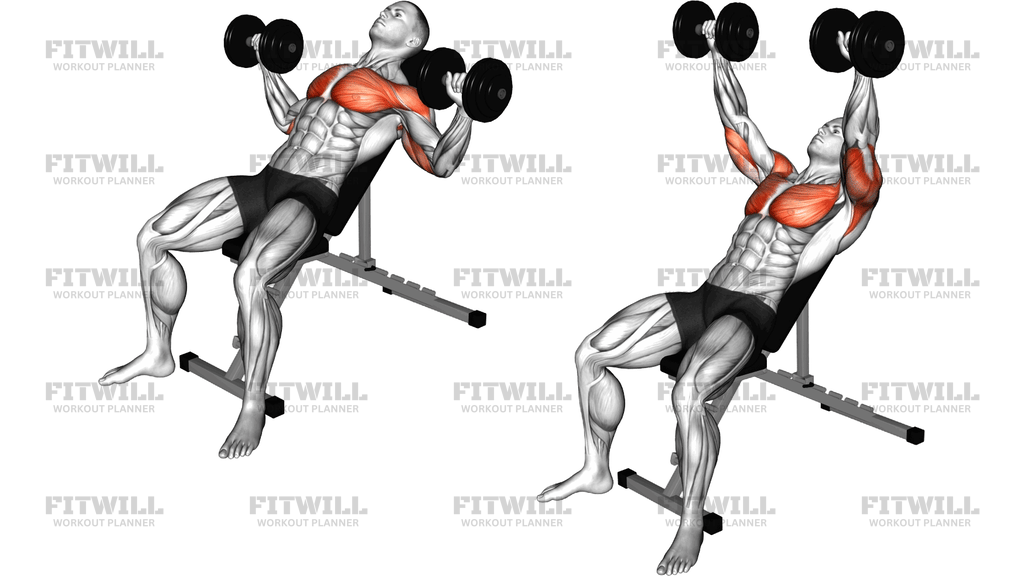
The Dumbbell Incline Wide Grip Bench Press is an angled pressing variation performed on a bench set to roughly 30-45 degrees, with dumbbells held wider than shoulder-width apart. The incline shifts emphasis toward the clavicular head of the pectoralis major, the upper portion of the chest that a flat press hits less directly, while the wide grip reduces elbow tuck and widens the arc of the press. Dumbbells also allow each arm to work independently, which helps expose and correct left-to-right strength differences.
This movement suits intermediate lifters who already own the basic dumbbell bench press and want to build the upper chest, but beginners can use it too with lighter weights and a modest incline. It fits well as a primary pressing exercise on a chest or upper body day, typically worked in the 8-15 rep range since dumbbells become hard to position at very heavy loads.
Beyond the upper chest, the press draws in the front deltoids to help initiate the drive and the triceps to lock the arms out. The wide hand position places a slightly greater stretch demand on the pecs at the bottom, and stabilizing two independent weights engages the rotator cuff and serratus anterior more than a barbell would.
Setup details matter here. The bench angle determines where the emphasis lands: too shallow and it behaves like a flat press, too steep and the shoulders take over. Keep your entire back, shoulders, and head against the pad, and plant your feet firmly on the floor. Wide grip does not mean flaring carelessly; your elbows should travel out to roughly 45-60 degrees from your torso so the shoulder stays in a safe track.
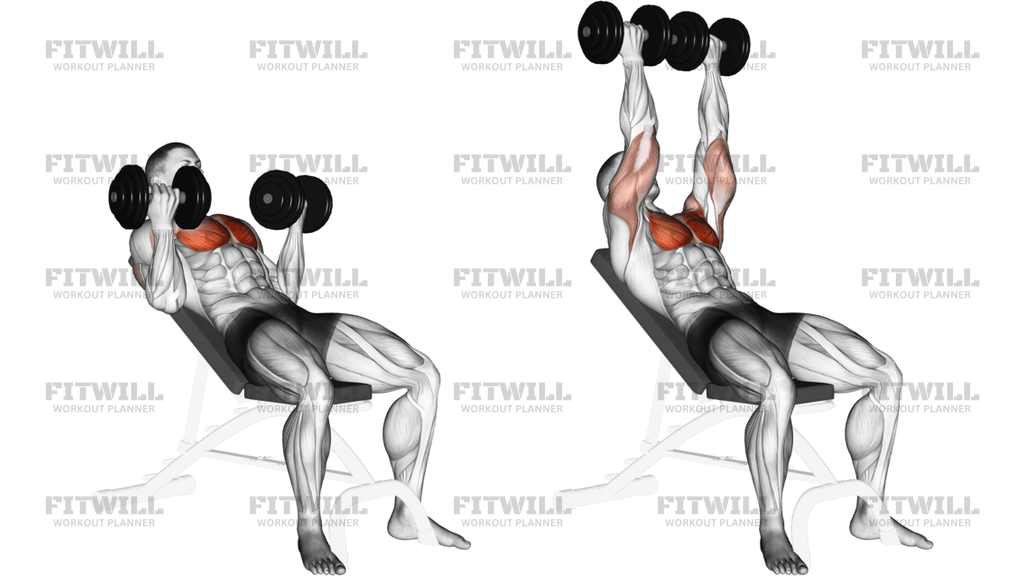
To execute well, set the dumbbells at your upper chest with wrists stacked over elbows, press up and slightly inward until the arms are extended without jamming the elbows, then lower under control until you feel a stretch across the upper chest. Because the wide grip lengthens the moment arm on the shoulders, leave one or two reps in reserve rather than grinding to failure.
Common use cases include building the often-underdeveloped upper chest, adding variety after flat barbell pressing, and training around barbell shoulder discomfort, since the dumbbells let the wrists and elbows find their own path. If you have a history of shoulder irritation, warm up thoroughly and start with a conservative angle and load.
[ Workout Log & Planner ]
Put your next workout in Fitwill
Keep your plan and training log ready when you are.


Instructions
- Set an adjustable bench to a 30-45 degree incline and place a pair of dumbbells within reach at the top of the bench.
- Sit on the bench, grip the dumbbells with palms facing forward and hands set wider than shoulder-width, then kick each dumbbell up as you recline back onto the pad.
- Position your head, upper back, and hips fully against the bench, feet flat on the floor, and pull your shoulder blades down and back.
- Start with the dumbbells held above your upper chest, arms extended, wrists stacked directly over your elbows.
- Brace your core and take a breath into your belly before the first descent.
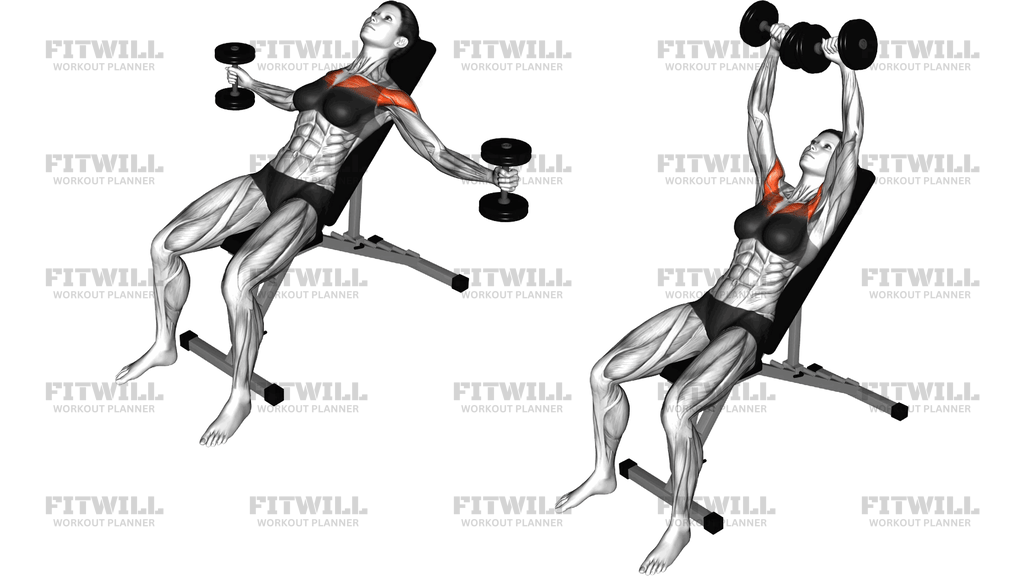
- Lower both dumbbells in a wide, controlled arc out to the sides until they reach the level of your upper chest and you feel a stretch across the pecs.
- Press the dumbbells back up and slightly inward along the same arc, driving through your upper chest until your arms are extended without locking the elbows hard.
- Exhale as you press up and inhale as you lower each rep.
- Complete the set, then bring the dumbbells back to your chest, rotate them to a neutral position, and sit up carefully or lower them to the floor with your legs.
Tips & Tricks
- Keep the incline at 30-45 degrees. Anything steeper than about 45 degrees turns this into a shoulder press and pulls work away from the upper chest.
- The most common mistake with a wide grip is letting the dumbbells sink below the chest line to chase extra depth. Stop when your upper arms are roughly parallel to the floor or you feel the pec stretch, not when the plates touch your torso.
- If your wrists bend backward at the bottom, the weight is drifting too far out. Focus on keeping the knuckles stacked over the elbows throughout the arc.
- Do not bounce the dumbbells off the stretch. The pause at the bottom is where the wide grip earns its benefit on the upper chest fibers.
- Squeeze the bench with your lats as you lower to keep the elbows from flaring past a comfortable angle, which is where wide-grip pressing usually aggravates the front of the shoulder.
- Lower the dumbbells to the upper chest, not the nipple line. Pressing to the lower chest on an incline defeats the angle of the bench.
- If you cannot get heavy dumbbells into position cleanly, have a partner hand them to you at the start rather than kicking them up with excessive momentum.
- Use a thumb-wrapped grip around the handles. A wide, open-hand grip over the ends of the dumbbells risks a slip over your face at lockout.
- Keep some tension in the triceps at the top instead of fully relaxing. This preserves shoulder position for the next rep.
Frequently Asked Questions
What muscles does the Dumbbell Incline Wide Grip Bench Press work?
The primary muscle is the upper chest, specifically the clavicular head of the pectoralis major. The front delts and triceps assist, and the rotator cuff and stabilizers work to control the two independent dumbbells.
How does the wide grip change the Dumbbell Incline Wide Grip Bench Press compared to a standard grip?
The wider hand position increases the horizontal stretch on the upper chest and reduces how much the triceps contribute at the bottom. It trades some pressing strength for a greater pec emphasis, so expect to use slightly lighter dumbbells than your normal incline press.
What bench angle should I use for the Dumbbell Incline Wide Grip Bench Press?
Set the bench between 30 and 45 degrees. Around 30 degrees biases the upper chest most directly, while steeper angles progressively shift work toward the front delts.
Is the Dumbbell Incline Wide Grip Bench Press safe for beginners?
Yes, if you start with light dumbbells and a lower incline. Practice the wide arc with weights you could press for 15 or more reps before progressing, and consider learning the standard-grip incline press first.
Why do my shoulders hurt when I use a wide grip on incline presses?
The elbows are likely flaring beyond roughly 60 degrees or the dumbbells are dropping too deep below chest level. Keep the elbows at a moderate flare, shorten the range slightly, and reduce the load until the movement is pain-free.
Can I substitute the Dumbbell Incline Wide Grip Bench Press with an incline barbell press?
You can, but a barbell fixes your hand path and lets the stronger side compensate. The dumbbell version is better for addressing imbalances and finding a natural wrist and elbow track, which matters more with a wide grip.
How heavy should I go on the Dumbbell Incline Wide Grip Bench Press?
Use less weight than your standard incline dumbbell press because the wide position lengthens the lever arm on the shoulders. Work in the 8-15 rep range and stop each set one or two reps short of failure.
How do I get the dumbbells into position on a steep incline by myself?
Sit back with the dumbbells resting on your thighs, then kick each knee up one at a time to roll the weights back toward your shoulders as you recline. Alternatively, use lighter weights or ask a partner to hand them to you at the top.
Should my feet stay on the floor during the Dumbbell Incline Wide Grip Bench Press?
Yes, keep both feet flat to stabilize your hips and prevent the lower back from over-arching off the pad. If your feet dangle or your hips lift, the bench angle or seat height needs adjusting before you add weight.