Weighted Lying Svend Press
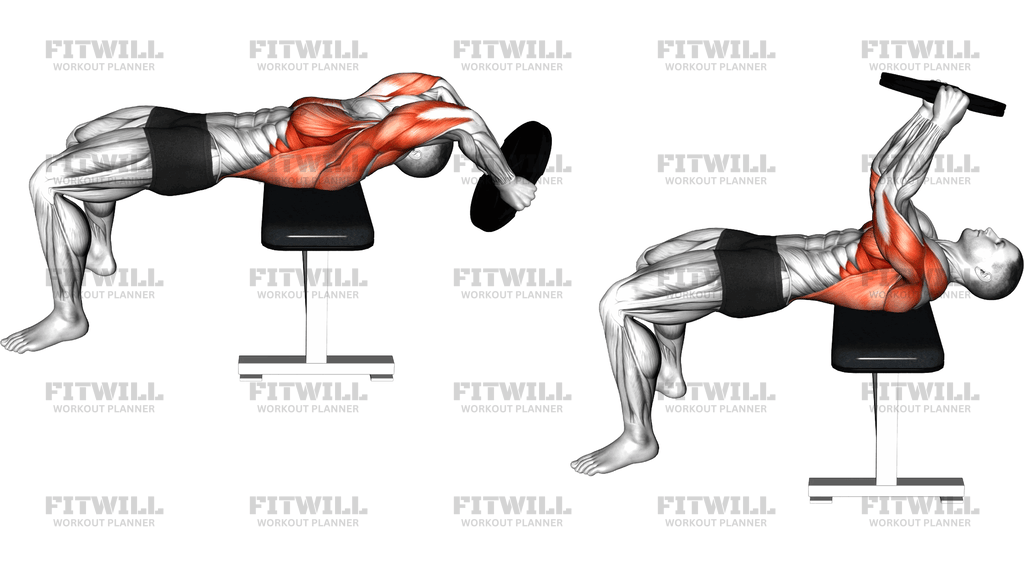
The Weighted Lying Svend Press is a chest-focused isolation movement performed on the floor with a weight plate squeezed between both palms. Named after Danish bodybuilder Svend Karlsen, the exercise turns a simple press into a two-part challenge: you must push the plate up toward the ceiling while simultaneously squeezing your hands inward to keep the plate from slipping. That constant inward squeeze is what makes the movement special — it drives strong contraction through the pectorals, especially the inner portion of the chest, in a way a standard press does not.
The setup is deliberately simple. You lie flat on your back with your knees bent and feet on the floor, holding a single plate sandwiched between your hands at chest height. Because you are lying down and the load is light, this is one of the safest pressing variations available, which makes it a great fit for beginners learning to feel their chest working, lifters recovering from heavier bench sessions, and anyone who wants a focused inner-chest burn without loading the shoulder joint heavily.
As you press the plate toward the ceiling, the front shoulders and triceps assist, but the real work comes from keeping the palms pressed hard against the plate faces throughout every rep. If that squeeze relaxes even briefly, the tension shifts away from the chest and the movement loses its purpose. This makes the Weighted Lying Svend Press an excellent teaching tool: it trains the mind-muscle connection and teaches you what a genuinely contracted chest feels like, which often carries over to better bench pressing and flye work.
Because you are on the floor, your range of motion ends when your upper arms touch the ground, and the torso stays supported the entire time. Keep the movement slow and deliberate rather than explosive, and choose a plate light enough that the squeeze — not the weight — is the limiting factor. A small plate, such as a 5 or 10 lb bumper or a compact iron plate, works best because it fits between average-sized hands with room to press on both faces.
Use this exercise as a finisher after your main pressing work, or as a low-fatigue chest builder on days when heavy barbell or dumbbell pressing is not appropriate. Two to four sets of 10 to 15 slow reps with a hard squeeze at the top is usually enough to make the chest work noticeably hard despite the modest load.
[ Workout Log & Planner ]
Put your next workout in Fitwill
Keep your plan and training log ready when you are.


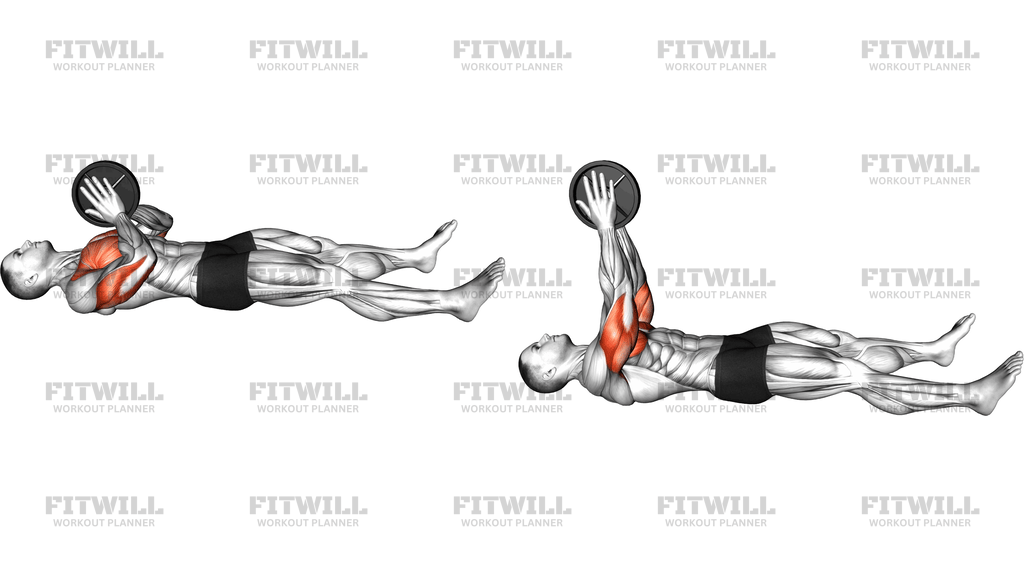
Instructions
- Lie flat on your back on the floor with your knees bent and feet flat, and hold a single weight plate vertically between both palms at your chest.
- Press your palms firmly against the two flat faces of the plate, fingers spread wide, so the plate is gripped by squeeze alone rather than by your fingers wrapping around it.
- Bend your elbows and tuck your upper arms close to your sides, resting the backs of your upper arms on the floor with the plate held just above your sternum.
- Brace your abdominal muscles lightly and press your lower back toward the floor so your ribs stay down and your torso does not arch during the press.
- Exhale as you press the plate straight up toward the ceiling, keeping your hands pushing inward against the plate faces the entire time.
- Continue until your elbows are nearly straight with the plate directly above your chest, and squeeze the plate harder for a beat at the top.
- Inhale as you lower the plate under control until your upper arms touch the floor again, maintaining palm pressure on the plate throughout the descent.
- Pause briefly with the plate at your chest, re-squeeze your palms, and begin the next repetition.
- After your final rep, guide the plate down to your chest, sit up carefully, and set the plate on the floor beside you before standing.
Tips & Tricks
- Choose a small-diameter plate. A large plate forces your hands wide and turns the movement into a partial flye, which reduces the squeeze on your chest that this exercise depends on.
- If the plate slips, your grip pressure has dropped before your chest has fatigued — that is the most common failure point here. Reset your palms on the plate faces rather than letting your fingers curl around the rim.
- Keep your elbows tracking roughly over your wrists as you press. Letting the elbows flare wide shifts stress toward the shoulder joint and away from the pectorals.
- Do not let the plate drift back over your face at the top. The end position is directly above your chest; pressing toward your head removes tension and puts the plate over an unprotected position.
- Aim for a hard, active squeeze rather than a fast press. The Weighted Lying Svend Press rewards tempo — a 1-second press, 1-second squeeze, 2-second lower beats rushing through 30 reps.
- Keep your lower back in contact with the floor. If your ribs lift and your back arches as you press, lighten the load or slow down, since the arch usually means you are pushing with momentum instead of chest tension.
- Treat this as a high-rep, low-load movement. Adding heavy weight usually forces the fingers to take over the squeeze and defeats the purpose of the exercise.
- If your shoulders feel pinched, reduce the depth slightly by keeping your upper arms from resting fully on the floor, or use a lighter plate and shorten the pause at the bottom.
Frequently Asked Questions
What muscles does the Weighted Lying Svend Press work?
The chest, particularly the pectoralis major and its inner fibers, is the primary muscle. The front shoulders and triceps assist the press, and your core stabilizes your torso while you lie on the floor.
Why does the Weighted Lying Svend Press use a plate squeezed between the hands instead of a dumbbell?
The plate requires constant inward squeezing to stay in place, and that squeeze is exactly what drives the chest contraction. A dumbbell can be held with fingers alone, which removes the inward pressure that makes this movement effective.
Is the Weighted Lying Svend Press good for beginners?
Yes. The load is light, you are fully supported on the floor, and the movement teaches you to feel your chest contracting, which carries over to bench pressing and flyes. Start with a 5 or 10 lb plate and focus on the squeeze, not the weight.
How heavy should the plate be for the Weighted Lying Svend Press?
Heavy enough that your chest works hard by rep 12 to 15, but light enough that you never need to curl your fingers around the rim to hold it. If your grip fails before your chest, the plate is too heavy or too large.
Where in my workout should I place the Weighted Lying Svend Press?
It works best as a finisher after your main pressing exercises, when the chest is pre-fatigued and a light, high-tension movement is enough to create a strong stimulus. It can also be used on lighter training days when heavy pressing is not appropriate.
Why do my shoulders take over instead of my chest?
This usually happens when the elbows flare wide or the inward squeeze relaxes. Keep your upper arms close to your sides, elbows over wrists, and press your palms hard into the plate faces so the pectorals stay the driving force.
Can I do the Weighted Lying Svend Press on a bench instead of the floor?
You can, but the floor version is safer and more stable because the range of motion ends when your upper arms touch the ground. On a bench the plate can drift back over your face at the bottom, which is a position to avoid with squeeze-only grip.
How many sets and reps should I do?
Two to four sets of 10 to 15 slow reps with a deliberate squeeze at the top works well for most lifters. Because the load is light, quality of the squeeze matters far more than the total weight used.
What should I do if the plate keeps slipping between my hands?
Spread your fingers wider across the plate faces, reapply pressure before each rep, and consider a smaller or slightly textured plate. If slipping continues, the load is likely too heavy for squeeze-only control.