Weighted Plate Pullover
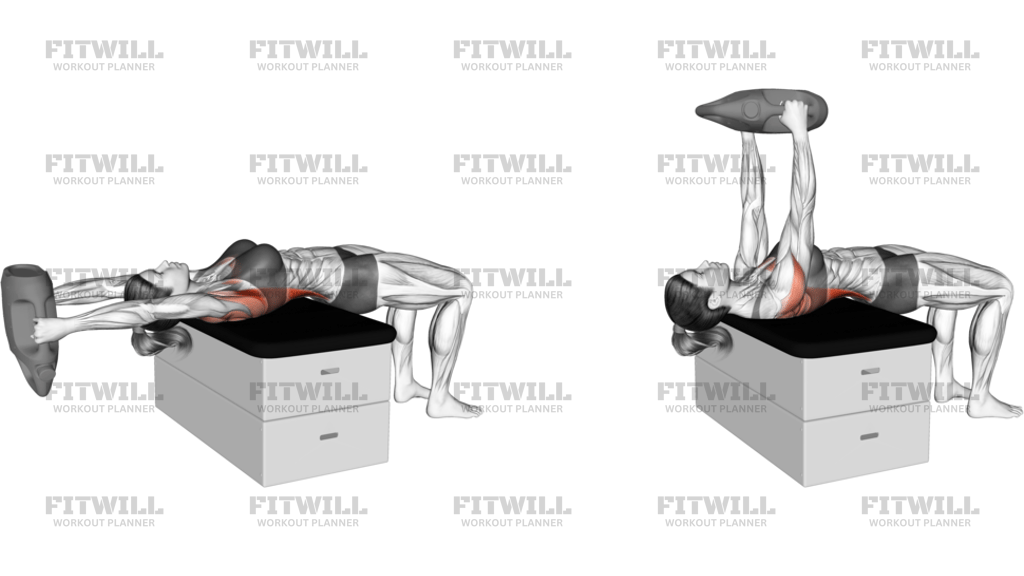
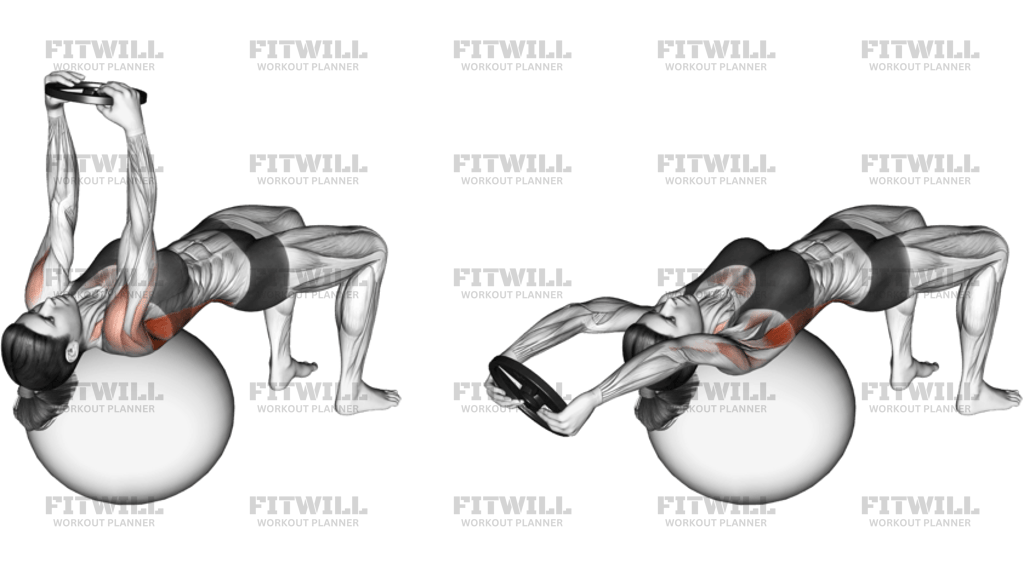
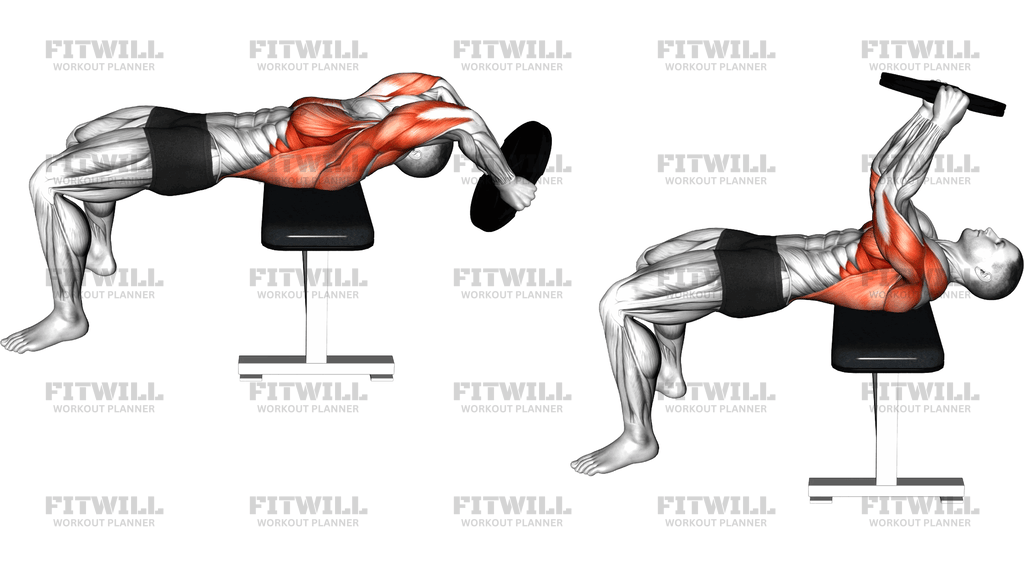
The Weighted Plate Pullover is a classic free-weight pullover performed lying across a flat bench while holding a single weight plate in both hands. You start with the plate held over your chest with soft elbows, sweep it back over your head in a smooth arc until your arms travel behind you, then pull it back up along the same path to the start. Unlike dumbbell or barbell pullovers, the plate version uses a compact, easy-to-grip implement, which makes it a good choice for lifters who find a heavy dumbbell awkward to maneuver into position behind the head.
This movement trains the lats as the prime mover, with the chest, serratus anterior, and triceps assisting through the arc. Because the weight passes overhead with the ribcage expanded and the core braced, it also places a steady demand on the deep trunk stabilizers, especially once the plate travels behind your head. Many lifters use pullovers specifically to feel the lats working through a long range, which can carry over to pulling exercises like pull-ups and rows.
Setup matters more here than in most accessory lifts. Because you sit across the bench rather than lying lengthwise, your upper back should be the only contact point on the pad, with your hips lower than your shoulders and your feet planted firmly on the floor. This cross-bench position gives your arms room to sweep behind your head without the plate hitting the bench, but it also means nothing is supporting your lower back except your own bracing, so body position is your safety net.
To execute well, hold the plate by its edges with both hands cupped underneath the top rim, keep a slight bend in the elbows that stays constant throughout, and think about moving from the shoulders rather than pushing with the arms. The arc should feel like a smooth pendulum: controlled behind the head, a deliberate stretch, then a strong pull back over the face to the chest. Breathe in on the way back and exhale as you return the plate over your chest.
The Weighted Plate Pullover fits well at the end of a chest or back day, typically for 2 to 4 sets of 8 to 15 reps with a moderate plate. Start light, even if the weight feels easy, because the stretched position behind your head is the hardest part to control. If you have never done a pullover before, rehearse the arc with no weight or a very light plate until the path feels natural before adding load.
[ Workout Log & Planner ]
Put your next workout in Fitwill
Keep your plan and training log ready when you are.


Instructions
- Set a flat bench in a clear area and sit sideways on it so only your upper back will rest on the pad, with your feet flat on the floor about hip-width apart.
- Pick up a weight plate and hold it by the edges with both hands, fingers wrapped under the rim, then walk it in close to your chest as you lower your upper back onto the bench.
- Position yourself so your shoulders and upper back are supported, hips dropped below shoulder level, and press your feet into the floor to create a stable base.
- Press the plate to full arm extension over your chest with a slight, fixed bend in both elbows, and brace your core as if preparing for someone to nudge you.
- Inhale and slowly arc the plate back over your head in a controlled semicircle, letting the shoulder joints lead while the elbow angle never changes.
- Stop when the plate is behind your head and you feel a stretch across the lats and chest, keeping the plate from dropping any lower than you can hold under control.
- Exhale and pull the plate back along the same arc, driving the movement with your lats until the plate is directly over your chest again.
- Pause briefly at the top with the plate over your chest, reset your brace, then repeat for the target number of reps.
- When finished, bring the plate back over your chest, sit up from the cross-bench position, and set the plate on the floor with both hands.
- Keep your hips from sagging or rising between reps; if your torso shifts, set the plate down and re-establish your position before continuing.
Tips & Tricks
- The most common mistake is turning the arc into a triceps extension by bending the elbows as the plate drops behind the head; pick an elbow bend of roughly 15 to 20 degrees and hold it for the entire set.
- Do not let the plate sink deep behind your head looking for a bigger stretch. If your lower back arches hard off the bench or your hips drop further, the weight is too heavy or the range is too long.
- Keep the plate close to your face and chest on the way up. Letting it drift toward your stomach shortens the lat work and turns the movement into something closer to a front raise.
- Choose a smaller, thicker plate rather than the largest diameter available. A big plate can scrape the floor or force your shoulders into an awkward angle behind your head.
- Squeeze the plate edges hard the whole time. Grip fatigue on a smooth plate behind your face is a real risk, so if your hands get slick, chalk up or pick a plate with a grip surface.
- If you cannot feel your lats, slow the return phase to a three-second count and think about pulling your elbows down toward your hips as the plate comes back over your head.
- Avoid turning this into a breathing pullover bodybuilding trick until you own the standard version. Keep the breathing rhythm simple: inhale going back, exhale coming up.
- Keep your neck neutral instead of lifting your head to watch the plate. Looking forward mid-rep rounds your upper back off the bench and changes the arc.
- Set the bench so it cannot slide, and make sure nothing is behind you within reach of the plate's path before your first rep.
Frequently Asked Questions
What muscles does the Weighted Plate Pullover work?
The lats do most of the work as the plate arcs overhead and back, with the chest and serratus anterior assisting and the triceps holding the elbow position. Your core stabilizes the cross-bench position throughout the set.
Why use a weight plate instead of a dumbbell for pullovers?
A plate is easier to bring into the cross-bench position safely because you can hold it against your chest as you lie down, rather than pressing a long dumbbell overhead. Holding the edges also forces both hands to share the load evenly.
Is the Weighted Plate Pullover good for beginners?
Yes, as long as you start with a very light plate and master the arc first. The cross-bench setup is the trickiest part for beginners, so practice the body position without weight before adding load.
Should my elbows be bent or straight during the Weighted Plate Pullover?
Keep a slight, constant bend of about 15 to 20 degrees. Straightening the arms completely stresses the elbow and shoulder joints, while bending further turns the exercise into a triceps extension.
Why do I feel this in my triceps instead of my lats?
That usually means your elbow angle is changing, so you are extending and flexing the arms instead of moving at the shoulders. Lock in a fixed elbow bend and focus on pulling the plate over your face with your armpits, not your hands.
How far back should the plate travel behind my head?
Stop where you feel a comfortable stretch across the lats and chest without your lower back arching sharply off the bench. Going deeper adds range but also adds stress to the shoulder, so earn that depth gradually.
Can I do the Weighted Plate Pullover on the floor instead of a bench?
You can lie lengthwise on the floor or a bench, but the floor stops the plate at bench height and cuts off the stretch behind your head. The cross-bench position allows the full arc, which is the main benefit of this setup.
How many reps and what plate size should I use?
A 5 to 15 kg plate works for most lifters, aiming for 8 to 15 controlled reps per set. Start at the light end; the stretched position behind the head is far harder to control than the top of the rep suggests.
Is the Weighted Plate Pullover safe for my shoulders?
It is generally well tolerated when the weight is moderate and the elbows stay fixed, but anyone with a history of shoulder impingement should keep the range short and stop before pain. If a stretched overhead position bothers your shoulders, choose a supported lat or chest exercise instead.
Should I put the Weighted Plate Pullover on chest day or back day?
Either works, since it hits both areas. It pairs naturally at the end of a back day as a lat finisher, or after pressing on chest day when a bit of extra stretch work on the pecs and serratus is welcome.